
How do you make a vegetable bowl with what's in season?
Put November cabbage, carrots, and locally abundant daikon in one bowl. Then use the market and the texture of the food to decide what to swap next time.
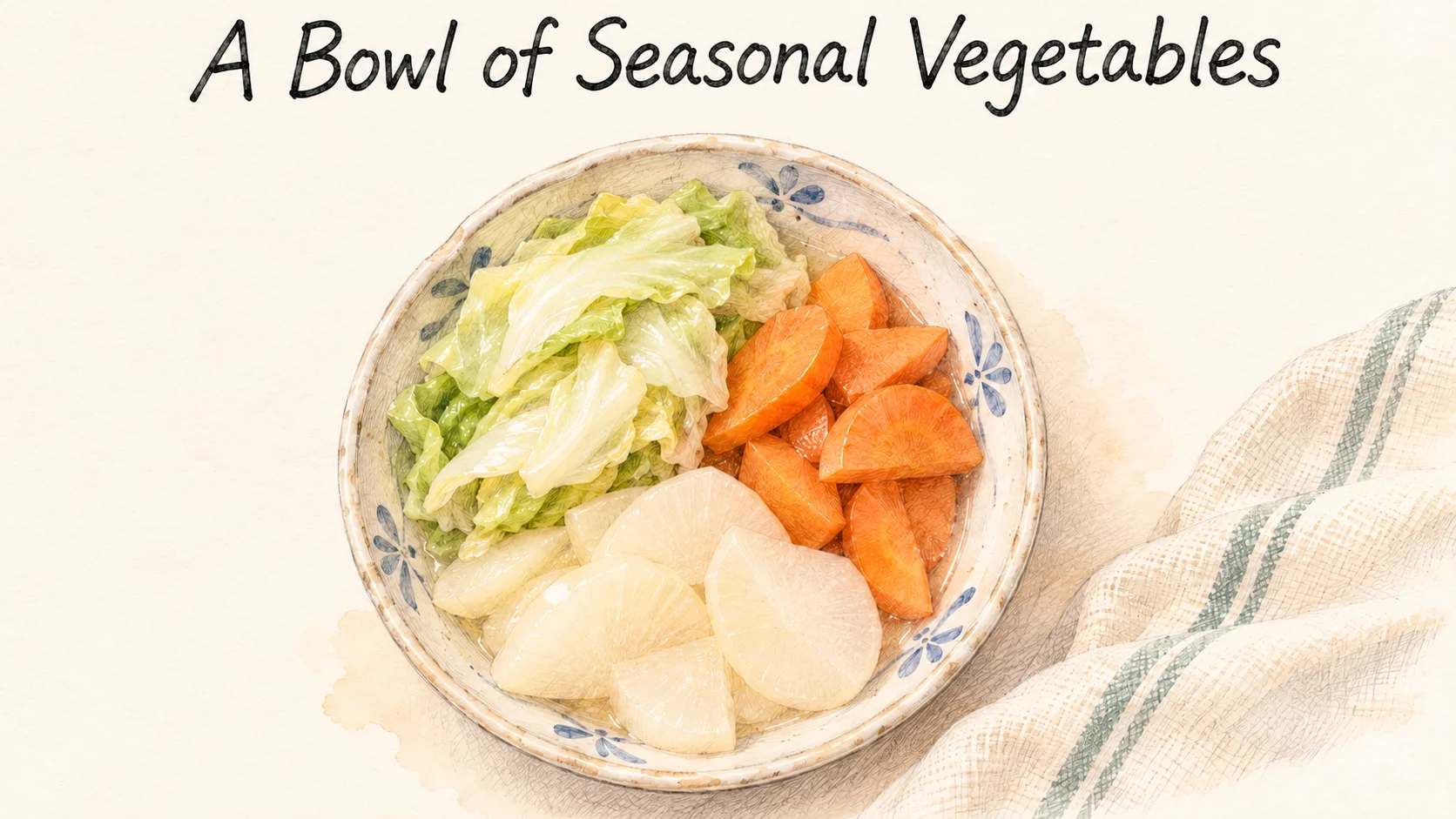
At the market in November, there's a pile of cabbage and carrots. Next to them is a crate of daikon from a nearby growing area. You buy a bit of each for a vegetable bowl. The next time you shop, there's no daikon. Can you still make the bowl you liked?
Keep two vegetables you know how to use and choose a third from the market that day. You might start with soft cabbage leaves and sweet carrot pieces, then add daikon or broccoli according to what you find. The growing area and time of year can help you choose. The texture you want in the bowl tells you how the pieces will go together.
What does each of three vegetables add to the bowl?
Picture the bowl when it arrives at the table. Cabbage leaves fold over one another. The carrot is in small pieces that retain a little bite. The thicker daikon slices become tender and juicy as they cook. Put them together and you can still tell what you picked up with the fork. Those are differences you can start with when you want a bit more variety.
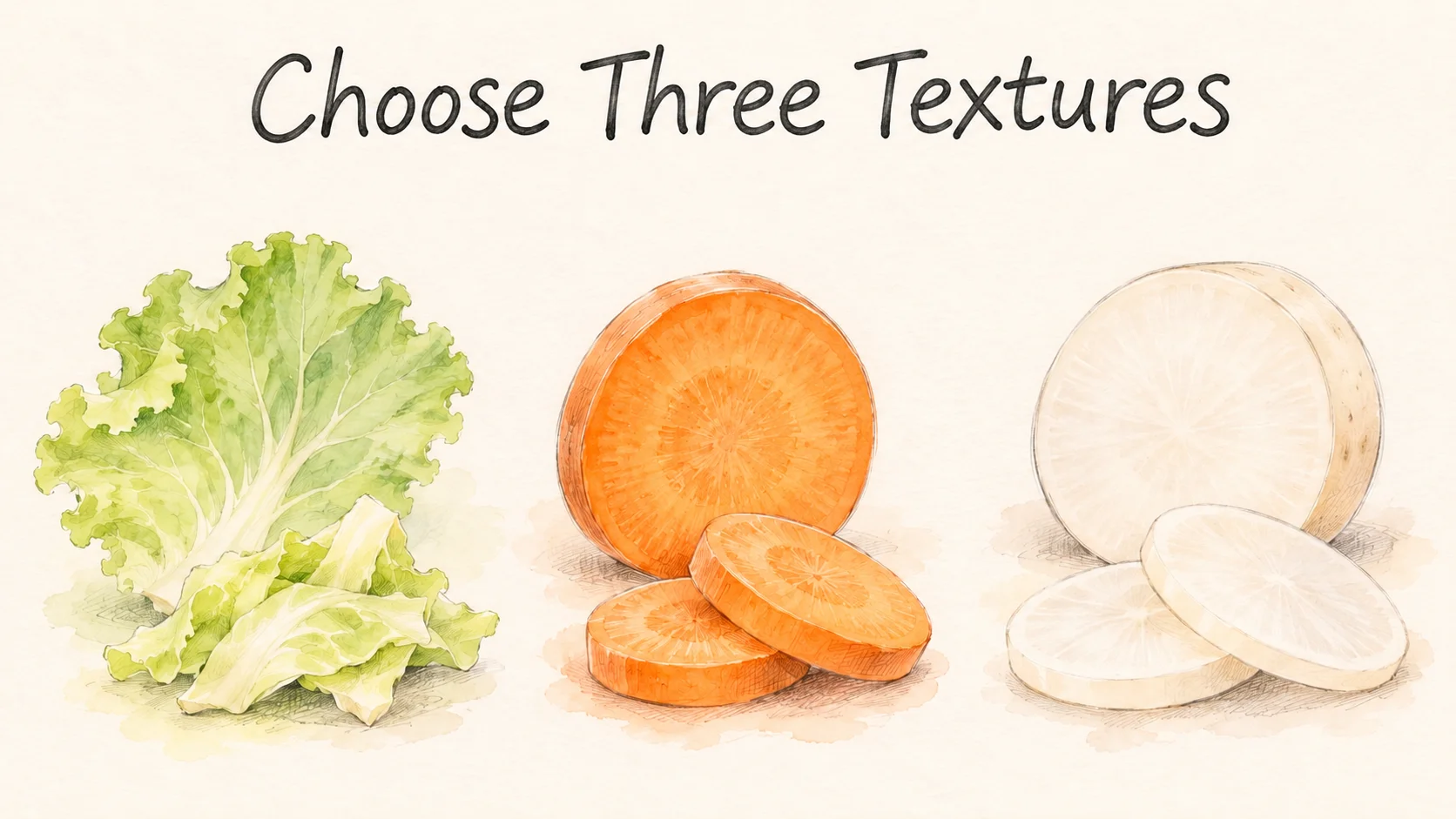
Taiwan's My Plate guidance suggests a little more vegetables than fruit and encourages using seasonal produce and including darker-colored vegetables [1]. Color can help you remember what you already have in the basket. The part of the plant you eat and the way you prepare it can change the texture too. If you already have a few orange carrots at home, see what leafy vegetable you want to put beside them. Broccoli is another option when you want some green florets in the bowl.
You don't have to buy a full bag of every ingredient for one bowl. Check what you have in the fridge. An unused piece of carrot can go alongside two vegetables you pick that morning. Next week you might still have half a cabbage. If you keep one familiar ingredient and choose something different to sit next to it, you can reuse what you have and still get a different dinner.
How do you tell what's in season where you shop?
Taiwan's Ministry of Agriculture lists peak periods for some vegetables in its school lunch sourcing guidelines. Cabbage is listed for November and December and January through May. Broccoli is listed for November and December and January through April. Carrots are listed for October through December and January through April. The national table lists radish for December and January through April [2].
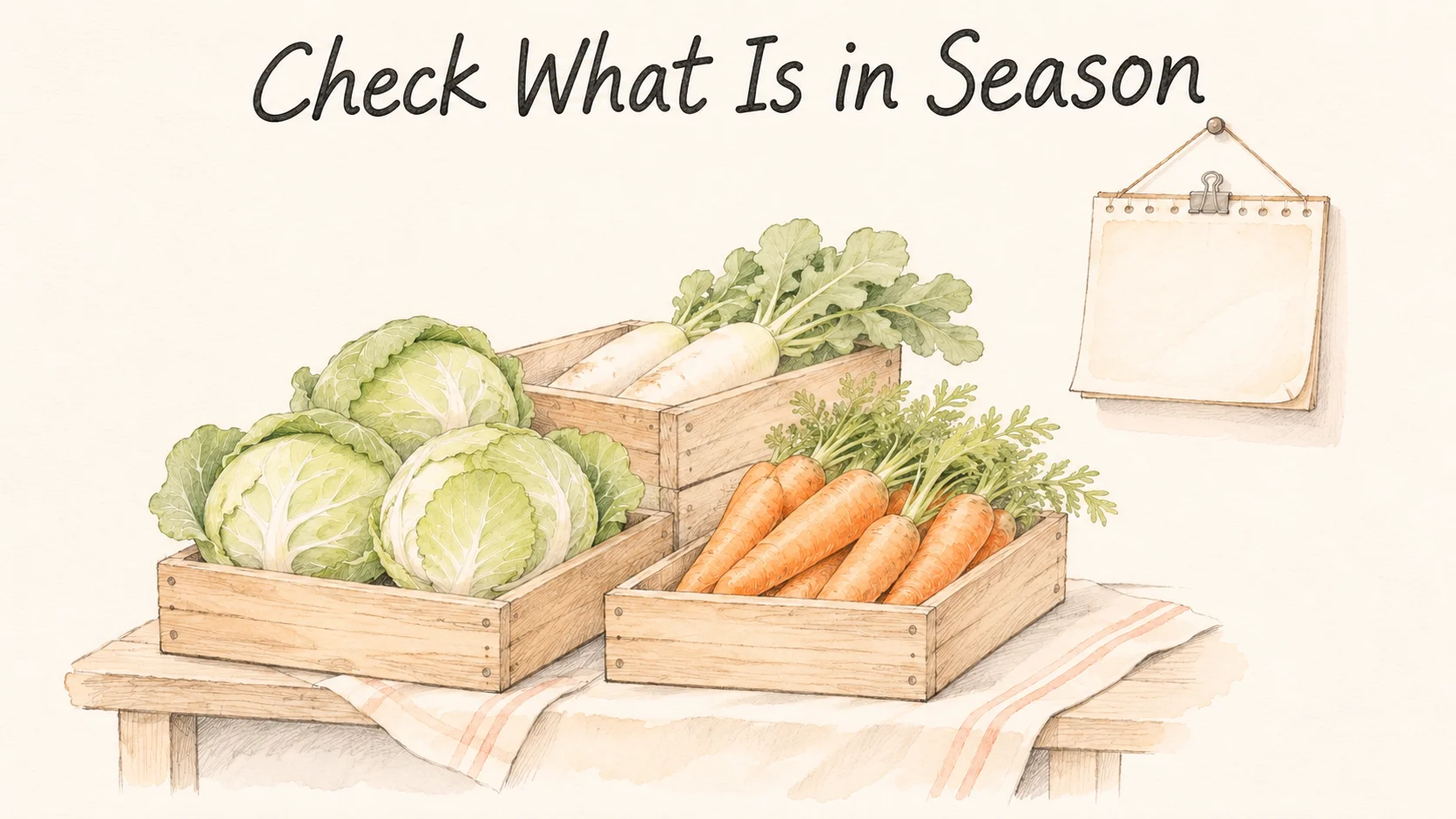
If you're buying daikon in November, the growing area can help you understand what you see. The ministry's food education guide says that some daikon in Puli, Nantou, peaks in October and November. In Taixi, Yunlin, the harvest can run from about November to Lunar New Year. The national table and the specific growing areas tell you slightly different things about when the vegetable arrives [3].
A peak season is a clue about supply. You can check the sign over the crate or ask the vendor where it came from. The month and the growing area together give you a better picture of the produce in front of you.
If all the daikon left at the stall is larger than you'll use, choose broccoli for that meal. If you have good napa cabbage at a different market, put it in place of the round cabbage. Think about which texture you want, then pick what you can find and use. The calendar can narrow down what you look for. What's in your fridge tells you what to buy today.
You can ask what came in this week, particularly if the sign lists the growing area but says little else. If you live outside Taiwan, use your own market and local calendar. A November crop in Puli doesn't tell you what will be on a stall in another country. The same question about texture will still help you put together a different bowl.
How do you keep three vegetables in each of two portions?
Suppose you've prepared about 300 grams of edible raw vegetables across three ingredients. To make two portions, divide each vegetable in half. Now each portion has about 150 grams by raw weight. Taiwan's Health Promotion Administration uses about 100 grams of edible raw vegetables as one serving, so that's a serving and a half per portion in this example. Leafy vegetables and roots can change volume differently when they cook. Dividing the ingredients first makes it easier to have all three in both bowls [4].
For example, you might have 120 grams of trimmed cabbage, 100 grams of carrots, and 80 grams of daikon. Divide the three separately and each portion gets about 60, 50, and 40 grams respectively. The point is to set aside part of each ingredient. If you cut up the whole cabbage first and use it all, you won't have those leaves for the second bowl.
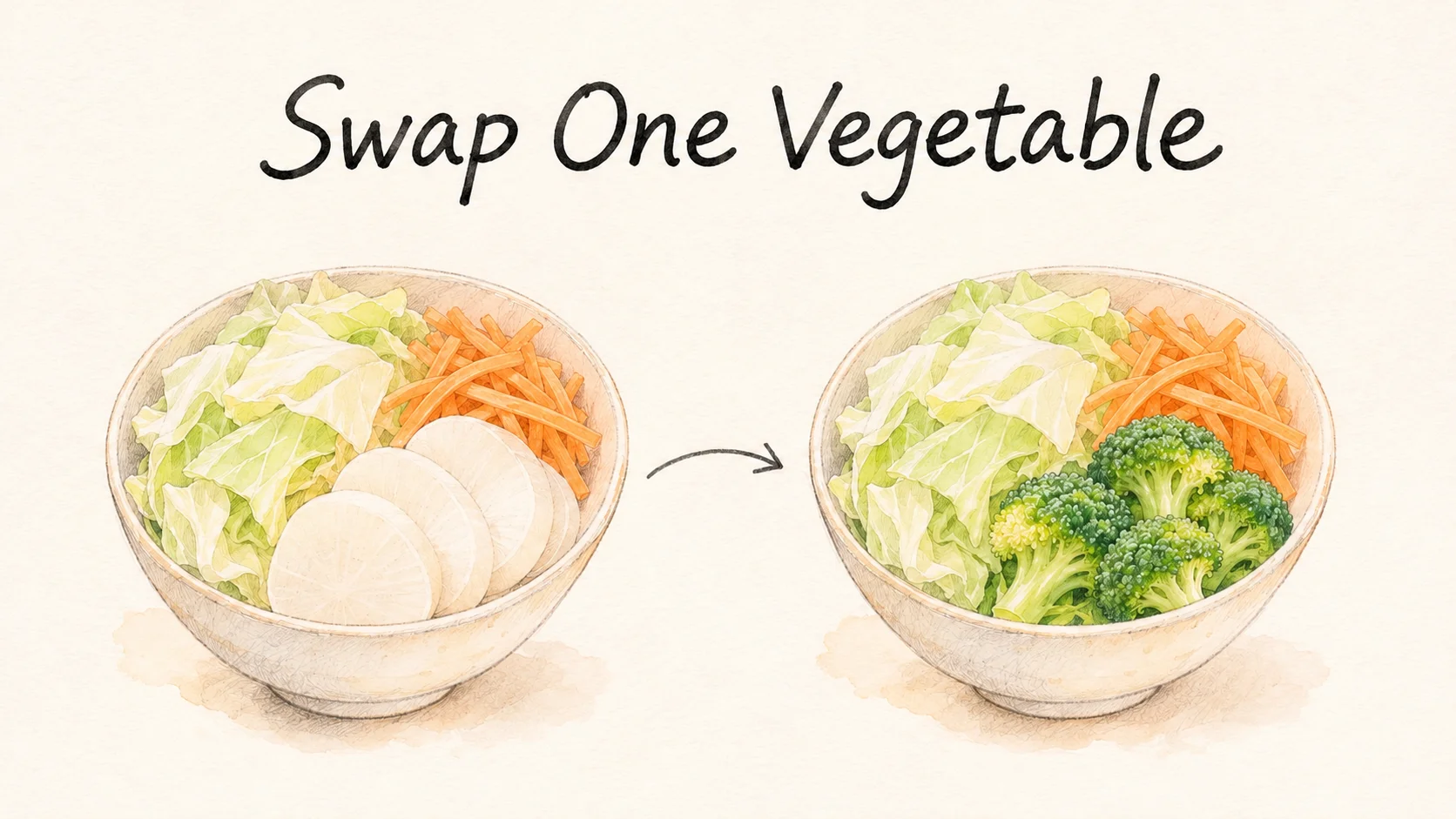
If you want a tender bowl, you can cook the pieces of root vegetable before adding the leaves. On another day, keep the cabbage and carrot and swap broccoli for the daikon. You can still use the half head of cabbage from the first day. You choose one change and the rest of the meal remains easy to shop for.
A garnish adds color quickly. A few shreds of carrot may look like a second vegetable across the top while adding little to the weight. If you actually want some carrot in several bites, cut a few more pieces and set aside enough for both meals. You can tell by looking at the amount of each ingredient before it all goes in the bowl.
What do you put on the market list next week?
Start with one leafy vegetable you know how to use and a root vegetable that will work in another dinner too. Choose the third when you arrive. It might be a head of broccoli where you had planned daikon. Giving it a place in a familiar dish makes it easier to use what you bring home.
If a vendor sells a smaller cut, you can buy just enough to see how you like it. If you take a whole vegetable, you could put part in the bowl and use the rest in a soup you already planned to make. That gives each piece a place before you reach home.
If you shop somewhere new, look at the growing area and ask what's particularly good that week. You can keep the vegetables you enjoyed and swap one you have trouble finding. Try noticing which one you want another bite of when you finish the bowl. That gives you something to keep on the next list.
References
[1] Taiwan Health Promotion Administration. Taiwan's My Plate guidance. 2018.
[2] Executive Yuan Gazette. Peak seasons of selected Taiwanese vegetables. September 6, 2024, Table 2.
[3] Taiwan Ministry of Agriculture, Food and Agriculture Education Portal. Radish varieties and seasons by growing area.
[4] Taiwan Health Promotion Administration. Healthy eating guidance and serving examples. Recommended amounts and portion sizes.