
A fish can lists two weights. Which one is the fish?
The net contents include the liquid. The drained weight tells you roughly how much solid food you can serve. Here's how to read both numbers.
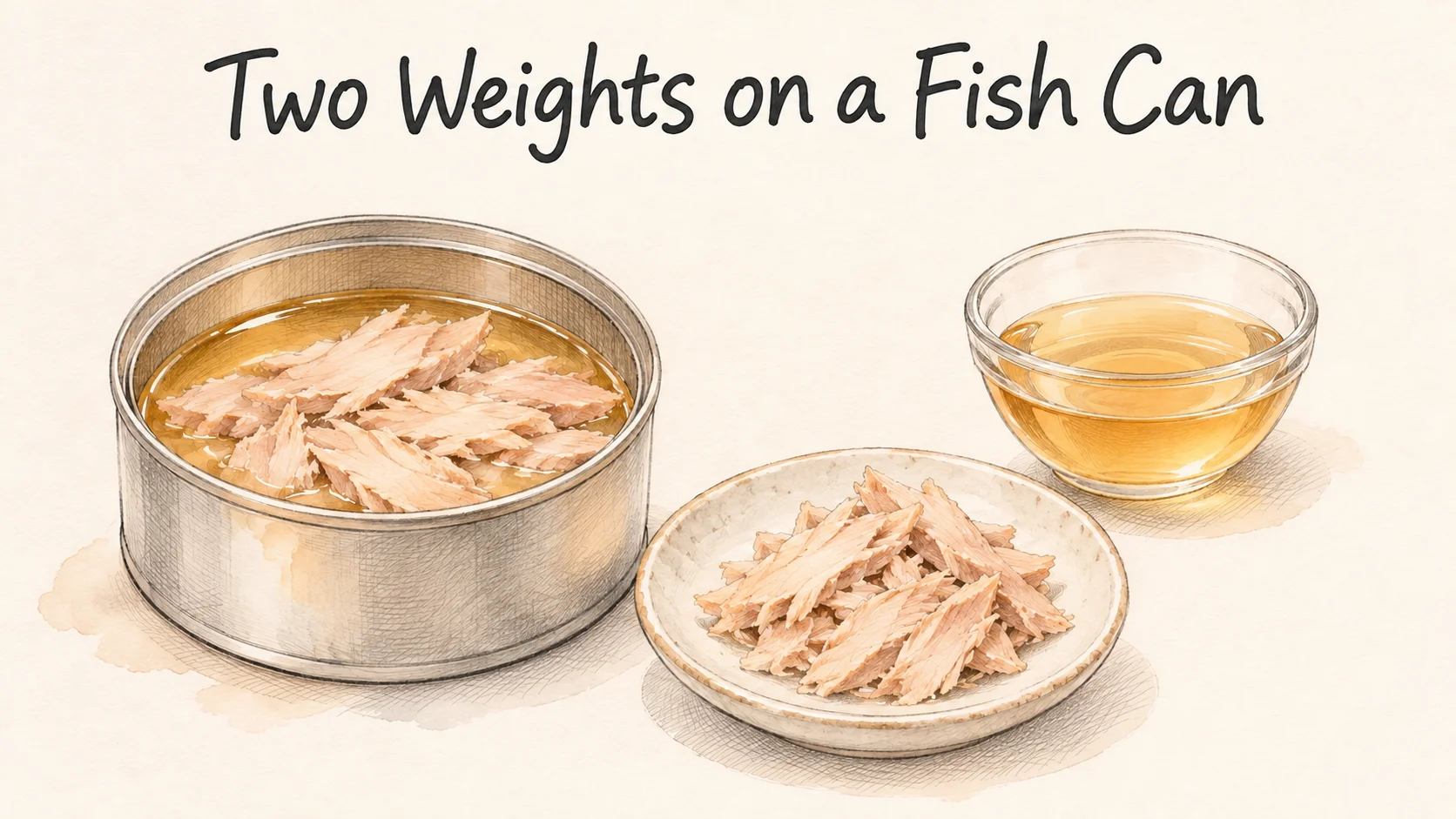
You want to make two bowls of tuna rice. The front of the can says 180 grams. Turn it over and there's a second number, 130 grams. Both refer to the contents of the can. Which one tells you how much fish will make it into the bowls?
If you plan to drain the fish, start with the drained weight. In a Taiwan Food and Drug Administration example, a tuna can has 180 grams of net contents and 130 grams of drained solids. The first number includes the fish and the packing liquid. Divide the solids between two bowls and you get about 65 grams in each [1].
What do the two weights look like in the kitchen?
Taiwan's rules call for separate figures for the contents and solids when a food mixes liquid and solid pieces. A uniform mixture that's hard to separate can show the net weight alone [2]. Picture a colander resting over a bowl. When you open the can, everything you tip out belongs to the net contents. That weight excludes the empty can. Once the liquid runs through the colander, the food sitting above it is closer to the drained solids on the label.
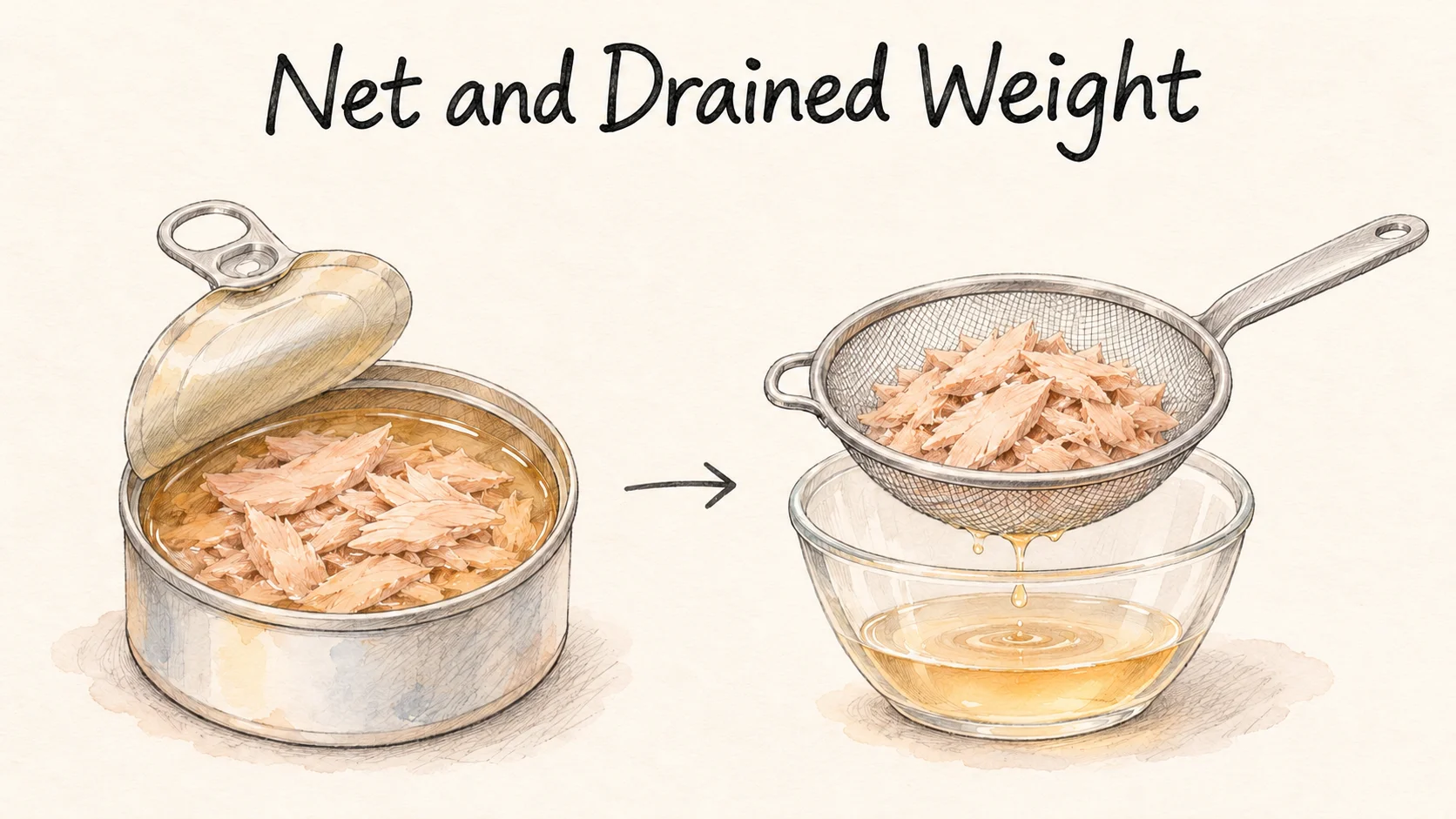
The kind of fish product makes a difference. A can of plain tuna flakes leaves mostly fish in the sieve. If a can has kernels of corn or another solid ingredient, those may count toward the solids too. Your mesh may let a few small flakes through, and the time you leave the fish over the bowl changes how much liquid runs off. The package gives you a planning figure. A kitchen scale can tell you what you actually drained this time.
There's another set of numbers on the back of the can. They're about nutrients, such as protein and sodium. Seeing the words “drained weight” in one place doesn't tell you which weight the nutrition panel uses. Look for wording that says whether those figures describe the full contents, include the liquid, or apply to a drained serving.
Some preparations come out of the can as one thick mixture. If it tells you only the net weight, the label won't let you work out how much fish you could drain. If you use the same product often, try making your sandwiches with it once and see how many slices it covers. That can be a better guide next time than the width of the can.
How much can you put in each of two bowls?
Take two Taiwanese examples. The agency's 180-gram example lists 130 grams of drained solids. How Mama's published specification for its tuna packed in oil lists 150 grams of net contents and 110 grams of drained solids. If you drain them and divide the solids evenly, you'll get about 65 grams or 55 grams per bowl, respectively. The cans are 30 grams apart in net contents. The difference in drained solids works out to about 10 grams per person [1][3].
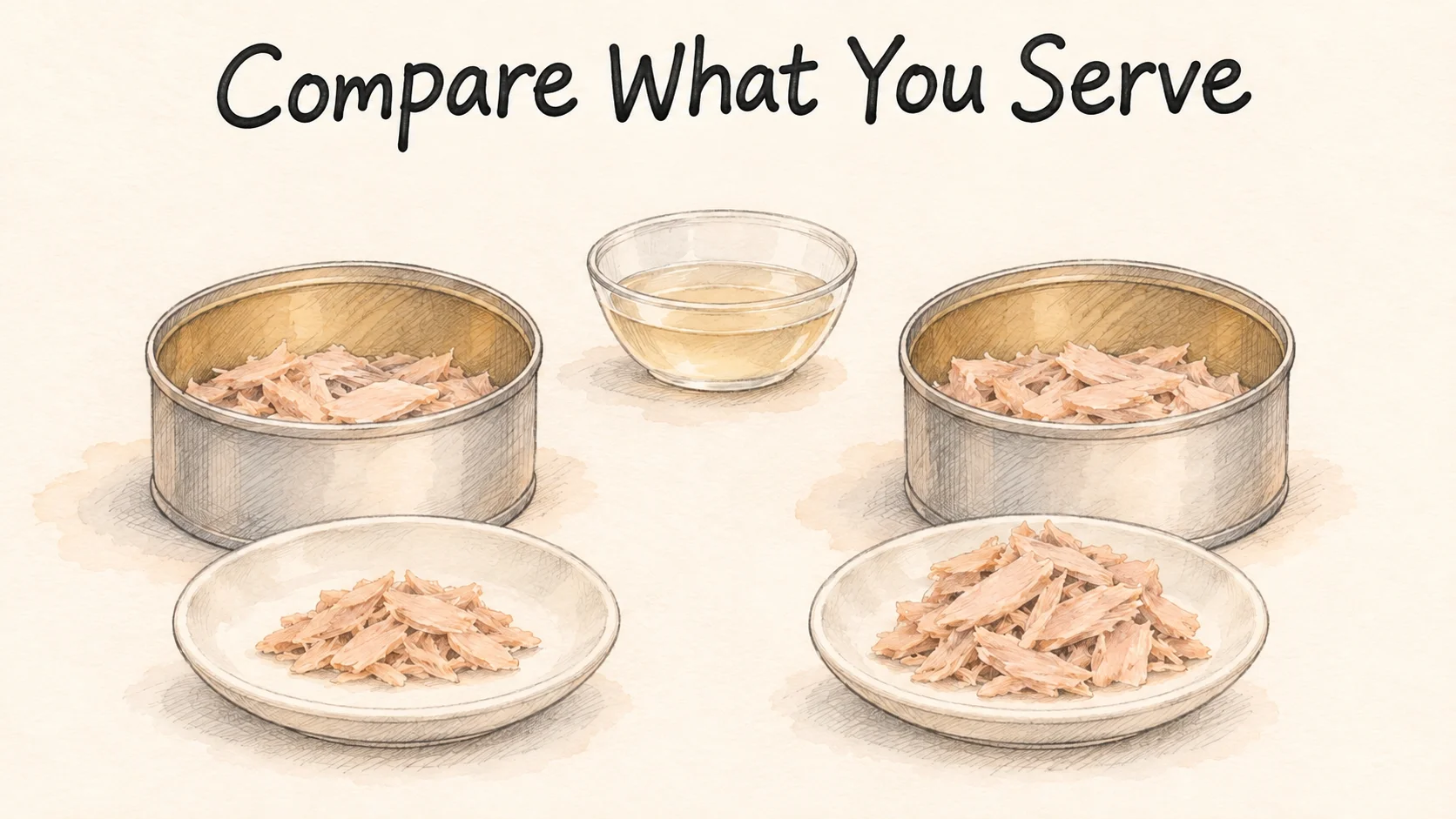
You can work backward from what you want to serve. If you're planning about 60 grams of drained tuna in each bowl, look for a can with around 120 grams of solids. A 110-gram can of solids gives you roughly 55 grams each. A 130-gram can of solids gives you around 65. Either may work, depending on how much tuna you'd like beside the rice and vegetables.
The same approach works for price. If you plan to drain the liquid, divide the price by the drained weight in grams, then multiply by 100. That compares the cost for the same 100 grams of solids. If you want the packing liquid for soup, you may value the contents differently. Decide what part of the can you're buying for the meal.
For example, suppose the 130-gram drained can costs NT$64 and the 110-gram one costs NT$59. Those hypothetical prices work out to about NT$49 and NT$54 per 100 grams of solids respectively. The larger can costs more at checkout but less per 100 grams. If you're making only one bowl and won't use the extra fish, you may still want the smaller one.
Grams of drained solids describe the food's weight. To find grams of protein, read the nutrition panel and check which portion its numbers apply to.
What happens to the nutrition figures if you pour off the liquid?
In January 2026, the Japanese company Hagoromo published the label for a small tuna pouch packed in water. Its front states 25 grams in the pouch and 3.9 grams of protein. That protein figure describes the packaged product. Figuring out how much is in the solid fish and how much is in the liquid would require measurements for those parts. In general, draining a portion of the weight doesn't give you a percentage you can subtract equally from protein, fat, and sodium. The fish and the liquid have different compositions [4].
Use figures for the whole can if that's how the label is written and that's how you use it. When you serve drained fish, look for figures that specifically apply to drained solids. If the label gives only an amount for the contents as sold, you can record that you poured off some of the liquid and treat the calculated nutrient amounts as estimates.
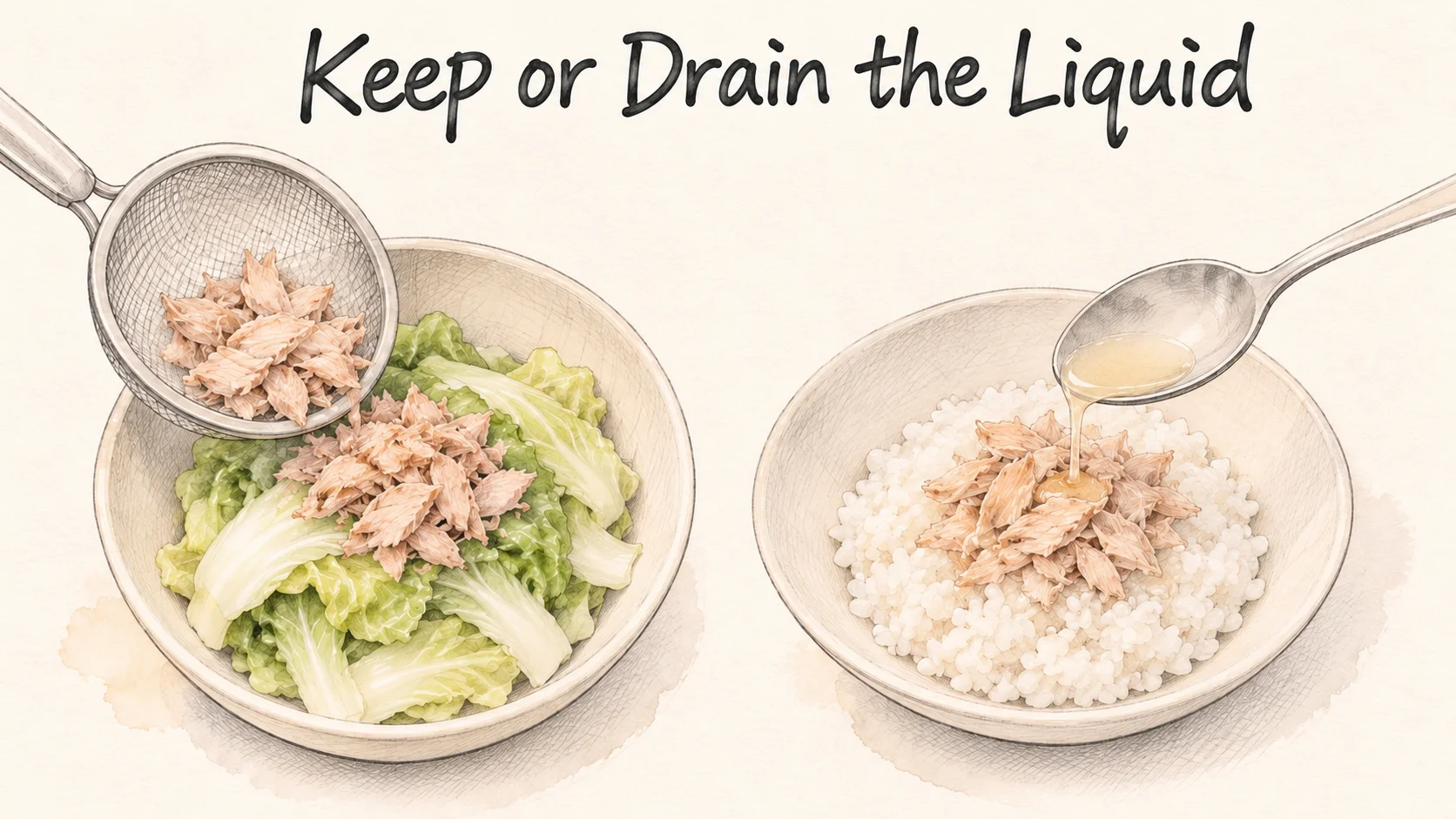
Picture two bowls with the same amount of fish. You add two spoonfuls of packing liquid to one and leave the other drained. The amount of solids is still the same. The dish with extra liquid uses more of the seasoning from the can. You can catch the liquid in a bowl first, then decide how much to use after you're done dividing the fish.
It also helps to notice what “packed in oil” describes. The How Mama example lists water alongside the soybean oil and other ingredients. If you're choosing between two cans for their taste or seasoning, check the ingredients. A different packing liquid can make that same amount of fish work differently on a plate [3].
What are you actually going to use from the can?
For a tuna sandwich, you might drain the fish so you can spread it across two slices of toast without making the bread soggy. For a warm bowl of rice, a little packing liquid might be something you want to keep. You can split the solids between two bowls first, then decide how much of the liquid to spoon over each.
Back at the shelf, think about whether your recipe calls for drained fish or the whole contents. Then check the weight for that part of the can. You'll have a better idea of what you can put on the plate.
References
[1] Taiwan Food and Drug Administration. HACCP plan example for canned tuna. Product description table.
[2] Taiwan Laws and Regulations Database. Enforcement Rules of the Act Governing Food Safety and Sanitation, Article 8.
[3] How Mama. Product specification for tuna packed in oil.
[4] Hagoromo Foods. Sea Chicken Smile Petit Pure product announcement and packaging. January 2026.