
How many vegetables are in a Taiwanese bento with three sides?
A bento can have pumpkin, pressed tofu, and cabbage in three different compartments. Sort the foods into groups and compare the portions with an ordinary rice bowl.
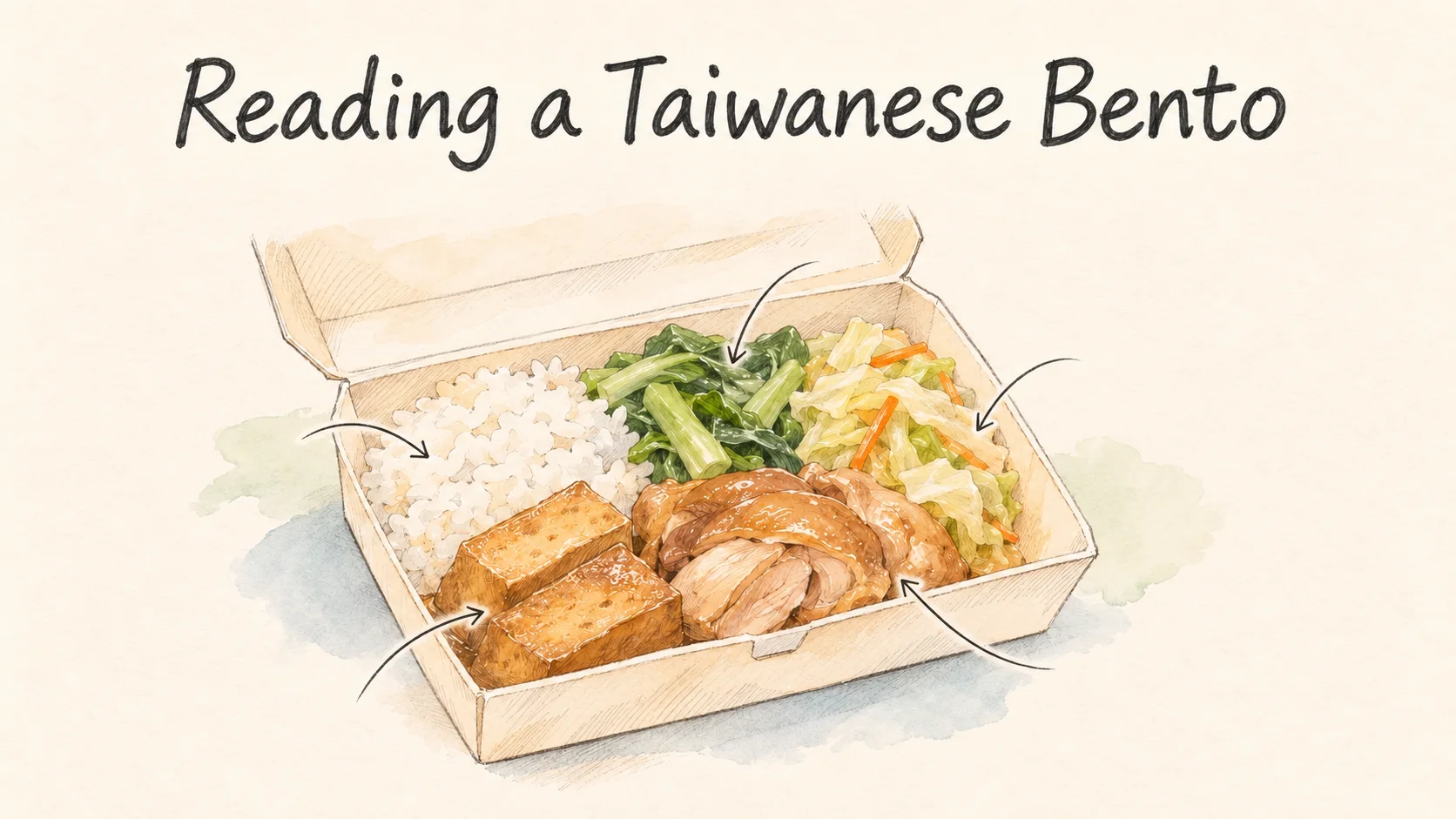
You open a Taiwanese pork chop bento. Rice fills the bottom, and the three side compartments hold pumpkin, pressed tofu, and stir-fried cabbage. The little sections are full. If you want to know how many vegetables you got for lunch, where do you start counting?
In this bento, the cabbage is the vegetable portion. Taiwan's Health Promotion Administration groups pumpkin with rice under grains and starchy foods in its food exchange list. Pressed tofu goes with the pork chop in the beans, fish, eggs, and meat group. In your head, put the foods into three piles. Look at the size of each pile after you've sorted it [1].
How can a bento with three sides have one vegetable?
Imagine tipping the bento onto an empty plate and arranging it again. Lift the chop and look at how much rice was underneath. Put the pumpkin with the rice. Move the pressed tofu over to the pork chop. The cabbage that remains is your vegetable pile. You can see the meal a little differently after moving things around: the vegetables came from one compartment, and the starchy foods were both underneath the chop and tucked in beside it.
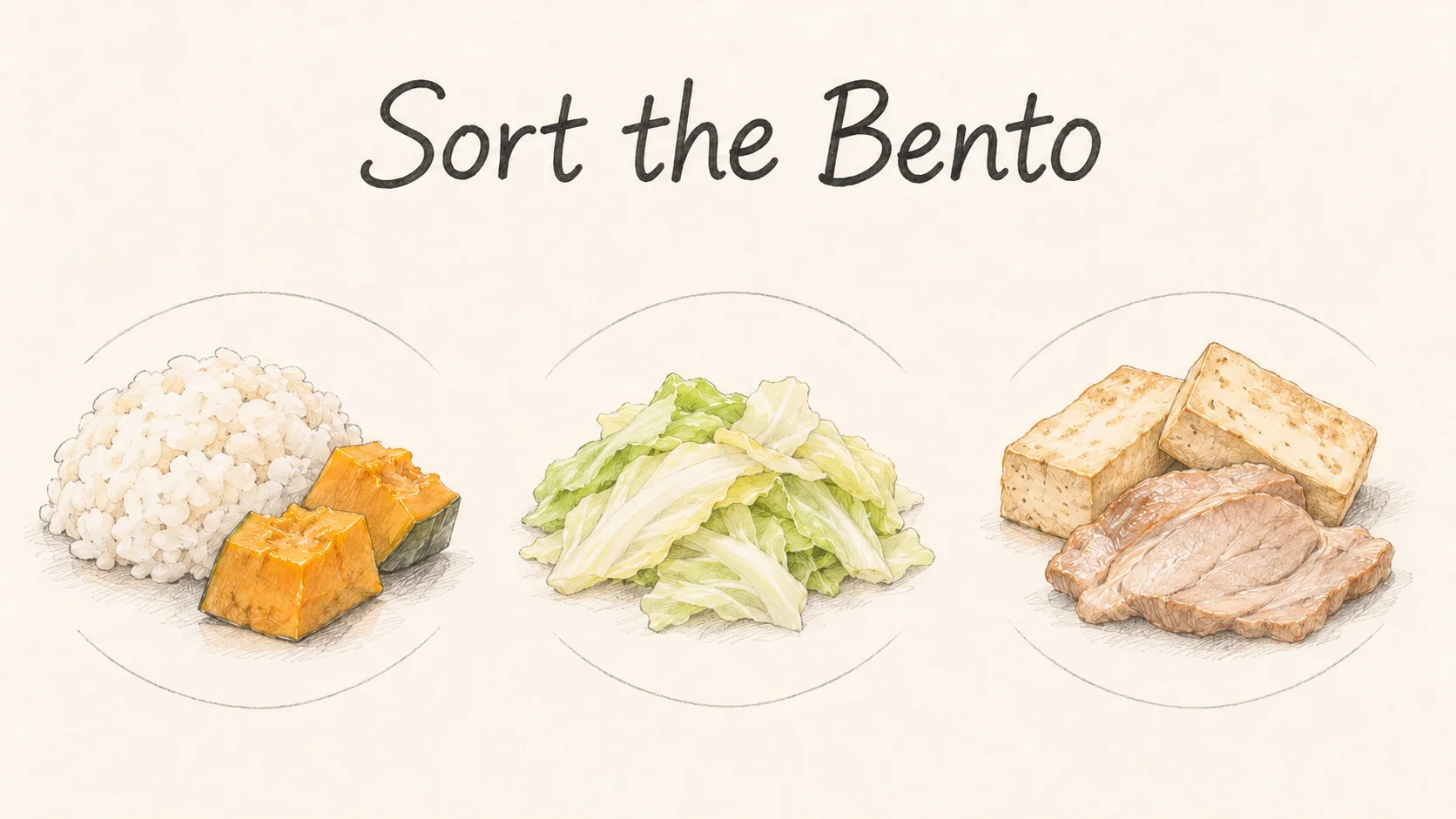
One compartment can hold food from more than one group. Think of scrambled eggs with tomato. The tomato belongs in the vegetables and the egg belongs with the tofu and meat. If a portion of sliced pork has a few slivers of green pepper stirred through it, those pieces go toward your vegetable portion. They may only make a forkful. A side of broccoli with sliced carrots contributes both ingredients to the vegetables [1].
Sorting shows you what the bento already supplies. A shop might add an extra serving of pressed tofu, in which case you have more in the beans, fish, eggs, and meat group. If you want more vegetables, you can ask what's going into the extra compartment. The same-size scoop can change different parts of the meal depending on what is in it.
How much rice does a portion of pumpkin compare to?
The Health Promotion Administration's food exchange list puts 40 grams of cooked rice and 85 grams of edible pumpkin in the same starch serving category. The table pictures the rice as about a quarter of a bowl and uses roughly 15 grams of carbohydrate as its estimate for a serving. The two foods weigh very different amounts but use the same exchange unit [1].
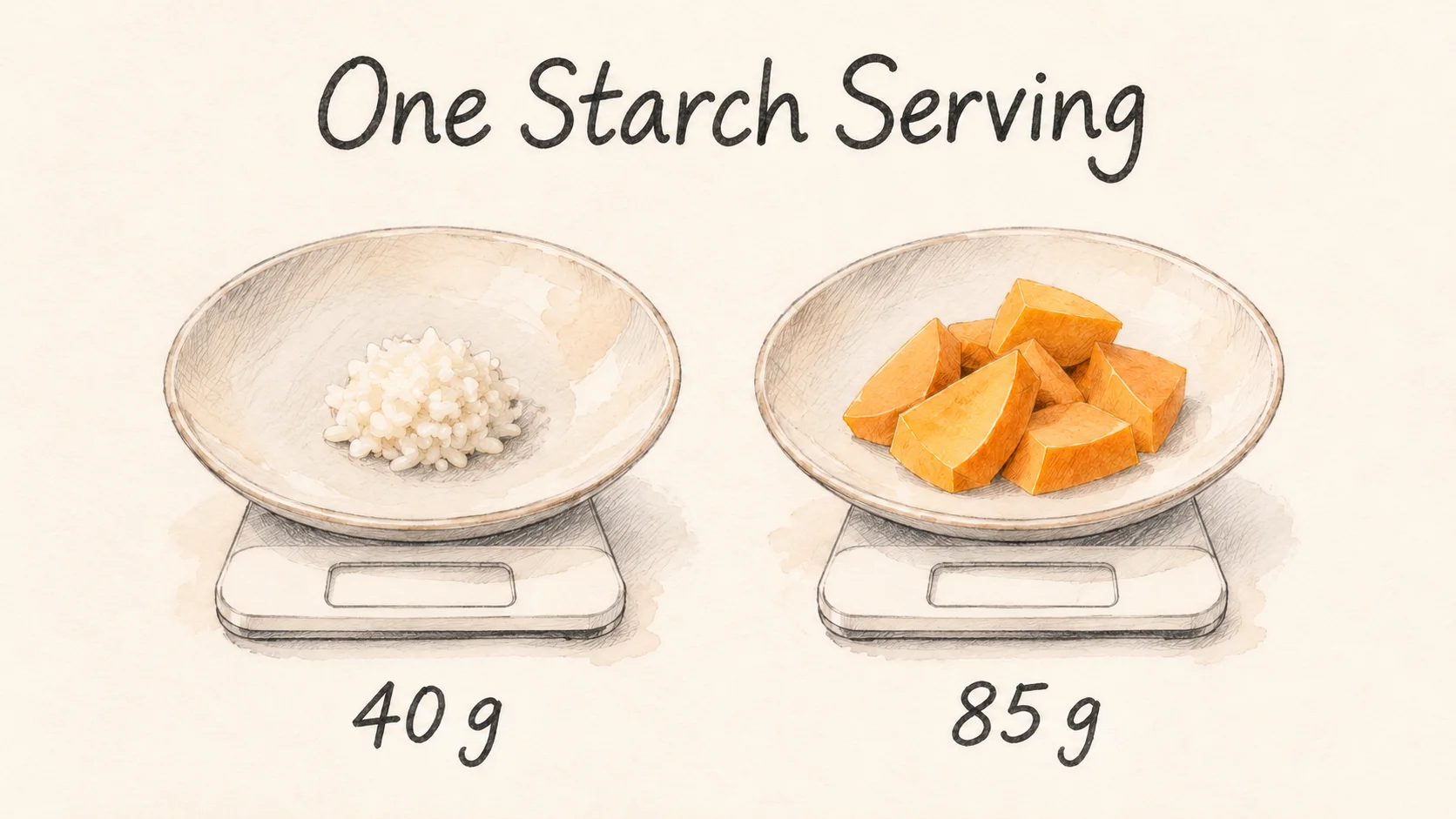
Imagine that the rice at the bottom of your bento weighs 80 grams and that the edible portion of pumpkin matches the table's 85 grams. The rice represents two exchange servings, the pumpkin one, for three starch servings total. On the table's bowl scale, that's about the same number of starch servings as three-quarters of a bowl of cooked rice. If you eyeball a different box as about half a bowl of rice, its weight will depend on how much the shop actually packed in.
An exchange serving is a counting unit. The rice and pumpkin are listed together for a rough comparison of starchy foods. The pumpkin figure refers to its edible weight. Oil, sugar, or sauce that the kitchen adds contributes separately [1].
Corn kernels or a few chunks of taro can go through the same sorting step if you see them among the sides. If you'd like to keep the pumpkin, you can. It just helps to see that you already have some starch up there alongside the portion of rice at the bottom. Then you can decide whether you want the usual amount of rice or would like to make room for another side.
Can you compare rice and vegetables with the same bowl?
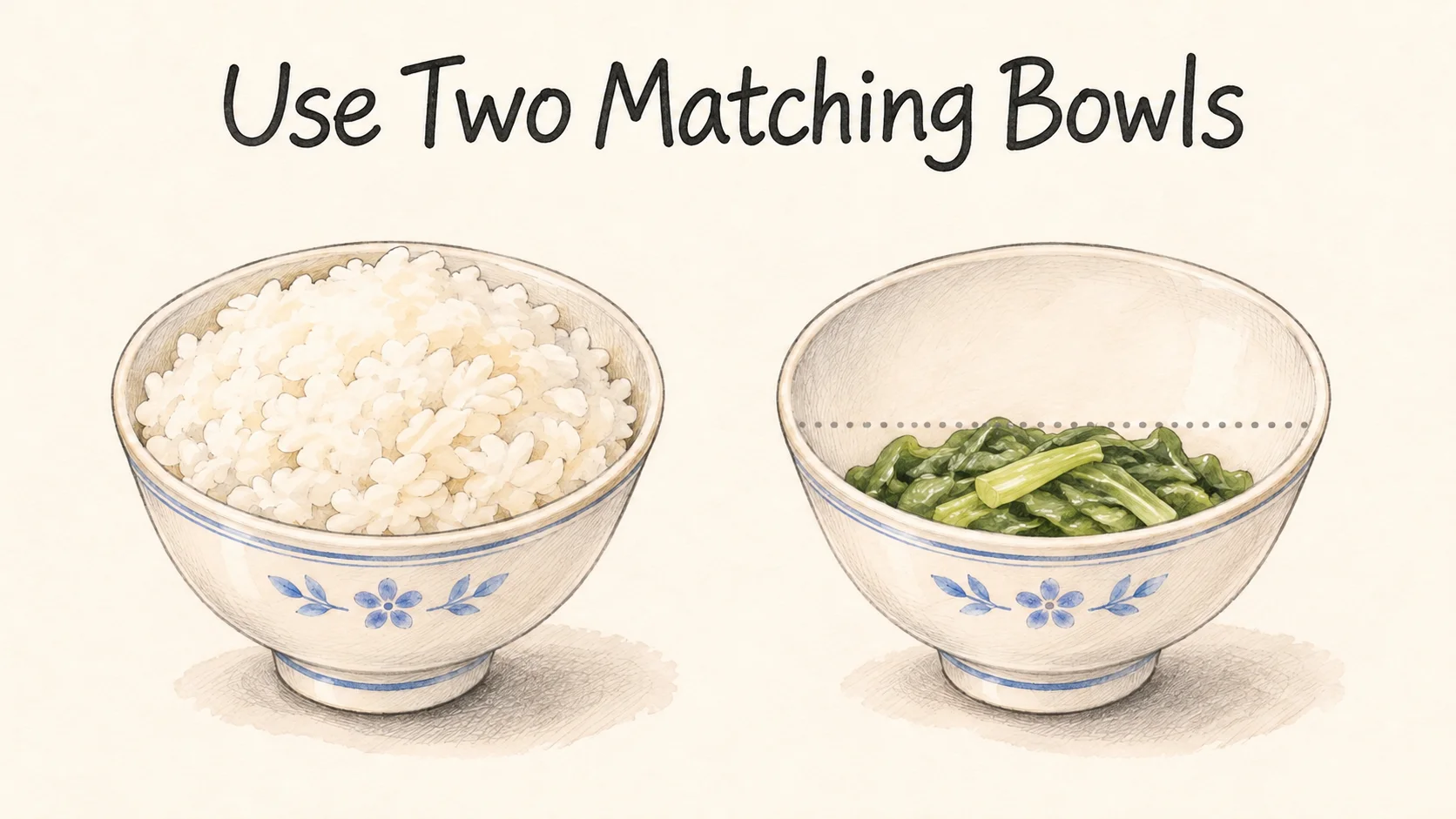
Taiwan's My Plate guide suggests comparable volumes of grains and starchy foods and vegetables, with a palm as the rough measure for beans, fish, eggs, and meat. Lifting the chop off the rice and putting the vegetables together makes that comparison easier to see [2].
Try two small household rice bowls of the same size. Put the rice you would normally eat in one, and the vegetable sides from the bento in the other. If the first bowl is nearly full and the second is only half full, your rice takes up about twice as much space as your vegetables. You can add pumpkin to the starch bowl too, if you have some. Scooping the rice out is useful when a thin-looking layer was pressed across the bottom of the box.
Vegetables change volume in the pan. The Health Promotion Administration uses about 100 grams of raw edible vegetables as one serving. In its examples, sweet potato leaves take up about half a bowl after cooking and broccoli takes up about two-thirds. They can start at the same weight and finish at different heights in your bowl. At lunch, a rough comparison is enough to see if you'd like more vegetables. To get familiar with what one serving looks like at home, try weighing it before cooking [3].
A pork chop can spread across the whole box, especially if it has a wide bone. For the palm estimate, use the size and thickness of the meat you can eat. The cubes of pressed tofu also contribute if you eat those. The guide gives you a reference point and you can estimate each part by what actually makes it onto your fork [1][2].
The scale and the rice bowl help with different questions. A scale lets you look up the 85 grams of pumpkin in the exchange list. With a bowl, you can compare the visible amounts of food on your plate. If your cabbage comes with sauce and the liquid fills the bowl, lift out the leaves and eyeball those. A deeper pool of sauce won't tell you how much cabbage there is.
My Plate covers fruits, dairy, and nuts and seeds as well. Here you're opening a box that holds the cooked parts of lunch. You can look at the foods in the box and see where those other groups show up elsewhere during your day [2].
What's one easy change to ask for at the counter?
Back at the bento counter, say you'd like to keep the pumpkin and have more vegetables. You might ask if the shop could put bok choy where the pressed tofu usually goes. If you'd like to keep the tofu, you could swap the pumpkin for broccoli instead. The box still has three compartments when they hand it over, but now two hold food for your vegetable pile. If the sides are fixed, a plate of greens ordered with the bento or vegetables left over from dinner can go beside it.
Take another look when the box arrives. Two shallow scoops of greens might still add up to half a bowl. One deep compartment of cabbage may hold more. Picture the bowl you used at home to estimate what the swaps actually did to your portion.
If you buy from two shops regularly, try ordering the same main dish from each. Open the boxes and see which gives you the amount of vegetables you were looking for. If you want to change how much rice comes with it, the bowl you tried at home gives you a sense of how much to ask for. The next time you open a bento, look at those three piles before you count the compartments.
References
[1] Taiwan Health Promotion Administration. Food Exchange List, May 2019. Beans, fish, eggs and meat, grains and starchy foods, and vegetables.
[2] Taiwan Health Promotion Administration. Taiwan's My Plate guidance. 2018.
[3] Taiwan Health Promotion Administration. Healthy eating guidance. Daily recommended quantities and serving examples.