
How much hot pot dipping sauce is in a spoonful?
Ten grams of shacha and ten grams of sweet chili sauce can be sixfold apart in calories. Here's how to estimate what you scoop, mix, and actually eat.
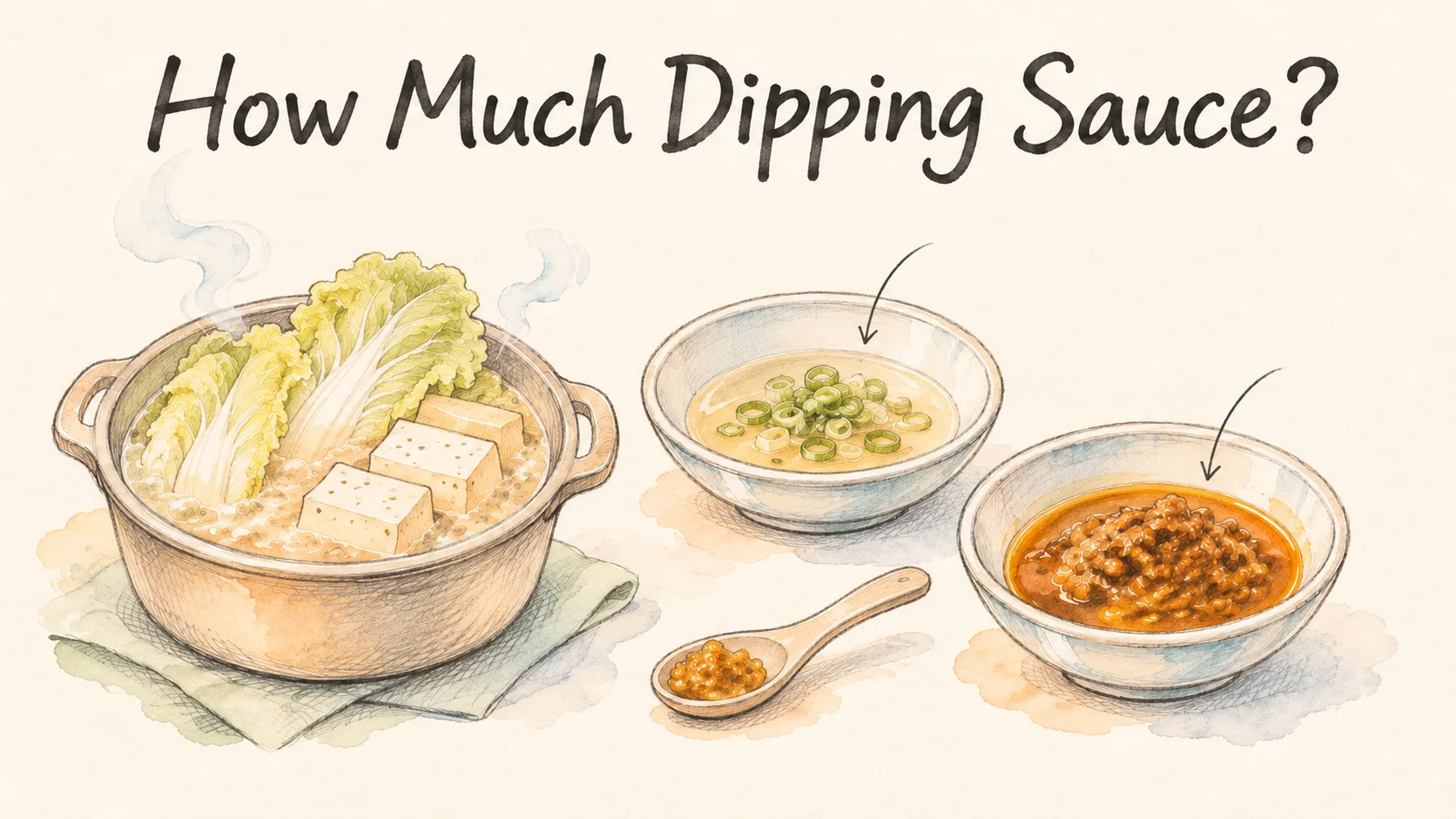
At the hot pot sauce bar, you scrape a teaspoon of shacha level against the rim. Your friend uses the long-handled scoop in the jar and carries a little mound back to the table. You both took a spoonful. Halfway through the tofu, your friend goes back for a little more. How much sauce did each of you use?
Start with the weight you put in the bowl, then multiply by the calories per gram of that sauce. In Taiwan's food composition database, 10 grams of a shacha sample provides about 73 calories. The same weight of the sweet chili sauce sample provides about 12. The first scoop and any refills are easier to estimate than the proportion of sauce left after dinner [1].
What happens when the sauces weigh the same?
The Taiwan Food and Drug Administration has an entry for a shacha sauce made with dried flatfish, dried shrimp, soybean oil, and other ingredients. It lists 729 calories and 71.8 grams of fat per 100 grams. A sweet chili sauce entry, made with ingredients including tomato, chili, sugar, and salt, lists 116 calories per 100 grams. To work with a serving you can picture, choose a weight and scale each number to match [1].
- Shacha sauce sample has 729 calories per 100 grams, or about 73 calories in 10 grams.
- Sweet chili sauce sample has 116 calories per 100 grams, or about 12 calories in 10 grams.
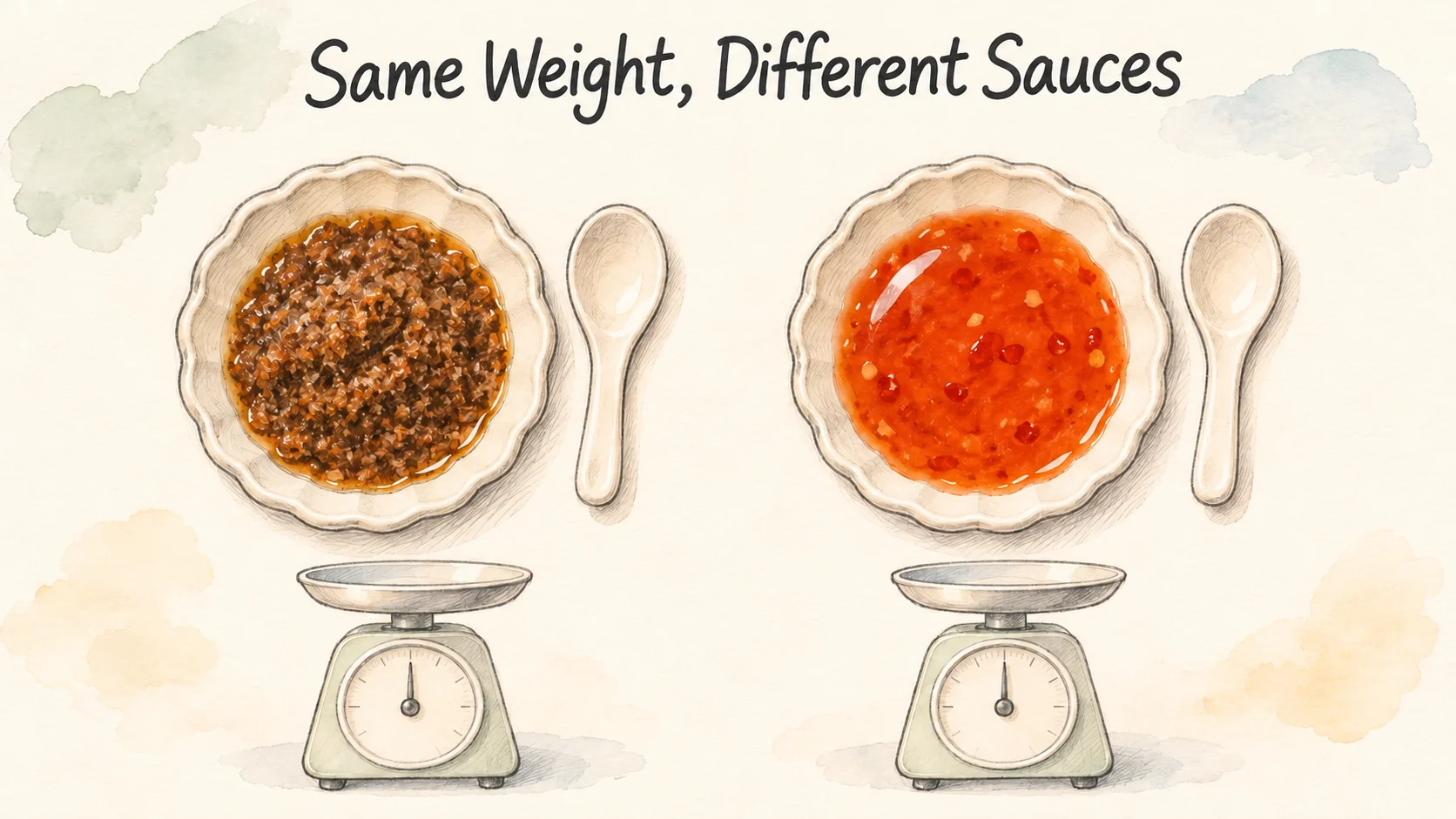
What fills each gram? In the shacha sample, oil accounts for much of the weight. Picture one bowl of dried seafood and spices stirred into oil, and another bowl with thickened sweet chili sauce. Both can coat the back of a spoon. Their thickness might tell you how they cling to cabbage, but the ingredients tell you more about how much energy those grams contain.
The database describes particular samples. One restaurant may serve shacha straight from the jar. Another may stir in soy sauce, garlic, and scallions before it ever reaches the counter. Check the label when you know which product you're using. A database entry helps you estimate the scale of the number when all you have is the name. Two entries in a database tell you very little about everything else in the pot.
How big is the spoonful that matches a bowl of rice?
Using the database numbers, 20 grams of shacha comes to about 146 calories. A cooked white rice sample in the same database lists 183 calories per 100 grams, making 80 grams of that rice about 146 calories too [1]. Those two amounts happen to line up. Try five grams of the same shacha and you get about 36 calories. Serve more rice, or use rice that took up a different amount of water in cooking, and that side of the comparison can shift too. The comparison is about energy. Rice and dipping sauce do different jobs at dinner.
It's easy to see what a spoonful means at your house. Put a clean dipping dish on a kitchen scale and press tare so the display reads zero. Scoop once as you usually would and check how many grams you added. Then start with a clean dish and zero the scale again. This time leave the scoop heaped. You'll have two measurements for the same spoon, and a good sense of what you miss if you remember only how many times you scooped.
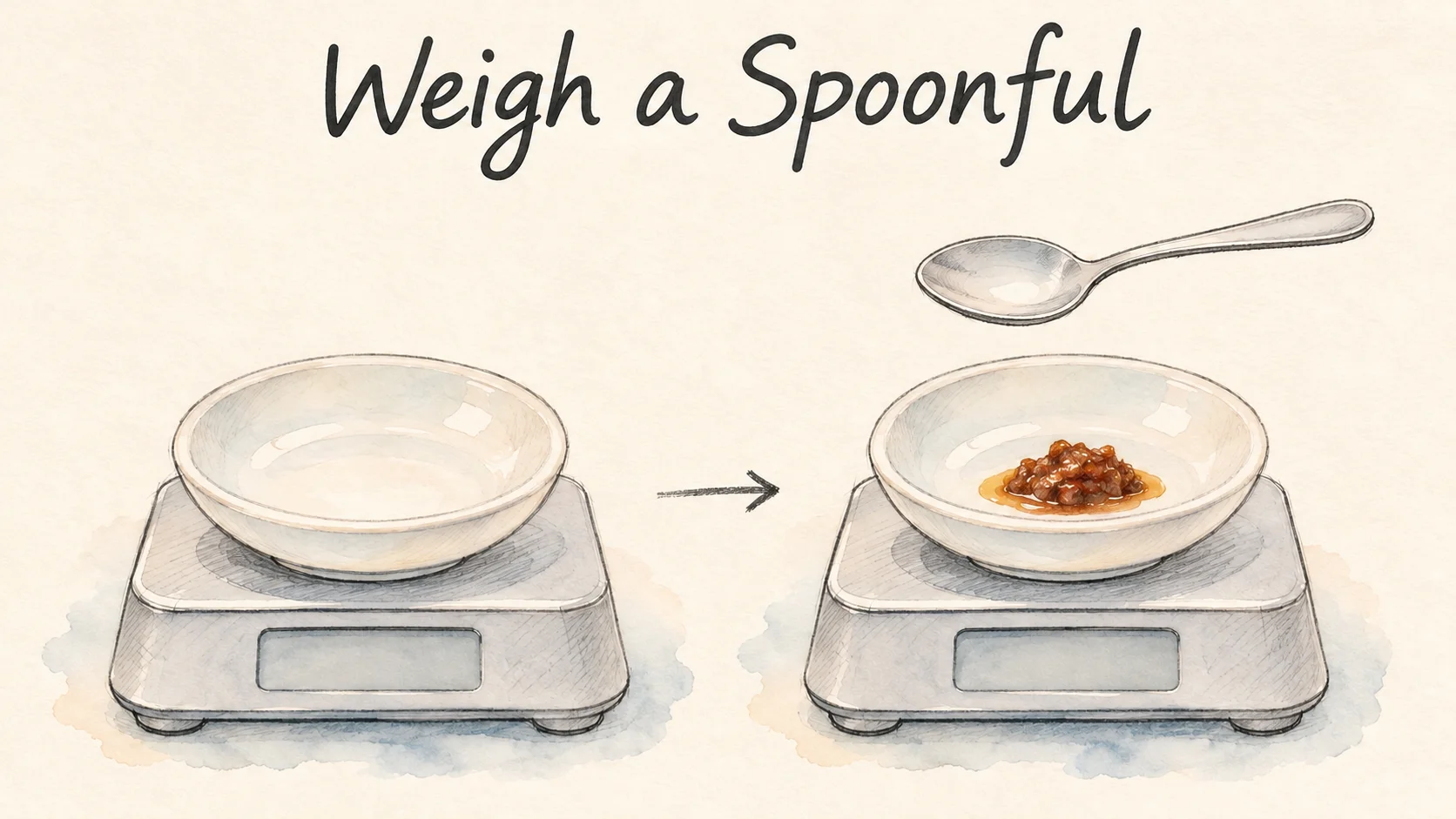
Suppose your level spoon holds eight grams and your heaped spoon holds 14. With the database's shacha, those would be about 58 and 102 calories. You've moved the spoon once either way. Those six extra grams account for about 44 calories. These weights are an example, and your actual spoon could give you different numbers. At the restaurant, you can use what you learned at home to ballpark the size of the serving scoop.
Try the same spoon with two sauces and check each weight. The spoon's capacity stays the same, but the number on the scale can change. An equal weight helps compare recipes. The actual weight you scooped helps estimate what went onto your plate.
The jar might say one serving is 15 grams and has 90 calories. Divide 90 by 15 and you get six calories per gram. If your spoon carried eight grams, that's 48 calories. The serving size on the jar supplies the conversion. The weight on your scale tells you how much of it you used.
What changes when you thin it with vinegar?
Start with 10 grams of shacha. Stir in 10 grams of white rice vinegar, and the bowl now holds 20 grams. The agency's glutinous rice vinegar sample lists 17 calories per 100 grams, so your 10 grams of vinegar adds about two. The bowl has about 75 calories. Its average drops from about 7.3 calories per gram to about 3.7. Each gram is less concentrated. If you finish the entire bowl, you still eat the original 10 grams of shacha [1].
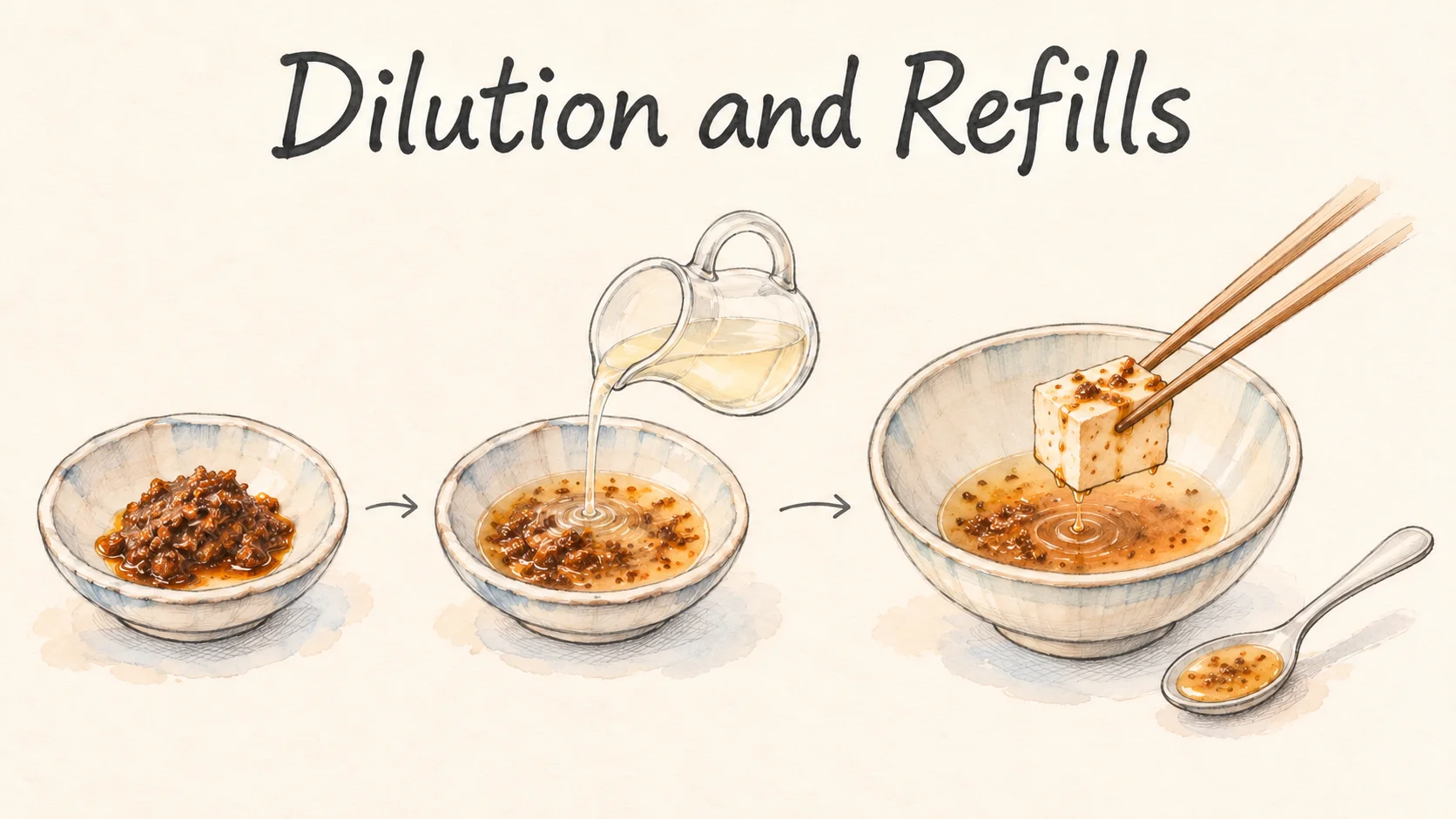
Now suppose you usually start with 20 grams of shacha. This time you use 10 grams of it and 10 grams of vinegar. The two bowls weigh the same, but the recipe has changed. Replacing 10 grams of shacha brings the full bowl from about 146 calories to about 75. Adding vinegar and replacing some of the sauce both make it thinner. The second approach changes how much of the original sauce went in.
A bowl half full at the end doesn't necessarily mean half of the original shacha is still there. Broth drips off tofu and cabbage into the bowl. Paste may cling to food, while oil or solids may stick to the dish. If you start with 10 grams of shacha and add five more, no more than 15 grams can have come from that bowl, or about 109 calories using the database sample. Leaving some behind or sharing a bowl can bring your own amount below that estimate. Working out by how much would require knowing how much of the original sauce is in what remains.
If the first scoop is shacha and the second is sweet chili sauce, calculate them individually and add them. With the database samples, 10 grams of each comes to about 85 calories for the whole dish [1]. If you share it, you'd still need to know who ate how much. A note that just says “20 grams of sauce” leaves out the information you need to choose a value per gram.
What can you keep track of at the table?
If you like the taste of shacha, start with an amount you expect to use, then dip a piece of tofu and see how it tastes. A splash of vinegar adds acidity. Scallions or garlic change the aroma. You can add another scoop if you want one, and count it with the first. Two eight-gram scoops make 16 grams, even if the bowl never looks very full.
At home, one weigh-in gives you a reference for a spoon you'll use again. Eating out, the difference between a little teaspoon and a shared serving scoop, and the number of trips to the counter, can give you a useful range. When you want to estimate the sauce, look at what went in while you can still see it.
References
[1] Taiwan Food and Drug Administration. Food Nutrition Composition Dataset. Shacha sauce P1001701, sweet chili sauce P1002501, cooked white rice A0550601, and glutinous rice vinegar P0600201. Serving examples are calculated from the corresponding values per 100 grams.