
How Much Bread Makes a Portion? Start With Weight and Filling
A slice of toast and a piece of Taiwanese milk-butter bun can weigh the same and have different calorie counts. See how weight, filling, and the rest of breakfast fit together.
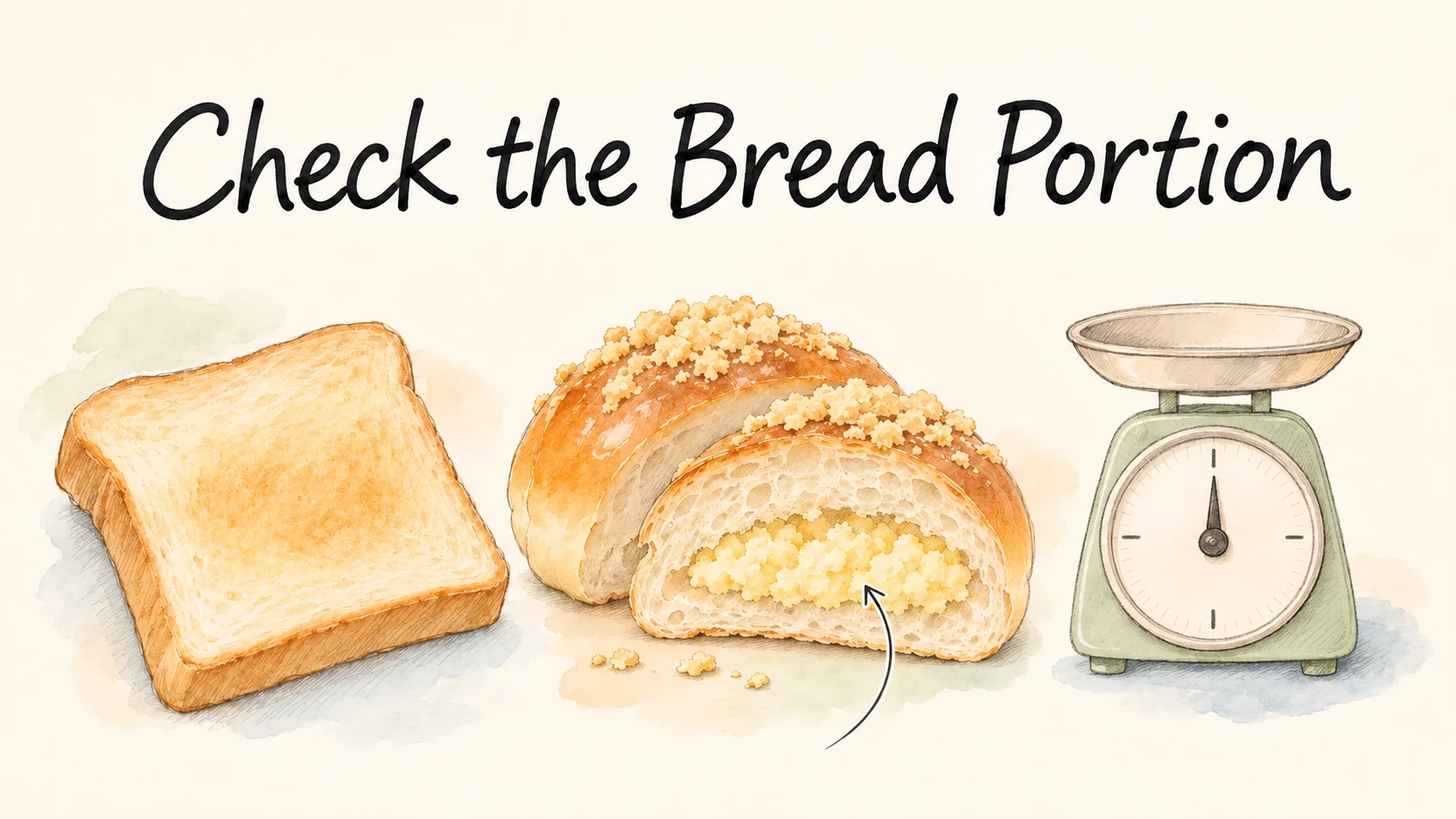
At the bakery in the morning, a slice of toast takes up plenty of room in the display. A Taiwanese milk-butter bun beside it looks smaller, but it feels heavier when you pick it up. If you're buying one thing for breakfast, does the smaller-looking one amount to a smaller portion?
Start with the weight you'll actually eat, then look at the filling and crust. Two pieces can weigh the same and bring different amounts of energy to breakfast. In Taiwan's food exchange table, 30 grams of plain toast comes to about 70 calories. The same weight of milk-butter bun comes to around 115 [1]. To estimate breakfast, you still need to know whether you're eating that small piece or the whole bun.
Why can two 30-gram pieces be so different?
Cut a loaf of toast bread open, and you can see all the little air pockets inside. A soft slice can cover most of a side plate. Cut open a Taiwanese milk-butter bun, and there's another layer of ingredients in the center. A Taiwanese pineapple bun gets its distinctive shape from a sweet, crumbly topping. Those features change what a piece contains, and how much it weighs for its size.
Taiwan's Health Promotion Administration uses a “serving” as a reference amount for exchanging similar foods. One grain serving supplies about 70 calories. The table places 30 grams of plain toast in that group. A third of the small milk-butter bun in the table, also 30 grams, counts as one grain serving plus one fat serving. The same exchange applies to the pineapple bun in the table [1].
- 30 grams of plain toast comes to around 70 calories.
- 30 grams of milk-butter bun comes to around 70 plus 45, or 115 calories.
The Taiwan food exchange table counts five grams of cooking oil as one fat serving, around 45 calories. The exchange is an estimate. A shop's recipe or nutrition label gives you the information for the item in your hand.
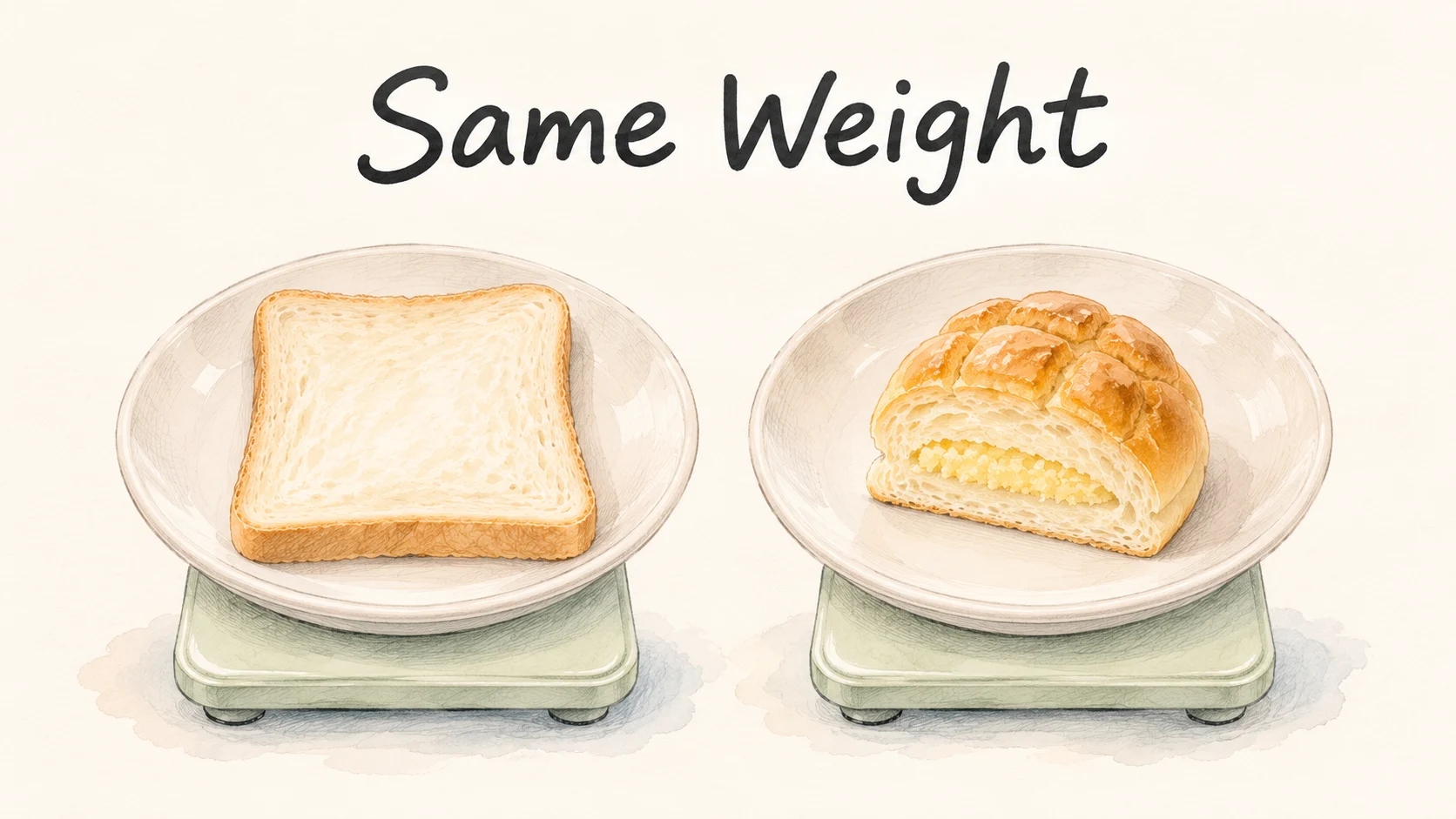
Think of that 45-calorie difference as the energy in a teaspoon of oil alongside the same grain serving. The exchange puts fat in a familiar kitchen unit. The real filling and topping contain other ingredients as well. A similar-looking piece in the bakery case can deliver a different amount of energy before you even consider how much of it you'll eat.
The piece you weigh and the whole bun
The milk-butter bun example started with just the third that went on the scale. If you ate the entire small bun in that example, you would have three grain servings and three fat servings, about 345 calories. That's 115 times three, a calculation from the table's reference portion. A bun from a different shop can come out quite differently.
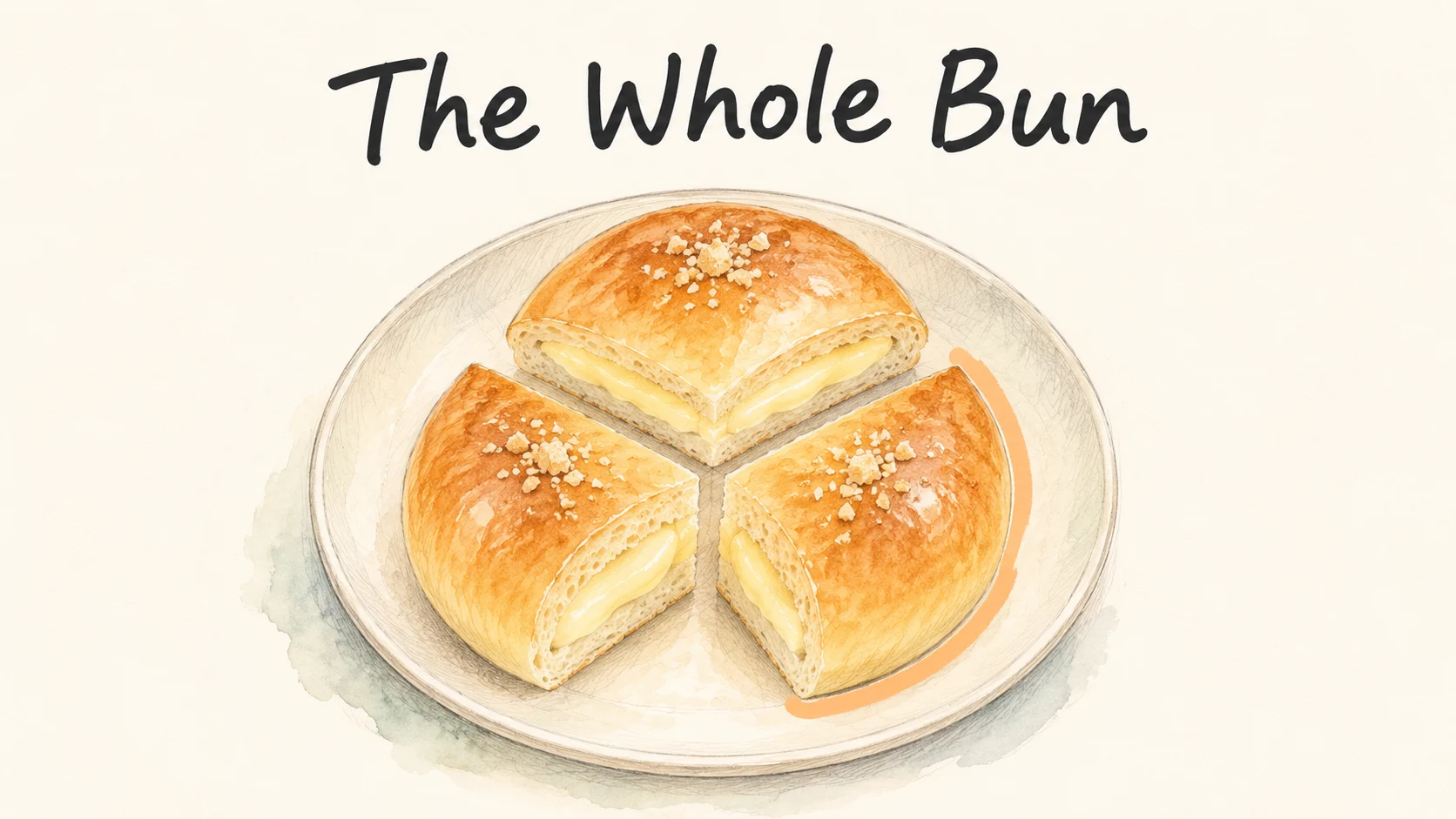
An older campus nutrition report from National Ilan University illustrates the variation. It lists one milk-butter bun sold on campus at 246.3 calories per serving. The report doesn't give enough information about the weight and recipe to separate how much of the gap came from size and how much came from ingredients. The figure describes a particular campus product. The exchange calculation shows how to scale a third of a bun to a whole one [1][2].
If the bread comes in a package, check how much the label counts as one serving and whether that matches what you're eating. A bakery may sell loose buns without a nutrition panel. Weighing your usual purchase once gives you a reference weight. For a more detailed log, keep the name of the item, whatever the shop says about the ingredients, and how much you ate.
Some labels also give calories per 100 grams. Suppose a loaf lists 240 calories per 100 grams. A 50-gram slice would come to about 120 calories. That's a sample label calculation, separate from the exchange table examples above. If two thin slices and one thick slice weigh the same and come from the same loaf, they use the same calculation.
Without a scale, you can divide a packaged loaf's net weight by its slice count to get a rough average. The end pieces and the center slices can differ. For a loaf from a different bakery, check the new package or measure a slice again.
Can you tell from sweet or savory?
The same campus report lists one red bean bun at about 243 calories and one pork floss bun at about 249. Their fat content differs more visibly. The pork floss bun had 10.6 grams of fat, compared with 4.8 grams for the red bean bun. The red bean bun had 42.7 grams of carbohydrate, compared with 31.3 grams for the pork floss bun [2].
Fat and carbohydrate shift in opposite directions in these two products, leaving their total calories close. That's useful when you're standing in front of a tray of savory buns and a tray of sweet ones. Choose the flavor you want. To compare energy and nutrients, bring the product information and the amount you're planning to eat into the decision.
What does “whole wheat” tell you?
Whole grain keeps the bran, germ, and endosperm. A mill can grind whole wheat into flour while still using all three parts. For solid foods sold under a whole-grain claim in Taiwan, the Food and Drug Administration gives a threshold of 51%. It measures the dry weight of the whole-grain ingredients as a share of the dry weight of all ingredients in the formula, with a specified rounding rule [3].
Imagine a formula with 60 grams of whole-grain dry solids and 40 grams of other dry solids. The calculation gives 60%. Adding water to make the dough leaves that dry-weight percentage unchanged. Taiwan's guideline also specifies when a product can use a single grain name such as “whole wheat,” and how to describe the ingredient if the recipe uses some whole-wheat flour below the threshold [3].
That tells you about the grain in the recipe. Give the serving its own look. A thick slice can weigh more than a thin one from the same loaf, and thick spreads or fillings have their own amounts. If dietary fiber is what you want to compare, use an equal weight on the nutrition panels where that figure is given.
Make it part of breakfast
If toast is the main starch in your breakfast, try it with an egg or unsweetened soy milk and some fruit. Taiwan's My Plate guide makes room for grains, protein foods, and fruit separately. At a bakery that translates into deciding what to have with the bread, including whether you want the fruit now or with another meal [4].
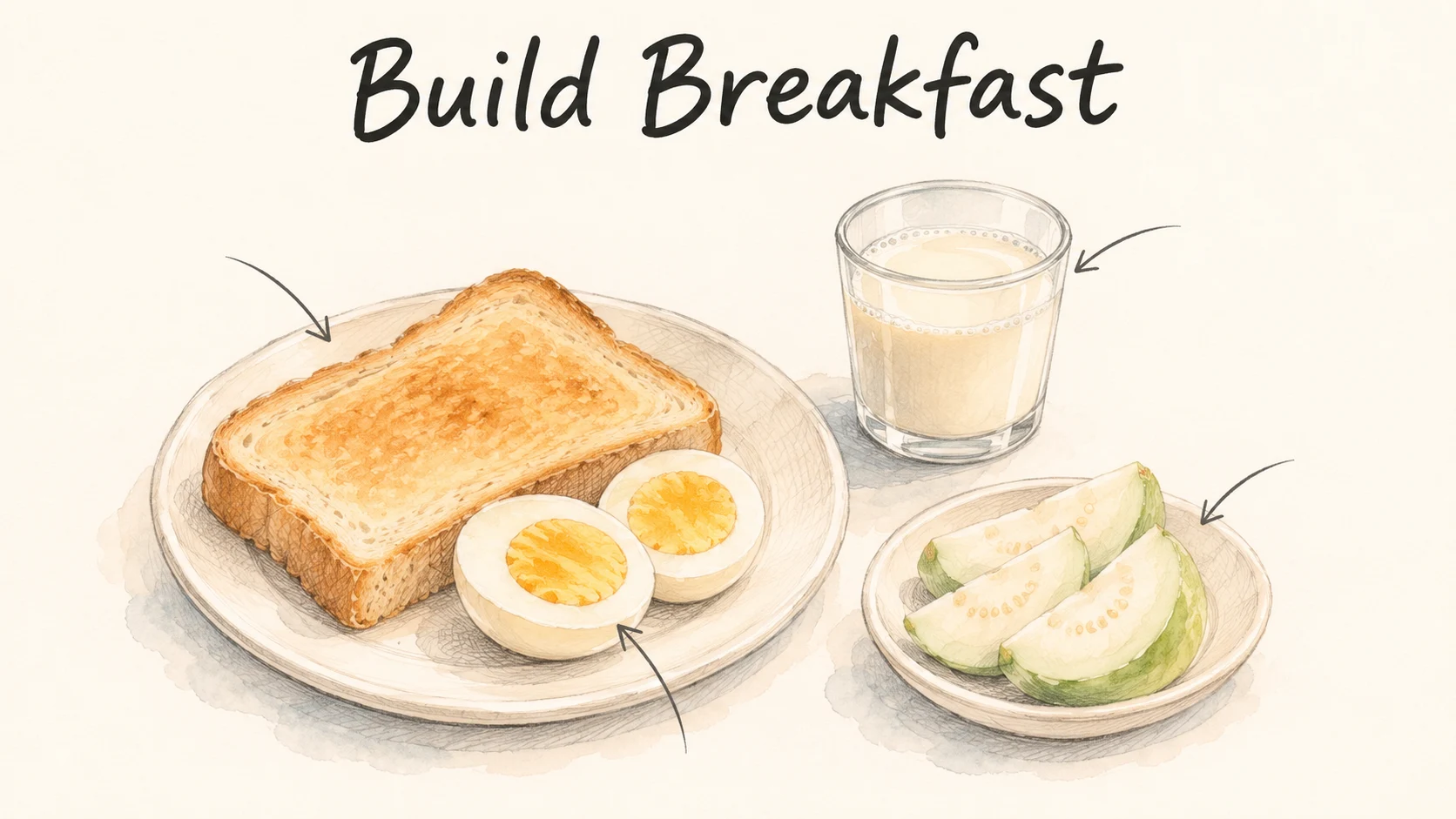
If what you really want is red bean filling, you can have half a bun with soy milk and save the other half. If the bread is an afternoon snack with tea, you can choose a small bun or share a larger one. Either way, decide on the portion while you can still put the rest aside.
Next time you buy the toast you normally eat, weigh one slice before putting it on the plate. Check whether the slices from the same loaf differ. The next time you look at the bakery display, “one slice” will bring to mind an amount you've actually eaten.
References
[1] Taiwan Health Promotion Administration. Food Exchange Table, May 2019 edition, appendices 3 and 6.
[2] National Ilan University. Campus food nutrition information, academic year 2011–12, pp. 3–4.
[3] Taiwan Food and Drug Administration. Guidelines for whole-grain product claims and labeling.
[4] Taiwan Health Promotion Administration. Taiwan's My Plate dietary guide. 2018.