
What Changes When You Add a Little Oil to the Same Salad?
Seven people ate the same vegetables on three different days with different amounts of oil. Researchers looked for carrot and tomato pigments in the particles that carry fat.
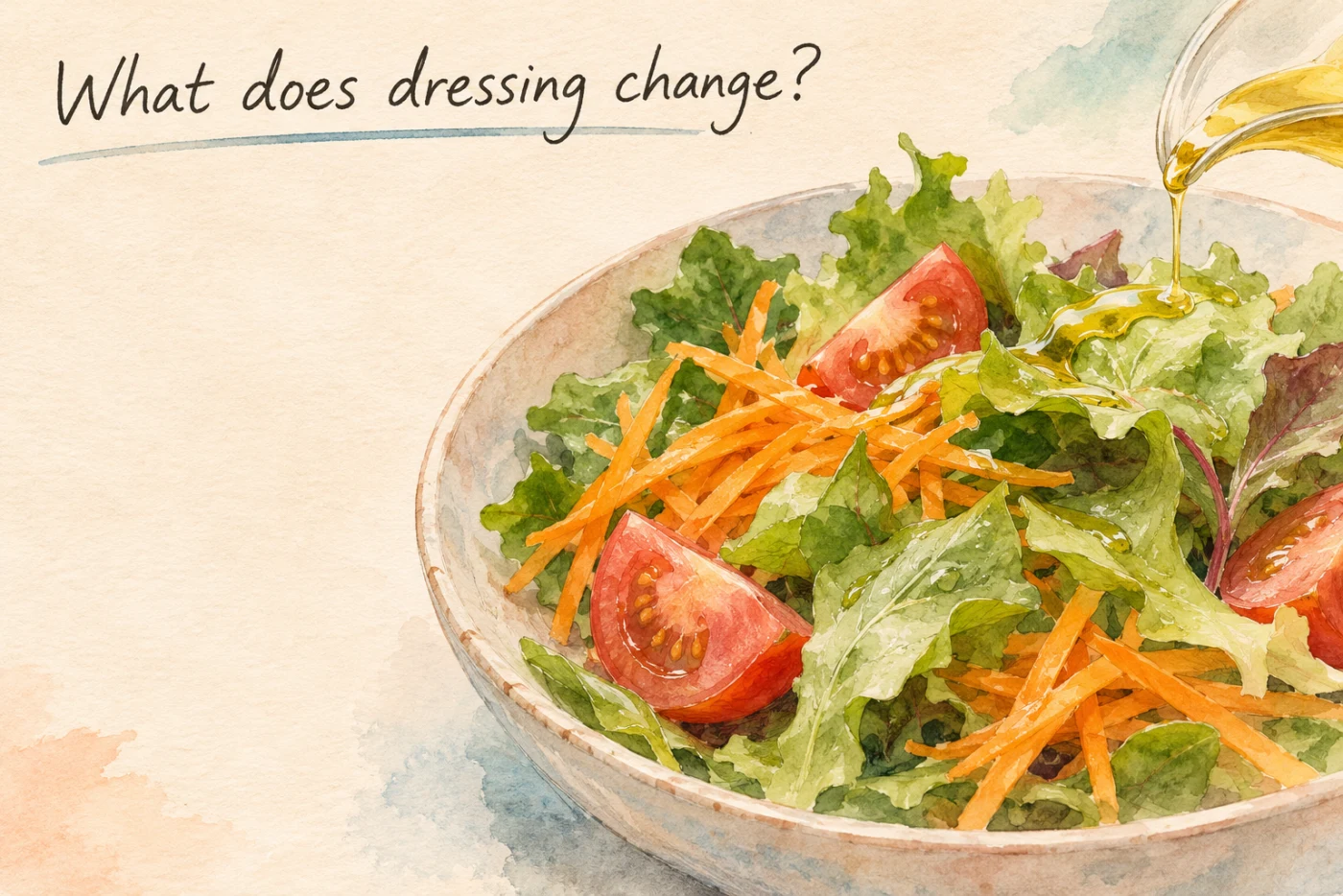
Your lunch salad comes with carrots, tomatoes, greens, and a little pot of dressing. You can pour some on or leave it on the tray. Either way you're eating the same amount of vegetables. Leaving out the oil changes the calories. It may also change how much of some of the pigments in those vegetables reaches your bloodstream.
Fat in a salad can help you absorb some carotenoids. In one experiment, the same people ate the same vegetables with three amounts of oil. The researchers looked for some of the plant pigments in particles that transport fat after a meal. To see why the measurements changed, start in the digestive tract [1].
How do the pigments get out of a carrot?
Some of a carrot's orange color comes from beta-carotene. Some of the red in a tomato comes from lycopene. These carotenoids don't dissolve well in water. First, digestion and chewing help release them from the plant. Then they have to make their way from the contents of the small intestine to the cells that line it.
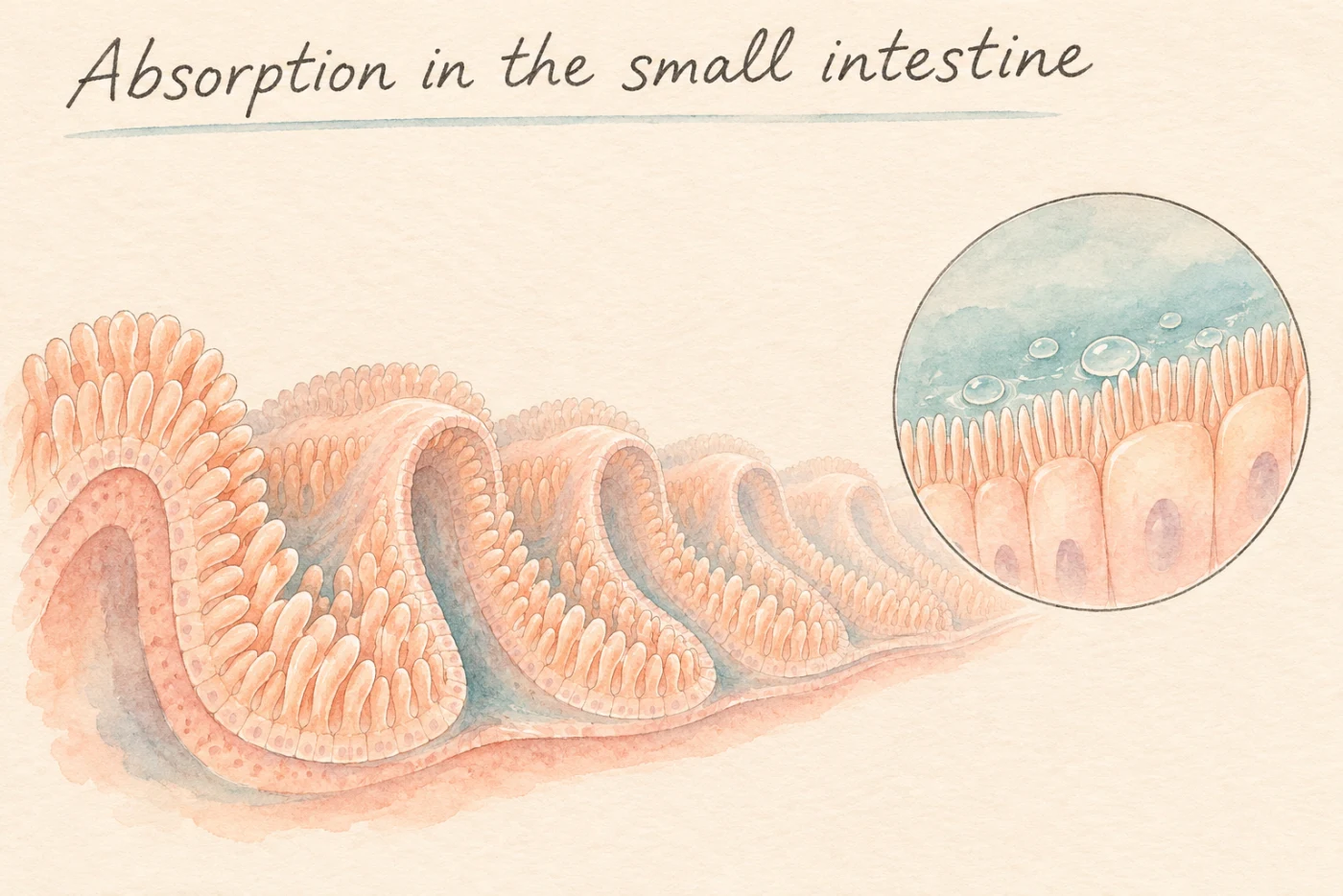
Bile and products of fat digestion help form tiny structures that can carry water-insoluble compounds closer to the intestinal wall. After entering intestinal cells, some of the carotenoids are loaded together with fat into particles known as chylomicrons. The particles travel through the lymph and then enter the blood. If researchers separate out those particles, they can see how much of a particular carotenoid has appeared in this part of the transport system since the meal [1, 2].
The amount in a carrot, the amount released when you eat it, and the amount that the blood test finds are three different measurements. You can serve the same carrot in two meals and still get different readings after eating.
Three identical salads, three different dressings
In 2004, a team led by Melody Brown invited seven people to eat three salads on different days. Each had the same amount of spinach, romaine lettuce, cherry tomatoes, and carrots. The dressings contained 0, 6, or 28 grams of canola oil. The researchers took a blood sample before the meal and then hourly for 12 hours. They separated out the chylomicrons and looked for carotenoids inside them [1].
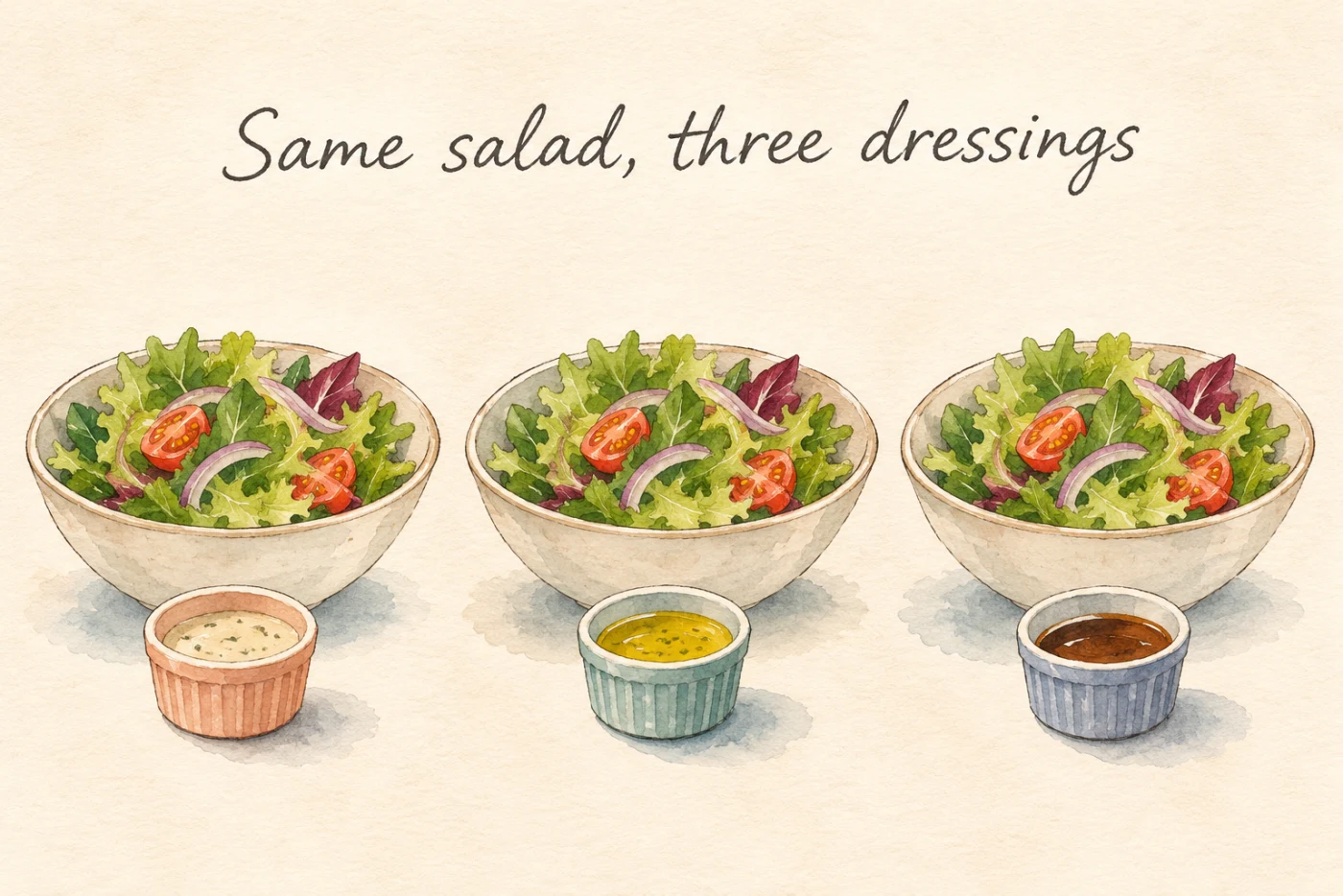
With the fat-free dressing, there was hardly any measurable appearance of alpha-carotene, beta-carotene, and lycopene in those particles. After the salad with 6 grams of oil, more of each was detected. The 28-gram dressing produced higher readings still under the conditions of this trial [1]. That's a comparison of a few pigments moving into fat-carrying particles after a particular meal. It doesn't tell you what happened to every nutrient in the salad or how the participants' nutrition changed over time.
Another experiment gave 12 women the same salad with five different amounts of soybean oil on separate days, from 0 to 32 grams. The researchers also measured some fat-soluble vitamins. The response depended on which nutrient they measured, and there was a wide range in how different people responded. For some compounds the readings rose across the range of oil amounts studied. Those results don't identify a single amount that's ideal for every salad or every person [2].
Both experiments measured changes after individual meals. They didn't track the long-term health of people who used different amounts of dressing [1, 2].
Would using the whole dressing pot follow from the experiment?
A gram of fat supplies roughly nine calories. The six grams of oil in the experiment account for about 54 calories by themselves. The 28 grams account for about 252. That's close to a 200-calorie difference from the oil alone. It isn't the calorie total for the salads, and neither number is a recommendation. The results tell you what happened to specific carotenoid measurements as the researchers changed one ingredient. The meal you eat also changes in size, energy, and flavor as you add more of it.
There's also a time limit to what that blood test sees. Chylomicrons carry several nutrients away after a meal. As the body processes those particles, their contents are distributed elsewhere. The team could compare the appearance of pigments by measuring the particles repeatedly over 12 hours, but the result describes that stretch of time and the conditions of that meal. You can't tell from it what someone's carotenoid levels will be after a month of eating salads [1, 2].
The larger study helps make that clear in another way. Looking at several nutrients, the researchers didn't find a single response shared by all of them. Using only the tomato pigment, for instance, would leave out what happened to others. When choosing the dressing for today's salad, you don't need to use a result for one compound as the rule for everything in the bowl.
Look beyond the dressing pot
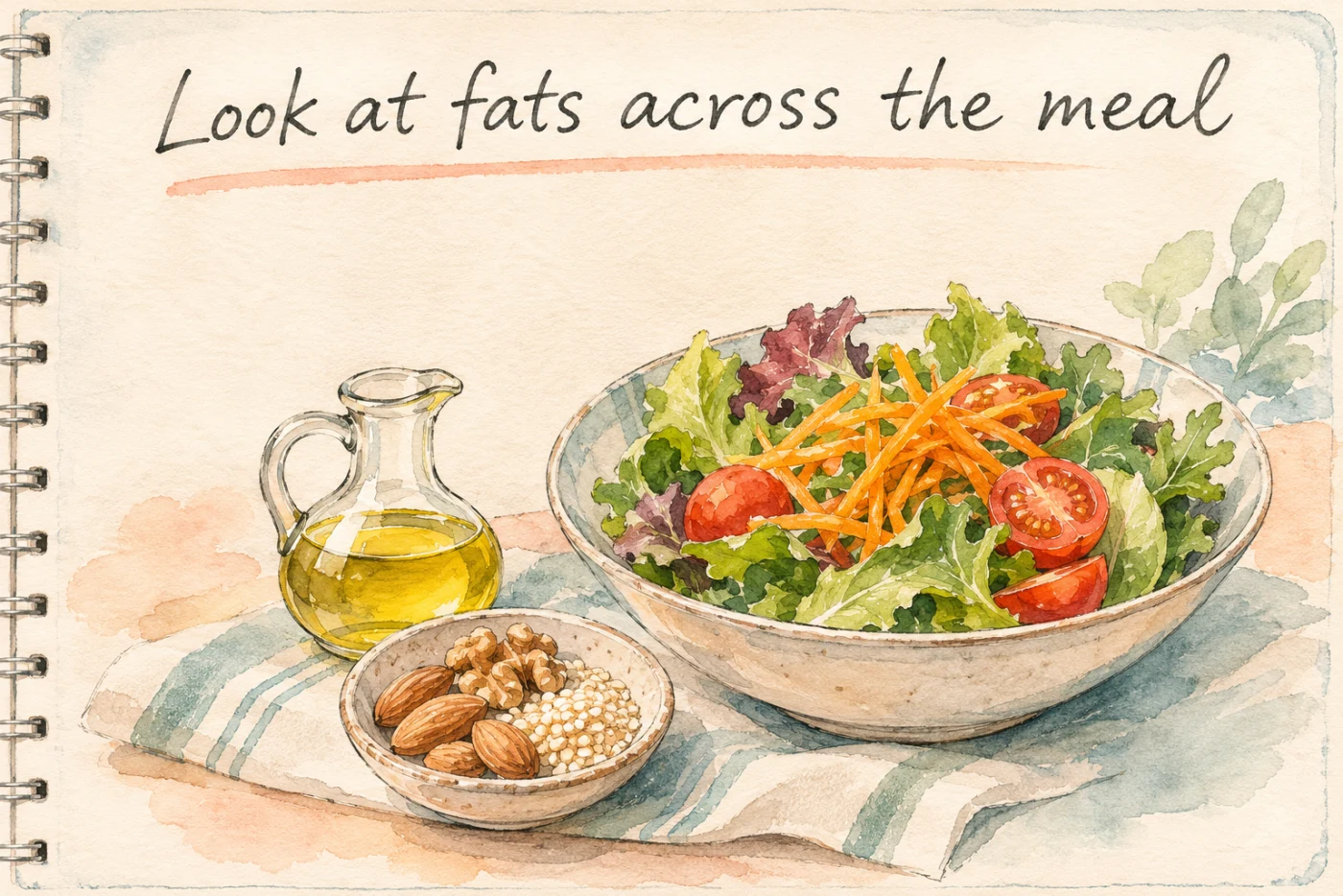
Suppose you have a plate of tomatoes with a squeeze of lemon. Pouring on a little oil changes the fat content of that plate. At another meal you might use the same lemon and eat the tomatoes alongside foods that already contain fat, such as a few nuts or seeds. The dressing has the same amount of oil in both meals if you haven't added any. The meals can still differ in how much fat you eat with the tomatoes.
The researchers changed the oil in the dressing because it gave them one ingredient to control. That doesn't show that the oil must be added from a bottle to the vegetables. It also doesn't let you swap a given number of grams of canola oil for the same number of grams of any other food and predict the same measurements. The oil, the vegetables, and the rest of the meal are all part of the conditions.
Next time you get a salad, look at what's on the plate and what you'll have with it. The dressing is an easy place to see how fat changes the meal, and only one of the ways a meal can contain both fat and vegetables.
References
- Brown MJ, et al. (2004). Carotenoid bioavailability from salads with full-fat and fat-reduced dressings. American Journal of Clinical Nutrition.
- White WS, et al. (2017). Soybean oil dose in salad dressing and absorption of carotenoids and fat-soluble vitamins. American Journal of Clinical Nutrition.