
How much protein is in a glass of oat drink?
One oat drink has about 2.6 grams of protein in 240 mL, compared with about 8 grams in the same amount of milk in Taiwan's food exchange list. Here's how to compare what goes in your cup.
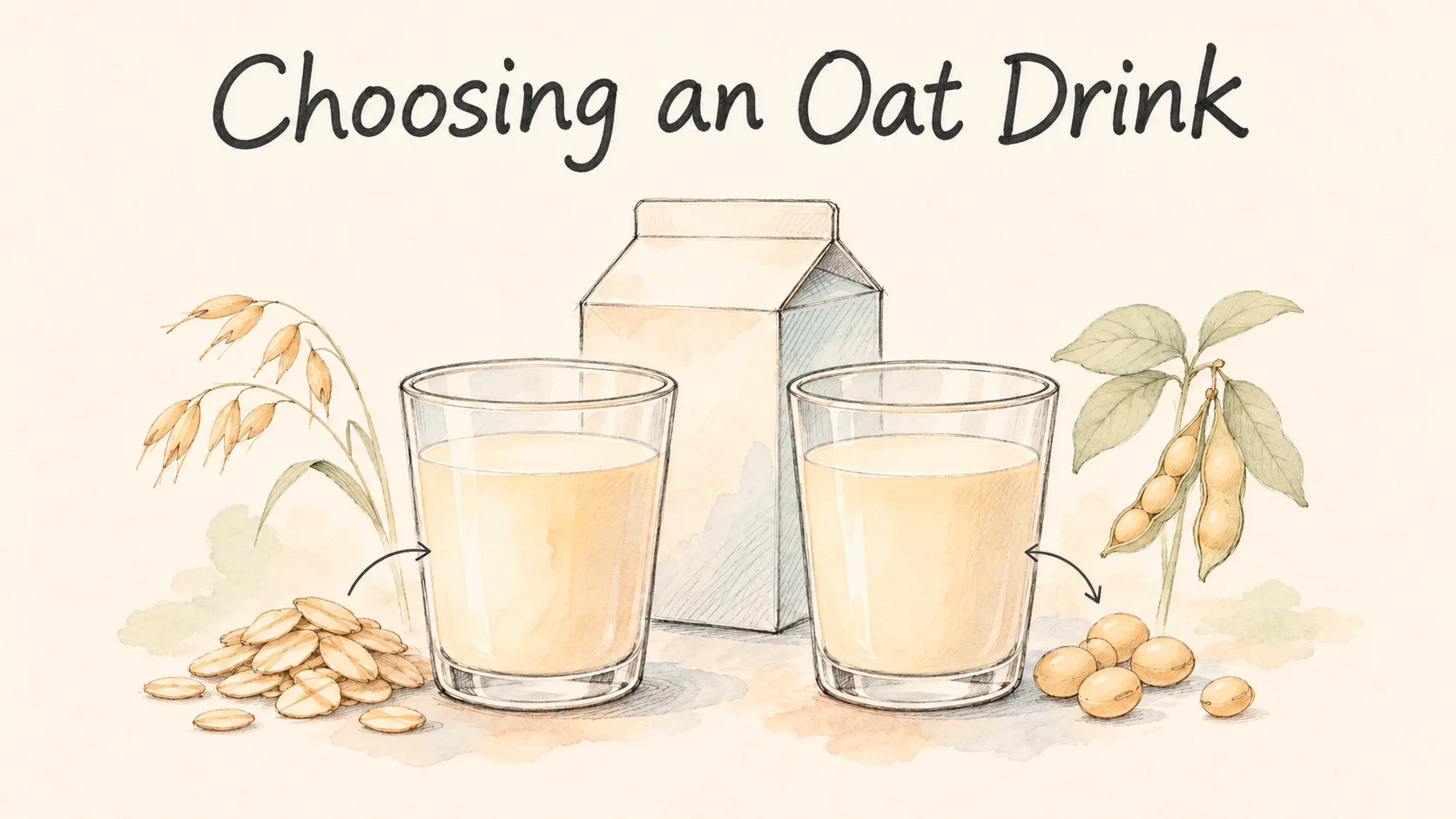
You order your usual latte with toast, and the barista asks if you'd like oat drink instead of milk. The drink comes in the same cup with the same layer of foam. How much of the protein you used to get from the milk comes along with the swap?
One Nordic barista oat drink provides about 2.6 grams of protein in 240 mL. Taiwan's food exchange list puts 240 mL of milk at about 8 grams. With the same amount in both cups, this oat drink supplies roughly a third as much protein as the milk in the guide. For the latte, the next thing to find out is how much went in [1][2].
What happens if you fill both glasses to the same line?
Take two matching glasses and pour 100 mL into each. One holds the Oatly iKaffe Barista Edition covered by the company's 2024 specification for Finland, Iceland, and Sweden. Its label lists 1.1 grams of protein per 100 mL. The other glass represents whole milk in Taiwan's food exchange list. The guide uses eight grams in 240 mL, which works out to roughly 3.3 grams per 100 mL [1][2].
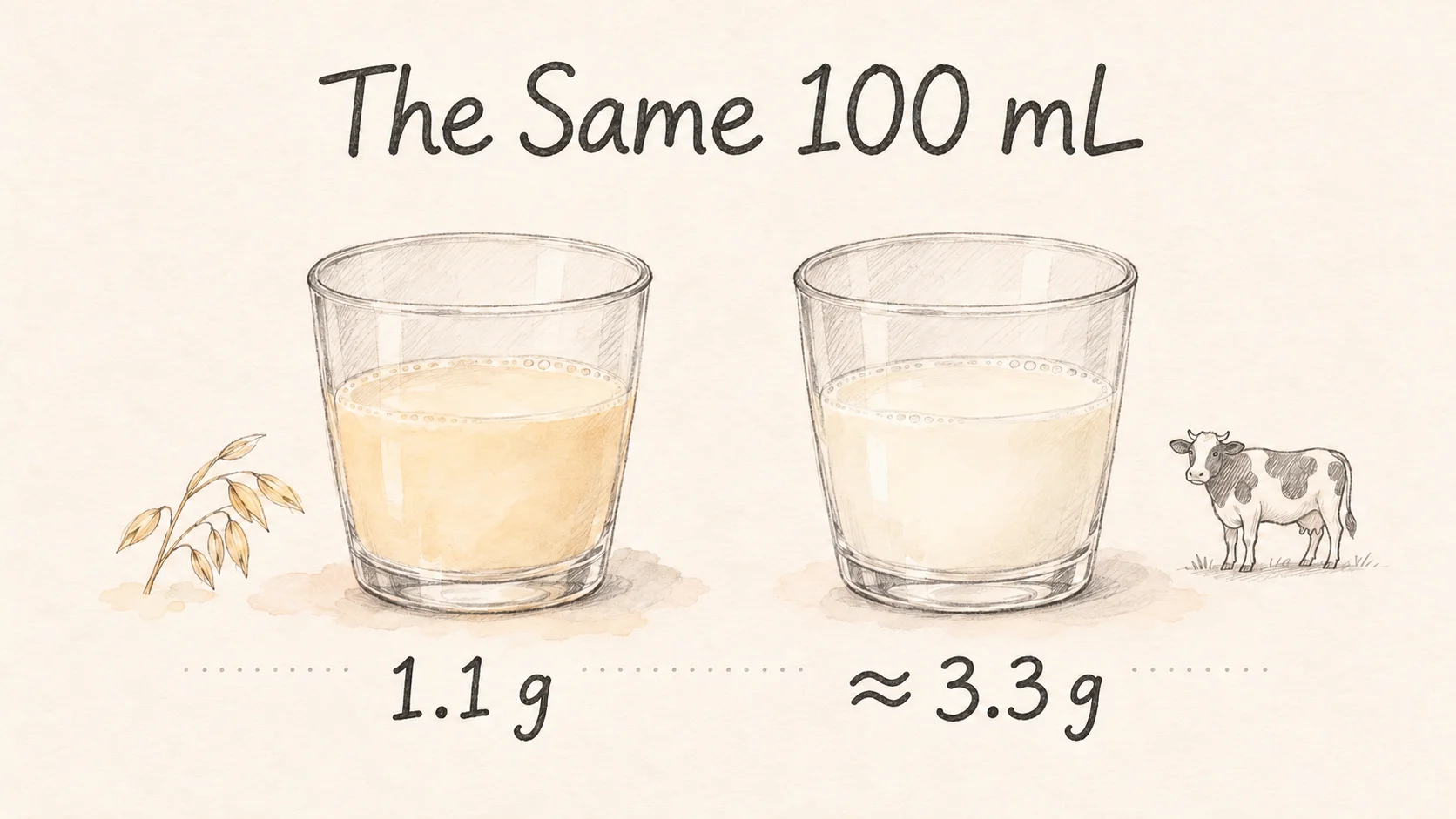
Now top both up to 240 mL. Multiply the oat drink's 1.1 by 2.4 to get about 2.6 grams. The milk has the original eight grams listed in the guide. Both glasses hold the same amount of liquid, and the protein difference is about 5.4 grams. That's a comparison between one specified oat drink and a reference value for milk. Even within the same brand, check the label of the carton you plan to use.
Compare the same amount of liquid first. If a label shows grams of protein per serving, divide that number by the serving volume in mL and multiply by 100. Once you have a value per 100 mL, you can scale it to the amount you actually pour.
The serving and the package might be different sizes. On a one-liter carton, the company may print a value for a glass. On a smaller bottle, look for the number of servings in the container. Compare the same volume across labels when you choose what to buy. Use the amount you'll drink when you want to work out how much protein your own glass provides.
Why do oat drinks on the same shelf differ?
Think of pouring water into the same bowl of dry oats. A bigger splash adds liquid and spreads the oats over a larger volume. The quantity of oats you started with is still there. Packaged oat drinks also have recipes. The Nordic barista product lists 10% oats, along with water, rapeseed oil, and added minerals and vitamins. Another brand might blend in soy drink or use different proportions [1].
A dietitian at Taitung Christian Hospital collected Taiwanese package examples. The table used two or three comparable products per category and rounded their average values. In those examples a 250 mL can of oat milk had about 2.1 grams of protein, a 290 mL unsweetened oat drink had about four, and a 300 mL unsweetened oat and soy blend had about six. Those numbers describe what you'd get if you drank the whole can. On the same basis of 100 mL, the examples work out to about 0.8, 1.4, and 2 grams respectively. That shows how the concentration varied in those samples [3].
The same table lists about 4.8 grams of protein in 40 grams of plain dry oats. If you cook those oats with water and eat the whole bowl, you've used the original portion of oats. When you buy a finished oat drink, its recipe and preparation are up to the producer. The number you need is the one on the finished drink [3].
The ingredient list can tell you where to look next. Oats and soy listed together tell you the drink is a blend. Look at the nutrition panel to find out how much protein the blend supplies. A carton marked “barista” tells you what the product was made for. You still need its protein number to compare it with another drink.
Do you use the full cup size for a latte?
Look through an iced latte glass as the barista makes it. The espresso is at the bottom, the ice takes up space, and the oat drink goes in last. Suppose the barista pours 150 mL of the same Nordic oat drink. Multiply 1.1 grams by 1.5, for about 1.7 grams of protein from the oat drink. The cup might hold 300 mL, but you wouldn't multiply 1.1 by three [1].
If the barista used 150 mL of whole milk, the food exchange estimate would come to about five grams. That comparison holds the volume poured steady. If the shop changes the amount when you swap drinks, use the volumes for each recipe [2].
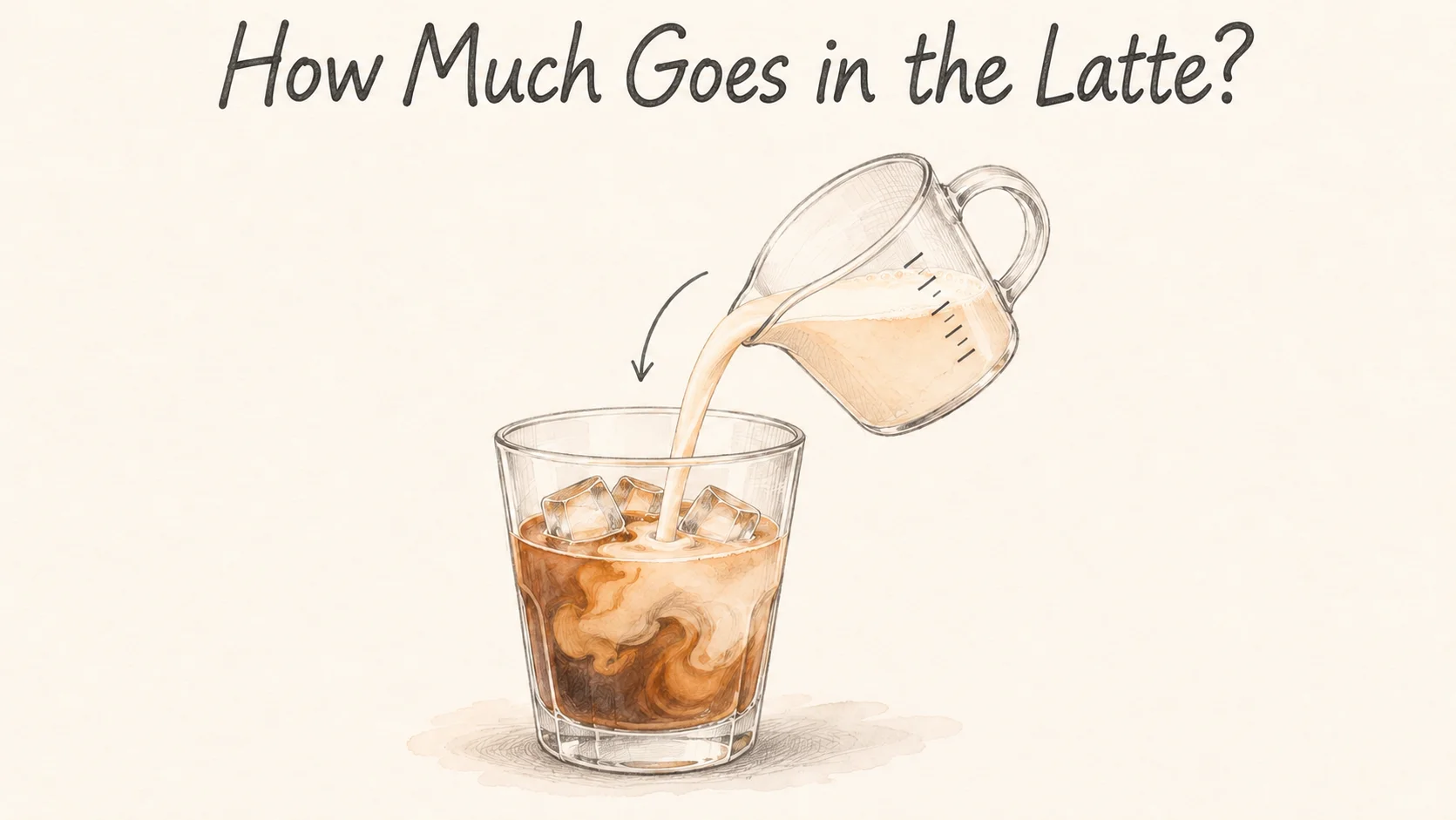
You can try this once with the glass you use every morning. Pour to the line you like and tip the liquid into a measuring jug. Did you pour 150 mL, 200 mL, or 250 mL? If it's 250 mL of that barista oat drink, 1.1 times 2.5 gives about 2.8 grams. Next time you make it to that same line, you already know roughly what went in. Add ice and the glass might look fuller, but the initial pour still supplies the same amount of protein.
If the cafe lists nutrition per finished drink or can tell you its oat drink volume, use that information. When you can only see the cup size, treat any calculation as a rough estimate. Two drinks can fill matching cups and still use different amounts of oat drink.
Foam makes the measurement harder in a hot latte too. A layer of foam takes up space without requiring the whole volume to be liquid. At home you can measure the drink you tip into the pitcher before you froth it. That gives you a volume you can match to the label.
What do you want the drink to do at breakfast?
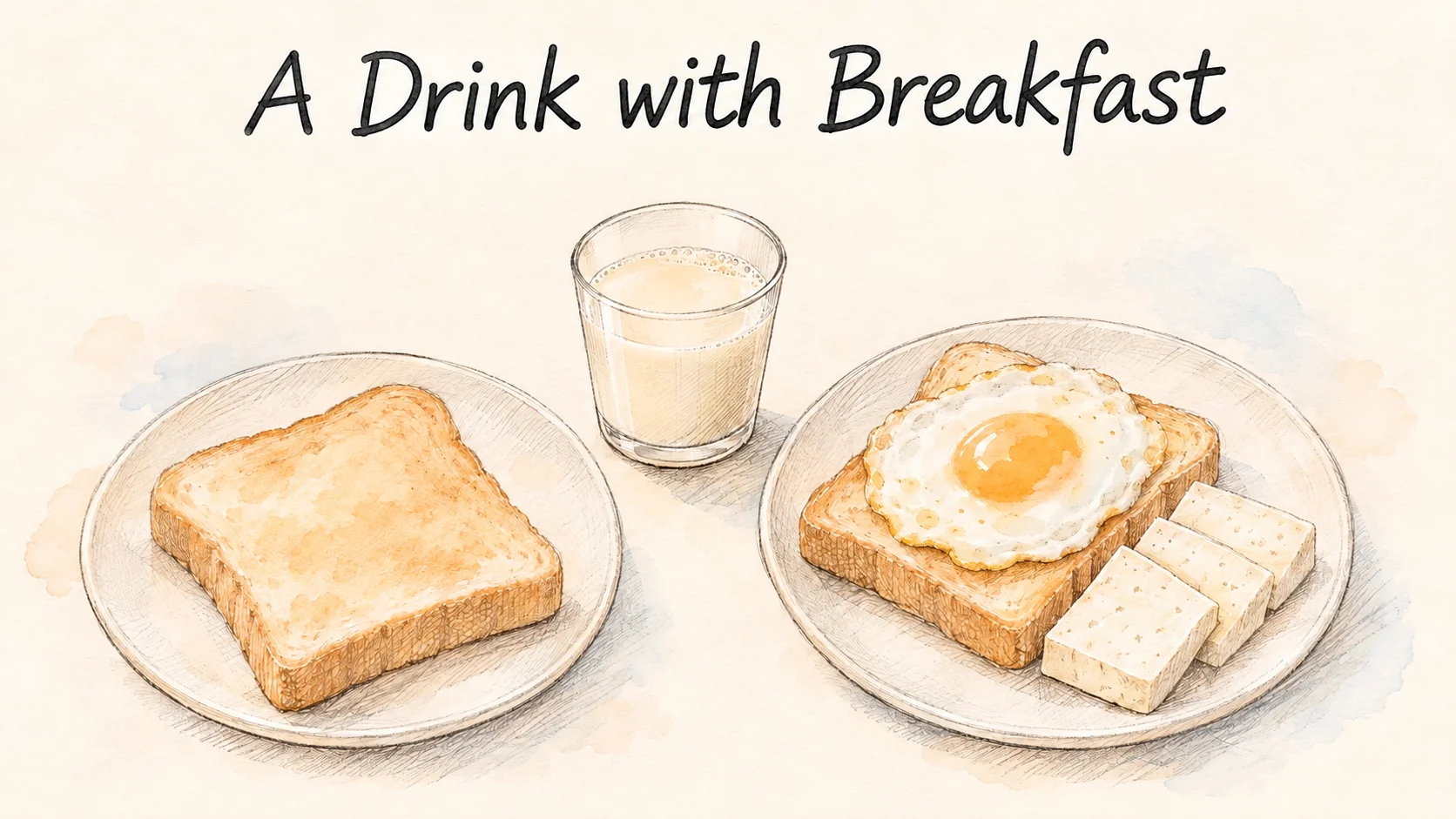
Once you've put your latte next to breakfast, you may find that you chose oat drink because you like how it tastes. If your usual breakfast relied on milk for some of its protein, look at the other food on the table after you make the swap. An egg or a little tofu contributes protein as well. If breakfast is toast and a latte and you want the drink itself to bring more, put the oat drink, plain soy drink, and any oat and soy blend on the same 100 mL basis and compare their cartons.
Calcium and vitamin D are worth reading in their own rows if those are part of your reason for buying the drink. The Nordic oat product lists 120 mg of calcium per 100 mL, alongside 1.1 grams of protein. The added calcium helps answer one question. The protein row still gives you the answer about protein [1][4].
The next time the barista asks if you want oat drink, think about what you want from that cup. When protein matters to the choice, start with grams per 100 mL, then use the amount that actually came out of the carton.
References
[1] Oatly. iKaffe Barista Edition product specification for Finland, Iceland, and Sweden. February 2024.
[2] Taiwan Health Promotion Administration. Food Exchange List, May 2019. Appendix 1, dairy products.
[3] Li Xin-rong. Oats at breakfast. Taitung Christian Hospital, 2022. The drink examples are rounded means of small groups of products sampled at the time.
[4] U.S. Food and Drug Administration. Milk and Plant-Based Milk Alternatives: Know the Nutrient Difference.