
Once Wheat Is Ground Into Flour, What Makes It Whole Wheat?
Whole-wheat flour keeps parts of the kernel that white flour largely leaves out. Distinguish what goes into the flour from how much of it a recipe uses.
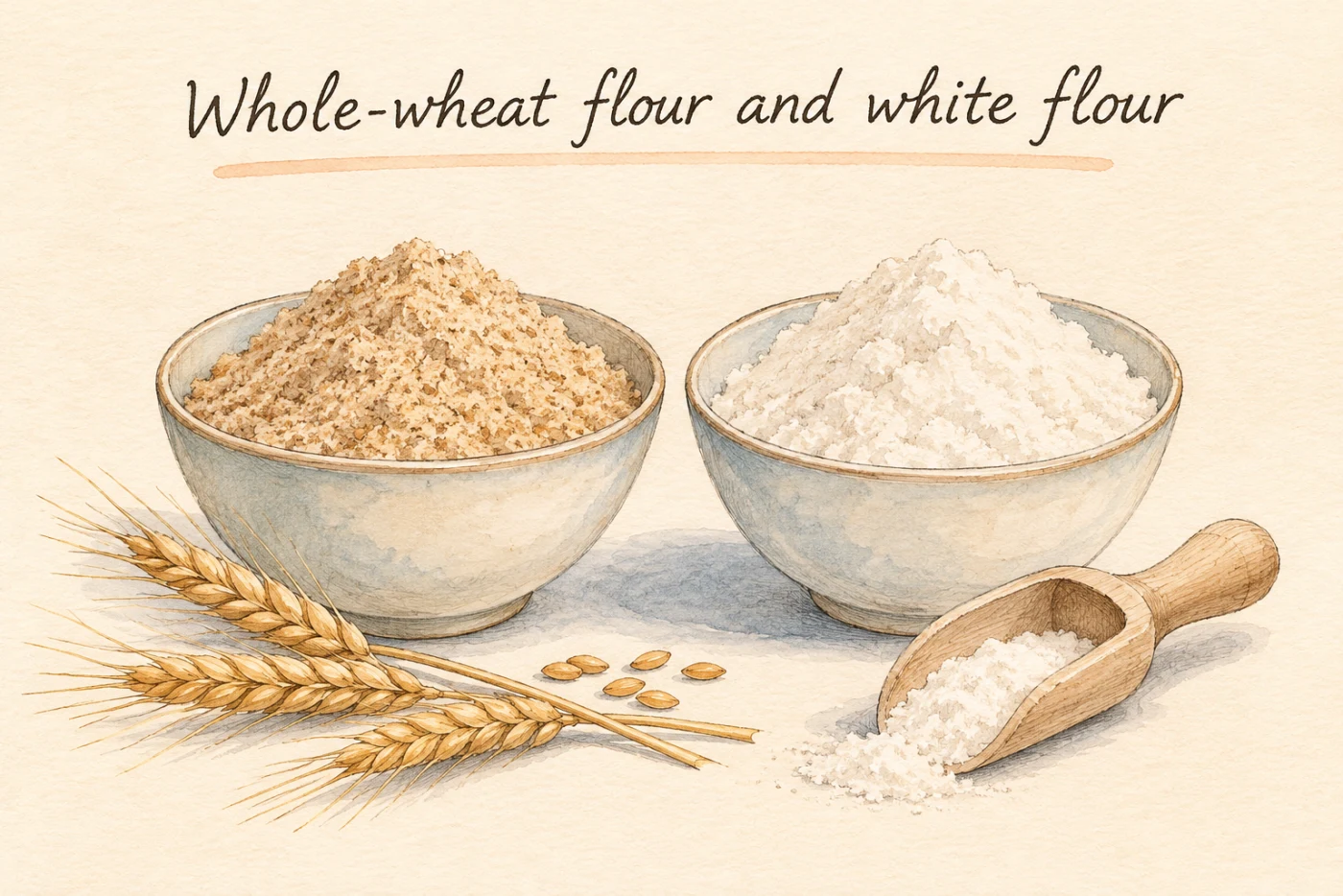
Two bags of flour are on the shelf. One is pale. The other looks a little brown and has specks in it. If you're looking for whole-wheat flour, should you take the darker one? What if it was ground so fine that the specks were gone?
Whether flour is whole wheat depends on which parts of the grain it contains. A whole-wheat flour can be ground very fine. As long as the bran, germ, and endosperm are there in their original proportions, it's a whole-grain ingredient. Once that flour goes into a bread recipe, a second question comes up. How much of the recipe uses it [1, 2]?
The three parts you would see inside a kernel
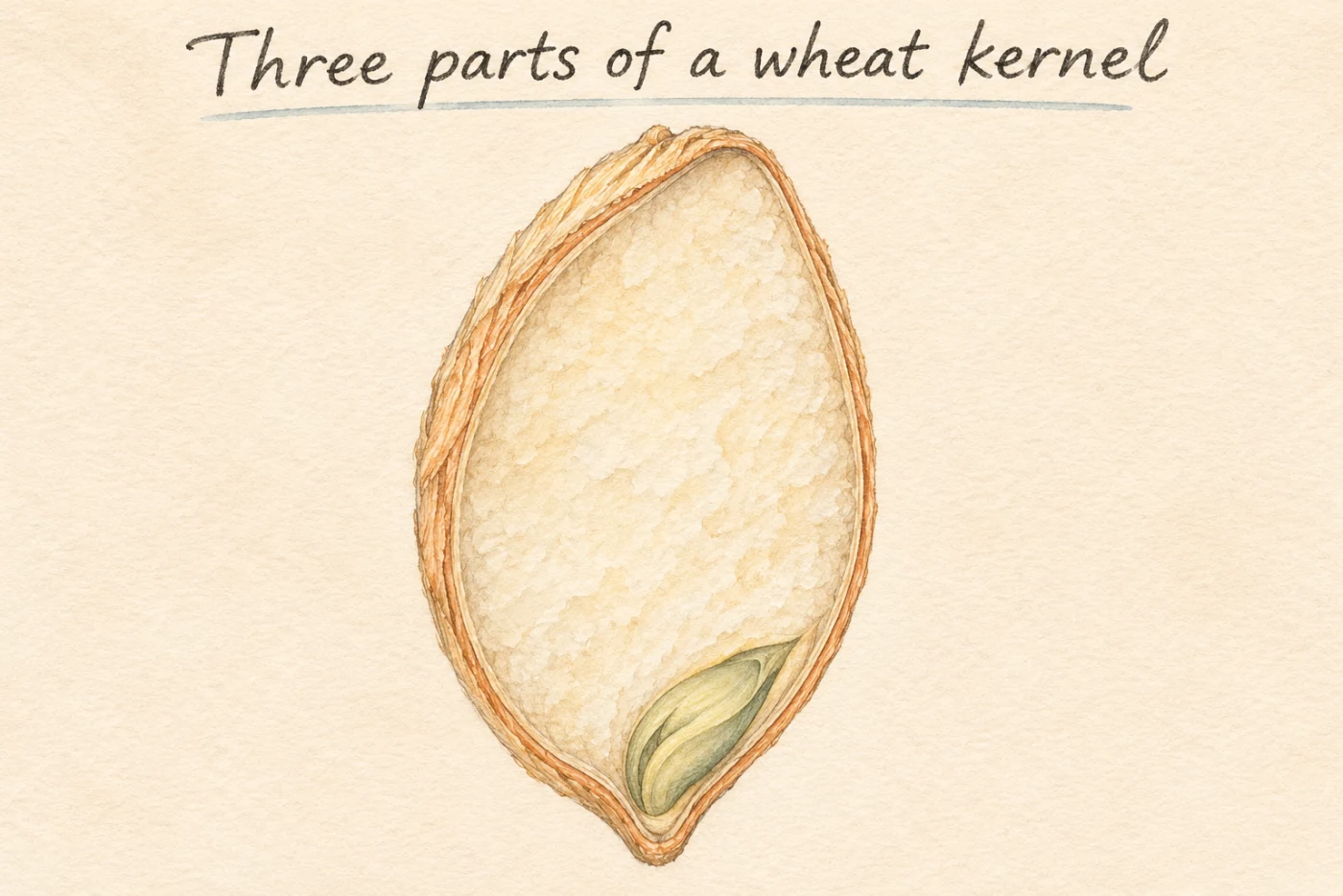
The endosperm makes up most of the wheat kernel. It's where the seed stores a lot of its starch and some of its protein. Around it is the bran, the fiber-rich outer part. At one end is a much smaller piece called the germ, which can grow into a new plant. They're different sizes and compositions, and all are part of the same seed [1].
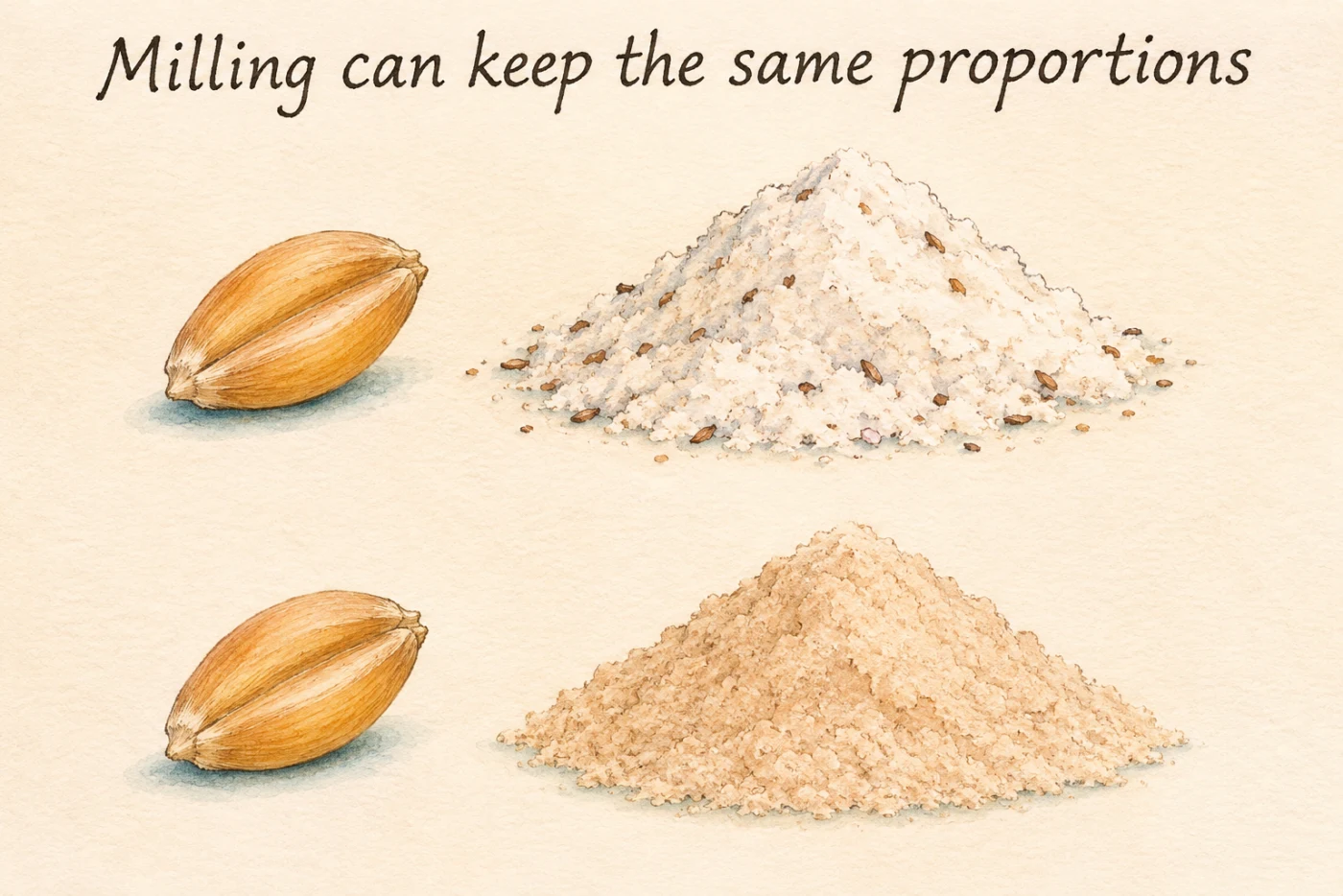
Milling ordinary white flour usually separates much of the bran and the germ, leaving flour that's mostly made from endosperm. A mill can grind the whole edible kernel together to make whole-wheat flour. It can also separate the parts during milling and bring them back together in the proportions they originally had. Once the flour is finely ground, you may not see the bran as individual specks, even when it's present [1, 2].
At a roller mill, the first rolls can break open a kernel, leaving a mixture that can be sifted. The steps that follow include separating larger pieces and grinding the pieces of endosperm into finer particles. Imagine trays of different materials coming out of a series of screens. A mill decides what to keep for a particular flour and how fine to grind it. The decision to grind something further is separate from the decision to include it in the bag [3].
Try the question in reverse. If you mix handfuls of bran into white flour, you can see the flecks again. That tells you an outer part of the kernel was added. The germ might still be missing, and you don't know whether the ratio matches the original kernel. Whole wheat describes what is present as a proportion of the kernel, whether the flour looks uniform or coarse.
A bag marked “stone-ground” describes the kind of grinding the mill used. You would need to find out what happened after grinding to learn which parts went into the flour. Some mills sift out material. A bag of finely ground whole-wheat flour and a coarse whole-wheat flour can both meet the definition if each retains the kernel's parts in their original proportions [1][3].
What's whole wheat, the flour or the loaf?
Imagine a dough made with 60 grams of whole-wheat flour and 40 grams of ordinary flour. Sixty percent of the flour in that dough is whole wheat. If there are sugar, oil, or other ingredients in the dough, 60 percent is no longer the fraction of the whole recipe. After it is baked, its finished weight will also depend on how much water it contains. Multiplying the weight of the finished bread by 60 percent doesn't tell you how much whole-wheat flour went in.
Think of making two doughs with the same amounts of flour and different amounts of water. The flour ratio stays the same. The loaves can weigh something different after baking. That's why an ingredient can be wholly made of whole wheat, without the same percent applying to a loaf made partly from that ingredient.
Another way to check the arithmetic is to set aside water for a moment. Suppose that on a dry-weight basis, the whole-wheat flour contributes 60 grams, the other flour contributes 40 grams, and the remaining ingredients contribute 20 grams. Whole-wheat flour makes up 60% of the flour by dry weight. It makes up 60 divided by 120, or 50% of the full dry recipe. Both numbers describe the same loaf. The denominator tells you which one you are reading.
Whole-wheat flour describes an ingredient. The ingredient list of a bread, tortilla, or cracker describes the foods it's put together from.
The label can tell you different things depending on where the words appear. The U.S. FDA's draft guidance gives examples of how manufacturers can describe whole-grain ingredients and the amount in a product [2]. "Multigrain" on its own doesn't tell you whether a manufacturer kept the bran, germ, and endosperm of any particular grain. Different grains can be milled in different ways. A darker baked surface can also come from baking or other ingredients, so color doesn't identify the flour.
In the United States, there is a separate standard of identity for whole-wheat flour itself. It preserves the proportions of the wheat's natural constituents other than moisture. The draft FDA guidance also points to a separate standard for products named whole-wheat bread, rolls, or buns. A statement such as “made with whole-wheat flour” can answer a different question from the standardized name on the front of a product [2][4].
The ingredient list answers more than the color
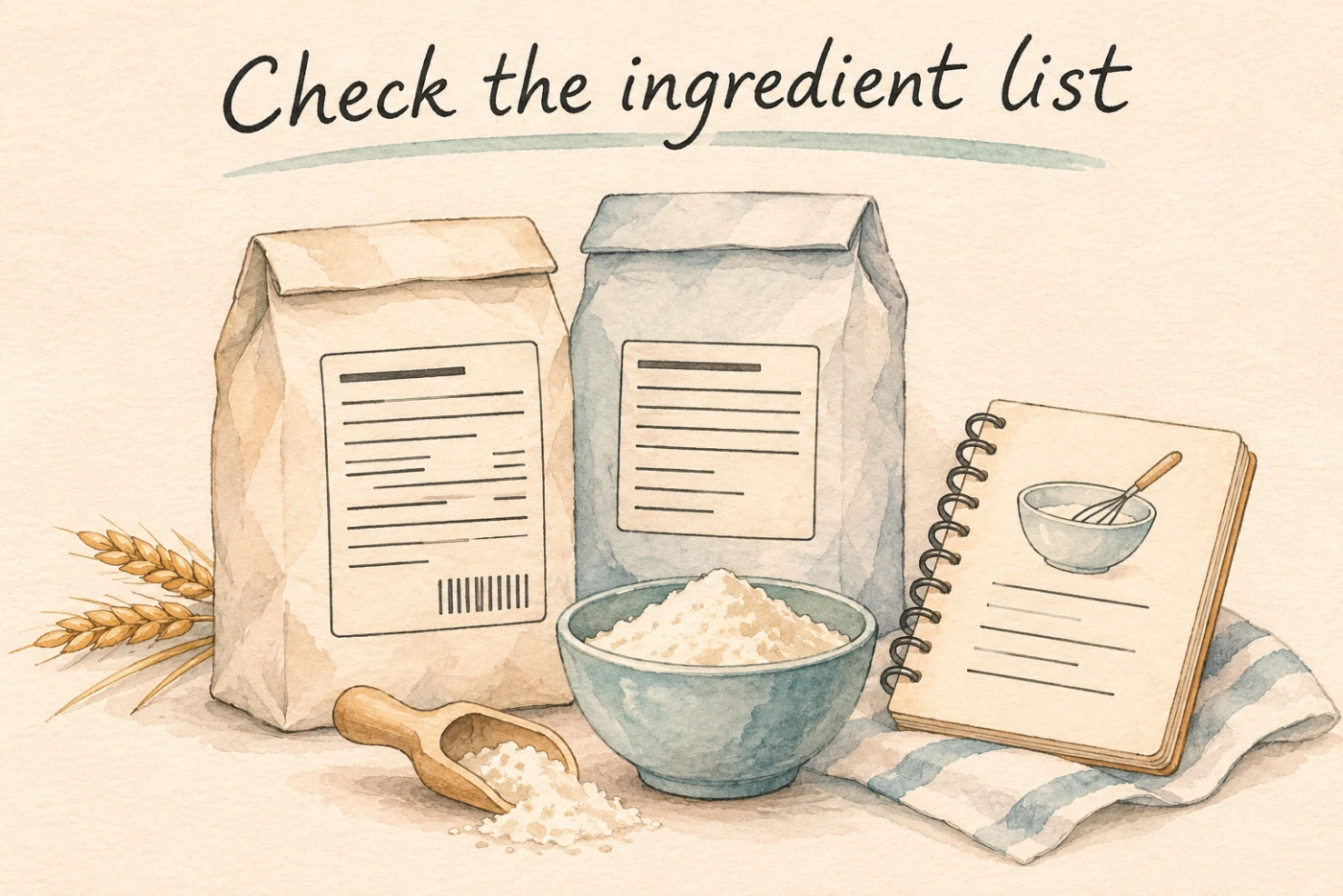
If you're buying flour for a recipe, read the name of the flour first. You can check the recipe for how much of that type it uses. If you're buying bread, look for whole-wheat flour in the ingredient list. When there's a declared percentage, read what the percentage refers to. Ingredient order gives you information about what's in the product, but it doesn't directly tell you the number of grams of a specific flour. Fiber per serving, if that's what you want to compare, is a number to look up in the nutrition information.
If you're making dough at home, weigh each flour before mixing. Add the flour weights to see what fraction of the flour is whole wheat. You can repeat the comparison when you switch between two whole-wheat flours with different textures. If you're choosing a loaf instead, work with what the package gives you. A flour listed before several other flours can be the biggest individual ingredient while still accounting for less than half of all the flour.
For instance, 40 grams of whole-wheat flour is more than either of two other flours at 30 grams each. The whole-wheat flour would still account for 40% of the combined flour weight.
Back at the shelf, a smoother flour might be just what you want to work with. The grain question is separate. Instead of judging how finely it was ground, use the label to work out what was kept from the kernel.
References
- Cereals & Grains Association. Whole grains and whole-grain foods.
- U.S. Food and Drug Administration. Draft guidance on whole-grain label statements.
- U.S. Department of Agriculture, Agricultural Research Service. Wheat: the Whole (Grain) Story. 2013.
- U.S. Code of Federal Regulations. 21 CFR § 137.200, Whole wheat flour.