
Do frozen vegetables still have vitamins?
Freezing can change texture. The effect on vitamins depends on what you measure. A study started with one harvest and compared refrigeration with frozen storage.
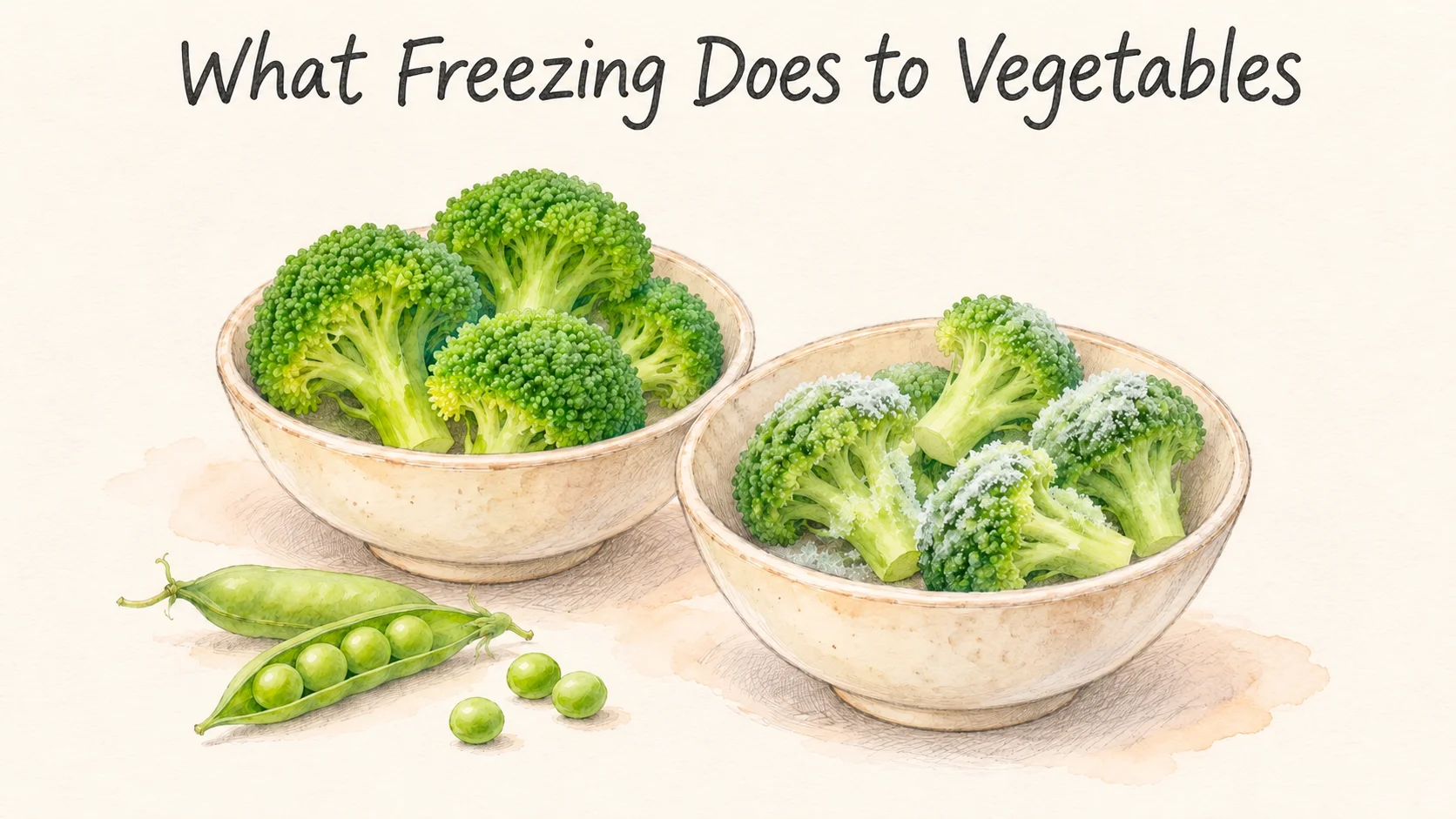
You picked up a head of broccoli over the weekend and forgot about it until Wednesday. On the way home, you could also buy a bag of frozen florets. If both options end up in a lunchbox, does the one from the freezer lose out on nutrition?
Frozen vegetables can keep much of their vitamin content. The result depends on what you measure. A University of California, Davis team tested eight fruits and vegetables. In five, including broccoli, measured vitamin C did not differ significantly between refrigerated and frozen samples. In the other three, it was higher in the frozen samples under the study's conditions. One different compound, beta-carotene, declined during frozen storage in carrots [1].
What happens before broccoli goes into the freezer?
A vegetable keeps changing after it leaves the field. A crisp leaf can droop, and its color can shift while it sits in the refrigerator. Low temperatures change the rate of those processes. So does the step that generally comes before freezing broccoli. The florets are briefly heated in water or steam, cooled and drained, then frozen. The short heating step is called blanching [2].
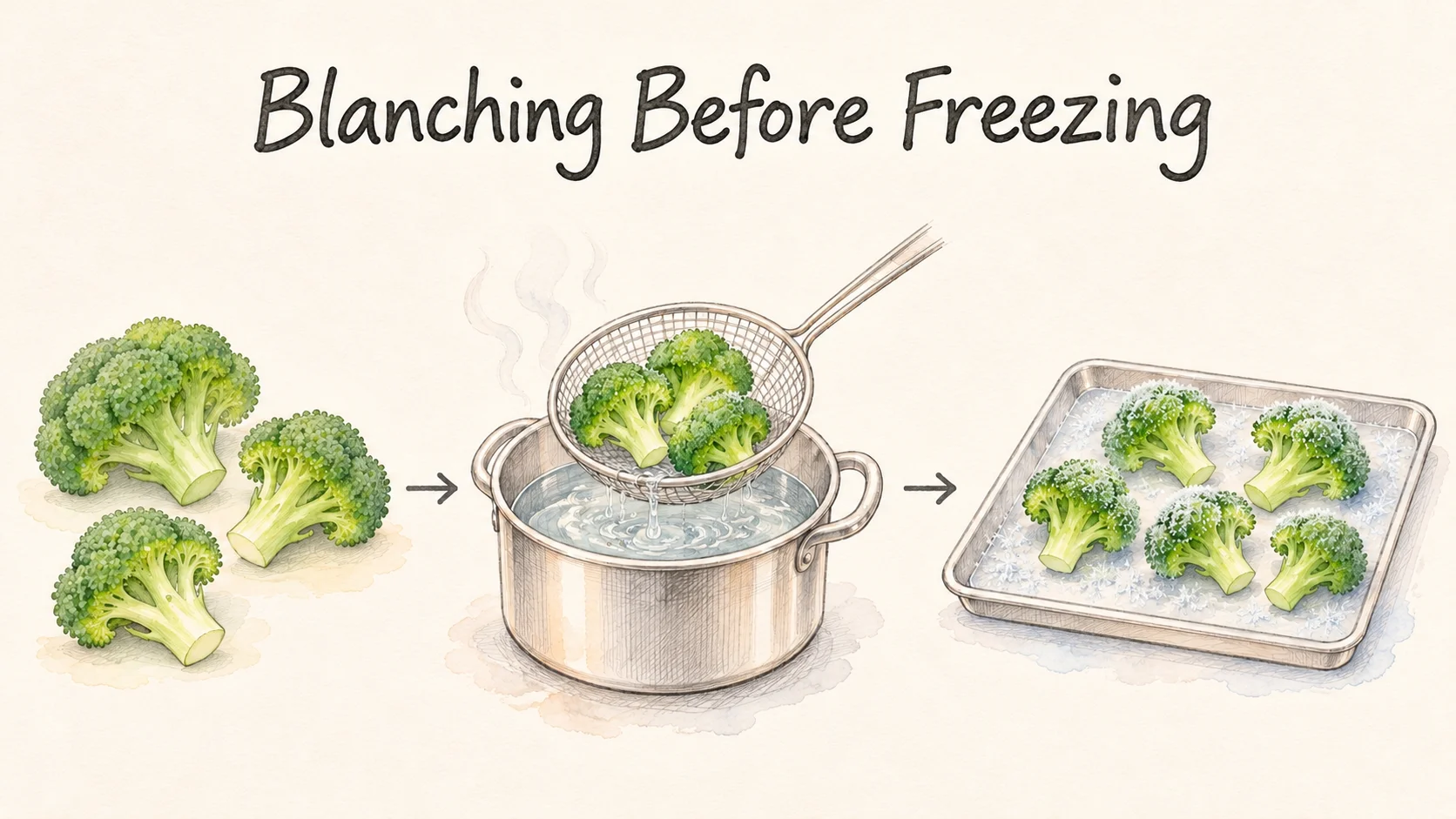
Blanching helps slow or stop the action of enzymes that alter color, flavor, and texture. Enzymes are molecules in the plant that help reactions take place. Some continue working after the plant is picked. Brief heat can inactivate some of them. How long it takes depends on the size and type of vegetable. Heat them too long and you can also change the color and texture and lose some vitamins [2].
That means “frozen” often describes the end of a process that started before the food went into the freezer. A bag of florets may have been cut and blanched before it was frozen. A head you bought at the market came through a different process. If you want to see what those two storage methods do, it helps to start with the same crop.
What changed when researchers split the harvest?
The researchers collected six field replicates for each food. They divided each into two parts, one to refrigerate and one to prepare for freezing. The chilled samples were tested within 24 hours and on days 3 and 10. The frozen samples were also tested within 24 hours and then on days 10 and 90. The team measured the produce before it was cooked into a meal [1].
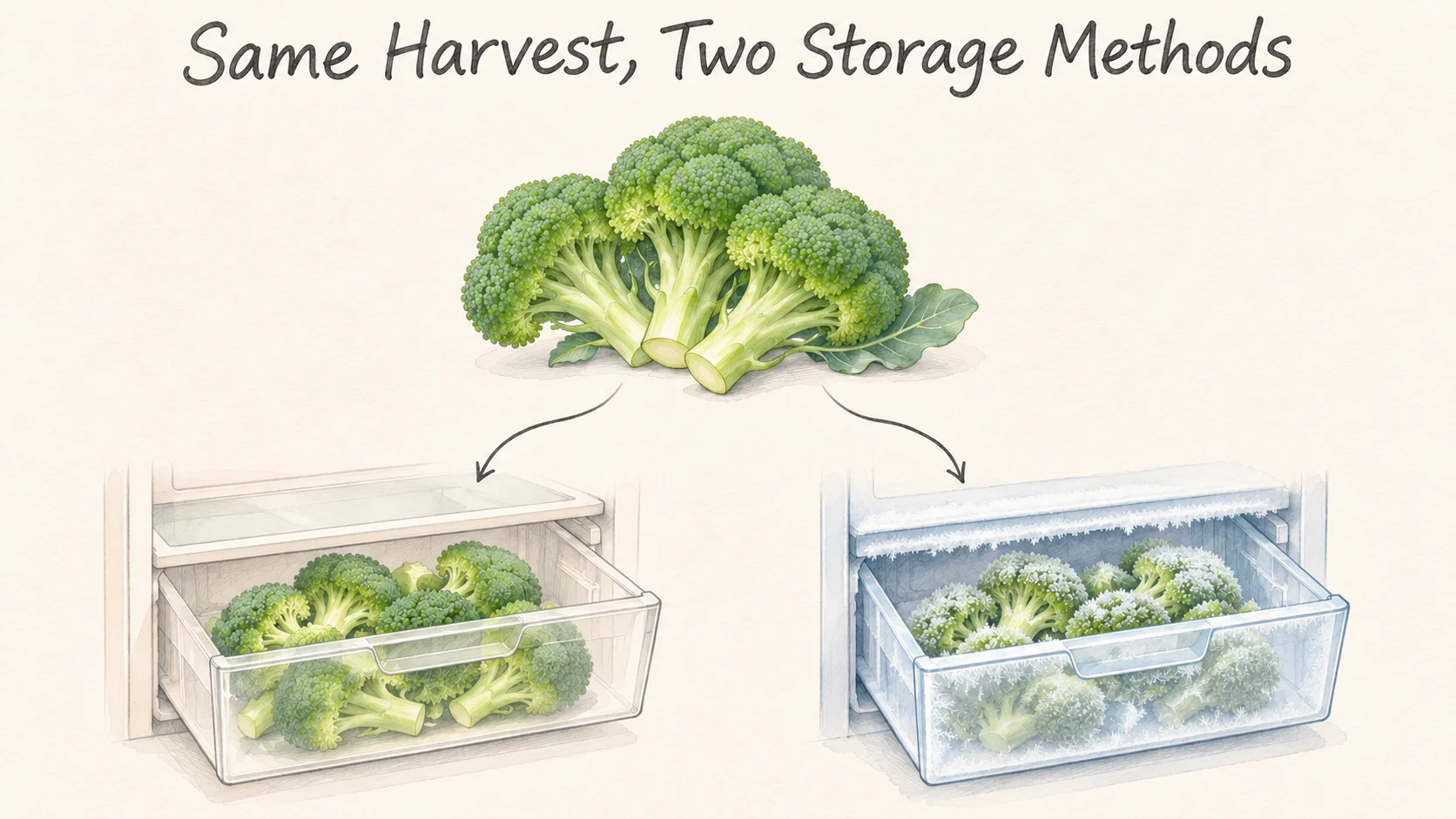
They measured vitamin C, riboflavin (vitamin B2), a form of vitamin E, and beta-carotene. In broccoli, carrots, spinach, peas, and strawberries, they didn't detect a significant difference in vitamin C between the storage methods. The frozen corn, green beans, and blueberries measured higher in vitamin C than their refrigerated counterparts [1].
Compared with whatever remained in the refrigerator, a higher measurement in the freezer can mean a compound was better preserved. That doesn't mean a freezer makes new vitamins. You can see the difference by looking at a second measurement in the same food. In carrots, the vitamin C comparison didn't show a significant difference. The beta-carotene level fell during the frozen storage period. A single vitamin number is only one part of the picture [1].
This was a comparison of storage treatments. Ten days in the fridge and 90 days in the freezer are different periods. The researchers used specified pre-treatments and temperatures. Those conditions don't tell you the exact vitamin content of every fresh head or frozen bag [1].
The comparison also helps explain why harvest timing matters. If you'd bought two unrelated samples in a store, they might have come from different growers or been picked at different stages. Splitting the crop gives both storage groups a more similar starting point. In your own fridge, you don't know everything that happened before you bought the vegetables. You do know how long you plan to keep them.
The researchers report concentrations on a dry-weight basis, where water doesn't contribute to the weight they're comparing. A 100-gram portion of thawed broccoli on your kitchen scale still includes water. That's another reason the study can tell you which compounds differed under its conditions without telling you exactly how many milligrams would be in your bowl [1].
Can you tell how much vitamin C is there by the texture?
A thawed broccoli floret can feel softer than the one you pulled out of the fridge. Plant cells contain water, and freezing forms ice crystals. The crystals can disturb the structures that make a stalk firm. When the ice melts, some water can run out. You can see that change when you pick up a floret with a fork. It isn't a test of the amount of a vitamin still inside it [3].
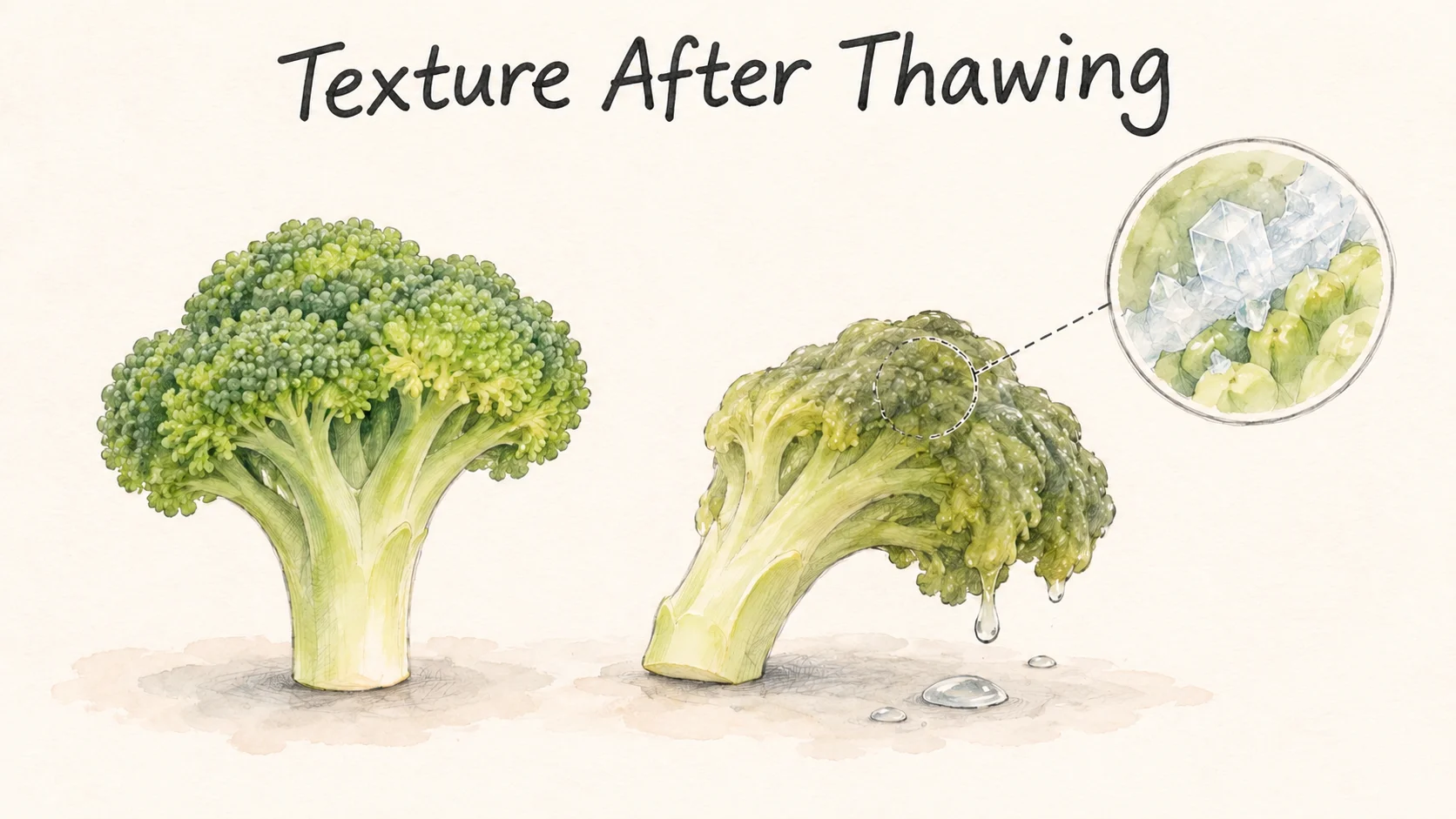
Texture gives you useful information for a different decision. If you want the crunch of raw vegetables, fresh produce will usually get you closer to the dish you had in mind. If you're adding greens to rice after work, a bag of frozen florets lets you take just what you plan to use. Knowing when the vegetable's texture matters can help you use both.
If you leave a freezer bag open, the surface of the vegetables can dry out. The University of Minnesota's extension service explains that air exposure and moisture loss can contribute to freezer burn and changes in texture and flavor. Press out excess air and close the bag before returning it to the freezer. That can preserve the quality of what you save for another meal [3].
If you only have a few florets left, a smaller freezer bag or container can hold them with less room for air. When you go looking for vegetables, try the open bag first. A little left from one meal can be useful for the next if you know where it is and can get it onto the plate.
What do you want to have on hand for Wednesday?
Start with the next couple of dinners. If you'll use a whole head of broccoli tonight, you can buy it fresh and use it right away. If you expect to cook twice this week and only need a few florets each time, a frozen bag can be convenient. If you pick up a prepared mix, check the label for sauces or additional ingredients so you know what you'll be putting in that dinner.
The same freezer bag can work across meals. Pull out a portion when you're going to use it, and seal up what remains. If you buy fresh vegetables for their crunch, think about which nights you'll use that crunch. The next time you get home on a Wednesday, you'll have something that fits the meal you are about to make.
References
[1] Bouzari A, Holstege D, Barrett DM. Vitamin Retention in Eight Fruits and Vegetables: A Comparison of Refrigerated and Frozen Storage. J Agric Food Chem. 2015;63(3):957–962.
[2] National Center for Home Food Preservation. Blanching Vegetables.
[3] University of Minnesota Extension. Preserving food at home: Freezing. Reviewed in 2025.