
The Broth Looks Clear. Where Does the Sodium Come From?
Two soups, a ladle, and a little math show how to estimate sodium from the ingredients and what dilution changes in a serving.
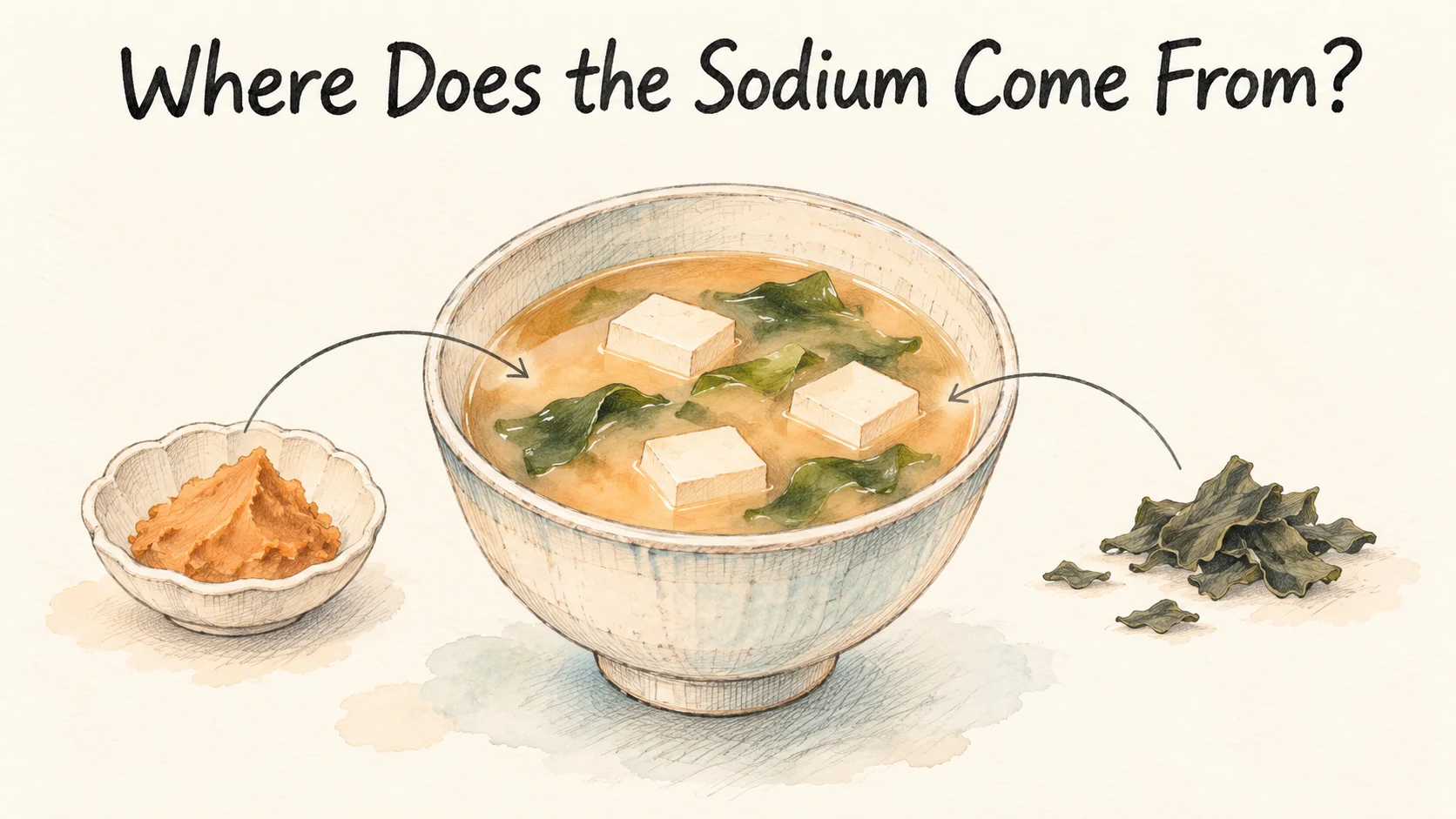
At a Taiwanese noodle shop, a bowl of clam soup arrives with broth so clear you can see the bottom. It tastes mild, too. That soup can still contain sodium. Salt dissolves without making the broth cloudy. Clams carry sodium of their own, and miso, soy sauce, and some stocks can add more. To estimate what you consume, find out what went into the pot and how much of the finished soup you ate.
Taiwan's Health Promotion Administration gives adults a reference upper amount of 2,400 milligrams of sodium per day, equivalent to roughly 6 grams of table salt, in its salt reduction guide [1]. Salt contains both sodium and chloride, which is why the weight of salt is greater than the weight of its sodium. Use the 2,400-milligram figure here as a scale for the examples. It counts sodium from the whole day, including the sauce on your lunch and the stock used to make your soup.
Two soups and three ingredients
Take a pot of clam and luffa soup, a Taiwanese dish often cooked with ginger. Taiwan's Food and Drug Administration lists 446 milligrams of sodium per 100 grams of edible meat for its clam sample. If a recipe uses 147 grams of edible clam meat, multiply 446 by 1.47. That comes to about 656 milligrams of sodium from the clams. If you bought a bag of whole clams, its weight includes the shells. The calculation uses the weight of the part you eat [2].
Say you add no salt and split the broth and the cooked clam meat evenly into two servings. Each serving gets about 328 milligrams of sodium from the clams, or about 14 percent of the full-day reference [1][2]. Any contribution from the luffa, ginger, or other ingredients is additional. Some sodium stays in the clam meat and some ends up in the broth. The 328-milligram figure estimates the clams' contribution to the meat and liquid together. You would need information about the broth itself to estimate the sodium in a sip of liquid on its own.
Now make a two-serving pot of miso soup. The database sample for miso has 4,153 milligrams of sodium per 100 grams, and the dried wakame sample has 8,085 milligrams per 100 grams. The figure on a 100-gram basis is higher for the seaweed, but the amount that goes into the pot is smaller. To calculate each ingredient's contribution, multiply its sodium per 100 grams by the grams you use and divide by 100 [2].
- 36 grams of miso contributes about 1,495 milligrams.
- 5 grams of dried wakame contains about 404 milligrams.
- The two add up to about 1,900 milligrams. If all of it goes into the soup and both solids and broth are split evenly, each serving gets about 950 milligrams from the two ingredients, close to 40 percent of the full-day reference [1][2].
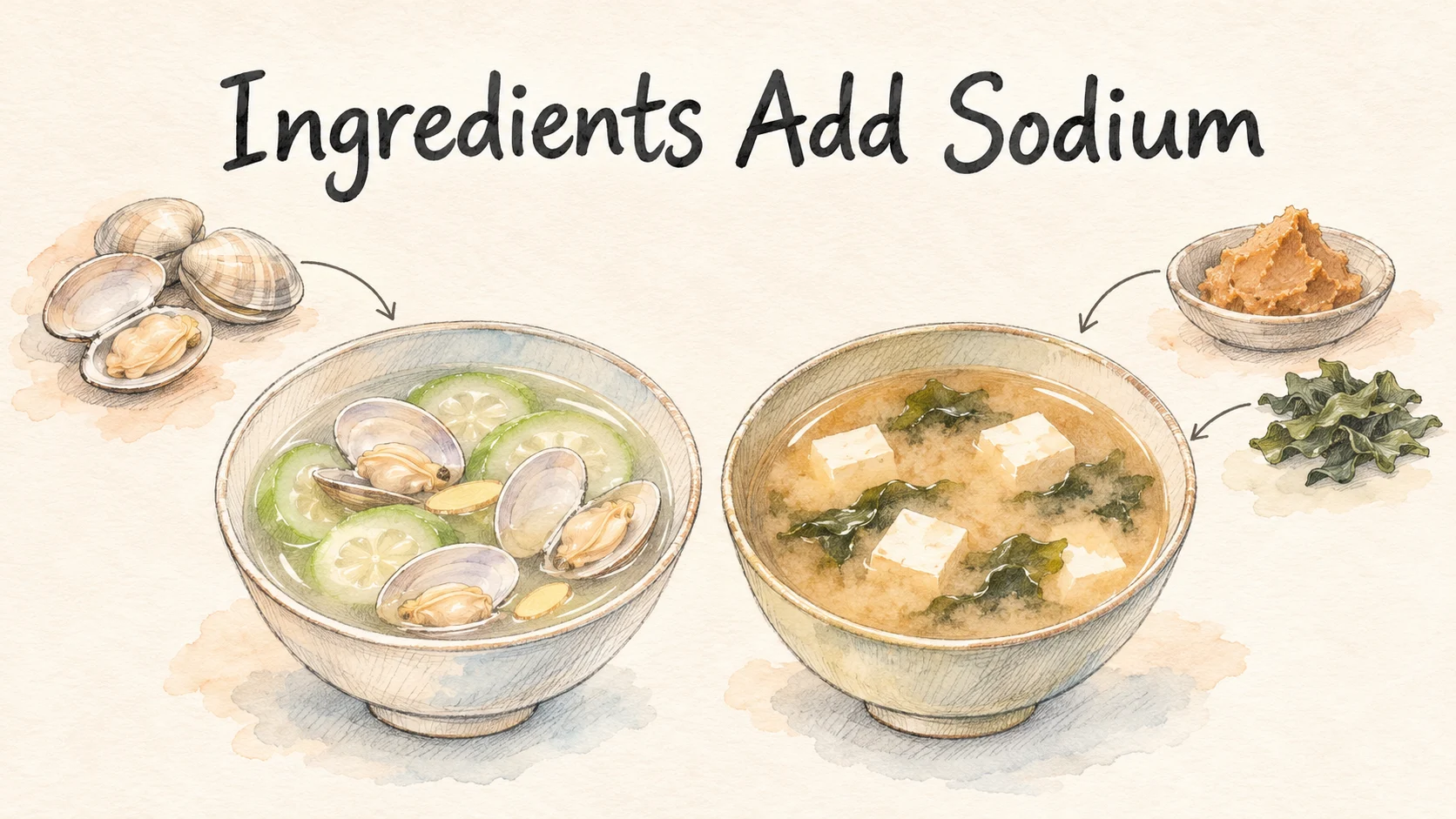
These are kitchen estimates from particular samples. For miso you have at home, the package may give you a better starting point for that recipe. Weigh dried seaweed before soaking when you use a dry-weight entry. If you pour off the soaking water, some sodium that moved into the water can go with it. Tofu and prepared stock can add more sodium, depending on the product. For a restaurant bowl, you would need its recipe or nutrition information to calculate a comparable number.
Add water, then count the bowls
Suppose a pot holds two equal bowls of broth and contains 1,000 milligrams of sodium. Stir well, then divide it, and each bowl gets 500 milligrams. Add two bowls of sodium-free water and stir again. The same pot now holds four bowls with 250 milligrams each. All four still add up to 1,000 milligrams. Dilution changes how much sodium is dissolved in the same volume of liquid.
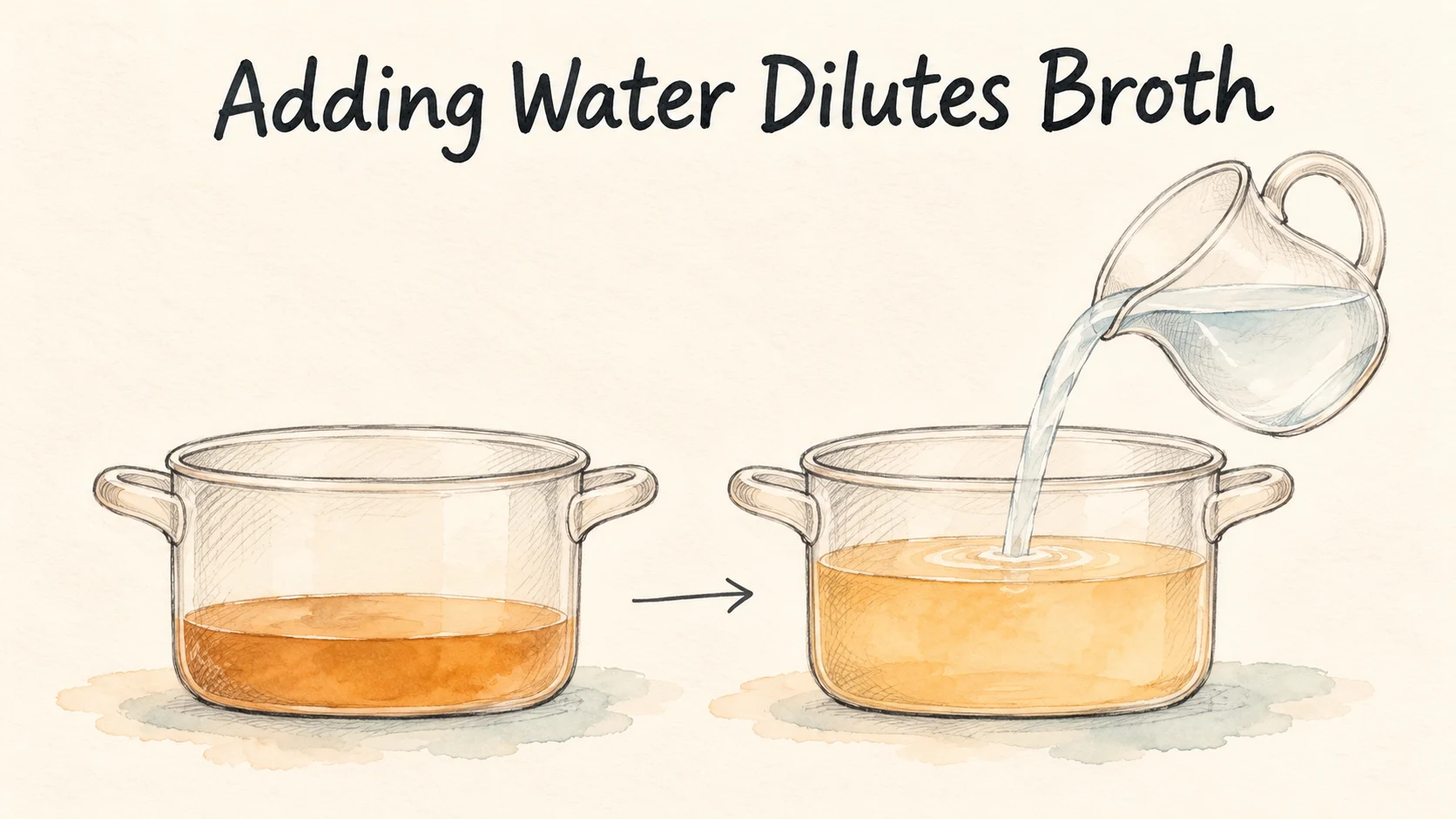
If you pour yourself the same bowl as before and stop there, you get less sodium from the diluted broth. If you have a second bowl, the total returns to 500 milligrams. If two people finish the whole four-bowl batch evenly, each gets the same amount of sodium they would have had by splitting the original pot. This example assumes the broth is mixed evenly and nothing was poured away. In a pot with tofu or clams, how much of the solids ends up in each bowl also matters.
You can change the starting amount instead. In the miso recipe above, use 24 grams of miso instead of 36. The 12-gram difference is about 498 milligrams less sodium for the pot, or roughly 249 milligrams less for each of two equal servings. Taste the soup at the smaller amount and decide whether to add back some miso. Record the final amount if you want to make it the same way next time [2].
What a month of meals can tell us
The DASH-Sodium trial recruited 412 adults and randomly assigned them to either a typical US control diet or the DASH diet. On their assigned diet, each person then ate food at three sodium levels for 30 consecutive days per level, with the levels given in random order. The team supplied meals, so each sodium level applied to the whole day's food [3].
On the control diet, average systolic blood pressure was 2.1 mm Hg lower at the intermediate level than at the high level. It was another 4.6 mm Hg lower at the low level. The average difference between the high and low periods was about 6.7 mm Hg [3].
At 2,100 calories per day, the three sodium targets were about 3,450, 2,300, and 1,150 milligrams a day. The reported blood pressure difference was an average across periods of controlled eating. To work out how much sodium you left in a bowl, you would need to know the sodium in the liquid and how much remained. To see your own blood pressure change, you would measure it over time [3].
Read the label or look at the ladle
For ready-to-serve broth, find the amount the label describes. If a 300-milliliter carton lists 110 milligrams of sodium per 100 milliliters, the whole carton contains 330 milligrams. Pouring and drinking half the carton gives you 165 milligrams. If the label lists sodium per serving, check the serving size and number of servings in the package. With concentrated soup base, see whether the label describes the base itself or the soup made according to the instructions.
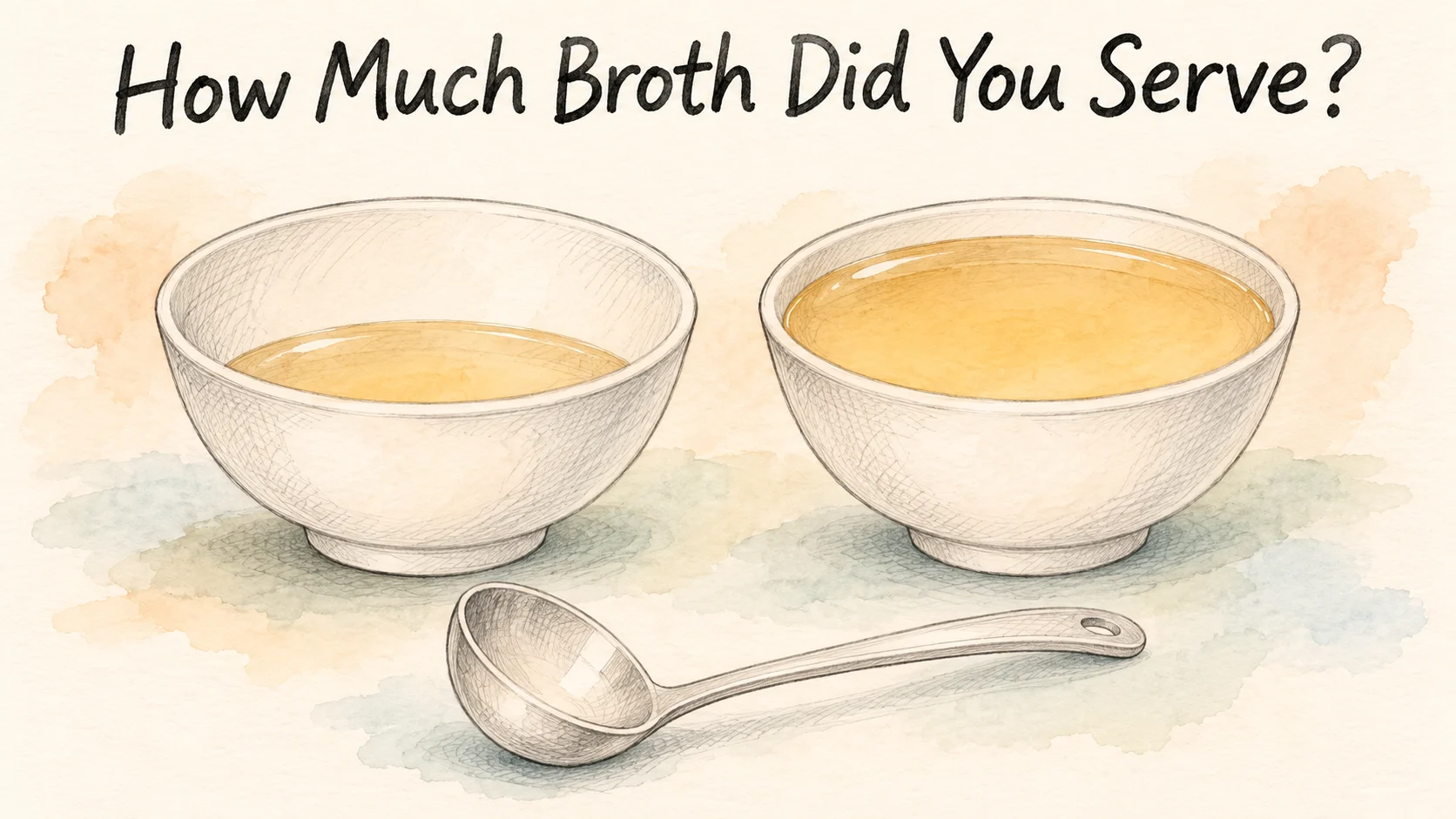
When you make soup again, measure the main seasoning before you stir it in. At the noodle shop, where you may not know the recipe, look at the amount in the bowl. If you want less broth, ask for a smaller serving or leave some after eating the clams and vegetables. If you also ordered braised sides or dipped them into sauce, those add to the day's intake, too.
Sources
[1] Taiwan Health Promotion Administration. Salt reduction guide.
[2] Taiwan Food and Drug Administration. Food composition dataset. Samples J3101001, P1200101, and F0810101.
[3] Sacks FM, et al. Effects on Blood Pressure of Reduced Dietary Sodium and the Dietary Approaches to Stop Hypertension (DASH) Diet. N Engl J Med. 2001;344(1):3–10.