
Two Shakes, Each With 20 Grams of Protein. Are They Both a Meal?
Two drinks can have identically large protein numbers on the front and 180 calories of difference inside. Compare the whole bottle, what you mix it with, and what else you're eating.
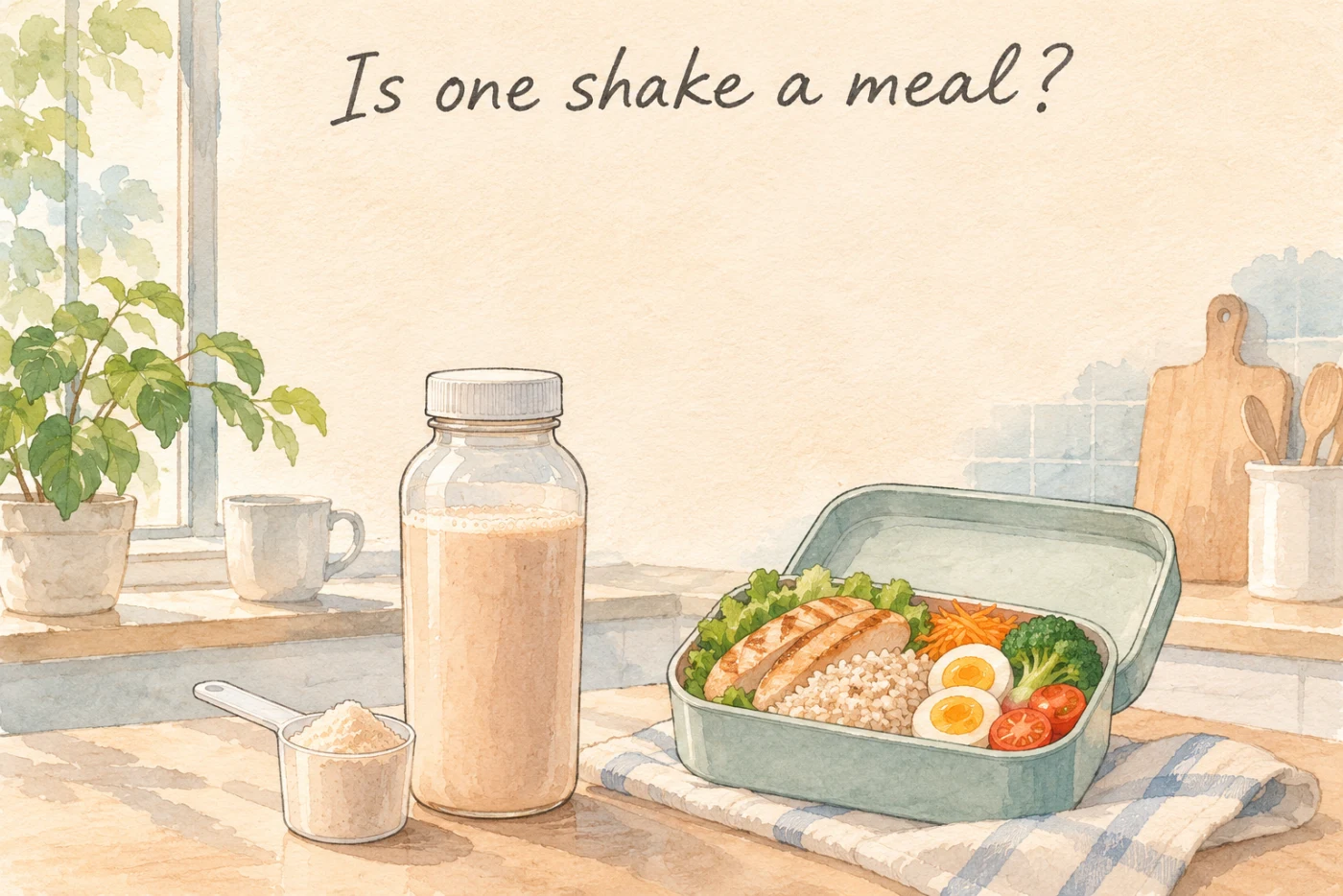
There are five minutes before your first meeting. You stop at the cooler and spot two bottles that both say 20 grams of protein. You need something to get you to the next time you can sit down to eat. From the front of the bottles, it's easy to assume either one will do about the same thing.
Turn them over. Two drinks can have the same protein and very different amounts of energy, carbohydrate, fat, and fiber. If you're looking at a powder, what you pour into the cup with it can change the finished drink, too. To see how a shake fits your day, compare what you'll actually drink, then consider what else you'll have with it and how long it needs to last.
Start by putting both labels on the same scale
Here are two imaginary drinks. The numbers are for the whole bottle in both cases.
| Whole bottle | Drink A | Drink B | | --- | ---: | ---: | | Energy | 120 calories | 300 calories | | Protein | 20 g | 20 g | | Carbohydrate | 5 g | 32 g | | Fat | 2 g | 10 g |
A packs a similar amount of protein into much less food energy. B also contains more carbohydrate and fat, and the bottles are 180 calories apart in total. Nothing on the front that says 20 grams of protein lets you infer that difference. Depending on what you're trying to put together, the same front label could lead you to a small addition to breakfast or to a larger part of the meal.
In the United States, the Nutrition Facts shows a serving size and a number of servings per container. Some products also show numbers for the full package [1]. If 20 grams is on the per-serving column and the bottle has two servings, drinking it all would give you 40 grams. If you're comparing bottles of different sizes, or one gives you 20 per bottle and the other gives you 20 per serving, get both numbers onto the amount you plan to drink before comparing.
A serving size also doesn't tell you how much food you ought to have at that meal. It's the amount to which the numbers on the label apply. If you only drink half on the way to work and save the rest, compare the half you had today with whatever else was in your breakfast, not with an imaginary meal made of the full bottle [1].
What goes into the blender is part of the label you need
Suppose a scoop of powder has 120 calories and 20 grams of protein. Mixing it with water adds neither. If the milk you use has 100 calories and 7 grams of protein in the 200 mL you pour, the drink has 220 calories and 27 grams of protein. These are sample values. Read the milk or soy drink you're actually using.
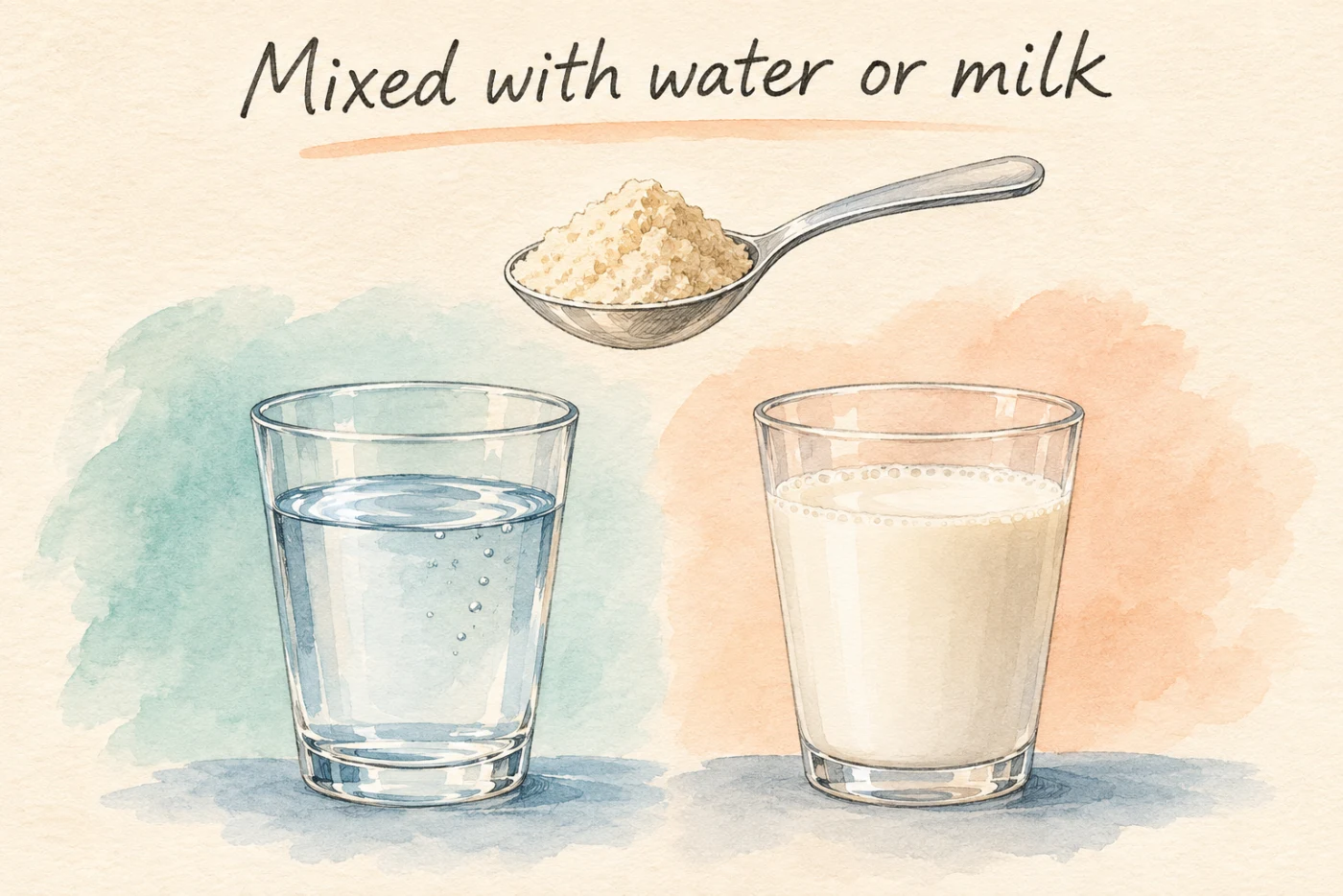
Check whether the powder label shows the numbers dry or as prepared. If the package already includes the milk in a prepared column, counting that milk again would overstate your drink. If you mix the powder differently from the instructions in that column, use the dry figures and add the amount of liquid you're using. An extra spoonful of oats or nut butter belongs in the same sum, even if the main reason you put it in was for texture.
At home, you can check how much your regular glass holds once, so you don't have to work it out on a rushed morning. The same goes for the scoop. A scoop filled to the brim, a mound above it, and a spoon from the kitchen drawer can hold different amounts. When it matters to make the same drink twice, the actual weight on the package gives you a better reference.
A bigger glass can mean two different things
If you pour another 100 mL of water into the 120-calorie drink, it still has 120 calories and 20 grams of protein. It tastes thinner and each sip can carry less of the powder, but the powder didn't leave the glass. If you drink only half after mixing it evenly, you get about half of what's in the glass. If instead you use the same water and add a second scoop, you have added another serving of powder. Both versions can make the glass look fuller, but they change the calculation in different ways.
For a comparison at the cooler, first write down how you actually prepare the powder. The example with milk came to 220 calories, 100 above bottled A and 80 below bottled B. You can also put that cup alongside the breakfast it usually accompanies or replaces. The comparison gets clearer once you decide which drink and which meal you're calculating.
Is the bottle an addition, or is it the whole thing?
A shake with 120 calories may be a side to the breakfast you already eat. It might also replace a breakfast sandwich, fruit, and a drink if the rest of that meal never gets made. For the first situation, all you need to know is what the bottle adds. For the second, compare the whole breakfasts. How long will it be before you get another chance to eat? What usually goes on the plate when you have time?
Fiber is one line worth checking alongside the totals. Other details can matter depending on the ingredients, including sodium and allergens. The ingredient list tells you something different from the amounts on Nutrition Facts. A blend can have oats or beans in it without giving you the same quantities as a bowl of oats or a side of beans. Conversely, the grams of protein don't tell you the amount of any other ingredient you were expecting to eat.
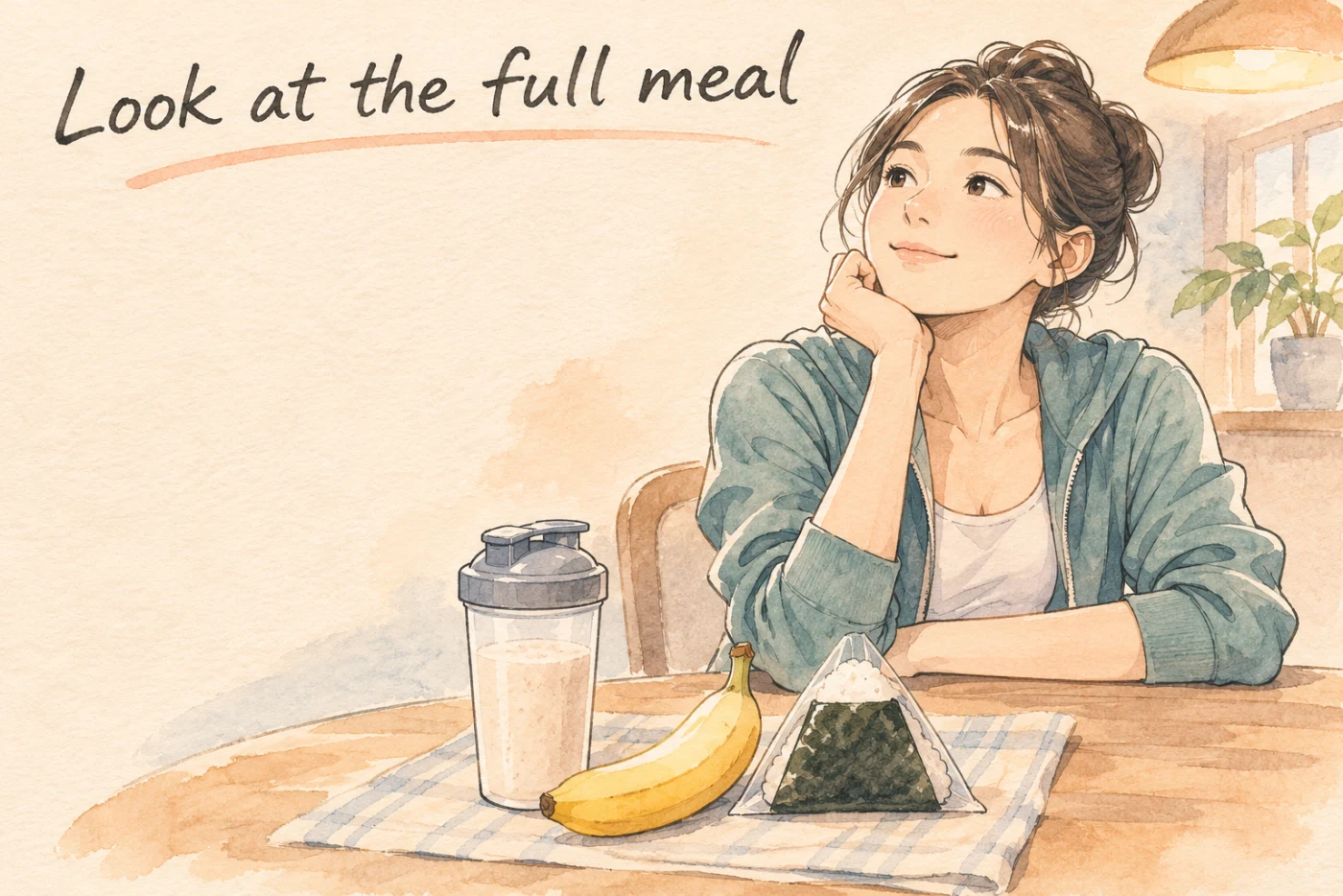
Think of two mornings. On one, you'll be eating lunch in an hour or two and the bottle is an easy snack. On the other, you'll be in meetings until midafternoon, and this is your last stop for food. A banana, a sandwich, or something you already enjoy may be an easy thing to take along for the second morning. The same bottle can play a different part depending on the rest of the day.
So when you see those two large 20s at the cooler again, check how the numbers were measured, what you'll drink it with, and when you'll eat next. You've got enough information to compare what each bottle actually brings to your morning.
References
- U.S. Food and Drug Administration. How to understand and use the Nutrition Facts label.