
What's in Your Noodle Bowl? Start With the Noodles
A full bowl of soup can hold less noodle than a bowl of sesame noodles. Estimate the cooked noodles, toppings, and sauce to make either bowl a meal.
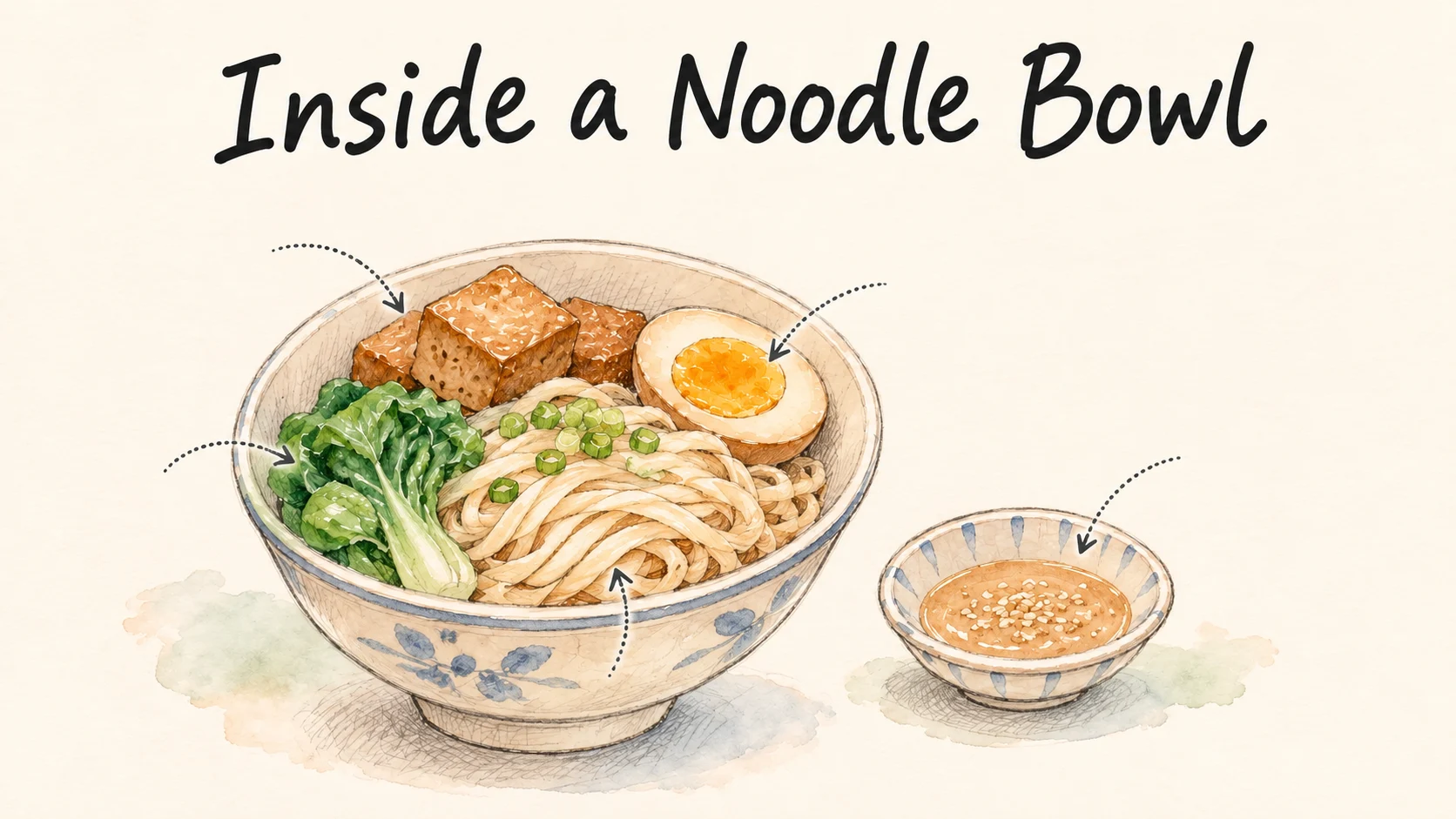
Start by looking at how much cooked noodle you will actually eat. Two bowls arrive at a Taiwanese noodle shop. The broth in the first is almost up to the rim. The sesame noodles in the second barely cover the bottom. The full one feels heavier, but your chopsticks may pick up fewer noodles from it.
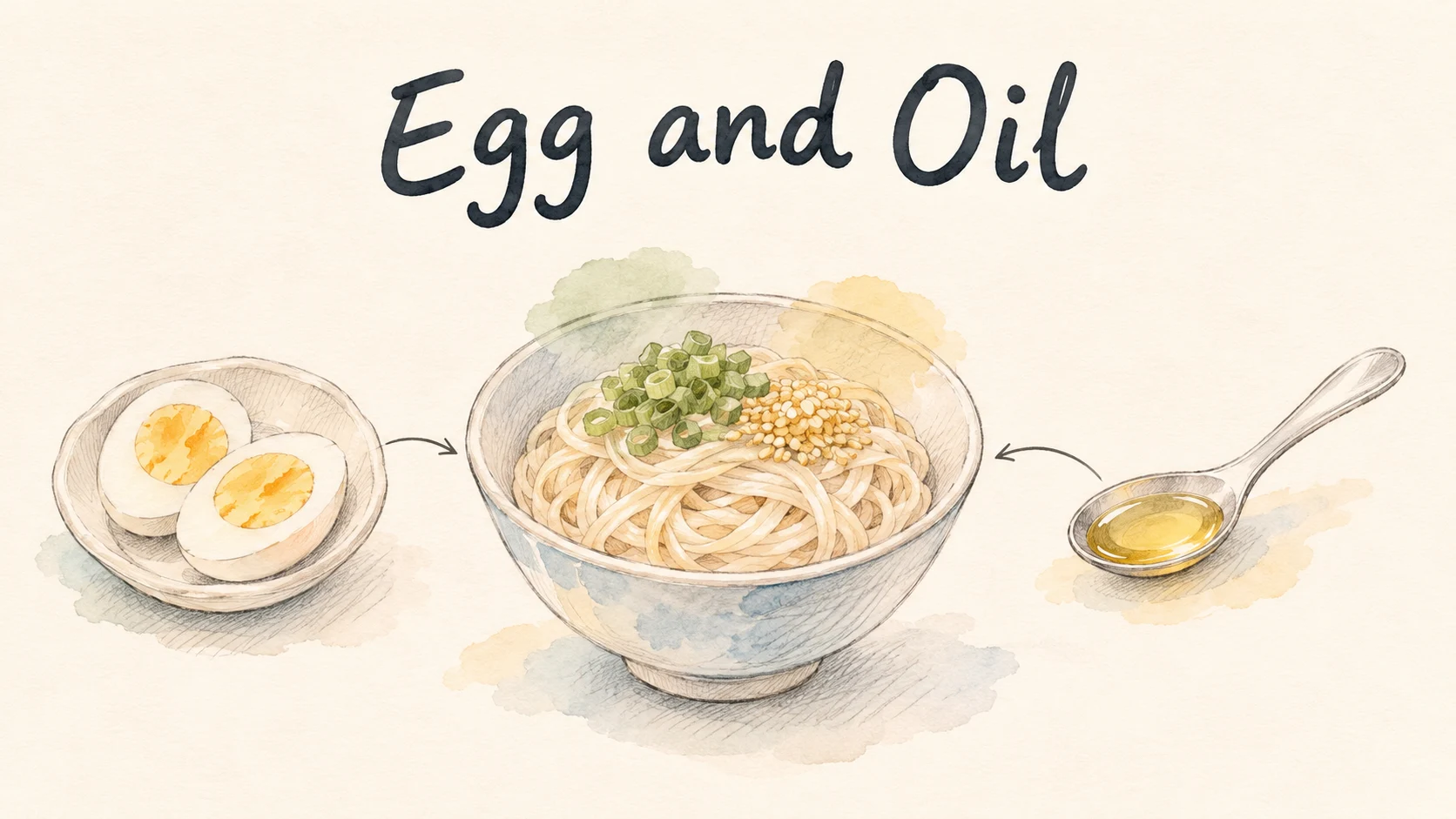
A bowl with the same amount of noodle can take an egg or a teaspoon of oil and come out differently. The egg adds protein and fat, and the oil adds fat. Then look at how much protein food and vegetable you have alongside the noodles to see what rounds out the meal.
How much noodle fits in a household rice bowl?
Lift the noodles and let them drain for a moment. Imagine putting them in the little bowl you use for rice. Taiwan's Health Promotion Administration uses about 60 grams of cooked wheat noodles as one grain serving in its food exchange table. That's roughly half a household rice bowl, with about 15 grams of carbohydrate and 70 calories. If you have 120 grams of cooked noodle, the estimate doubles to around 30 grams of carbohydrate and 140 calories. The amount that doubles is the noodle portion, even if one bowl comes in a bigger vessel [1].
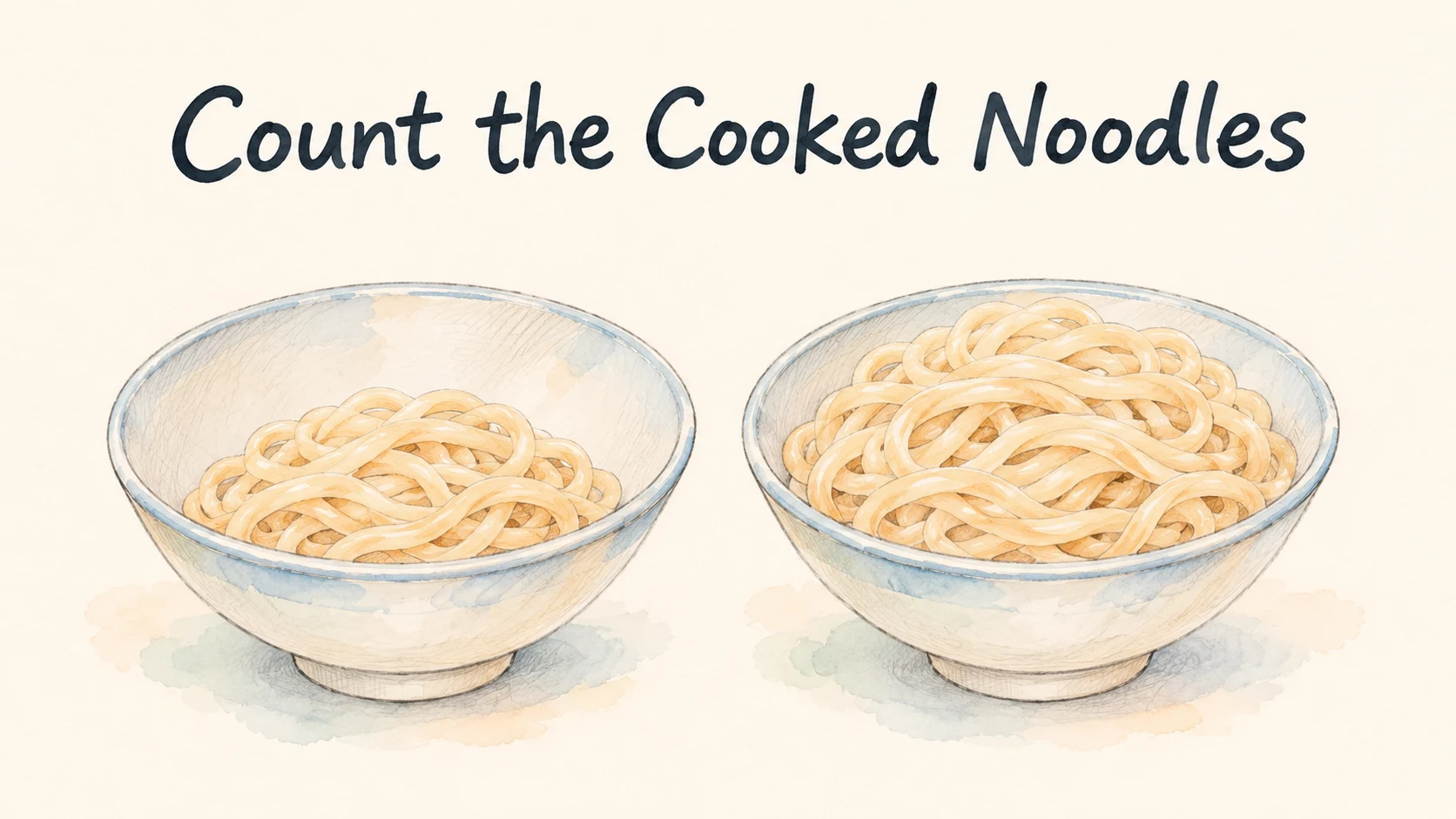
The same table counts 20 grams of dried noodles as one grain serving. Dried noodles take up water in the pot and weigh more once cooked. That makes the cooking stage important when you look up a number. Both the dried and the cooked entries might report nutrients for 100 grams, but those weights describe samples at different points. The amount of water taken up also depends on the noodle, how long you cook it, and how thoroughly it drains [1].
Taiwan's food exchange table gives reference portions. For an oil noodle or another noodle type, use the entry that matches the food and the stage you are weighing.
Here's something you can see at home. Weigh a handful of dry noodles. Cook the whole handful and weigh it again once it stops dripping. The extra weight shows how much heavier that portion got in your kitchen. For another batch from the same package, the reading gives you a point of reference. At a noodle shop, picture how much of a household bowl you could fill with the noodles you can lift.
How you measure can depend on when you decide to track lunch. If you are still cooking from a package, you can weigh the portion going into the pot and use the label for that dry product. If a cooked serving is already on your plate, find the matching cooked entry. Over time you may recognize what your usual serving looks like. A larger bowl or different shape of noodle is a reason to look again.
Add one egg, then try the same comparison with oil
Say your bowl contains 120 grams of cooked noodles. The general grain exchange value puts the protein in those two servings at about four grams. An egg is one medium-fat protein serving in the table, with about seven grams of protein, five grams of fat, and 75 calories. Adding it brings the protein in this example to about 11 grams. The amount of noodle stays where it was [1].
Now start with the same portion and toss it in an extra teaspoon of cooking oil. Taiwan's exchange table counts that teaspoon as about five grams of fat and 45 calories. If you eat all the added oil, those calories come with it. With the teaspoon of oil, the protein estimate stays at four grams [1].
The 120 grams, egg, and teaspoon are examples that show what changes. At a shop, egg sizes vary, minced pork brings both meat and fat, and the sesame dressing may include water and other seasonings. A spoonful of finished dressing has a recipe of its own. If it spreads out all over the bowl, the amount that spreads tells you little about how much of it is oil.
If you put both the egg and the oil in the bowl, both contributions are there. The added egg brings about seven grams of protein and five grams of fat, then the added oil brings another five grams of fat. Look separately at what goes into the pot or bowl so that each part gets counted once.
How to compare one bowl of soup noodles with one bowl of tossed noodles
Imagine two bowls that start with the same 120 grams of cooked noodles. The noodles account for the same part of each meal. The next questions are how much meat or oil comes in the broth, how much dressing coats the tossed noodles, and how much you actually eat. An extra half bowl of broth can change the weight you feel when you lift it. A shallow bowl of tossed noodles can already have dressing on every strand.
If the shop can serve the sauce on the side, stir in part and add more to taste. If you're tracking dinner, notice what remains at the end. Did you eat the minced pork you ordered on the side? Did some of the dressing stay in the bottom? You can get a useful estimate without counting every drop by looking at the food that made it from the bowl to your mouth.
Put the noodles and sides on one plate in your head
If your clear-broth noodles come with a few leaves, you can add blanched greens and choose an egg, braised tofu, or sliced meat. If there is already a generous serving of meat in the bowl, look at the vegetable portion. You can ask for the same sides with a small serving of sesame noodles. When the greens arrive dressed in garlic oil, include the vegetables and the dressing among the things you eat.
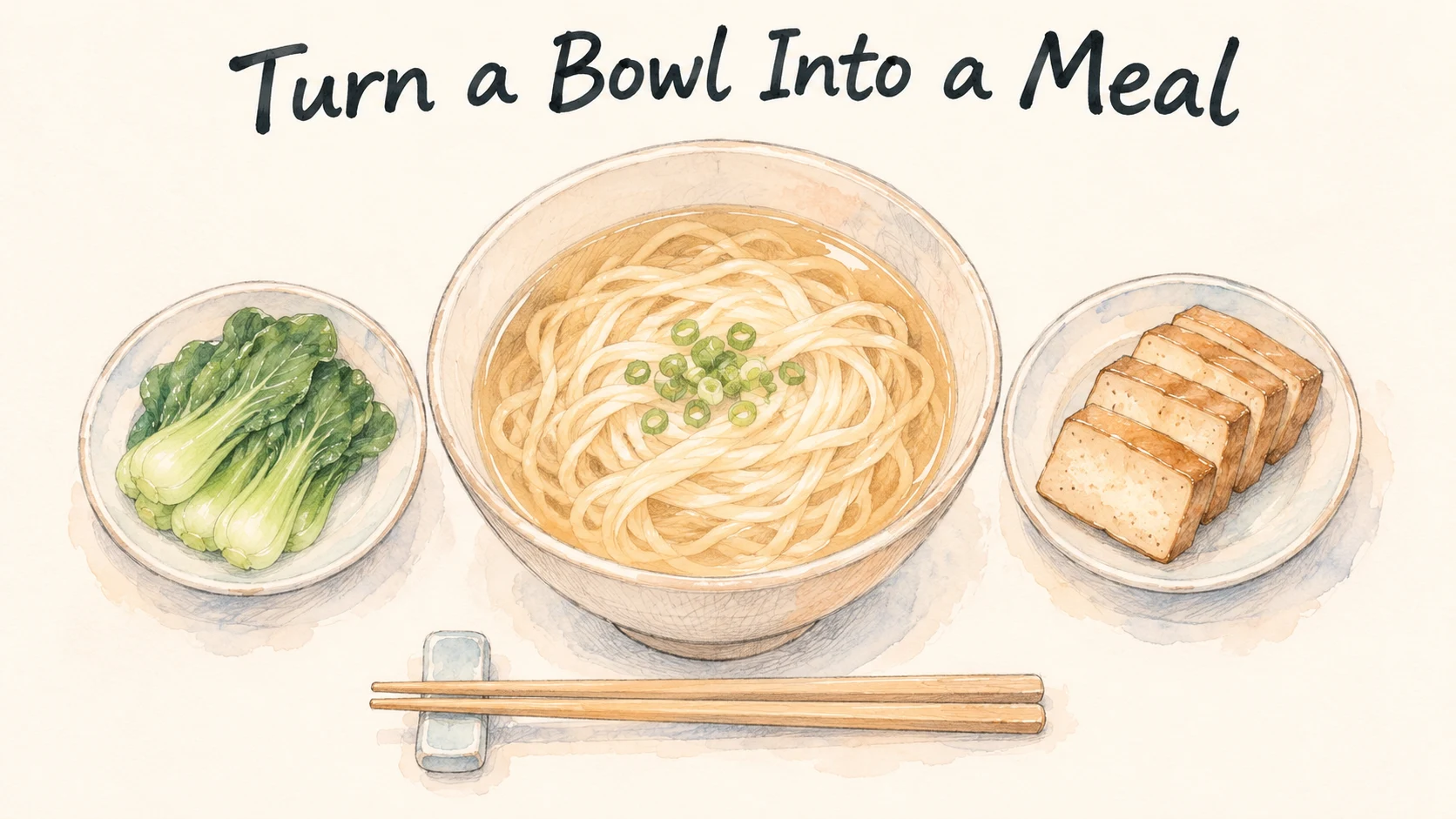
Taiwan's My Plate guide uses volume to give you an idea of proportions. Grains and vegetables take up a similar amount of space, and a palmful is a visual cue for the beans, fish, eggs, and meat group. At a noodle shop, picture the contents of the bowl and the side dishes together. The vegetables might be spread across two plates, or only a few leaves might be floating in the broth. Once you picture them together, it's easier to see where there's room for another side [2].
If you share a side plate of greens, count what you actually get from it. If you order an egg for a bowl that already contains sliced meat, picture both on the protein food side of the plate. Several little dishes can add up to one portion, and a large plate might be for several people.
Next time a bowl arrives, lift the cooked noodles first. Then look at the egg, meat, vegetables and sauce. That gives you a way to judge what makes up this meal, whether the shop serves your noodles in a shallow bowl or under a ladle of soup.
References
[1] Taiwan Health Promotion Administration. Food Exchange Table, May 2019 edition, appendices 2-2, 3, and 6.
[2] Taiwan Health Promotion Administration. Taiwan's My Plate dietary guide. 2018.