
What Happens to the Calories When Chicken and Rice Becomes Soup?
Add water to chicken and rice and the whole pot still has the same calories. A study shows why the amount in a spoonful, and what you eat next, can change.
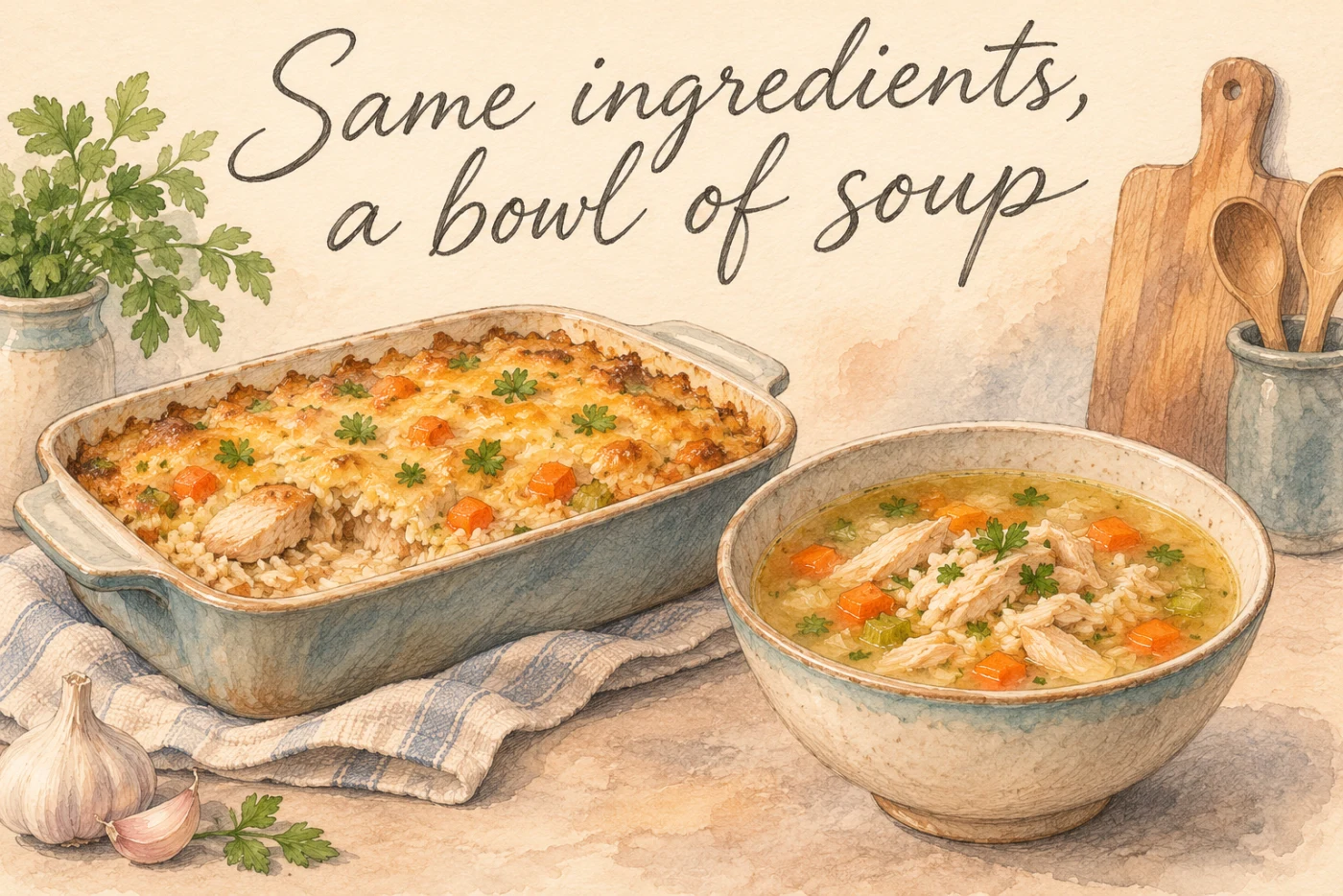
There's one bowl of chicken and rice left in the fridge. You put it in a pot, add water, and get a generously filled bowl of soup. Each spoonful has less chicken and rice than a spoonful of yesterday's dinner. If you finish the whole pot, though, the calories from the chicken and rice are still there.
Adding water changes how much energy is in each bite. One study found that putting water in a bowl of food, instead of serving that same water in a glass, changed how much the same people ate for lunch afterward. Both versions had the same calories and weighed the same when put on the scale together [1]. To see what happened, first separate the spoonful from the whole pot.
The same calories, spread over a larger weight
The energy density of a food is the amount of energy per gram. Many food labels give calories per 100 grams, which is another way to show it. Take the same weight of two dishes and you can compare how much energy each portion contains.
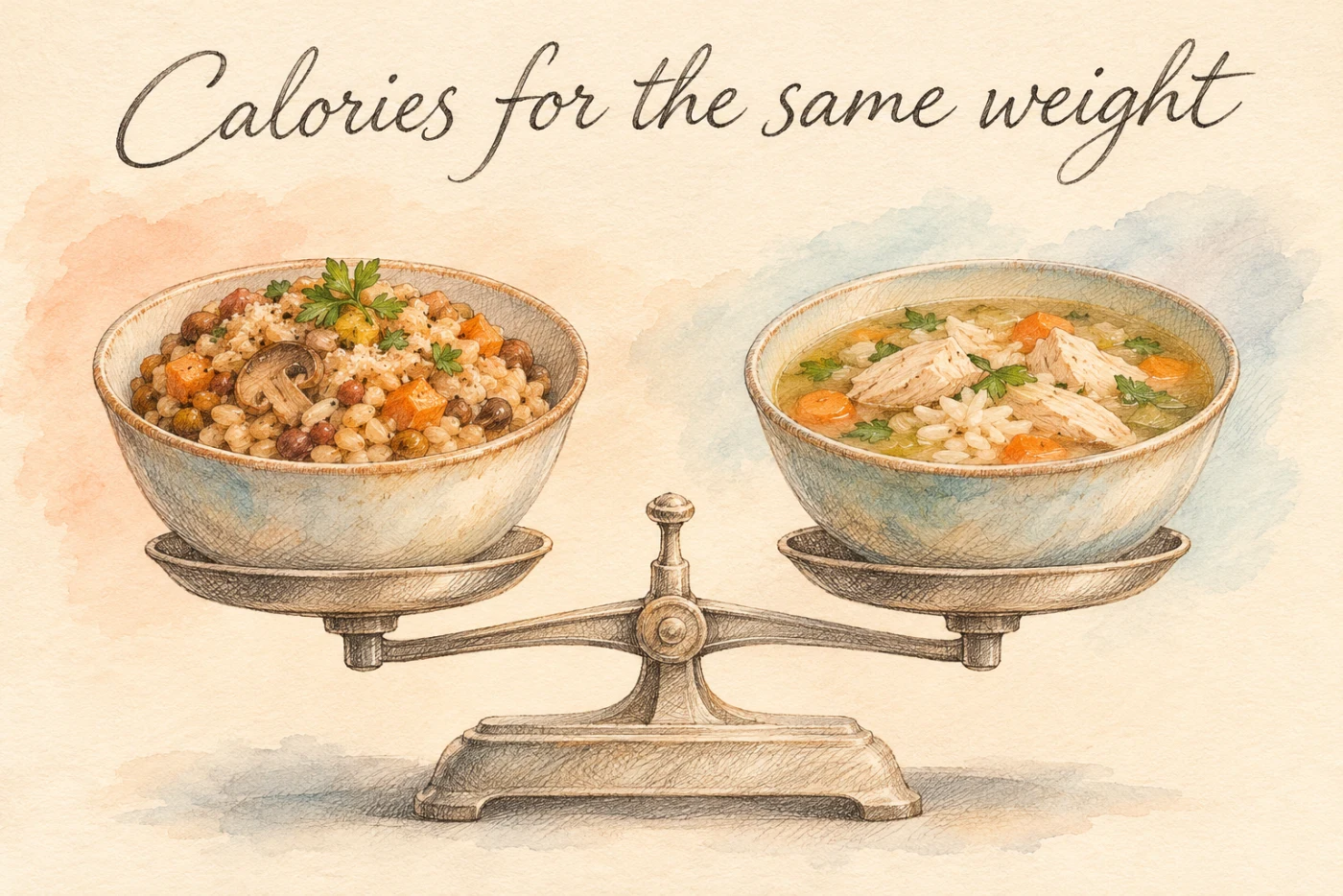
Suppose a 250-gram serving of chicken and rice contains 300 calories. You add 250 grams of water and nothing evaporates. No oil, sauce, or other food goes in. The pot now contains 500 grams and still has 300 calories. There were 120 calories per 100 grams before you added the water. Now there are 60 per 100 grams. Ladle out a 250-gram serving with half the ingredients, and it has about 150 calories. So does the other half.
The example assumes the rice, chicken, and broth are distributed evenly. If you scoop out most of the rice and chicken first and leave the broth behind, your 250 grams can have more than 150 calories. If you stir in a block of curry roux or a handful of noodles, you also change the calories in the whole pot. Water changes the weight used for the calculation. Extra ingredients can change both parts of it.
Does it matter whether the water is in the glass or the bowl?
In 1999, a team led by Barbara Rolls had 24 women aged 20 to 37 come to the lab on four days. On three days, they received a fixed amount of food shortly before lunch. On the fourth, they didn't get that first course. Each of the three first courses had the same chicken, rice, and other ingredients, served as a casserole, the casserole with a glass of water, or chicken-and-rice soup with the water added to the dish [1].
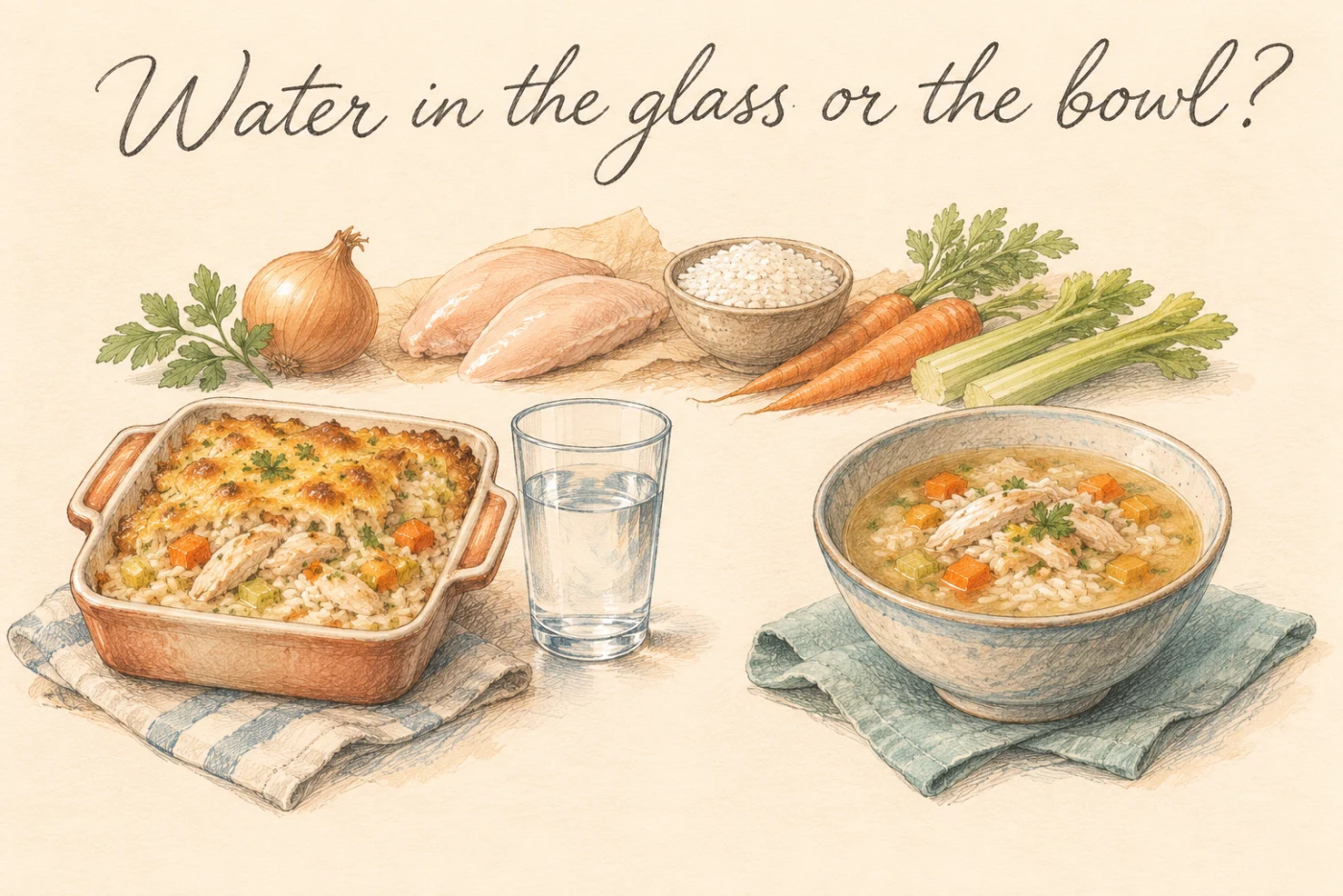
The casserole and glass together and the soup alone each weighed 619 grams, and each contained about 270 calories. The researchers served the whole first course, then gave participants a lunch they could eat in the amount they wanted [1]. If water had the same effect wherever it was served, both days with water might have looked similar. The design let researchers compare water as part of the food with water served on the table beside it.
When participants had the casserole with a glass of water, the lunch that followed averaged about 396 calories. When they had the soup first, lunch averaged about 289 calories. The difference in the next meal was about 107 calories. Those numbers are in addition to the 270 calories in the first course. The original paper reports kilojoules, converted here at 4.184 kilojoules per calorie [1].
The researchers didn't find a clear difference in dinner calories. They could see a difference in how much people ate at lunch under these conditions. The experiment didn't isolate the feeling or step that made it happen. A bowl of soup can feel and taste different and can be easier or slower to eat, depending on the soup and the person. The study was small and used carefully scheduled meals. It couldn't tell us how often the same pattern would occur if people started making soup at home [1].
Lunch was smaller after the soup even though the two first courses had the same calories and the same added amount of water. Water was still available. The experiment didn't ask people to cut back on what they normally drink [1].
What if you put the glass on the scale, too?
Put the full casserole and glass on the scale together and their 270 calories are spread across 619 grams, or about 44 calories per 100 grams. The soup gives the same answer. Weigh the casserole by itself, however, and the denominator is 263 grams. Its density is about 103 calories per 100 grams [1]. The two calculations answer different questions. The smaller number describes the combined weight of the food and water. The bigger one describes what goes onto the plate if you scoop out 100 grams of the casserole.
Think about what you want to compare before choosing the numbers to put on the scale. If you're calculating a meal total, a glass of plain water doesn't take away any calories from the rice. If you're comparing the contents of two spoonfuls, the water already mixed into the food does affect how much rice and chicken each one holds. That's the distinction the researchers built into the trial.
Start with the ingredients and the serving
When you're looking at a menu, the word soup on its own tells you very little about the bowl. A cup of broth that comes with a lunch plate might have mostly liquid. A bowl of noodle soup might include noodles, an egg, slices of meat, and oil in the broth. The bowls may hold different amounts, too. For a full serving, you'll want to know both how much energy there is in a given weight and how much you're eating.
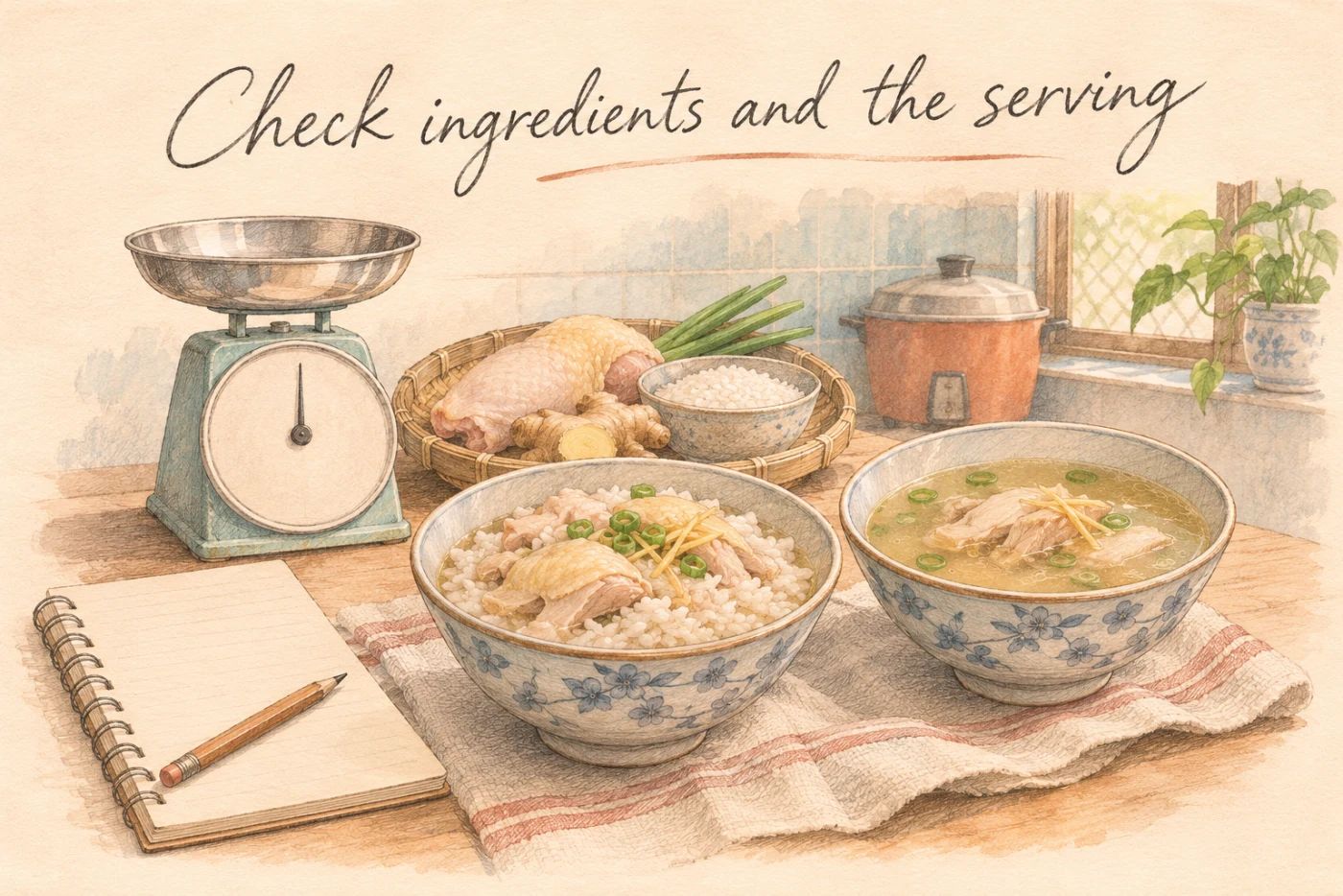
At home you can write down how much chicken, rice, and oil went into the pot, then see how much of each you served if you plan to divide it. On a package, check whether the numbers are for the powder as sold or for the prepared food. A dry soup mix has a different weight from the soup you make with it. If you use and eat the whole packet, the packet's total is easier to interpret than a guess based on the number for 100 grams of prepared soup.
Energy density helps when you're comparing like amounts. For dinner you're also deciding how many spoonfuls, what sits in those spoonfuls, and whether you'll save half for tomorrow. When yesterday's chicken and rice fills a pot instead of a small bowl, the first question to ask is how many bowls you'll make from it.
References
- Rolls BJ, Bell EA, Thorwart ML. (1999). Water incorporated into a food but not served with a food decreases energy intake in lean women. American Journal of Clinical Nutrition.