
How do you keep yesterday's meal prep safe until lunch?
Cool cooked food promptly in shallow containers, then keep your packed lunch cold with two cold sources. Follow the meal from the kitchen to the office.
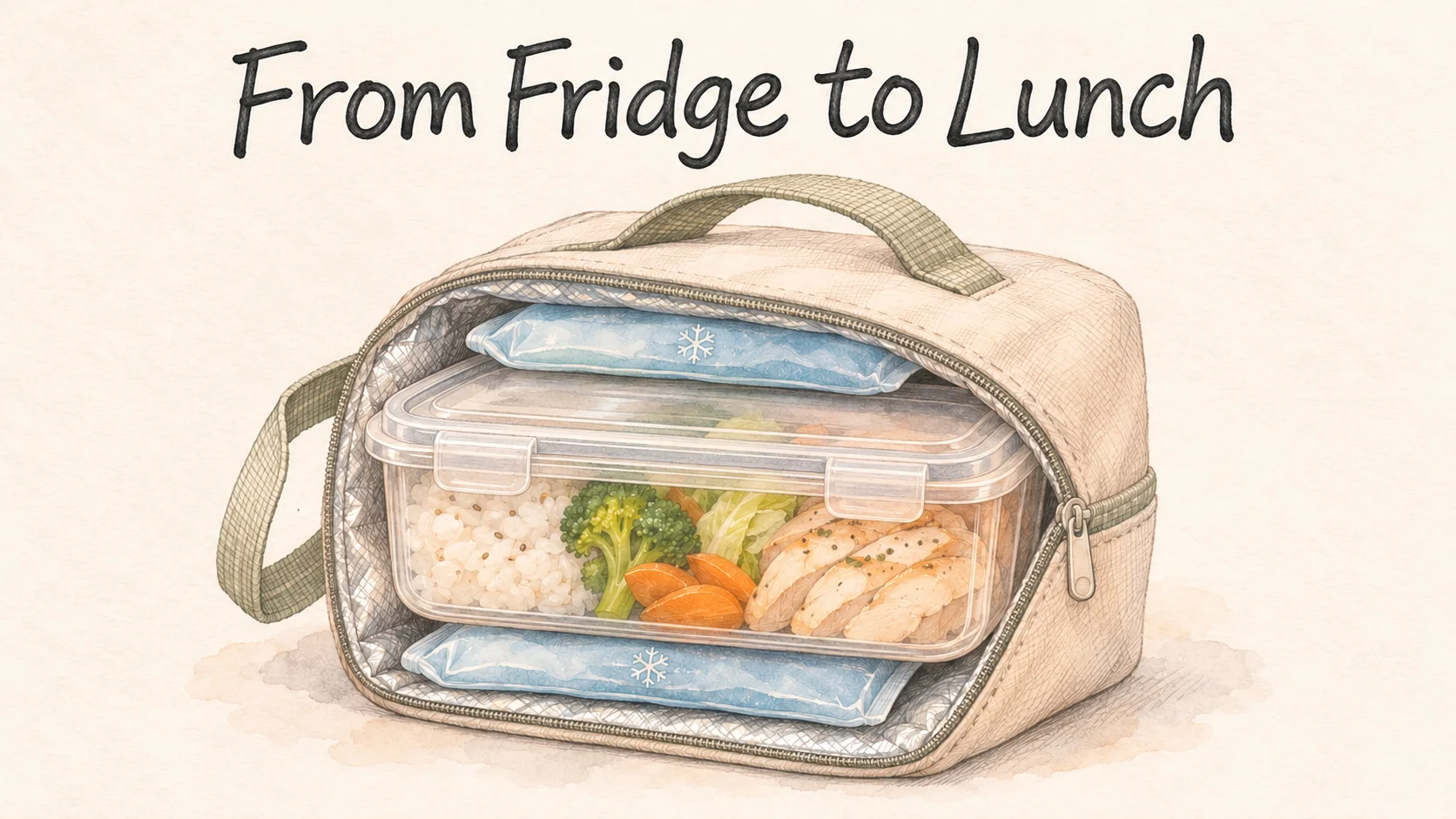
It's Sunday evening. You cooked rice, chicken, and greens for dinner, and you want to pack a few lunches while you're clearing the kitchen. The rice is still hot. The kitchen is warm. Do you leave the food out until it cools or start putting it away now?
Divide the food into shallow containers and refrigerate it promptly. The next morning, pack it in an insulated bag with a cold source on either side, then refrigerate it when you arrive if you can. For cooked leftovers, the U.S. Department of Agriculture advises a limit of two hours out of temperature control, or one hour above 90°F (about 32°C). Refrigerate at 40°F or below (about 4°C). For cooked rice specifically, the UK's Food Standards Agency advises cooling it quickly, ideally within an hour, and using it within 24 hours in the fridge [1][2][3].
How do you get a pot of food to cool faster?
A large pot of food can feel cool around the edges while holding heat in the middle. Spread the same cooked food across smaller, shallow containers and it has less depth to cool through. The USDA recommends shallow containers for faster, more even cooling. Taiwan's Food and Drug Administration also advises separating large batches of food, such as soup or big pieces of meat, into small amounts before refrigerating [1][4].
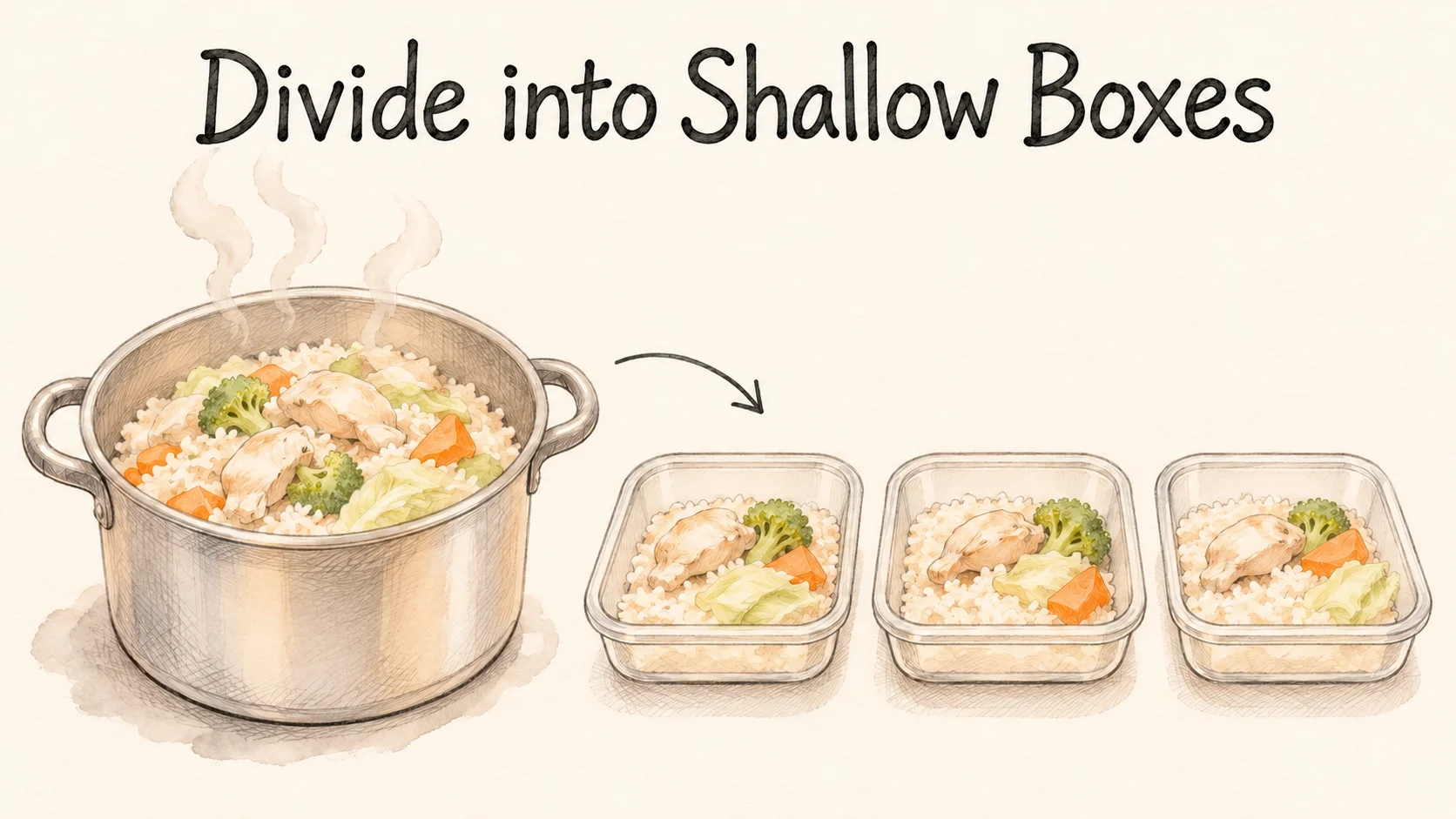
While you clear dinner, use clean utensils to portion what you plan to eat tomorrow. Divide up the chicken, spread the vegetables out, and portion the rice into shallow containers. Put the containers in the refrigerator promptly. Make room for air to move around the containers, especially if there's already a lot in the fridge. You can do this straight away while you still know how long the food has been out.
Two hours is an upper limit. If your kitchen or outdoor temperature is above 90°F, the USDA reduces the limit to one hour. For cooked rice, the UK Food Standards Agency gives a more specific target of cooling it as quickly as possible, ideally within an hour [1][3].
Rice can stay warm in the center of a rice cooker's bowl for a long time after the cooker is off. The Taiwan FDA notes a food safety risk when cooked rice sits at room temperature too long. Reheating doesn't undo the way rice was stored. Divide it up while you clean the kitchen rather than leaving the whole batch to cool in the rice cooker [3][5].
Here's how that might fit your evening. You turn the stove off at 6:30, clear a space for three shallow containers, and divide what you need while the rest of the family clears the plates. At 6:45 the containers can go into the refrigerator. Those times illustrate how to put things away early. How quickly the food cools depends on the containers and how cold the refrigerator actually is. A refrigerator thermometer can help you check [1][2].
Where does the cold come from on the way to work?
The lunch should already be cold when it leaves the refrigerator. Use an insulated bag and put one ice pack below the container and another above it. You can also use a frozen water bottle in place of one pack. The USDA recommends at least two cold sources for a lunch containing perishable food. Refrigerate the lunch when you arrive if you have somewhere to do so. If you put the insulated bag in the refrigerator too, open the bag so cold air can reach the closed food container [2].
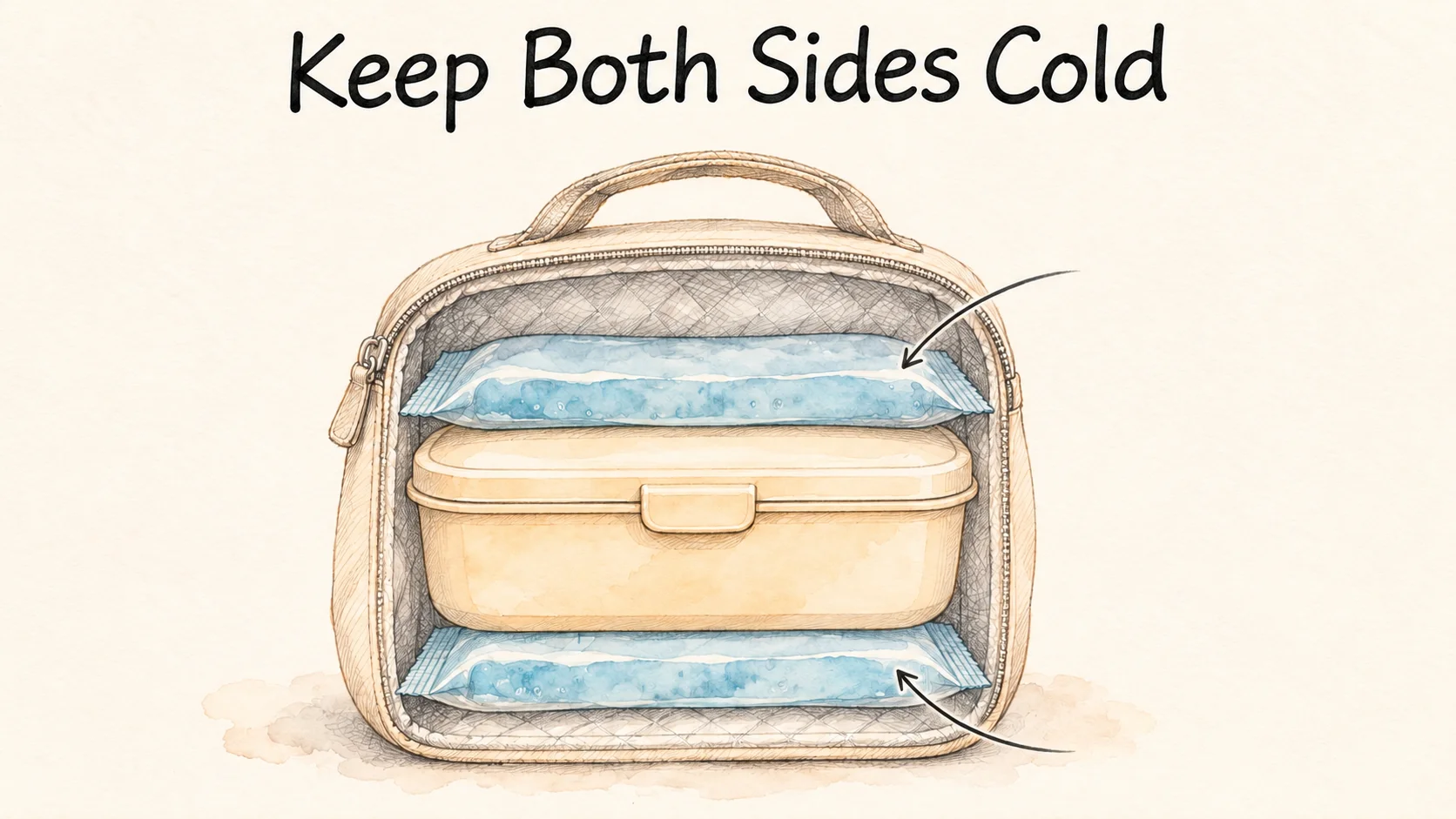
You might commute for half an hour, then put the bag beneath your work desk until lunchtime. What matters is the whole time between your refrigerator and lunch, including the hours at the desk. Warm weather, sunshine, and opening the bag can all shorten the time it stays cold. Two ice packs give you cold sources on both sides. They don't guarantee how long your specific lunch will stay at a safe temperature.
Suppose you're due to go from home straight to the refrigerator at work, but a morning errand outdoors gets added to the plan. If it's above 90°F and you can't keep a perishable lunch cold, the USDA's limit for time outside temperature control is one hour. On that day, you could leave the chicken and rice in the refrigerator at home and carry something that doesn't need to be chilled [1][2].
If you want to eat it hot, reheat in a microwave-safe container with a vented cover. Stir or rotate the food so the middle and edges heat through. The USDA recommends reheating leftovers to an internal temperature of at least 165°F (about 74°C), which you can check with a food thermometer. When a perishable lunch has already sat out longer than the recommended time, have something else for lunch [1][2].
If you packed enough food for lunch and a later meal, take the lunch portion out first, then put the rest back in the fridge. Heat the portion you mean to eat. For rice, the UK agency advises reheating it only once and checking it's hot throughout [3].
Which portions are better put in the freezer?
Think about the date you'll eat each lunch. Tomorrow's portion can go in the refrigerator. Portions intended for later can be frozen promptly after you divide and cool them. The USDA guidance for properly refrigerated leftovers in general is three to four days. The UK Food Standards Agency specifically recommends using refrigerated cooked rice within 24 hours. If you made rice on Sunday and want it on Thursday, set aside Thursday's portion for the freezer on Sunday, rather than leaving it in the refrigerator through the week [1][3].
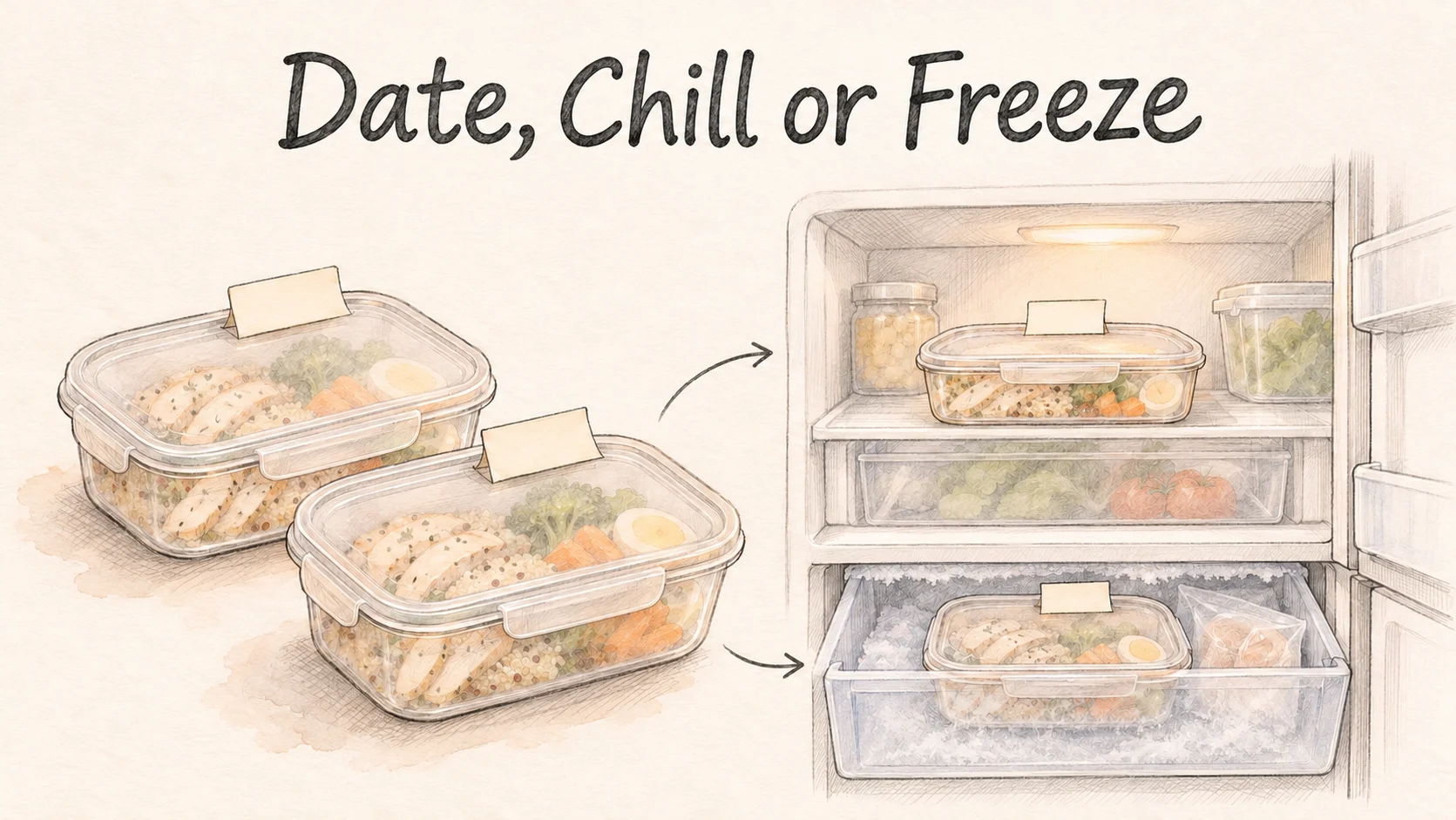
Date the containers when you make them. When two look the same in the fridge, the date tells you which to use first. To thaw a frozen portion, move it to the refrigerator ahead of time, then transport it cold. Reheat the portion you're going to eat and leave the others in the refrigerator [2].
If you come across an unlabeled box, try to establish when you made it and whether it was kept cold afterward. Include the time the box went out with you if you brought it home again. When you can't establish that a perishable meal was kept within the recommended limits, choose another lunch [1][2].
If you expect to be away from a refrigerator and can't depend on keeping a chicken-and-rice bowl cold, decide on something you can carry safely. Whole fruit or other food that can be stored unopened at room temperature can travel without ice. Buying a lunch when it's time to eat can also make sense on that particular day. For tomorrow's usual lunch, finish the job you started on Sunday night when you put the shallow container in the fridge. In the morning you'll be taking an already cold meal with you.
References
[1] U.S. Department of Agriculture, Food Safety and Inspection Service. How do I handle leftovers safely? 2024.
[2] U.S. Department of Agriculture. Kitchen Companion: Your Safe Food Handbook. 2015. Sections on reheating leftovers and packing lunches.
[3] UK Food Standards Agency. Home Food Fact Checker: Rice.
[4] Taiwan Food and Drug Administration. Clostridium perfringens and storage of prepared food.
[5] Taiwan Food and Drug Administration. Bacillus cereus and storage of cooked rice.