
Can You Guess an Apple’s Sugar From Its Color?
Three yellow apples and a red-green comparison show how variety, acidity and the portion you eat each affect the answer.
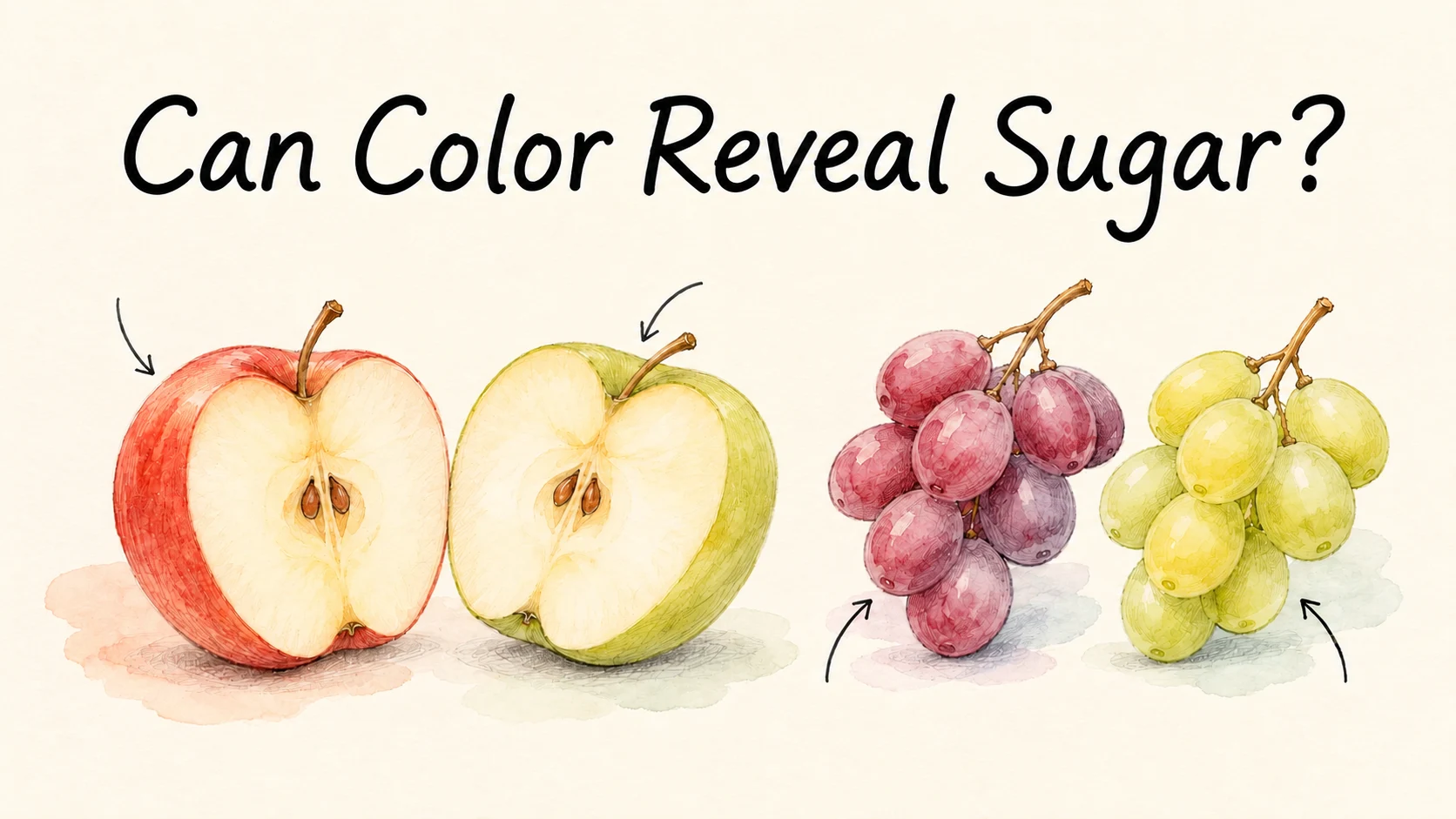
An apple's skin color can't tell you how much sugar is in your serving. To estimate the grams you will eat, start with the variety and its sugar content per 100 grams. Then check the weight of the part you will actually eat. How sweet the apple tastes is a separate question. Acidity and aroma also shape the first bite.
At a fruit stand, a shiny red apple looks sweet before you have even tasted it. The green one beside it makes you think of a sharper bite. If you are picking two for an afternoon snack, taste is one way to choose. If you want to know which plate contains more sugar, you will need to know what variety you're buying and how much you will put on the plate.
▌Three yellow apples can have different amounts of sugar
A South Korean team studied 24 apple varieties grown in one research orchard, including three yellow-skinned varieties. The researchers peeled the apples and made juice from the pulp for their sugar and organic acid measurements. They separated the compounds by liquid chromatography and reported the amounts on a fresh-weight basis. That gave them a way to compare apples of the same weight even when they looked much alike. [1]
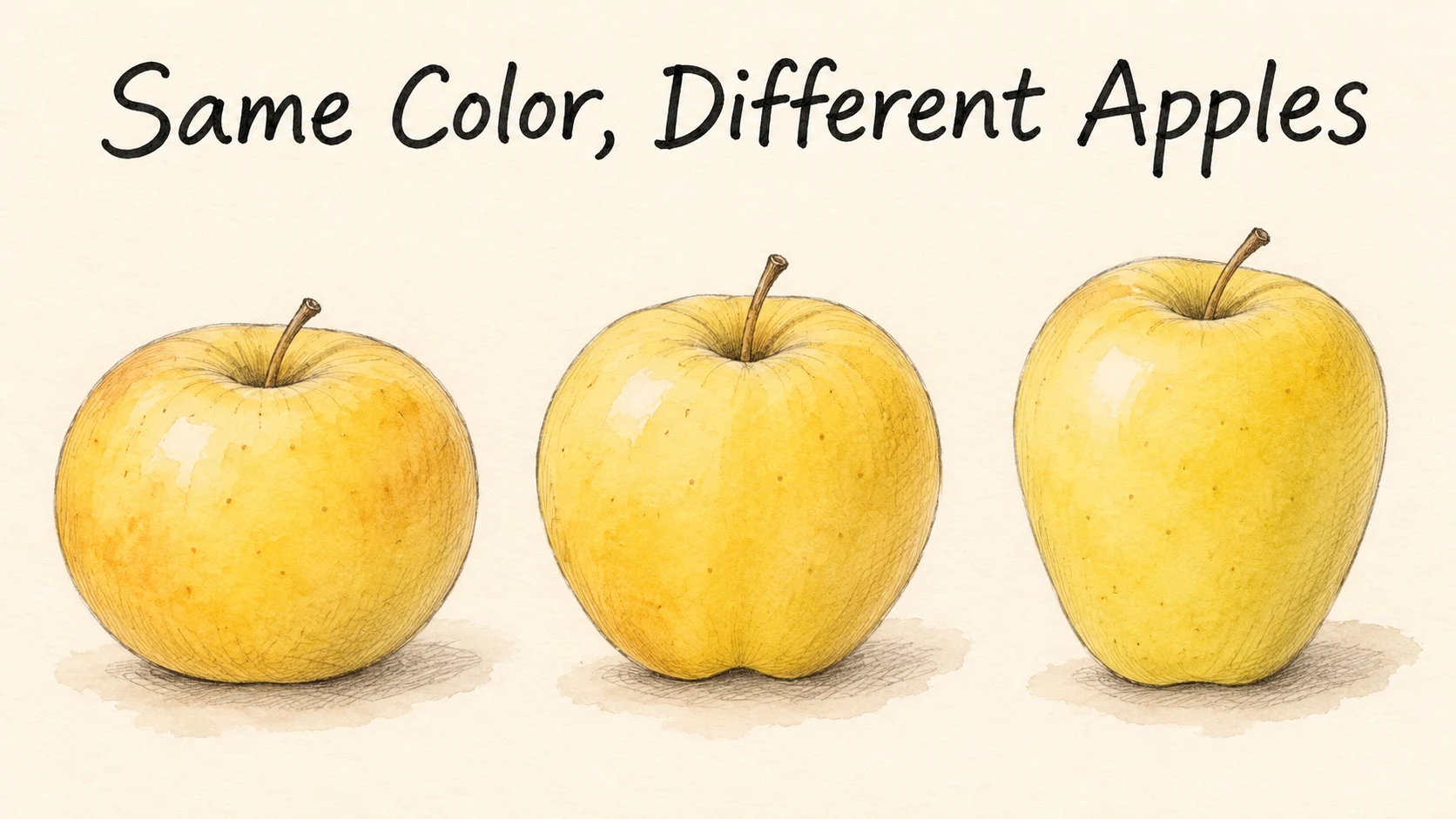
Two of the yellow apples, Summer King and Hwangok, contained about 9.3–9.8 grams of sugars and sorbitol per 100 grams. Golden Delicious had about 7.2 grams per 100 grams. On two plates of the same weight, the study's numbers would put the difference at around two grams or a little more. The Korean study's total adds up glucose, fructose, sucrose, and sorbitol. Sorbitol is a sugar alcohol. In the next study, the researchers list it separately from the three sugars. [1]
These measurements came from a particular harvest in one orchard. Knowing the variety gives you a more useful name to look up than knowing the color. Apples of that variety can also differ depending on where they grew or when they were picked. If two bags both say yellow apples and the fine print names a variety, you can keep that name for the next time you shop for the flavor you liked.
The same Korean study measured compounds in the peel and flesh separately. In the pink-fleshed Tinkerbell apple, the researchers found relatively high levels of anthocyanins and suggested that these pigments account for the pink color. The sugar and acid results for the fruit come from a separate set of measurements. [1]
▌A more tart apple can still contain close to the same sugar
A separate group led by researchers at the University of Novi Sad's Institute of Food Technology analyzed seven apple varieties sold in Serbia. They reported the results on a fresh-weight basis. The green Granny Smith had about 7.6 grams of glucose, fructose, and sucrose per 100 grams combined. The red Red Delicious had about 8.4 grams. That's a gap of less than one gram. But the Granny Smith had around 0.70 grams of malic acid, compared with about 0.27 grams in Red Delicious. The first had about 2.5 times as much malic acid. [2]
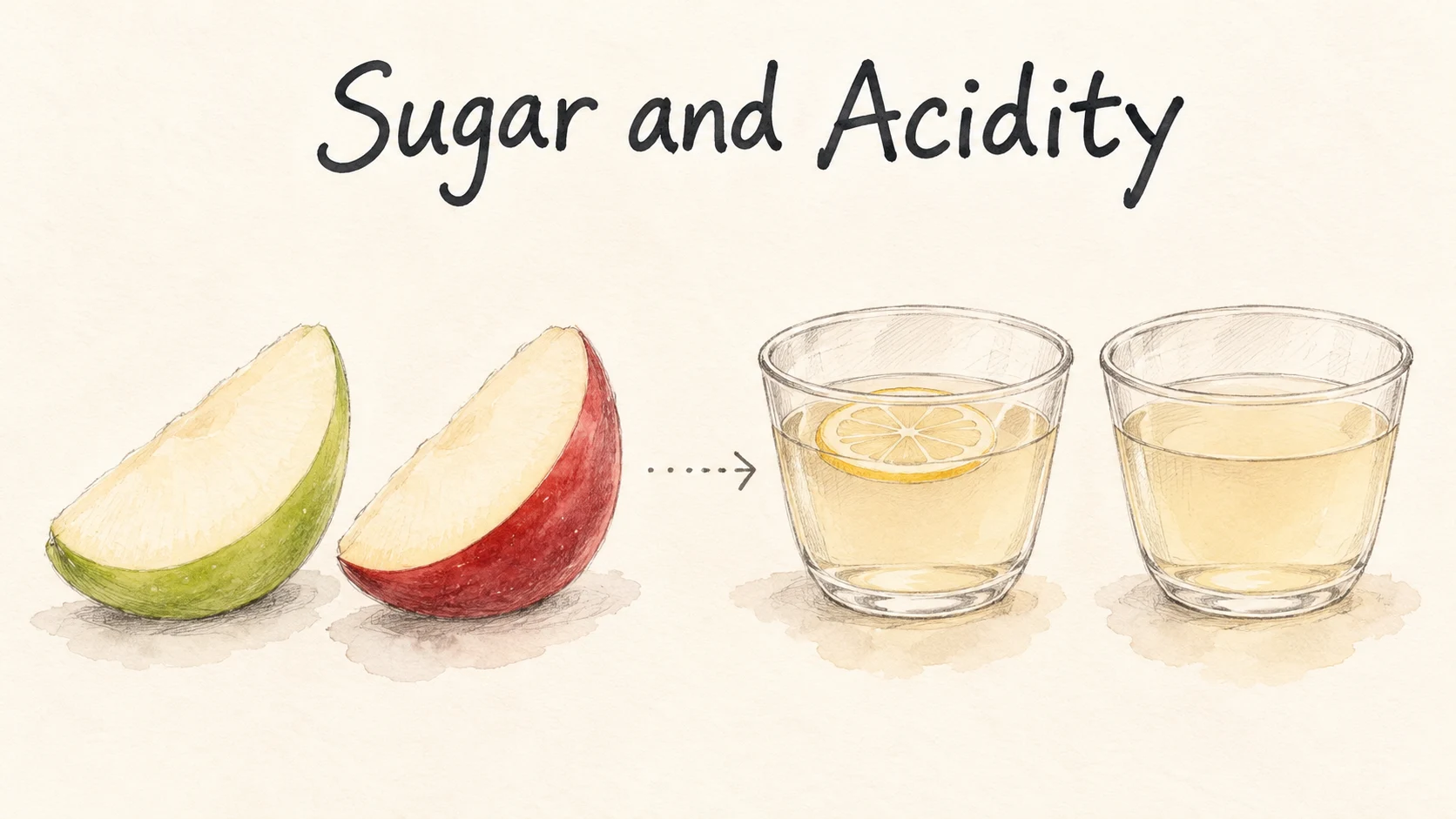
Think of two identical cups of sweetened tea. Squeeze lemon into one and the drink tastes more tart. The amount of sugar you put in each cup was the same. An apple's sugars and acids reach you in the same bite. The Serbian researchers measured those compounds in the samples. The figures describe the composition of the fruit. For how tart it actually tastes, you would take a bite.
A fruit sign sometimes gives a reading in degrees Brix. This is generally measured with a refractometer and describes dissolved solids in the juice. Sugars are a large share of those solids, and other compounds are dissolved along with them. The reading can help growers gauge ripeness and flavor. To work out grams of sugar in your snack, look up the actual sugar content and weigh the portion you plan to eat. [3]
The three yellow apples give an example. Golden Delicious read about 13.9° Brix, and Hwangok about 11.9° Brix. Yet Golden Delicious had the lower total for the sugars and sorbitol measured by liquid chromatography. One number describes dissolved solids in the juice, and the other adds up the individual compounds the researchers measured. [1]
▌From 100 grams to the portion in your hand
Bring the two varieties from the Serbian study back to your table. With two 100-gram servings, the Red Delicious contains a little more of the three sugars. If you cut 150 grams of Granny Smith and serve 100 grams of Red Delicious, the calculation changes. Using the rounded 7.6 grams and multiplying it by 1.5 gives about 11.4 grams of the three sugars from the green apple, compared with about 8.4 grams from the red one. A bigger portion can reverse the order you saw when both servings weighed the same. [2]
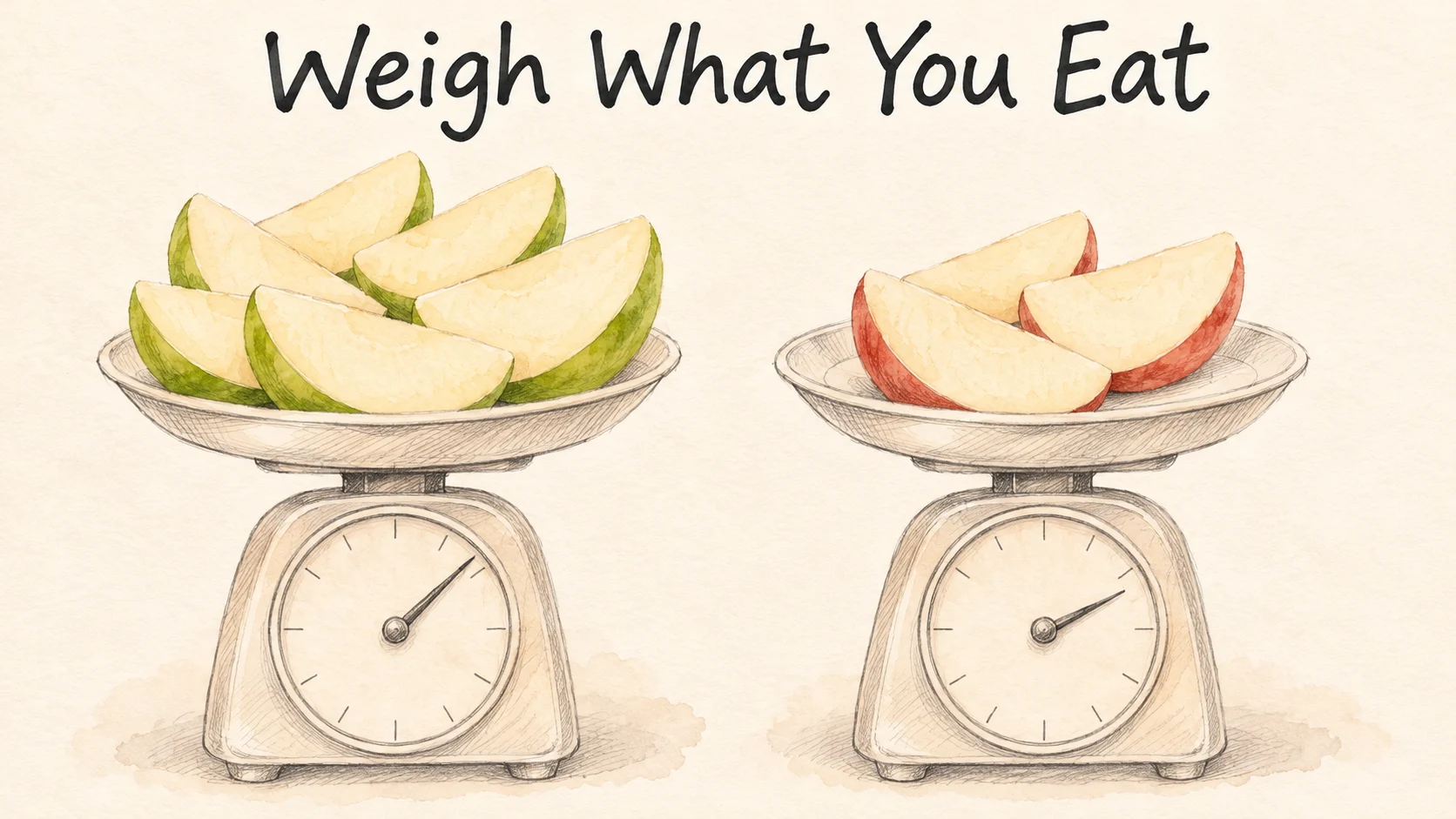
The weight of an apple at the market includes bits you may leave behind. Put the core, seeds, and any peel you don't eat to one side. If you are packing a snack, weigh the slices as you put them in the container. If there is no scale, Taiwan's My Plate guide uses a fist-sized volume as a visual cue for a serving of fruit. It's handy for filling a small plate. An estimate in grams of sugar still uses a weight and the composition of the food. [4]
If a food database simply says “apple,” use its entry as an estimate for a typical apple. When you know the variety and can find a matching entry, you can use a closer reference. A study reports what was in its specific samples, so treat the figures as estimates for the fruit you brought home. A different harvest can give the same variety a different composition.
A mixed-fruit box is another reason to calculate from the portion. Apple wedges may cover half the space and guava slices the other half. Those visual halves can weigh different amounts. To estimate the sugar in the box, weigh the edible portions separately, use the available figure for each fruit, then add the two estimates.
You can make the same comparison with a friend by cutting both apples into wedges. Give each person a couple of wedges to try, and note the varieties that taste good to you. If you're tracking the amount of sugar in the snack, weigh the wedges that went onto your own plate. The apples may have looked like a red one and a green one at the fruit stand. Now you know which fruit you tried and how much you ate.
References
[1] Kim I, et al. Metabolite Profiling and Antioxidant Activity of 10 New Early- to Mid-Season Apple Cultivars and 14 Traditional Cultivars. Antioxidants. 2020;9(5):443. Table 1 and Figure 2.
[2] Cvetković B, et al. Assessing Antioxidant Properties, Phenolic Compound Profiles, Organic Acids, and Sugars in Conventional Apple Cultivars. Foods. 2024;13(14):2291. Tables 3 and 4.
[3] Kaohsiung District Agricultural Research and Extension Station. How fruit sweetness is measured. 1999.
[4] Taiwan Health Promotion Administration. Taiwan's My Plate dietary guide. 2018.