
Want More Fiber? Start With Your Usual Bowl of Rice
Use familiar portions of brown rice, broccoli, and guava to see how fiber adds up across a day of Taiwanese meals.
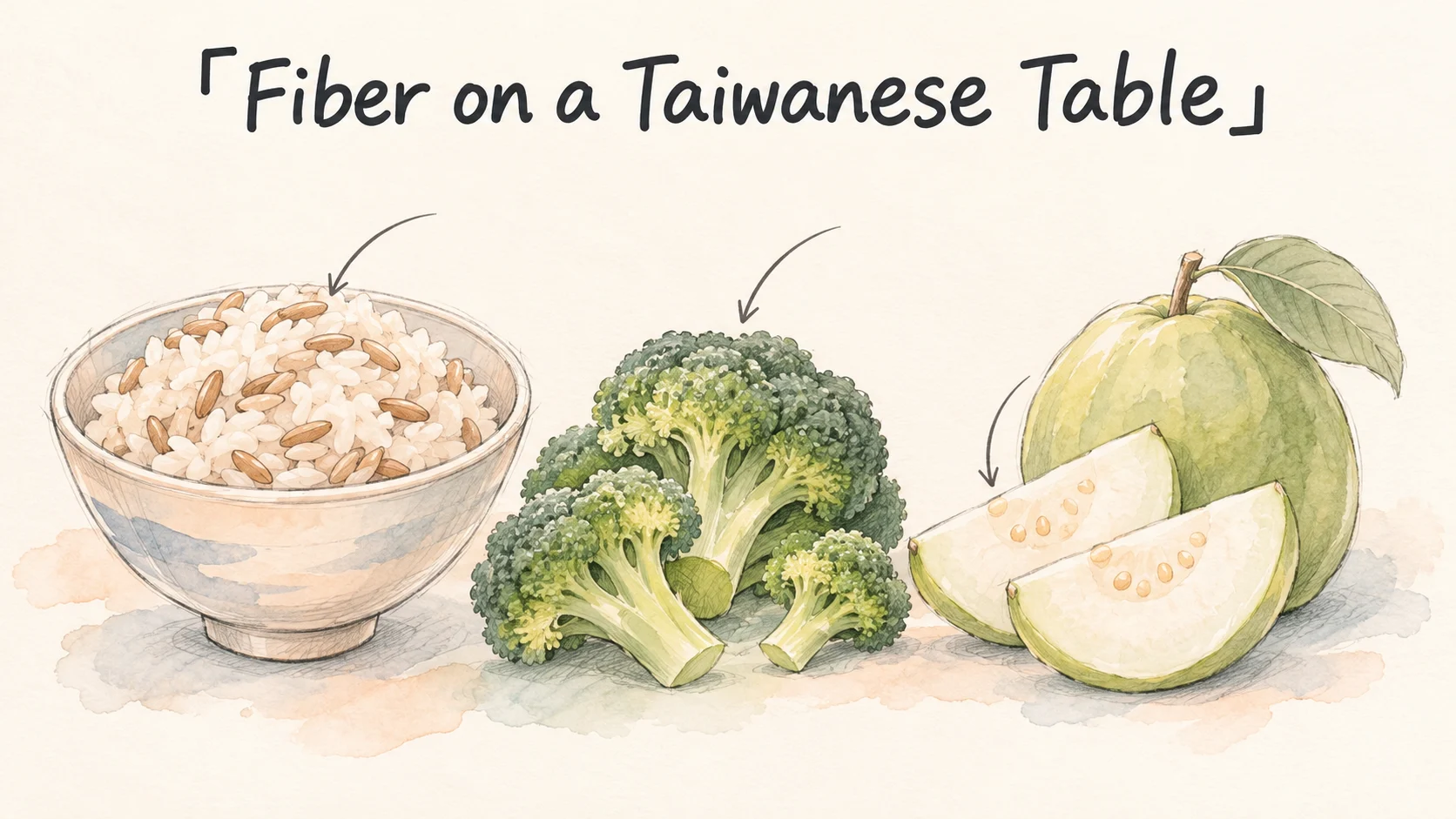
Your lunch bento comes with a few florets of broccoli, and later you have half a guava. Both give you fiber. To see how much you added, start with portions you actually eat. Blend some brown rice into your usual bowl of rice, or add a vegetable side you know you'll finish. One familiar meal gives you a place to start.
Taiwan's eighth edition of the Dietary Reference Intakes uses 14 grams of dietary fiber per 1,000 calories as its basis for adequate intake. That comes to about 25 grams for someone who needs 1,800 calories a day. At 1,500 calories, the same calculation gives 21 grams. These are examples of how a whole day's figures add up. They leave room for several sources, including grains, vegetables, and fruit [1].
Start with the grains in your rice cooker
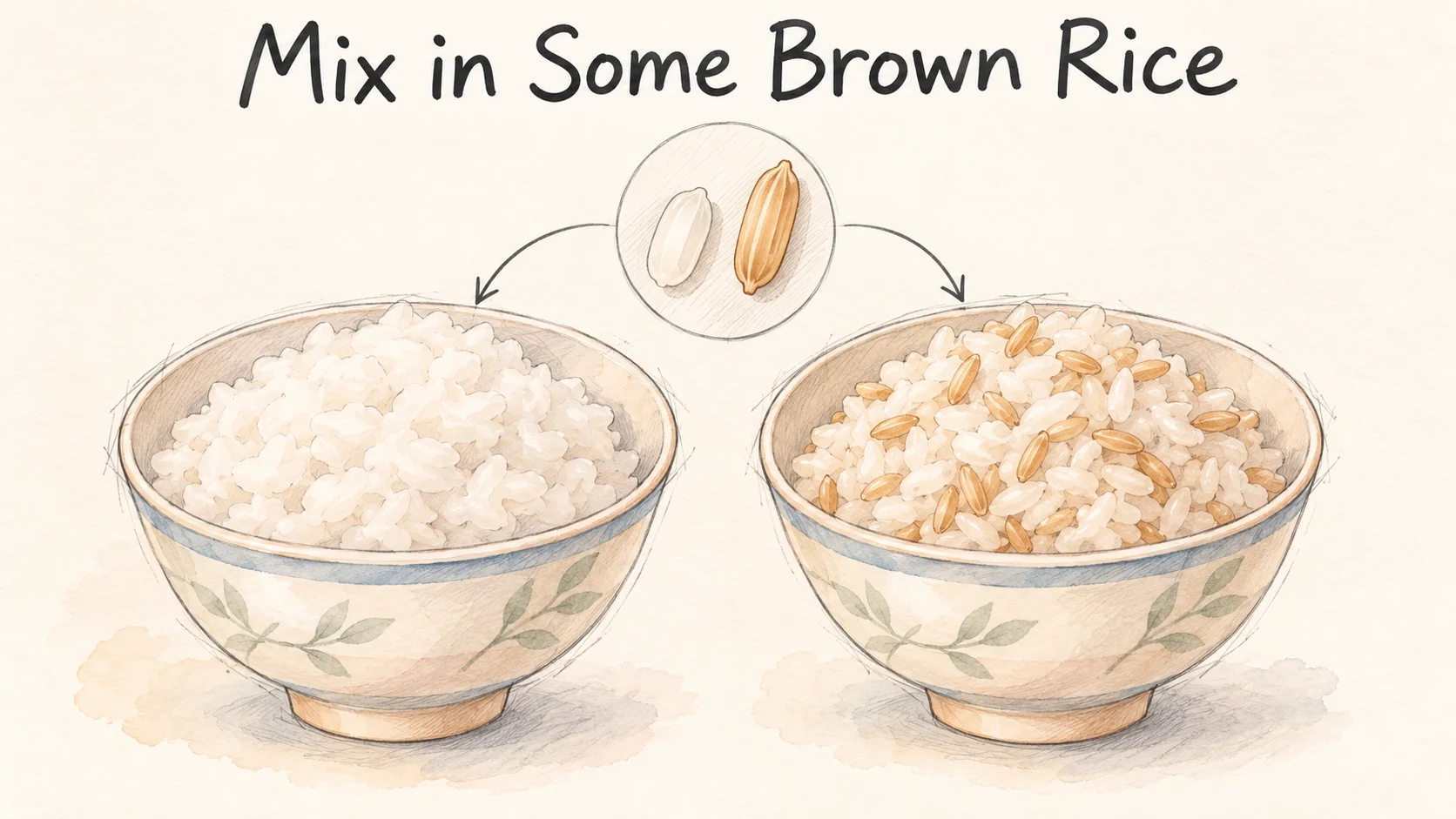
Brown rice keeps the outer bran layer and the germ. Milling it further to make white rice removes those parts and some of the grain's fiber. If you eat rice most days, part of the serving can come from brown rice without rebuilding the rest of the meal [2].
Taiwan's Health Promotion Administration suggests starting with one part brown rice to two parts white rice. Soak the brown rice first, then cook the grains together. Mixing the two gives you a texture closer to the white rice you already serve. In that batch, one of the three dry measures is brown rice. The share of unrefined grains and starches you eat over a day also depends on what you have at other meals [2].
Weight matters when you look up the numbers. Rice absorbs water as it cooks. A hundred grams of dry rice contains more rice grains than a hundred grams of cooked rice, because some of the cooked weight is water. To compare two cooked servings, look up cooked entries and use the same weight for both. To repeat a blend you liked making at home, the proportions you used in the rice cooker are enough.
If there is a roasted sweet potato on the table, some of it can take the place of part of the rice. Keep the rest of lunch familiar. For a bento you bring the next day, you can save a portion of the blended rice and add the sides you normally pack [2].
How much do the broccoli and guava add?
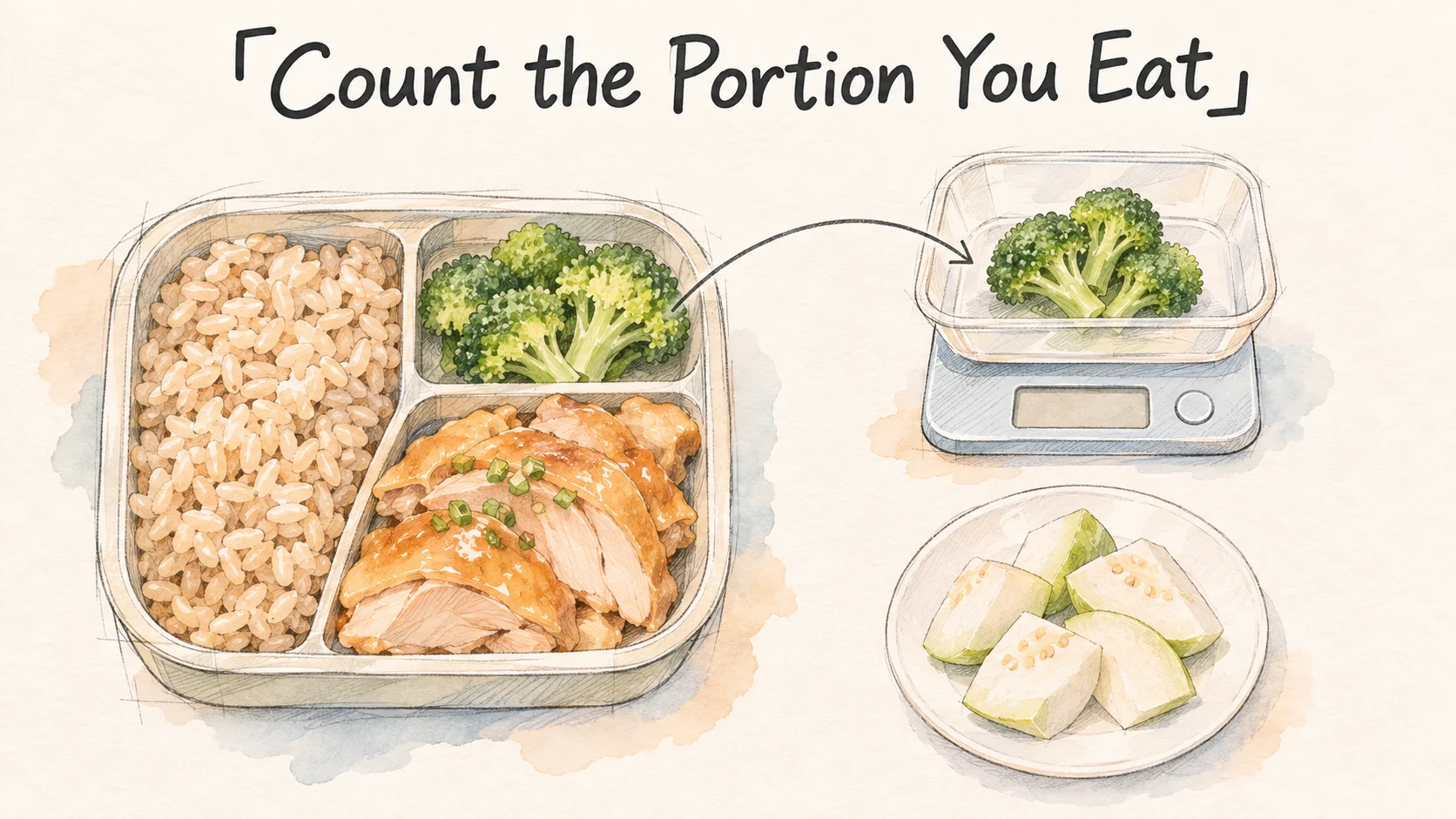
The Taiwan Food and Drug Administration's database gives the amount in 100 grams of the edible portion. Its broccoli sample collected in 2021 contains 2.8 grams of fiber per 100 grams. Its entry for Thai guava lists 3 grams per 100 grams [3]. These figures help when the sizes of individual florets or pieces of fruit vary.
Suppose you have a small portion of broccoli equivalent to about 50 grams of the edible sample in the table. Later, you eat 140 grams of Thai guava. Here's what that works out to.
- 50 grams of broccoli gives about 1.4 grams of fiber.
- 140 grams of Thai guava gives about 4.2 grams.
- The two portions together give about 5.6 grams. A second 50-gram portion of broccoli would add about 1.4 more.
These numbers estimate two foods from the reference samples. The rice, beans, or any other sides would have their own amounts. Vegetables can gain or lose water during cooking, and a little sauce adds to what you see on the scale. Guavas vary by variety and size. Pick a database entry close to what you're serving and treat the result as an estimate.
For a package of 280 grams of cut Thai guava, the 140-gram example is half the package. If you split it into two containers, measure the portion you actually eat that day. You can use your usual bowl next time once you've seen what that quantity looks like. If the shop's containers are a different size, use the new package weight and the fraction you eat. The 140-gram amount belongs to this example. Another fruit with the same weight can have a different amount of fiber, so use the entry for that fruit.
How researchers measured what happens next
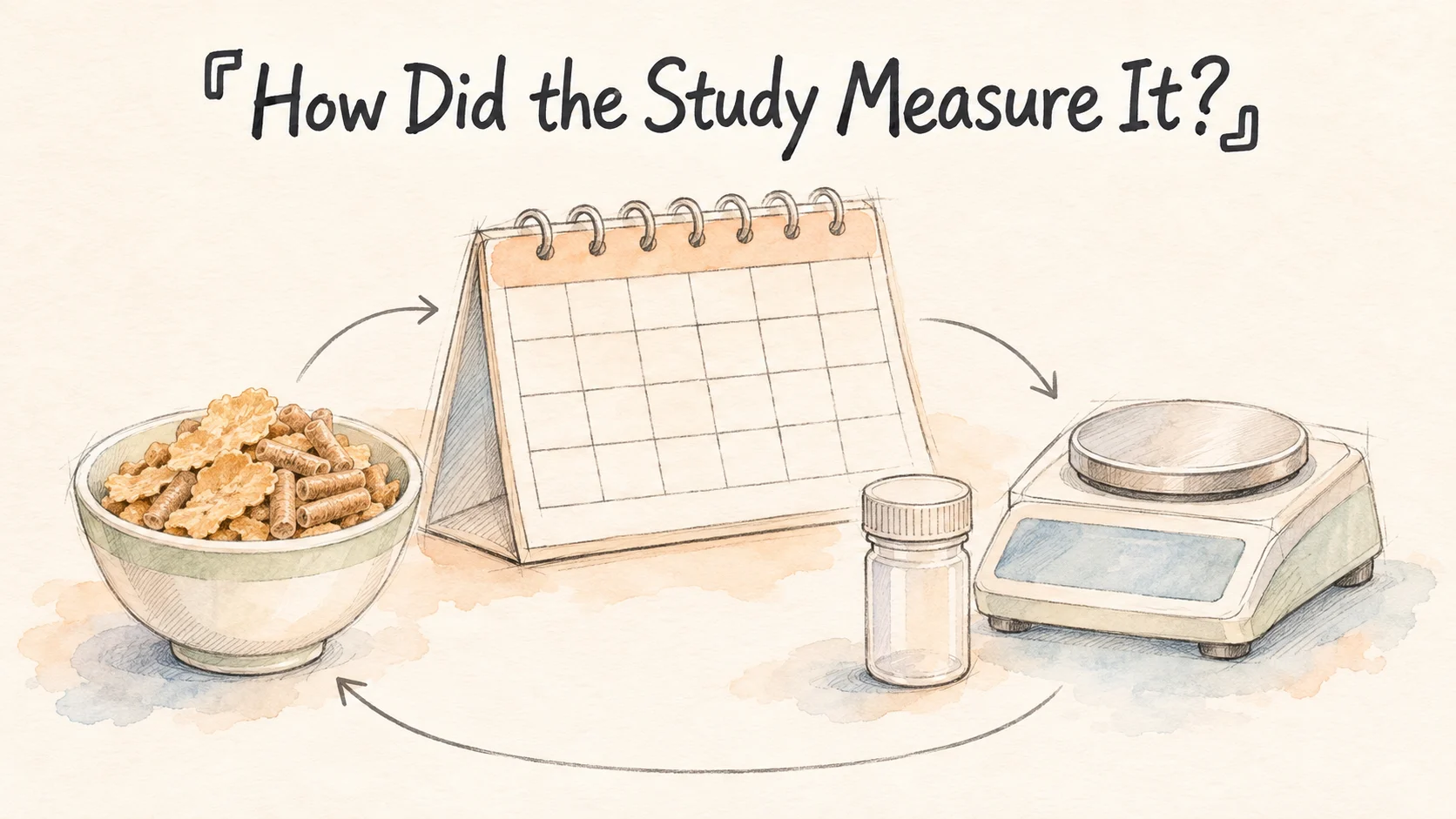
Different fibers can hold water or be used by bacteria in the large intestine. To see what changing the fiber in a meal does, researchers can track what happens over a series of days. One Canadian trial did this by giving the same volunteers different breakfast cereals [1][4].
Twenty-three participants rotated through five conditions, each lasting three weeks. One used a low-fiber control cereal and four used different high-fiber cereals. The background diet provided about 12 grams of fiber a day. The high-fiber cereals supplied about 25 to 29 grams on top of the background diet. Those figures describe what each part of the menu provided [4].
During the last week of each period, researchers collected and weighed stools. Average daily wet weight was 128 grams in the control period and about 197 to 247 grams with the high-fiber cereals. Average bowel movement frequency also rose, from 0.97 to about 1.17–1.27 per day [4].
At the low end of the range, the difference in wet weight was nearly 70 grams per day. The researchers changed a substantial portion of the diet and followed it for three weeks. The trial gives no estimate for the specific change caused by adding one side of broccoli to a bento. The stool frequency numbers are averages across people and days, which is why they can include a decimal.
One change to try this week
Pick the meal you come back to most often. If you make white rice at home, try one measure of brown rice mixed with two measures of white rice. At a bento shop, order one extra portion of vegetables you like. Or pack some cut fruit in a familiar container and keep it where you'll see it at snack time.
An extra portion equivalent to 50 grams of broccoli and 140 grams of Thai guava would add about 5.6 grams, roughly one-fifth of the 25-gram reference example. Use the portions you actually eat when you estimate your own day. If cooking rice is the change you can repeat, save the proportions you used. If fruit is easier, find the bowl or container that makes the serving easy to remember.
The next time lunch comes in a bento box, look at the part you can change once and order again. A small addition becomes easier to repeat when you know what it looks like on the plate. If you have special dietary restrictions, discuss portions with a clinician or dietitian.
Sources
[1] Taiwan Health Promotion Administration. Dietary Reference Intakes, eighth edition.
[2] Taiwan Health Promotion Administration. Whole grains and unrefined starches.
[3] Taiwan Food and Drug Administration. Food composition dataset. Samples E5800402 and D1500204.
[4] Vuksan V, et al. Using cereal to increase dietary fiber intake to the recommended level and the effect of fiber on bowel function in healthy persons consuming North American diets. Am J Clin Nutr. 2008;88(5):1256–1262.