
The Beans Contain Iron. How Much Do You Actually Absorb?
The same iron-containing porridge gave different results when people drank water, had tea with it, or waited an hour. The form of iron matters, and so does the rest of the meal.
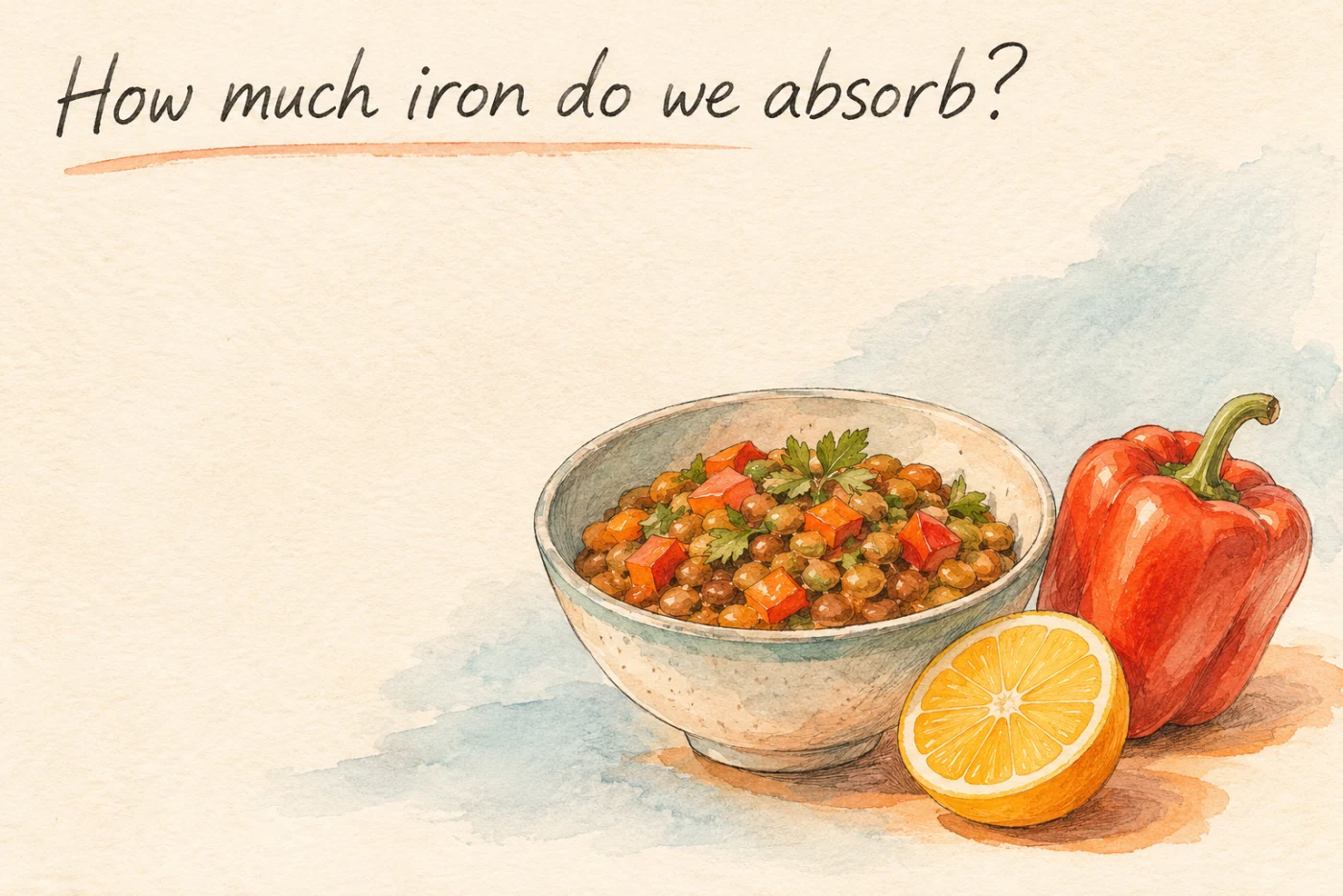
Lunch is a bowl of rice, tofu, and edamame. You can look up how much iron the ingredients contain. Beside the bowl is a plate of sliced peppers and a mug of tea. Neither got your attention when you looked up the numbers, but both can change how much iron your gut takes in from the meal.
The amount in the food and the amount you absorb are two different measurements. Some of the iron in meat is in a different form from the iron in beans. With plant foods, vitamin C in the same meal can make some of the iron easier to absorb. Compounds in tea can make some of it harder to absorb. How much either changes depends on the meal and the person [1–3].
Iron comes in two forms on the plate
Some iron in meat, fish, and poultry is part of a structure called heme. Heme helps proteins handle oxygen. Iron from this structure is called heme iron. Beans, grains, and vegetables supply nonheme iron. Animal foods can supply this second form as well. The body handles the forms differently, and nonheme iron is more affected by other ingredients in the meal [1].
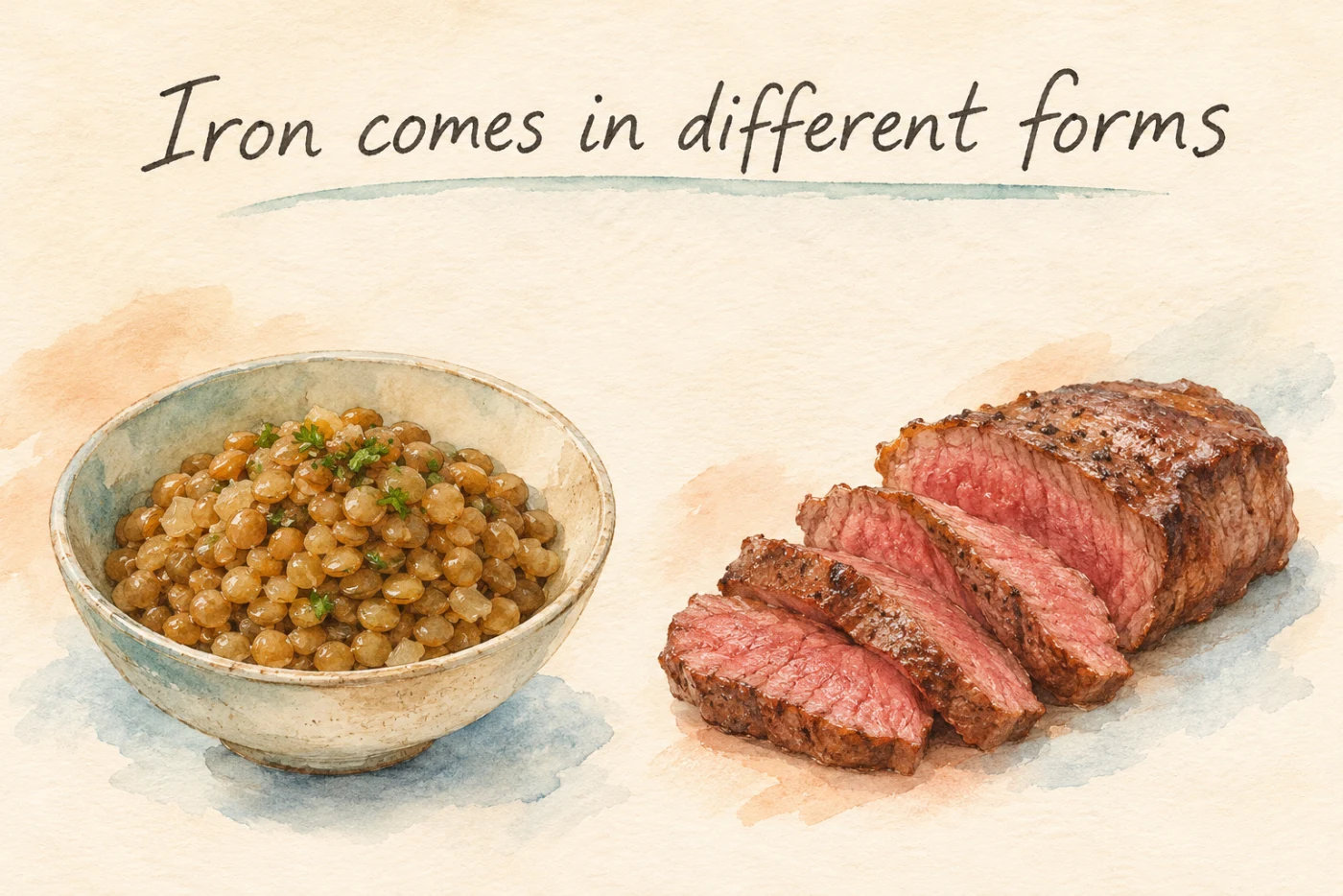
Think about what the cells lining the gut have to take up from the food. Other compounds in the meal can bind to nonheme iron and make it less available. Vitamin C can keep some of it soluble and convert it to a form the intestine can take up more easily. That's why a study of iron absorption from a meal usually puts the source of vitamin C where it's needed for the comparison, alongside the food containing the iron [1, 2].
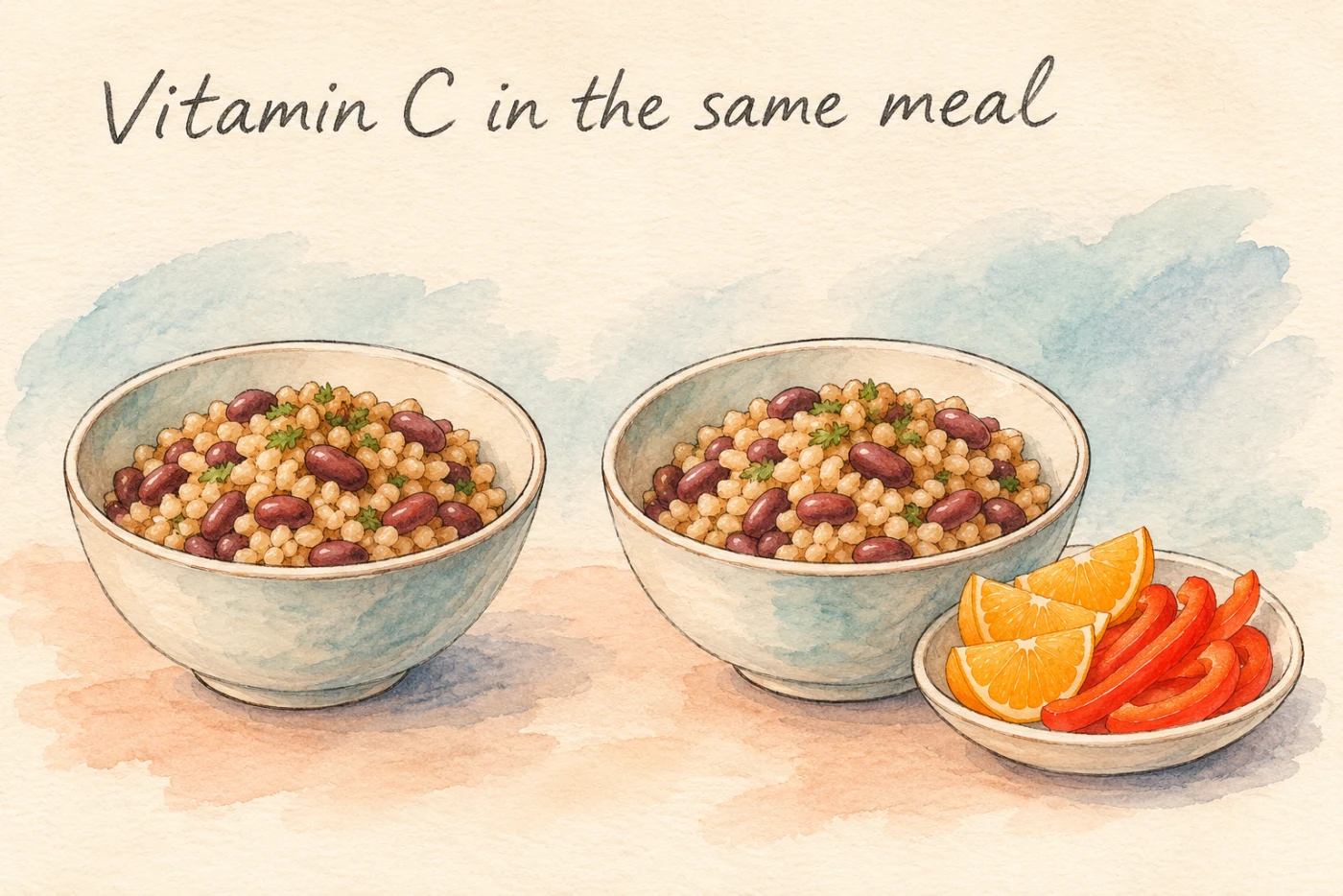
Lars Hallberg and colleagues used distinguishable forms of iron, called isotopes, to compare absorption from meals with and without added vitamin C in the same person. They also used different meals and compared different amounts of vitamin C. Absorption could increase with more vitamin C, but the size of the change depended on the meal [2]. The effect of adding an orange to one dinner doesn't supply a percentage you can apply to a different dinner the next night.
The same tea, one hour later
Another team gave 12 women the same porridge on several study days. The porridge contained 4 milligrams of iron tagged with a stable isotope. The researchers served it with water, with black tea at the same time, or with the tea an hour later. They used the amount of the tagged iron that showed up in red blood cells to estimate the fraction absorbed [3].
| With the porridge | Average estimated fraction of tagged iron absorbed | | --- | ---: | | Water with the porridge | 5.7% | | Black tea with the porridge | 3.6% | | Black tea an hour later | 5.7% |
Average absorption was lowest when the tea was served alongside the porridge. The timing comparison showed more absorption when tea came an hour after the food [3]. The average for water and the average for delayed tea both round to 5.7%. That doesn't mean the same result occurred in every person or that water and delayed tea were proven equivalent. There was a lot of variation. The team used one kind of tea prepared the same way, with a little milk, and one recipe for the porridge.
The percentages are estimates for the tagged iron in this experiment. The trial doesn't give you a formula for every meal, and it isn't measuring how much iron a cup of tea takes out of your body [3].
Say you usually eat a different breakfast, or brew a much stronger mug of tea. The result gives you a reason to consider the timing, but no way to calculate a new exact percentage. And the trial was about absorption after a meal. To know whether someone's iron stores change over months, you'd need to look at the rest of the diet, how much iron the person needs, and how the body adapts its absorption to what's already available [1].
A bigger percentage can still be a small amount
Here's a made-up example. Imagine you are tracing four milligrams of one form of iron in a meal. If the absorption estimate is 4%, that comes to 0.16 milligrams. If the estimate is 6%, it comes to 0.24 milligrams. The change is two percentage points, or 0.08 milligrams in that example. You need the initial amount and the percentage to work it out. A percentage alone can't tell you how much iron a person got.
Suppose both of your possible lunches come with tea, but one has beans and grains, and the other has fish and a side of peppers. The meals can differ in how much iron they contain, which forms of iron are present, and what else goes into the gut at the same time. Even if you brew the tea the same way, you won't see the whole comparison by copying over 3.6% from the porridge study. That's where the distinction between a food label and a meal experiment starts to help. The label describes what's present. The experiment shows how a specified combination can change absorption under a particular set of conditions.
Bring the question back to lunch
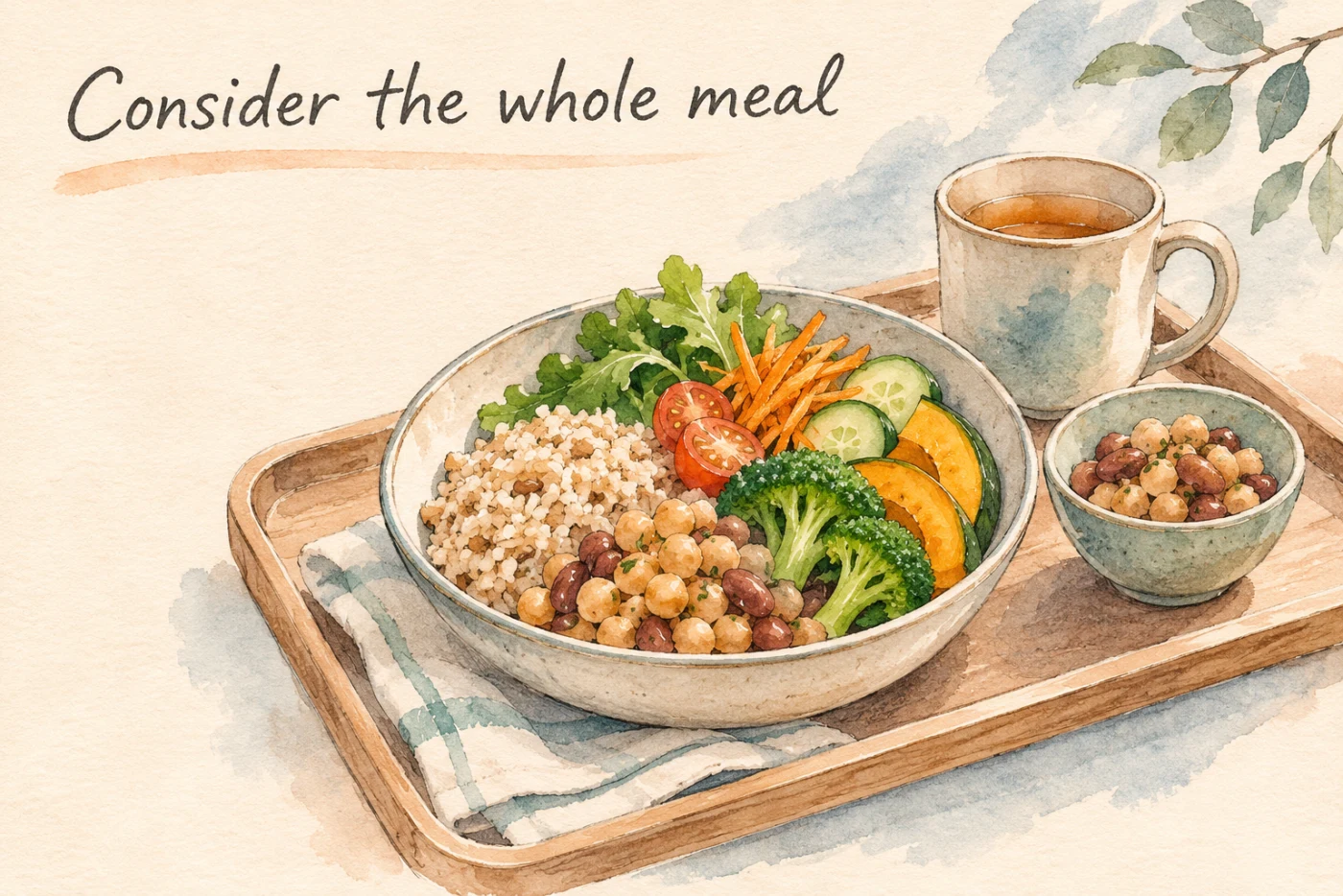
If beans or tofu are a regular part of your lunch, the meal might already include peppers, broccoli, or fruit as a source of vitamin C. If you want to see how a different tea schedule fits, set the same mug aside until after lunch and see whether the timing works in your actual day. The experiment explains a way to think about food combinations. It doesn't leave you with a test you need to run on every meal.
Think about that bowl of tofu again. Tonight you might have it with peppers, tomorrow tucked into a bowl of noodles. Its iron content is a useful number when you're comparing foods, while the rest of the plate matters when you're thinking about absorption. If a test has already shown low iron, share that result with your care team so you can investigate the cause and what to do about it. Tea timing alone can't answer those questions.
References
- NIH Office of Dietary Supplements. Iron fact sheet for health professionals.
- Hallberg L, Brune M, Rossander L. (1986). Effect of ascorbic acid on iron absorption from different types of meals.
- Ahmad Fuzi SF, et al. (2017). Tea timing and iron absorption from a meal containing stable-isotope iron. American Journal of Clinical Nutrition.