
How much rice does a baked sweet potato replace?
Taiwan's food exchange list uses 55 grams of sweet potato and 40 grams of cooked rice as one starch serving each. See what changes after steaming or baking.
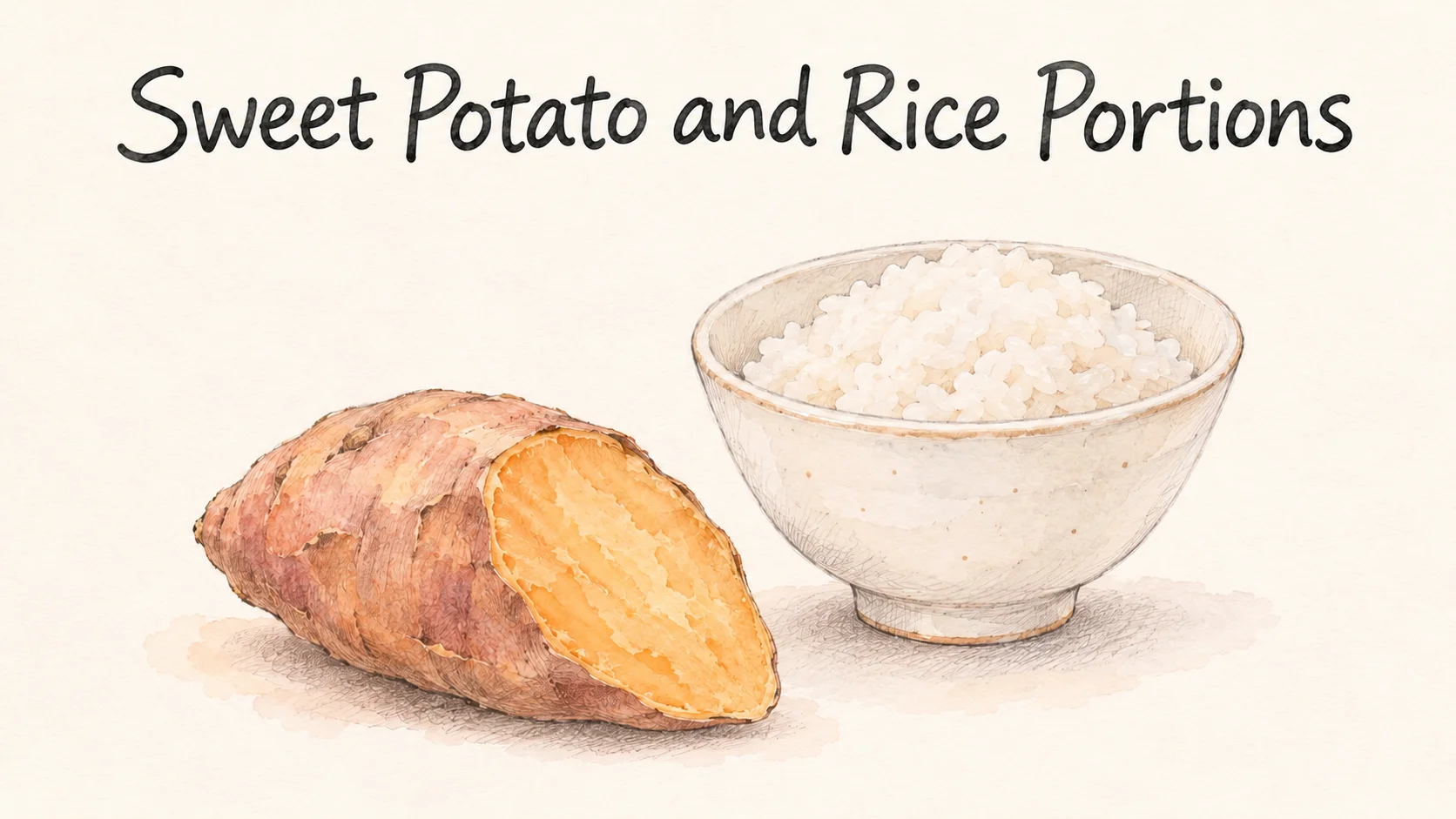
You bring home a baked sweet potato and there's a bowl of rice on the table. You'd like some of both. If you'd normally finish the bowl of rice, how much can you set aside to make space for the sweet potato?
Taiwan's food exchange list counts about 55 grams of edible sweet potato and 40 grams of cooked rice as one starch serving each. The table describes 40 grams of cooked rice as roughly a quarter of its reference bowl. If you want to swap one serving, try setting aside that much rice and putting about 55 grams of sweet potato in its place. The sweet potato from the shop may have several such portions, depending on what you actually eat [1].
Why are the two starch servings different weights?
Picture two small dishes. In one is cooked rice. In the other are a few pieces of sweet potato. Taiwan's food exchange list groups both with grains and starchy foods. The water content and composition of the foods differ, so a gram of one doesn't contribute exactly what a gram of the other does. The table uses about 15 grams of carbohydrate and about 70 calories as an estimate for a serving of foods in this group [1].
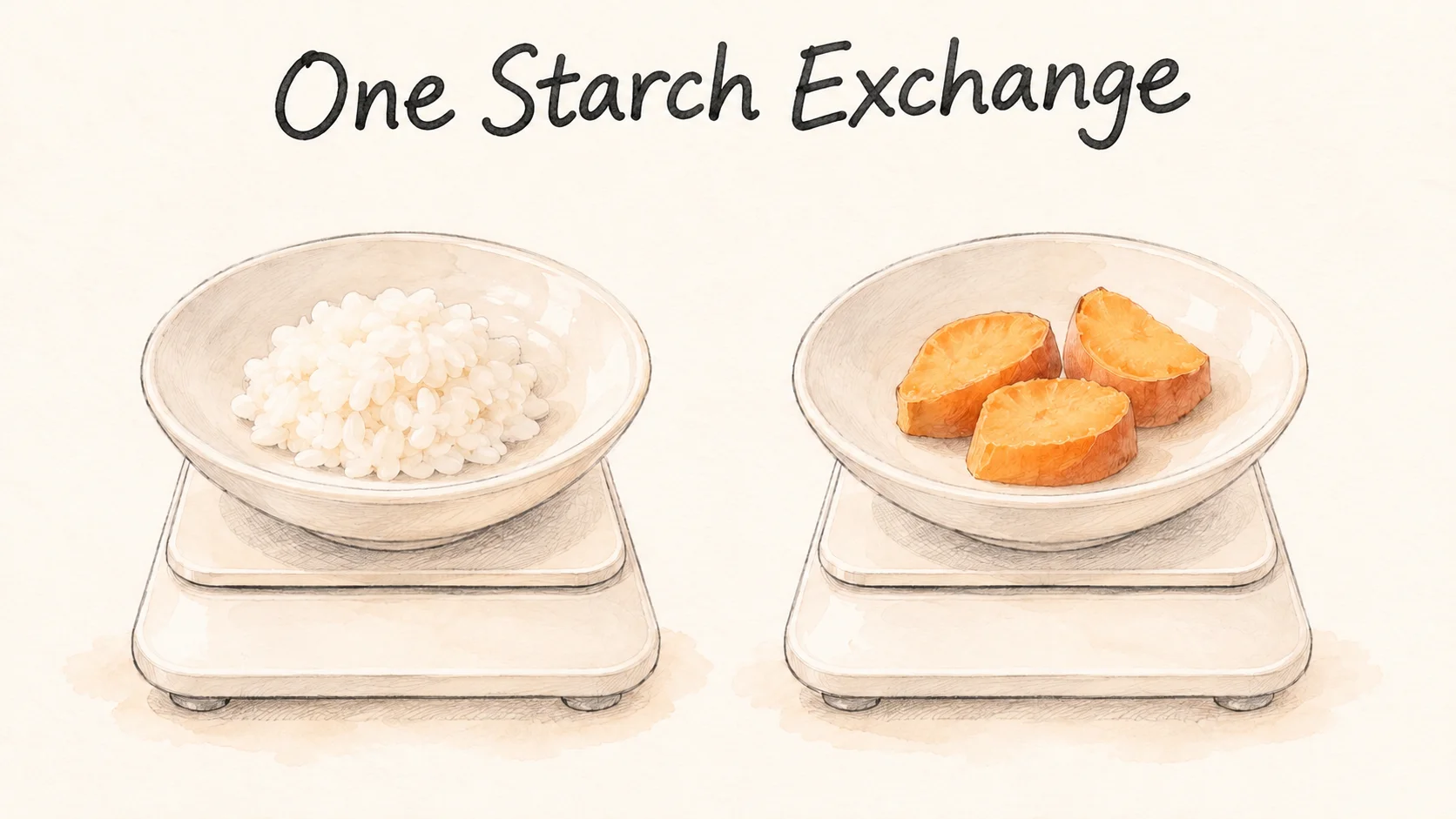
At home, place an empty dish on a scale and tare it. Set the pieces of sweet potato you want to eat on the dish. If you leave the ends or peel behind, set those aside first. Fifty-five grams may be only part of a shop-bought sweet potato. Weigh cooked rice after you serve it. The quarter bowl in the exchange table is a reference, and a quarter of a deep household bowl may hold a different weight.
It helps to put familiar quantities in front of you once. A couple of slices might be close to one exchange serving if the sweet potato is narrow. One thick slice across the widest part of a bigger one could weigh much more. What you see on the scale gives you something to picture when you don't have it at the store.
Say a large sweet potato weighs 165 grams after you remove the parts you'll leave behind. By the exchange list, that's about three portions. If you want to trade away one portion of rice today, you can split the potato into three roughly equal parts and use one. You can save the other two for different bowls.
Exchange servings and food composition values have different uses. The exchange list gives you a rough portion to swap. To estimate calories in a particular cooked portion, choose a food composition entry for the way it was prepared.
What changes when the sweet potato is steamed or baked?
Japan's food composition table shows values for 100 grams of the edible portion. It lists cooked white rice at 156 calories. The peeled steamed sweet potato entry gives 131 calories and 65.6 grams of water. The peeled baked entry gives 151 calories and 58.1 grams of water. The preparations differ, and 100 grams of the baked example contains about 20 more calories than the same weight of the steamed example [2][3][4].
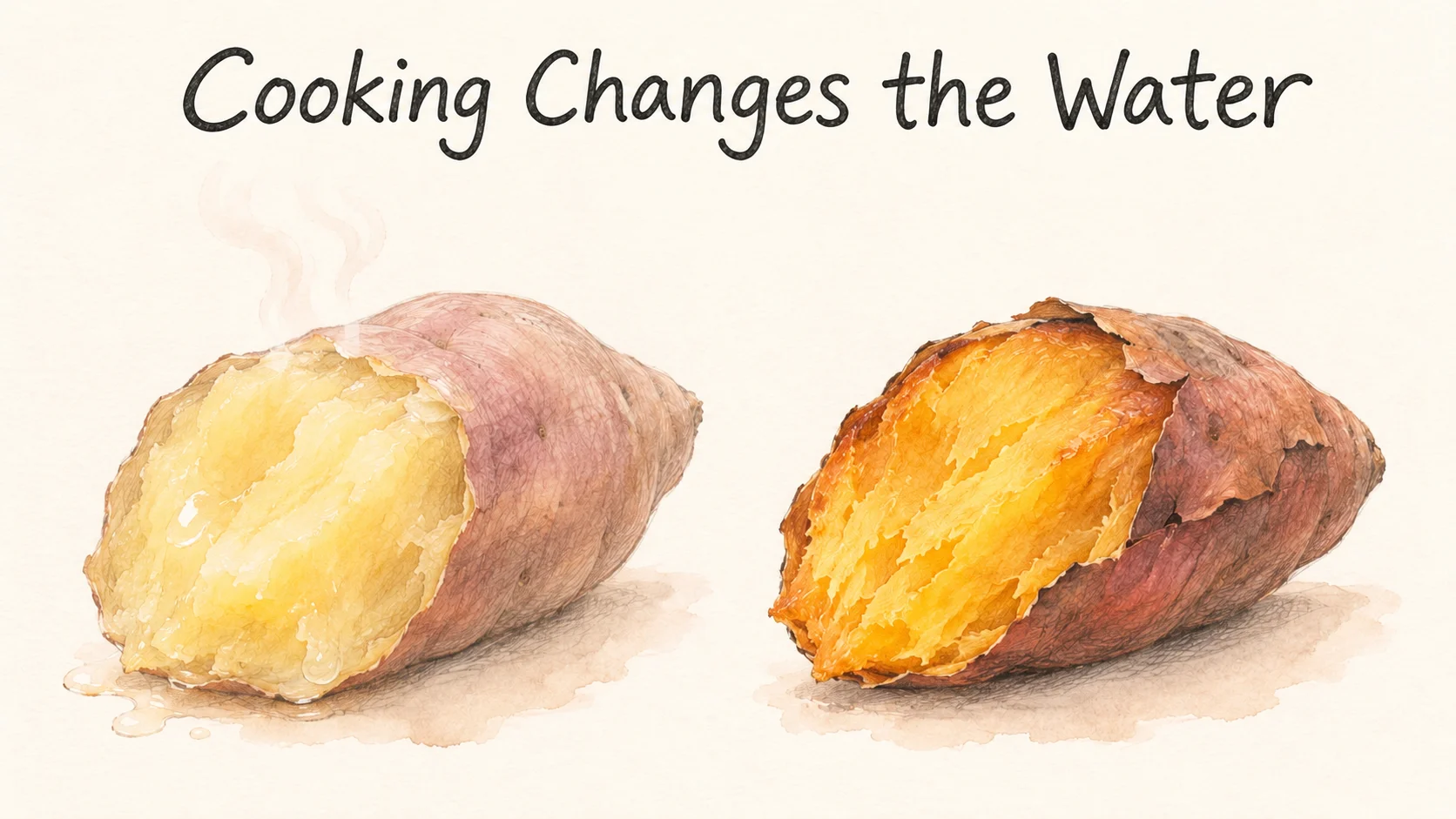
Imagine starting with two similar pieces. You steam one and bake the other. The amount of water in the cooked piece can differ, and so can the cooked weights. A higher number of calories per 100 grams means the cooked food carries more energy for its weight. It doesn't mean the original piece gained 20 calories in the oven. For a meal estimate you still need to know what the cooked portion weighed.
Using the Japanese values, 40 grams of cooked rice is about 62 calories, and 55 grams of steamed sweet potato is about 72 calories. Fifty-five grams of the baked entry is about 83. These figures are in the same general range as the exchange example, and the exchange list's servings aren't exact nutritional matches. If you buy a sweeter variety, a potato that's been baked much drier, or a prepared item with added ingredients, use its own nutrition information where available [1][2][3][4].
You can apply the same distinction when a recipe lists an uncooked amount. A raw weight describes what went into the pot. The Japanese entries here tell you about the edible weight of cooked foods. Match the prepared food to the row before multiplying by the weight on your plate.
Cooked rice carries water too. The Japanese entry lists 60 grams of water per 100 grams of cooked rice. A small measure of dry rice makes a heavier portion when it cooks because it absorbs water. For a comparison at the table, use the cooked rice you serve. If you switch to sweet potato, use its weight in the state you're going to eat it as well [2][3][4].
What if you'd like to keep half the rice?
Suppose your usual bowl holds 160 grams of cooked rice. By the Taiwanese exchange list, that works out to four starch servings. To replace one, serve about 120 grams of rice and about 55 grams of sweet potato. To replace half, use roughly 80 grams of rice and 110 grams of sweet potato. The example splits up the servings that were already in the bowl. It doesn't set a number of servings everyone needs at a meal [1].
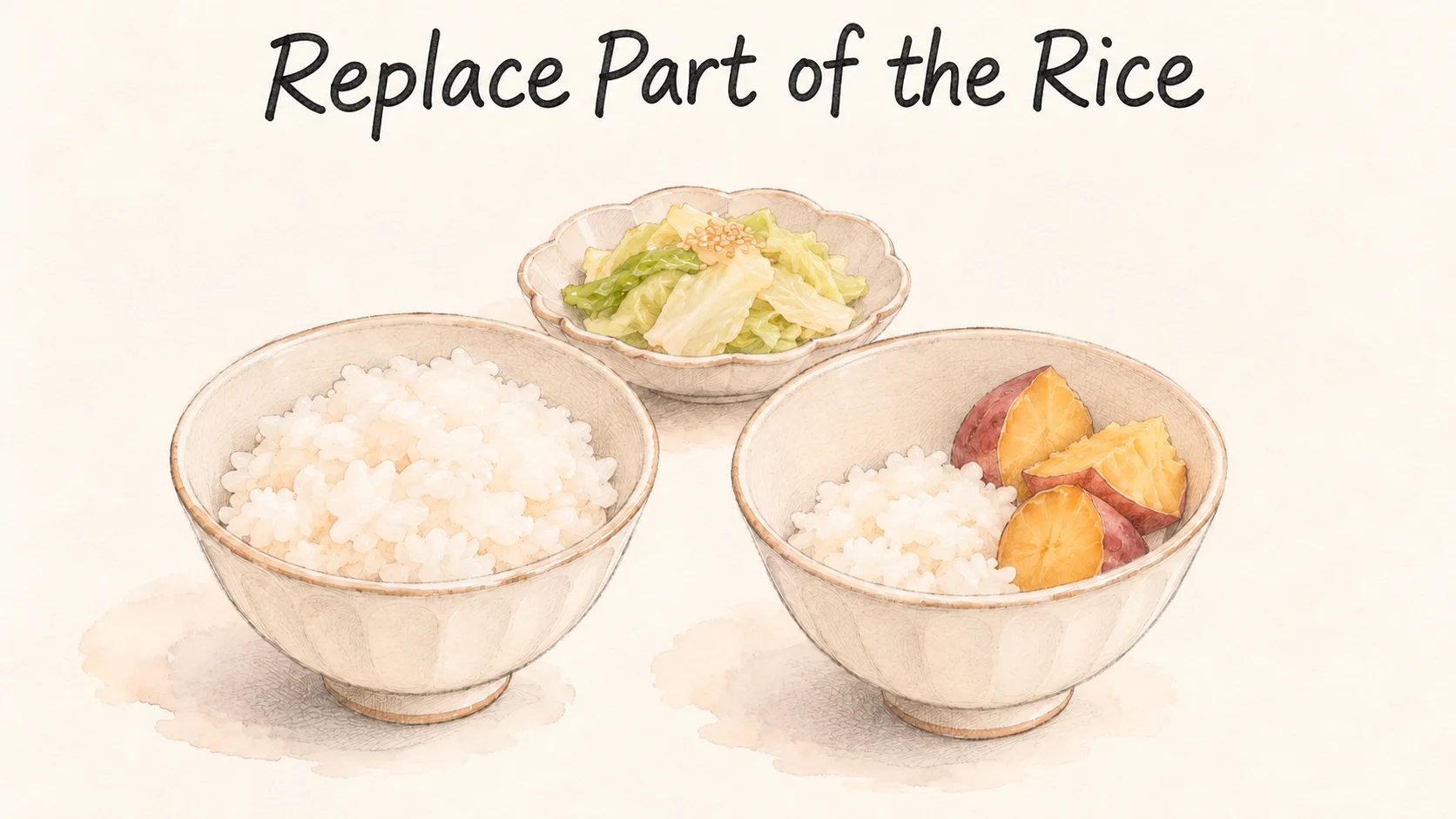
You can start with a smaller change than half. Leave enough rice to soak up the sauce you planned to eat it with. Put a couple of pieces of sweet potato beside it. If you eat the entire original bowl and a whole sweet potato as well, that's adding another starchy food. If you leave some rice behind and replace it, that changes the share of each item in your meal. Think about which one you had in mind before deciding what to serve.
Try the two reference quantities once. Serve your usual rice and remove 40 grams. See how much space it leaves in that bowl. Then put a 55-gram edible piece of sweet potato on a plate. Those two observations can help at a shop with no convenient place to use a scale.
For a family meal, you can set out the cooked rice and sweet potato in separate bowls. Each person can start from the amount of rice they would usually serve. Some might leave more rice for the sauce and take a smaller piece of sweet potato. The example gives you a way to change one part of the meal around the foods you already planned to make.
What size should you pick at the baked sweet potato counter?
A shop may sell baked sweet potatoes by weight, or you may find a whole one in a bag. Think about the piece of rice you want to swap. If that's only part of a bowl, you can use only part of a large sweet potato and save the rest for another meal. If you want to estimate the calories in that portion, weigh it and use a suitable baked entry or the product label.
When you get home, start by picturing your usual bowl of rice. Decide how much space you want to give the sweet potato. Then chop off a piece that fits the swap you had in mind.
References
[1] Taiwan Health Promotion Administration. Food Exchange List, May 2019. Appendix 3, grains and starchy foods.
[2] Ministry of Education, Culture, Sports, Science and Technology, Japan. Standard Tables of Food Composition in Japan, cooked white rice. Food number 01088.
[3] Ministry of Education, Culture, Sports, Science and Technology, Japan. Steamed sweet potato without skin. Food number 02007.
[4] Ministry of Education, Culture, Sports, Science and Technology, Japan. Baked sweet potato without skin. Food number 02008.