
How much protein is in 100 grams of edamame?
A bowl of edamame on the scale often includes the pods. Here's how to turn the weight of cooked shelled beans into an estimate of the protein you eat.
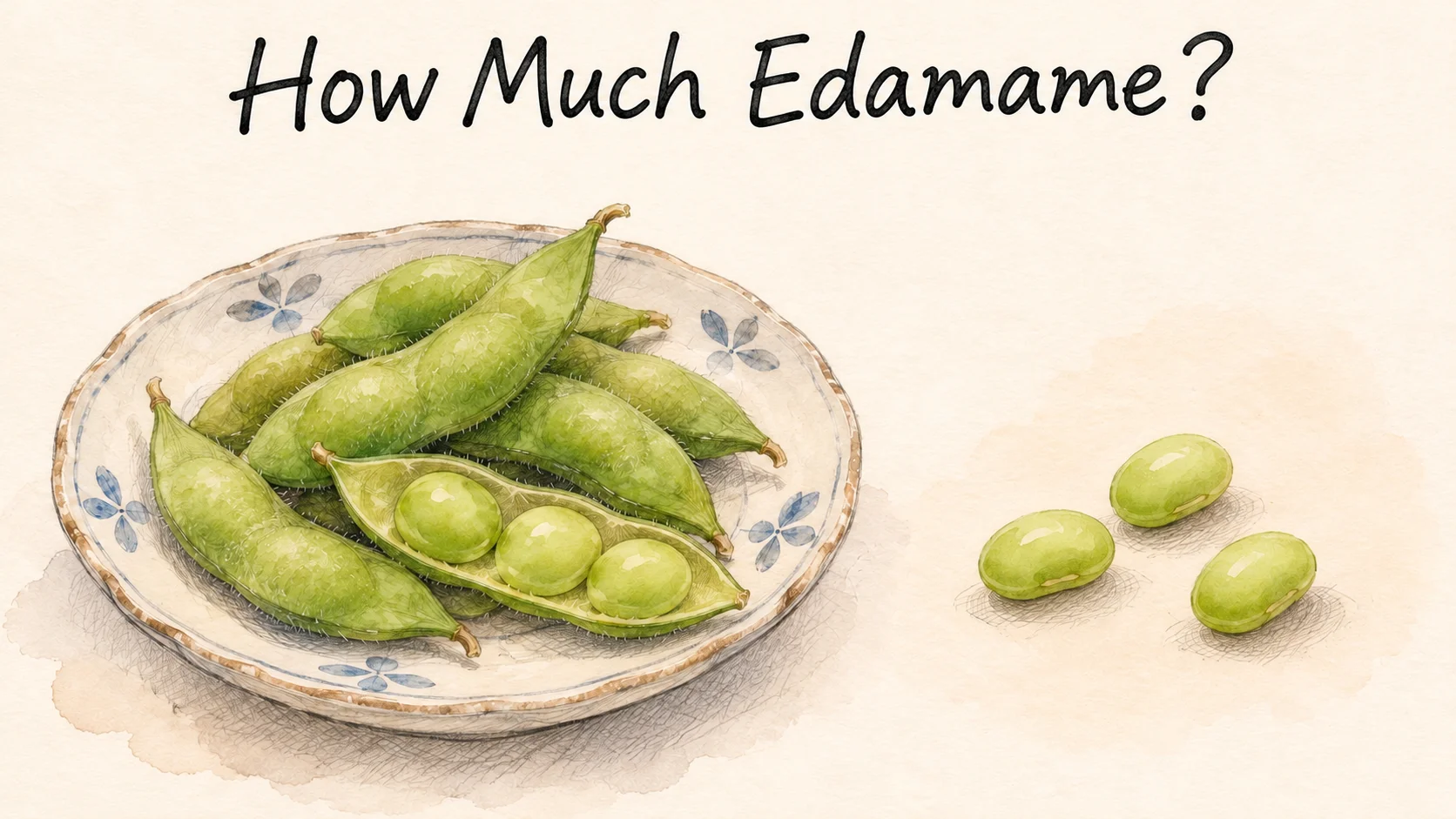
You order a little dish of edamame to go with lunch. By the time the conversation winds down, the dish is full of empty pods. Suppose the edamame weighed 100 grams when it arrived. A nutrition table says 100 grams has 11.5 grams of protein. Is that how much you ate?
The 11.5 grams of protein is for 100 grams of boiled, shelled edamame. Japan's food composition tables estimate that pods make up about half the weight of edamame served in the pod. Using that estimate, a 100-gram portion with pods contains about 50 grams of beans and provides about 5.8 grams of protein. For your own dish, weigh the beans you've taken out of the pods if you want a closer estimate [1].
What was actually weighed for those 100 grams?
Pick up an edamame pod and push the beans out with your teeth. The beans go into your mouth and the pod goes back onto the plate. At the grocery store you can find bags of shelled edamame too. Both things are edamame, and both can weigh 100 grams. The difference is that one weight includes the part you leave behind.
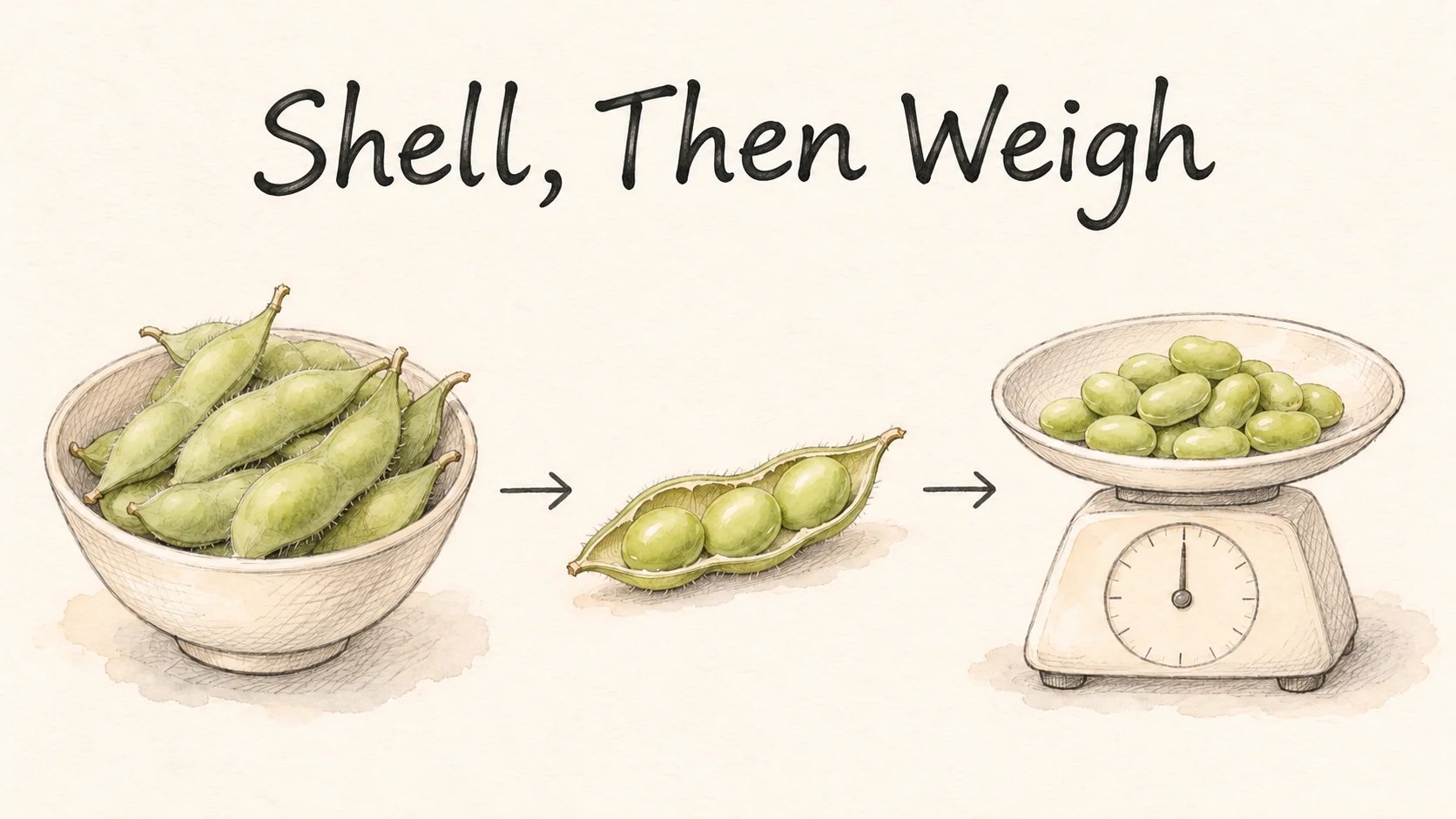
The Japanese Ministry of Education, Culture, Sports, Science and Technology lists boiled edamame as cooked in water and drained. It identifies the pod as the part removed, and reports the nutrient values for 100 grams of the edible portion. Picture the bowls in the kitchen. The pods are left next to the cutting board while the shelled beans go into the bowl for analysis. If you're using that entry to estimate your dinner, that second bowl is the one you're interested in [1].
The preparation matters too. A bunch of raw edamame from the market, a bowl of cooked pods from a restaurant, and a bag of frozen shelled beans are different things to put on a scale. Their water content and any seasonings can differ. For a dish of cooked edamame, the boiled entry is a good reference once you've accounted for the pods. For a particular packaged product, check what food and preparation the label describes.
A label may give figures for a serving of already shelled beans. If the weight in the statement already refers to those beans, use it as written. If the packaging is unclear about the basis, you can still measure the portion you eat and use the table for plain boiled beans as a rough estimate.
Why does one 100-gram dish give you about twice as much?
Imagine putting two dishes on the scale. One holds 100 grams of cooked edamame in pods. Using the table's 50% discard estimate, the beans account for about 50 grams. The second holds 100 grams of beans that have already been shelled. The weights start equal, but the amount of beans on the right is about double [1].
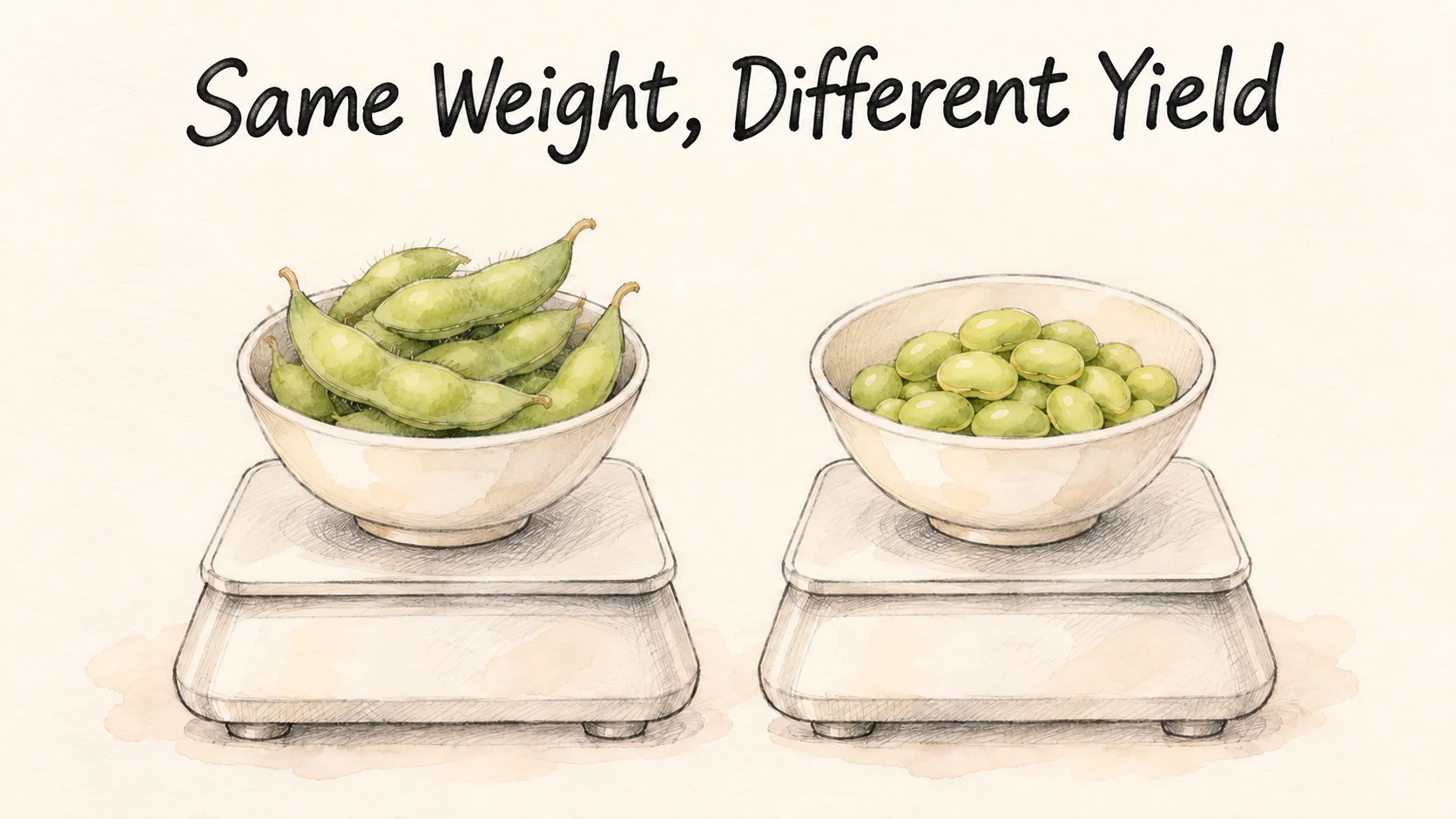
The first dish provides 11.5 times 0.5, or about 5.8 grams of protein. For the second, you can use the table's full 11.5 grams. Taking half the weight in the first dish is a way to account for the pods. If you've weighed the shelled beans, there's no need to take half again.
Half is a table estimate. Some pods have bigger beans or thicker walls, and a newly drained batch can retain some surface water. Use half for a rough estimate when pods are included. If you know the actual weight of the beans, use that instead.
Taiwan's food exchange list puts edamame under beans and soy products, in its beans, fish, eggs, and meat group. It often arrives green and tucked in next to the vegetables. If you stir shelled edamame into rice, you can count the beans as part of that meal's protein foods. The bok choy on the side is a separate portion of vegetables [2].
The exchange list and the composition table help with different questions. Seeing edamame in the bowl tells you there are beans in the meal. If you want to compare the amount of protein those beans provide with what you ate yesterday, the weight of the beans helps you use the composition table.
Do you need to shell and weigh a batch every time?
Try one measurement with the edamame you usually buy. After you cook and drain it, put the empty dish on the scale and press tare. Fill it as you usually do, and record the weight of the beans in their pods. Zero the scale with a second dish, then shell the edamame into it. Now you know what the usual amount of pods in your dish actually gives you.
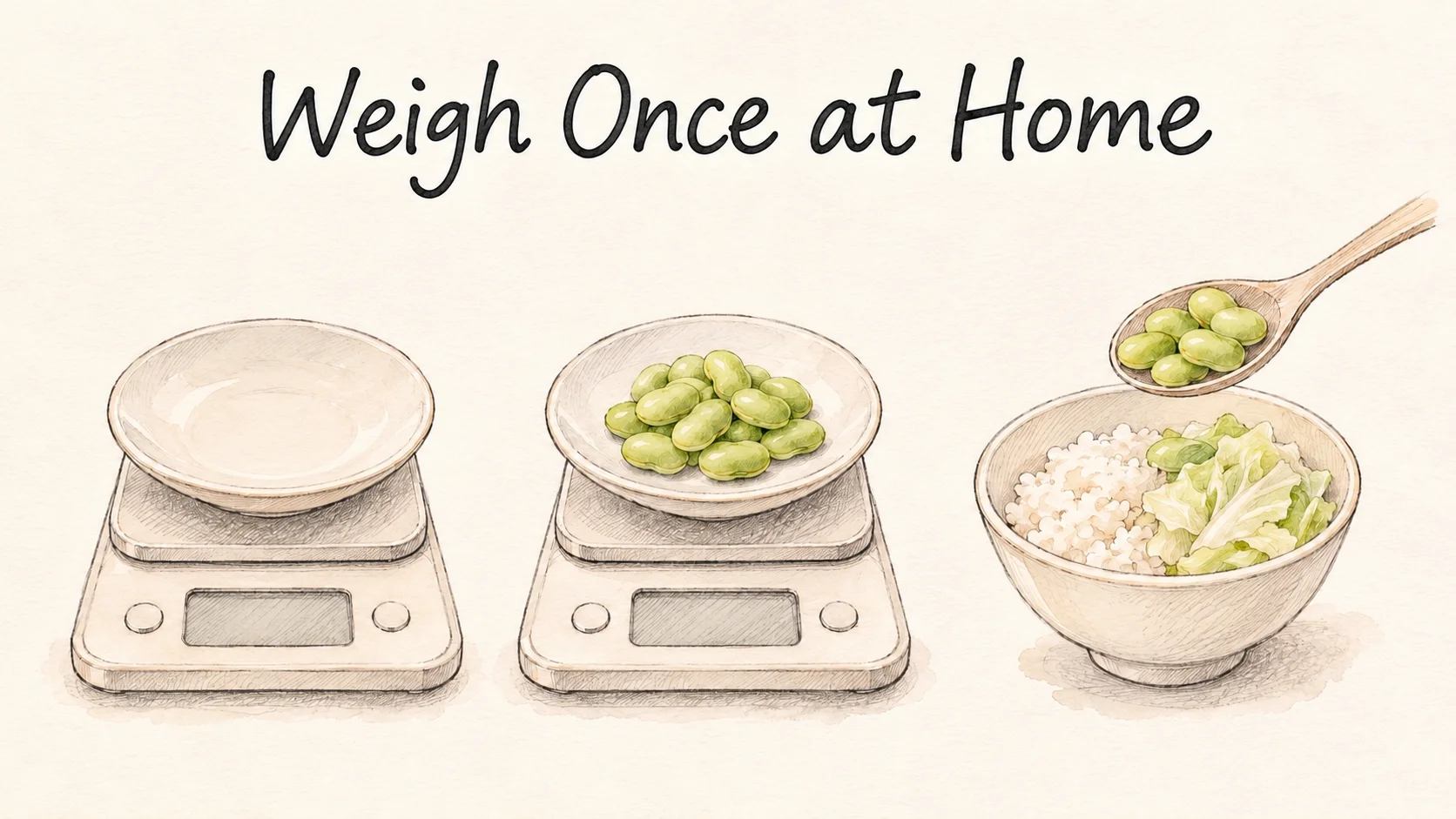
Suppose you end up with 65 grams of beans. With the same boiled edamame entry, 11.5 times 0.65 gives about 7.5 grams of protein. If you cook the same product and fill the same dish to the same level next time, this gives you a useful reference. It will be rougher if you buy a bigger variety, serve it in a deeper bowl, or split the dish with someone.
Say the pods weighed 120 grams and the half-weight shortcut predicted 60 grams of beans. The scale says 65 grams. That five-gram difference in beans is about 0.6 grams of protein using the table. Either route gives you the scale of the answer. If you're dividing a cooked batch into several boxes and want roughly equal amounts, it's easier to start with the beans on the scale.
You could also weigh the empty pods afterward and subtract them. If people share a dish, the same plate can collect someone else's pods. Dressing or water left behind can also complicate the subtraction. Weighing the shelled beans directly takes care of both problems at home.
You can do the same with a bag of pre-shelled edamame. If you want to know how many beans go into the rice, weigh what you plan to stir in. Once the beans, rice, and greens are mixed, weighing the whole bowl tells you its total weight, but you still need to know how much of it was edamame.
What if the dish is at a restaurant?
Start with how much of the dish you expect to eat. If you share it with friends, look at the few pods you take each time. A long plate can make a thin layer of pods look plentiful. How big the beans are inside the pods gives you another clue. The portion you measured at home can help if you want a rough sense of what the beans would look like together on a small saucer.
If the edamame is there to nibble while you talk, you can leave the scale at home. If you want to know how much protein it contributes to lunch, start with the beans you'll eat. The empty pods at the edge of the plate are a reminder of what the original weight included.
References
[1] Ministry of Education, Culture, Sports, Science and Technology, Japan. Standard Tables of Food Composition in Japan, boiled edamame. Food number 06016. Sample and preparation notes.
[2] Taiwan Health Promotion Administration. Food Exchange List, May 2019. Beans, fish, eggs, and meat.