
What Happens to Vitamins When You Cook Vegetables?
Use a carrot and broccoli experiment to tell apart vitamin concentration, the amount that stays in the whole batch, and the amount on your own plate.
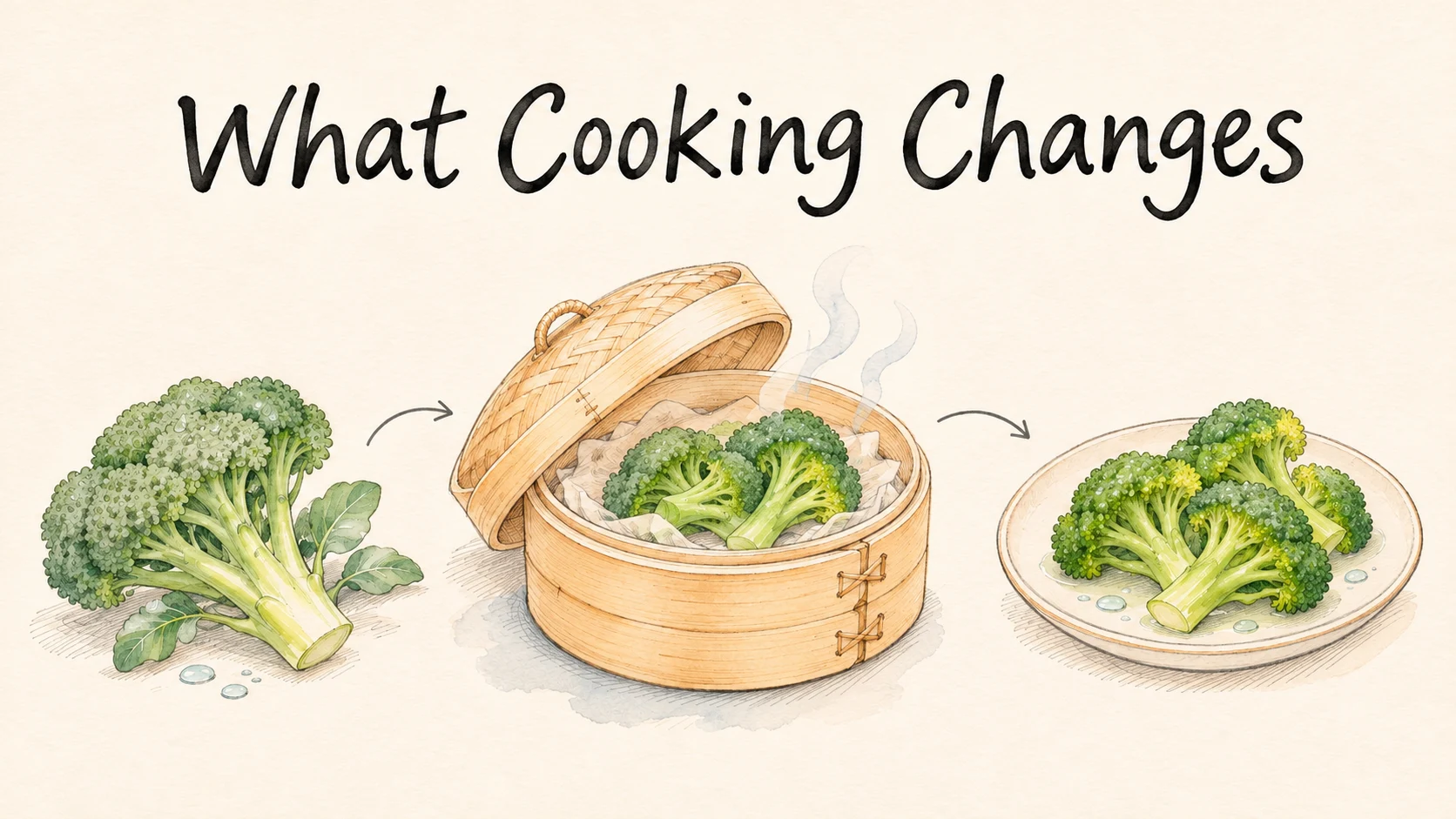
To find out how much of a vitamin is left after cooking vegetables, multiply its concentration in the cooked food by the weight of the cooked batch. A hundred grams of cooked vegetables can contain more of a vitamin than a hundred grams of the same vegetable raw. Follow one batch from cutting board to plate, though, and the total amount of that vitamin might have gone down.
Say you slice carrots and boil them until they're soft. A table says the cooked carrots have more vitamin C per 100 grams. Does your plate now have more vitamin C than the carrots you started with? First, see how much the carrots you put on the plate weigh.
▌More in every 100 grams, less left in the batch
A research team in South Korea bought ten vegetables from a local market and compared boiling, blanching, steaming, and microwaving. They measured the vitamin concentration in both raw and cooked samples and recorded the weight after cooking. Multiplying the amount of a vitamin per gram by the batch weight gave them a total for each stage. Then they divided the cooked total by the raw total. In the paper, this percentage is called true retention. [1]
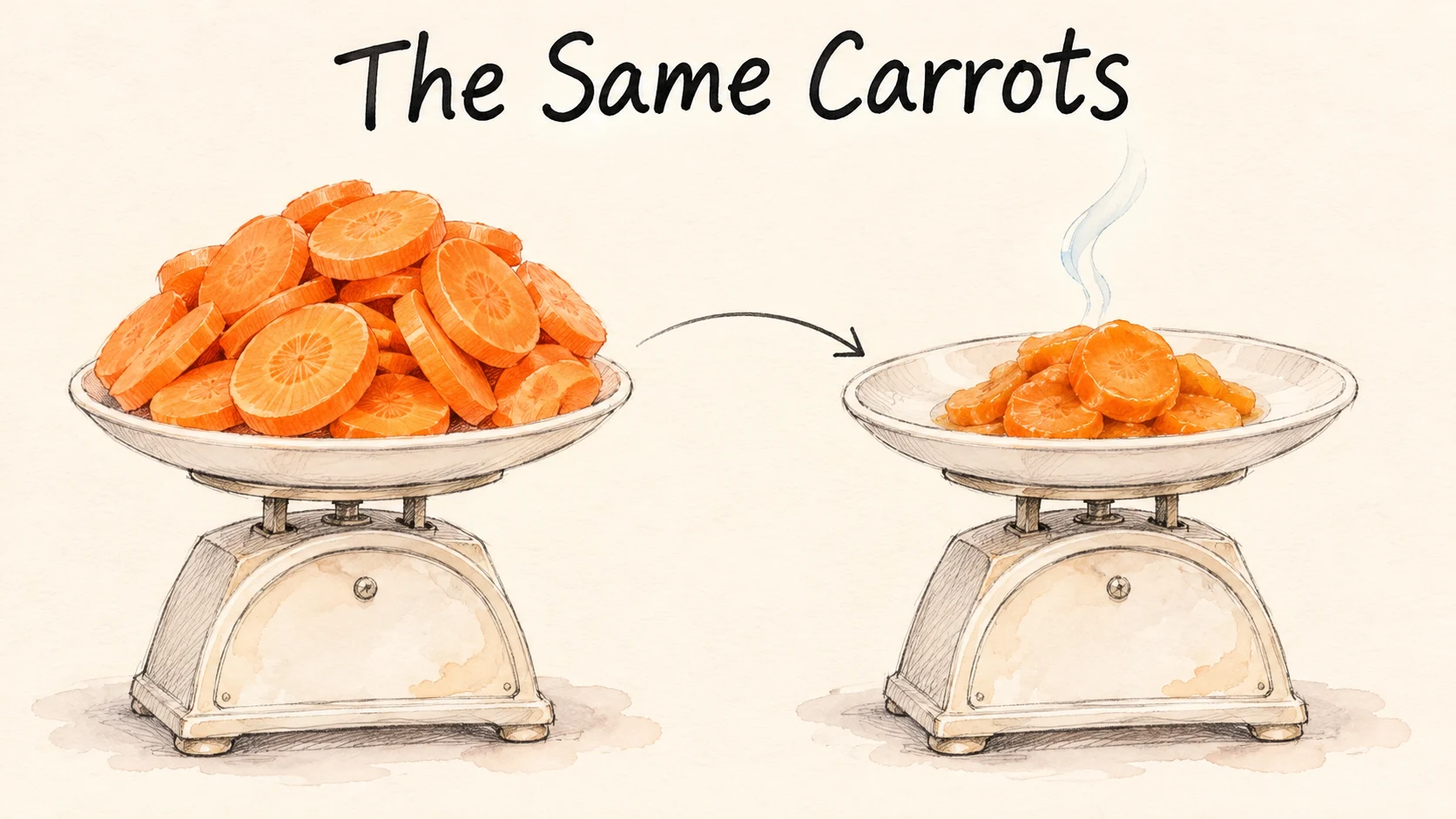
The raw carrots in the experiment contained about 4.0 milligrams of vitamin C per 100 grams. After 12 minutes of boiling, the cooked carrots measured 5.7 milligrams per 100 grams. Once the researchers accounted for the cooked weight, however, they found that the whole batch had retained around 55% of its original vitamin C. If you start with 100 grams of those raw carrots and their roughly 4.0 milligrams of vitamin C, applying the study's retention rate gives about 2.2 milligrams in the portion that comes out of the pot. [1]
Each figure answers a different question. To compare two plates that each hold 100 grams of carrots, the per-100-gram column gives you a common starting point. To compare the carrots you weighed raw with everything they made after cooking, you need the second weight as well. The researchers' percentage describes the batch they tested. A differently sized cut or a different cooking time at home can give a different result.
You can also work backward to see why the weight matters. If the cooked carrots contain 0.057 milligrams per gram and the batch contains 2.2 milligrams, those rounded figures imply a cooked weight of about 39 grams. That's an illustration based on the study's measured concentration and retention. To get the cooked weight of the carrots in your own pot, use a scale. [1]
Think of a pot of soup that's simmered down to half its original volume. You get a more concentrated taste in each spoonful, with fewer spoonfuls to serve. The same reasoning helps with a vegetable nutrient table. The concentration tells you about each spoonful. You still need to know how many there are. Some foods lose water in cooking while others take it up. Either way, it's the weight of the actual batch that goes into the calculation.
▌One minute and five minutes in the broccoli pot
The same researchers put broccoli into 500 milliliters of boiling water. The blanching batch came out after one minute and the boiled batch after five. The researchers drained both batches for two minutes before preparing the samples. The broccoli retained about 89% of its vitamin C in the one-minute batch and 53% in the five-minute batch. On a scale where the original amount is 100, the results are around 36 percentage points apart. [1]
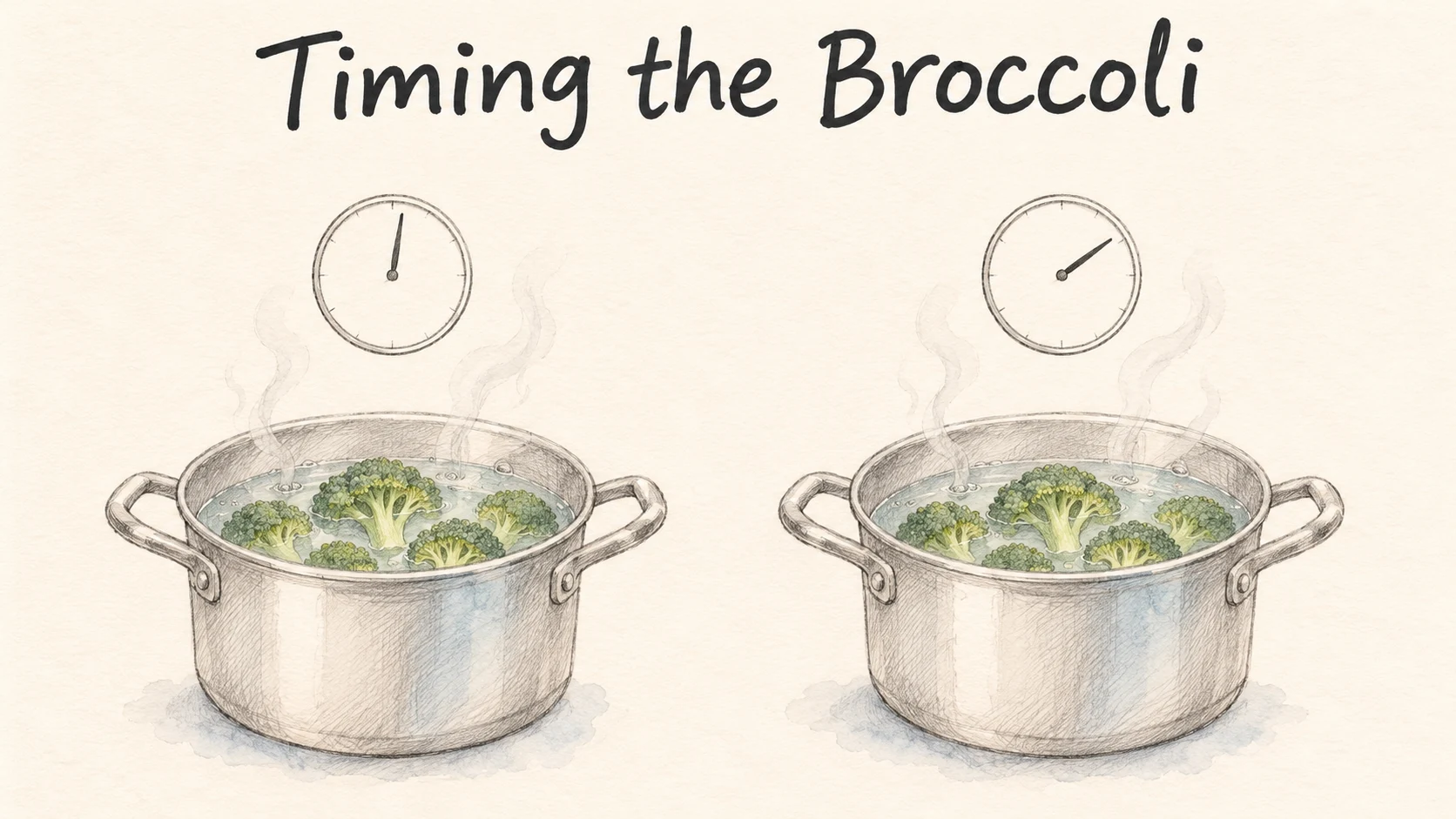
The raw broccoli also had about 67 milligrams of vitamin C per 100 grams. If you use that starting portion, the retention percentages give about 59 milligrams after the one-minute blanch and 35 milligrams after the five-minute boil. Those totals follow the same starting weight as it becomes a serving of whatever weight it reaches. [1]
The result follows the broccoli as it comes out of the water and onto a plate. Vitamin C dissolves in water and is sensitive to heat. Some of what disappeared from the vegetable may have moved into the cooking water and some may have broken down during cooking or handling. The study measured the broccoli, so you would need a measurement of the water too to calculate what you'd get from the same vegetables served with the broth. [1]
Switch from vitamin C to vitamin K and the picture changes. For the broccoli boiled for five minutes, vitamin K retention was about 99%. Vitamin C retention in that batch was about 53%. Even in a single pot, the answer depends on which vitamin you look up. The same applies when you compare boiling with steaming or microwaving. Find the nutrient and cooking method you want before reading across the table. [1]
A kitchen has other variables. A small floret cooks differently from a piece with a thick stalk, and adding a large batch can mean waiting longer for the pot to come back to a boil. If you want some bite in the broccoli, start with a shorter cook and try the stalk with a fork. The study shows what happened in its timed comparison. Your pot and your preferred texture guide when you take dinner off the heat.
▌Weigh at the stage that answers your question
If you are logging the amount of vegetable you eat, use information for the state in which you weighed it. Use a raw entry for the vegetables on your cutting board and a cooked entry that matches the method for the food you weighed at the table. For a 75-gram serving, multiply the cooked value per 100 grams by 0.75. If you are also tracking cooking oil, account for the oil you used and any noticeable amount left behind in the pan.
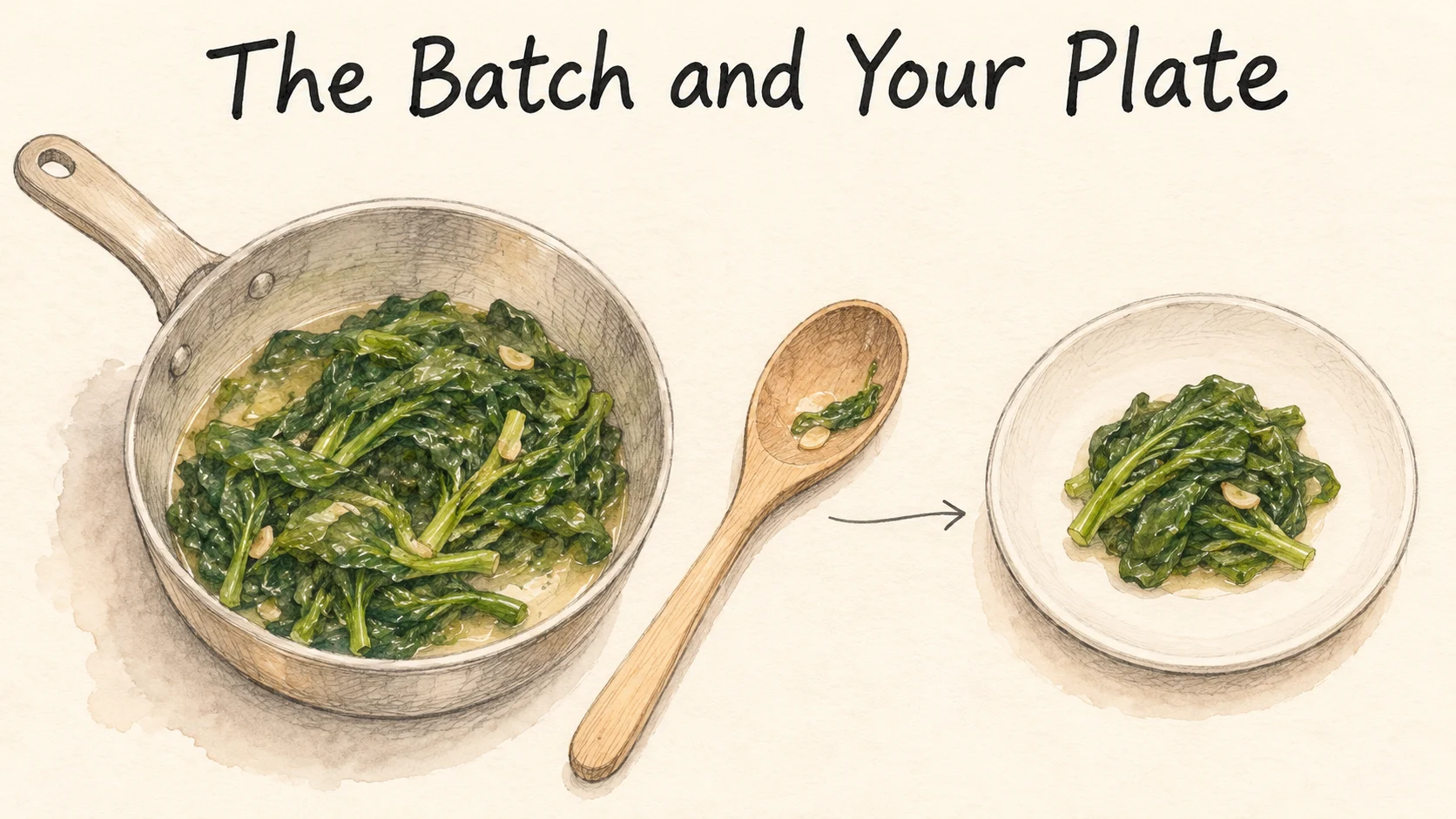
If you're cooking for four, you can record the vegetables and oil for the whole pan, then see how much you serve yourself. Four roughly equal portions mean you get about a quarter of the batch. If somebody takes a few leaves and you take half the plate, dividing by four gives you a different estimate. For the vitamin itself, go back to the matching cooked entry or to a retention value from comparable cooking conditions.
If you make soup with half a bunch of greens and sauté the other half until the water cooks off, treat them as two dishes. The weight of the soup includes the liquid you ladled out. The sautéed greens may sit as a little mound on a plate. When you eat some of each, the amount you served from each dish tells you more than a single number for the weight of cooked vegetables.
Next time you cook greens, choose which amount you want to know. For the serving, weigh what you put on your plate. To follow what cooking did to a batch, keep the weight you started with as well.
References
[1] Lee S, Choi Y, Jeong HS, Lee J, Sung J. Effect of different cooking methods on the content of vitamins and true retention in selected vegetables. Food Sci Biotechnol. 2018;27(2):333–342. Tables 1 and 2.