
How to Build a Taiwanese Convenience Store Lunch
Start with a rice ball, a boxed meal or a chicken salad. Look at how much staple food, protein food and vegetables you have, then shop for the missing part.
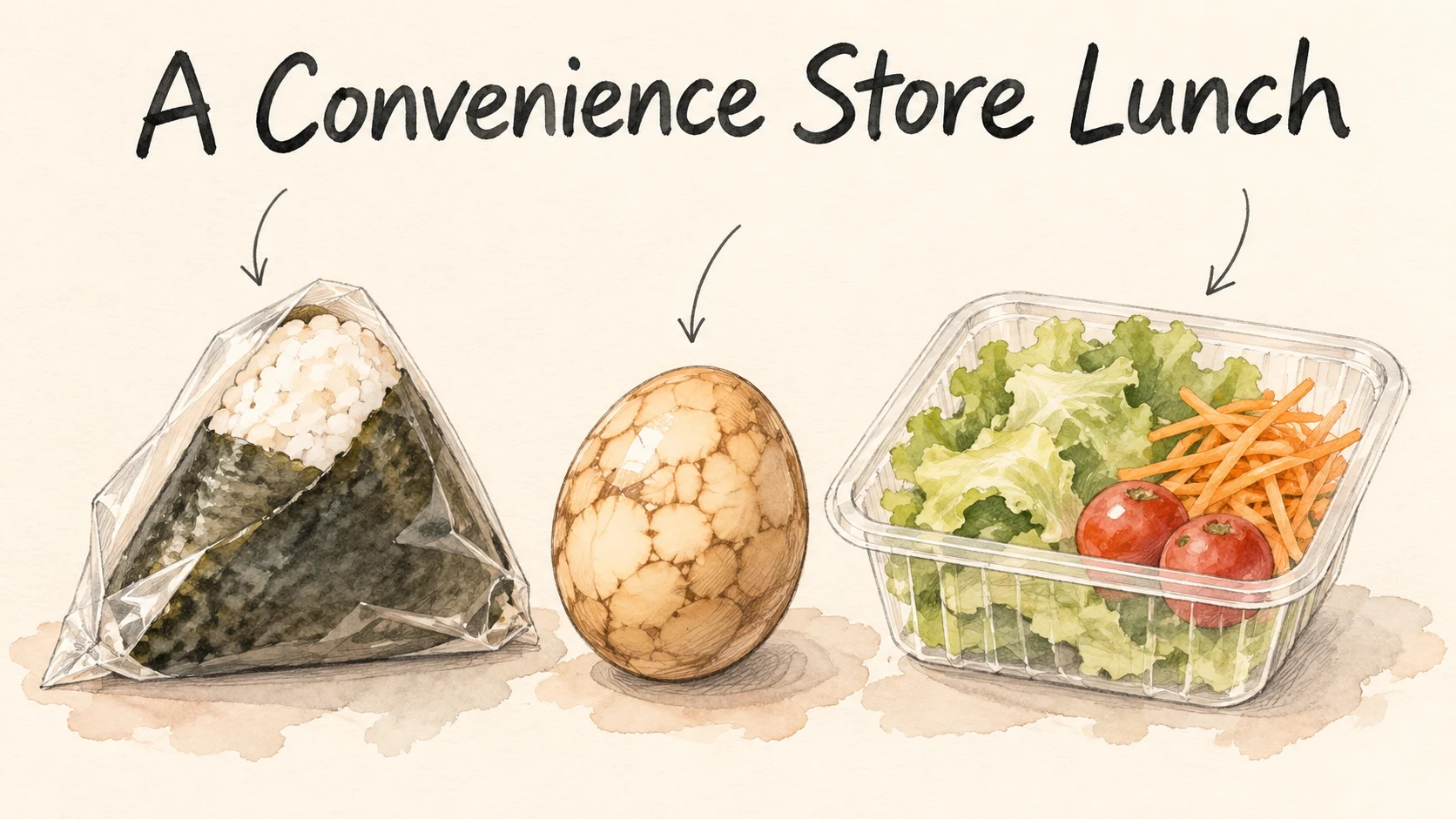
Start with one thing you want to eat, then see which part of lunch is still missing. Picture emptying everything onto a plate and look for a staple food, a protein food and vegetables. If you are holding a tuna rice ball, the rice is your staple. Look at how much tuna is inside before deciding whether to add a tea egg or some tofu. A box of leafy greens can go on the other side of the plate.
Suppose you have a rice ball, a coffee and a milk-butter bun. They look like three different things when each has its own wrapper. On a plate, most of the rice ball and most of the bun go on the same side. If the bun was what you wanted in the first place, you can start with that. Once you know what goes on the other sides, it is easier to decide whether a second staple suits your appetite.
▌What does a tuna rice ball or a chicken salad already give you?
Start with the rice ball's cross-section. A thin streak of tuna may run through the center with a thick layer of white rice around it. Most of the triangle gets its shape from the rice. Treat it as the staple for now and look for a serving of protein food such as a tea egg, tofu or chicken. If your rice ball has a generous filling, keep that in the picture too. The package's protein number can help you compare products. It includes protein from the rice and all the other ingredients as well as the filling.
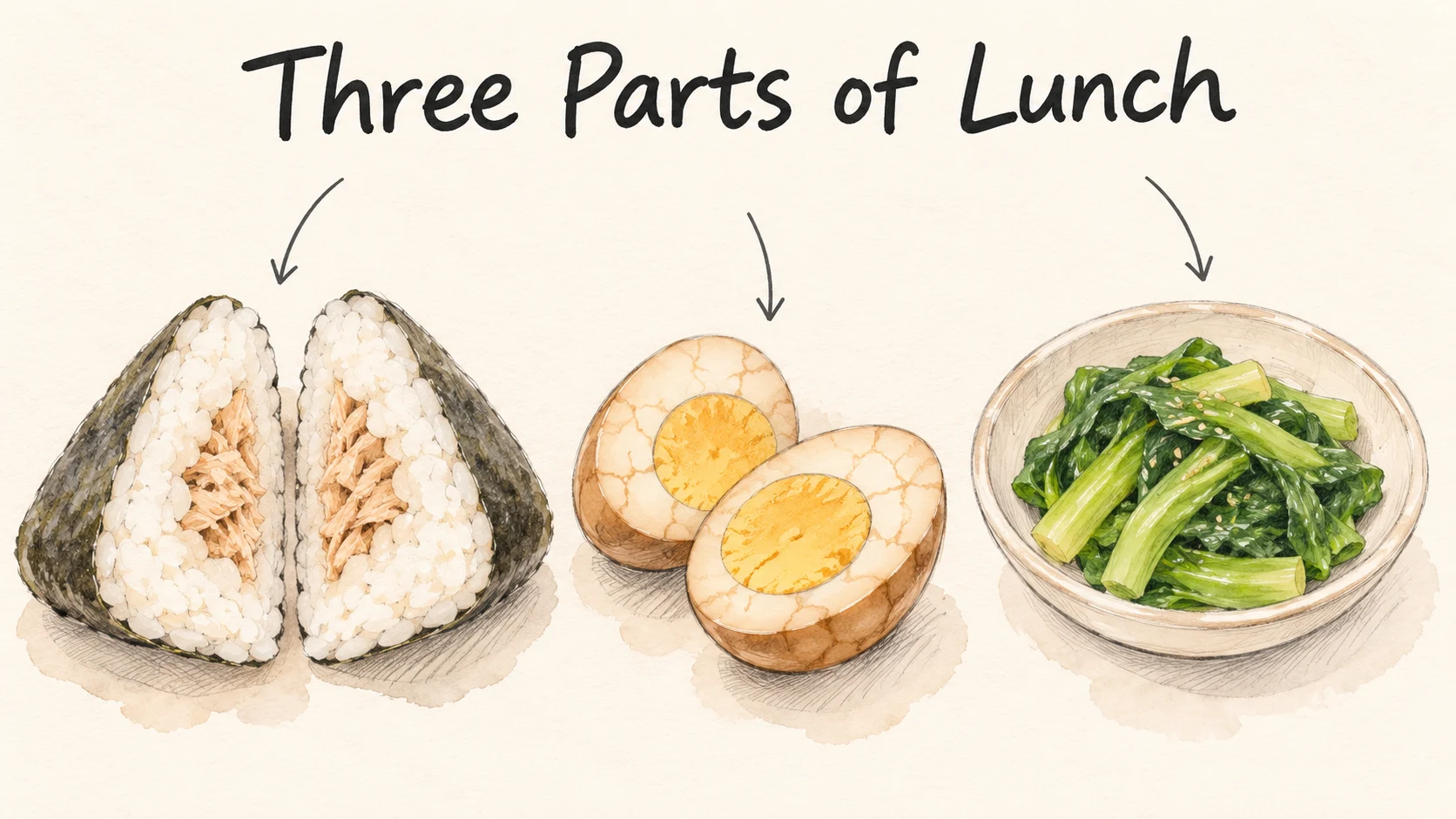
Start with a box of chicken salad and the same check can take you to a different part of the store. If you see a serving of greens underneath several slices of chicken, you have already found two parts of lunch. The hot case might have a roasted sweet potato to fill the staple side. If the word salad is on a box filled mostly with potato and mayonnaise, the potato goes on the staple side. Look for cucumber, greens or another vegetable dish if you want vegetables alongside it.
The same picture helps with a tray of chilled noodles that looks full. Noodles give the tray most of its volume, while dressing and a few shreds of cucumber spread over the top. Imagine pushing the cucumber together in one corner. If that leaves a small pile, you can grab a separate serving of vegetables. When a different version includes chicken or an egg, look at the actual amount in the tray and decide from there.
▌What is on the HPA's 660-calorie convenience store plate?
Taiwan's Health Promotion Administration, or HPA, gives a convenience store meal example of about 660 calories. A roasted sweet potato supplies the staple and a roasted chicken leg is the protein food. The other items are a salad, mixed fruit, mixed nuts and fresh milk, covering all six groups in Taiwan's dietary guide. The 660 calories refer to the agency's particular example. A larger sweet potato, a different style of chicken leg or a different amount of dressing will change the total. [1]
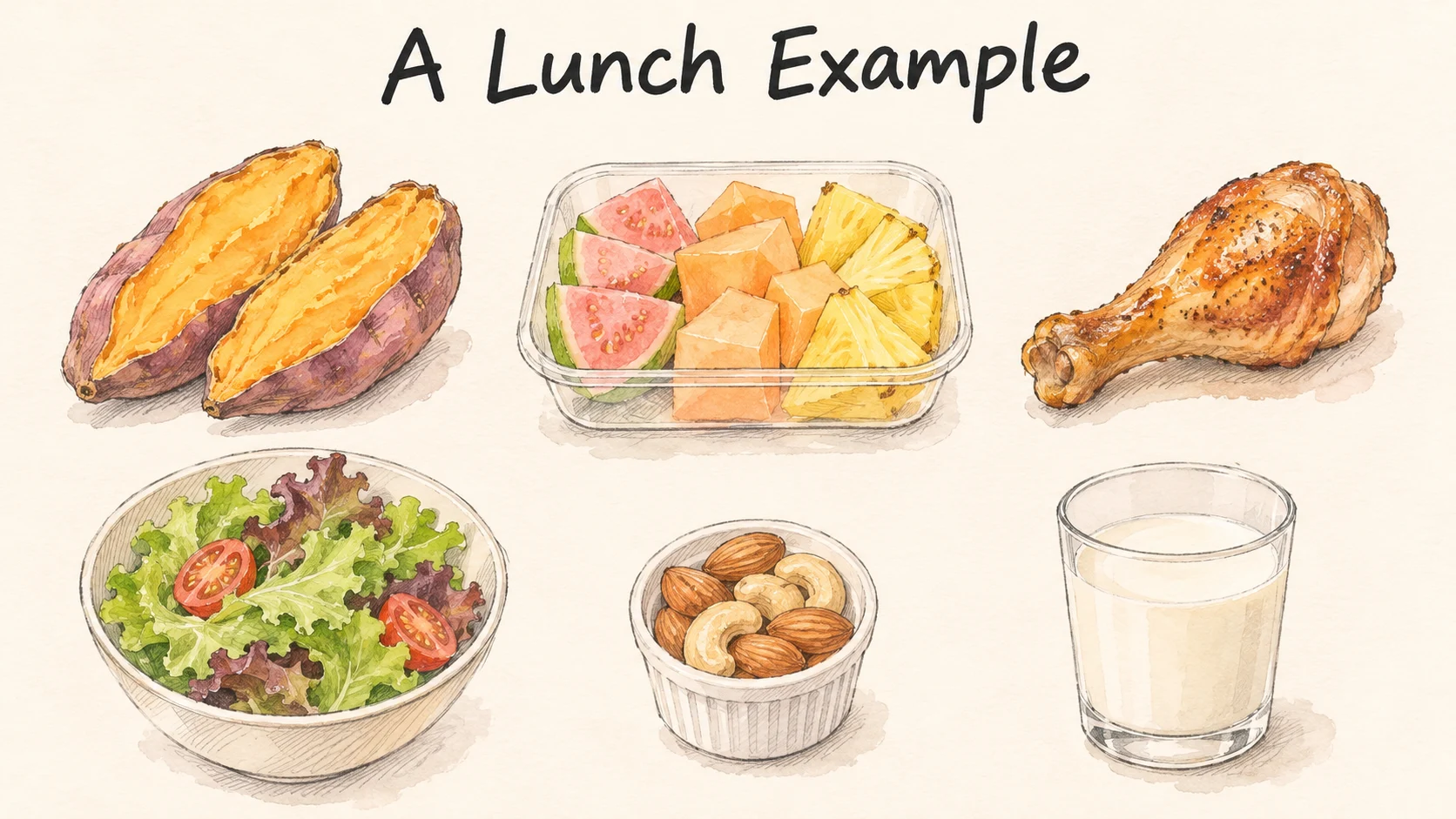
Buy the sweet potato and chicken leg separately and it is easy to see the roles they play. Buy a boxed chicken lunch and the components may be stacked on top of one another. Rice can cover the bottom of the tray while a thin layer of vegetables is spread across its surface. Push the vegetables into a corner with your chopsticks and compare what you see with the mound of rice. If the vegetables come to a few bites, a side box of greens might be the next thing you want.
The HPA's My Plate guide uses volume for its visual proportions. It suggests roughly the same amount of staple food and vegetables and uses your own palm as a visual guide for protein foods. [2] Loose lettuce in a clear tub takes up space differently from cooked cabbage or other cooked greens. For a quick choice at lunch, you mostly need to spot the difference between a garnish and a side serving. When you want to log the meal in detail, look up the weight or serving on the package.
The drink has a place in the same picture. The fresh milk in the HPA example goes in the dairy group. If you want dairy at lunch, it helps to see whether the bottle you picked is plain milk, flavored milk or another drink with milk in it. Soy milk belongs with soy, fish, eggs and meat in Taiwan's guide. Fruit or dairy you already have at home can fit into the rest of the day. [2]
▌Where do you look when the chicken sells out?
Imagine you have a rice ball and a salad and the chicken breast you normally buy is gone. Check the tea eggs by the counter or look for plain tofu or edamame in the refrigerator. You are filling the part between the two foods already in your hands. A tea egg and a packet of chicken go on that same side of the plate and can offer different amounts of protein. Look at the serving you will eat and, if it helps, compare the package values.
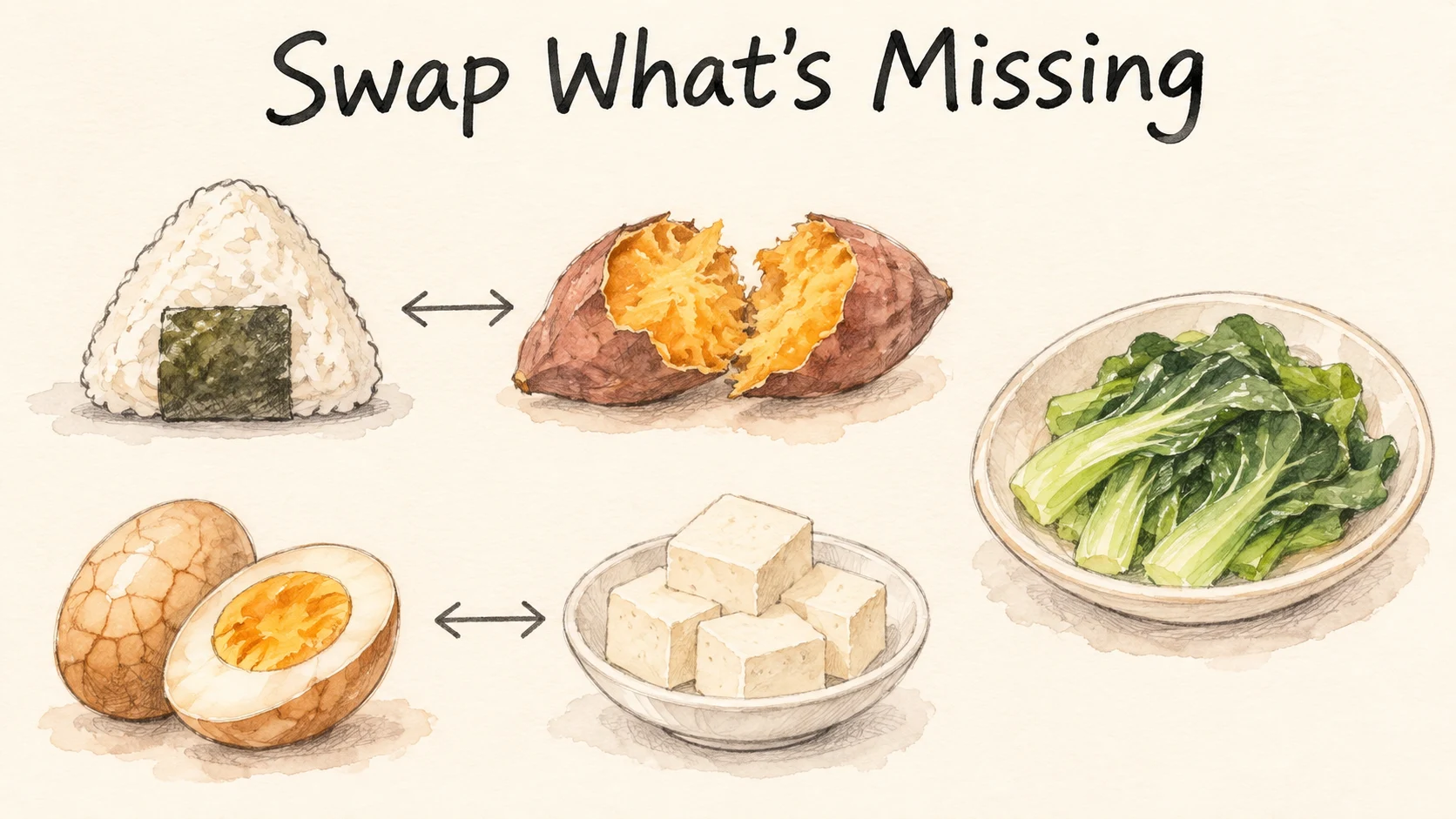
On another day, the eggs and salad are still there, but the hot case is out of sweet potatoes. Look for a rice ball, a rice box or chilled noodles for your staple. A complete boxed meal can also save some trips around the shop. If it already has rice and chicken and comes with few vegetables, go straight to the vegetable sides. Start with how much you feel like eating today, then decide how much of the boxed meal or which extra side to take.
You can also count what is already outside the store. If you have cooked greens in the office fridge, you only need to shop for the other parts. If you will eat at your desk, you can leave the salad dressing sealed until you are there. If you have to eat on the road, pick food you can carry and open comfortably. Once you see what is missing, fitting lunch to your budget and break gets easier.
Before you pay next time, picture putting your lunch on one plate. A rice ball leaves you looking for protein food and vegetables. A salad gives you something to build beside, depending on what is already in the box. See which part is still empty, and make one more stop before you reach the register.
References
[1] Taiwan Health Promotion Administration. Example balanced meals when eating out at convenience stores. Published 2019, updated 2024.
[2] Taiwan Health Promotion Administration. Introduction to My Plate. 2018.