
Tofu and soy milk both start with soybeans. Do they have the same calcium?
Tofu can gain calcium from the coagulant that sets it, while soy milk can be fortified. Here is how to find the amount in what you eat or drink.
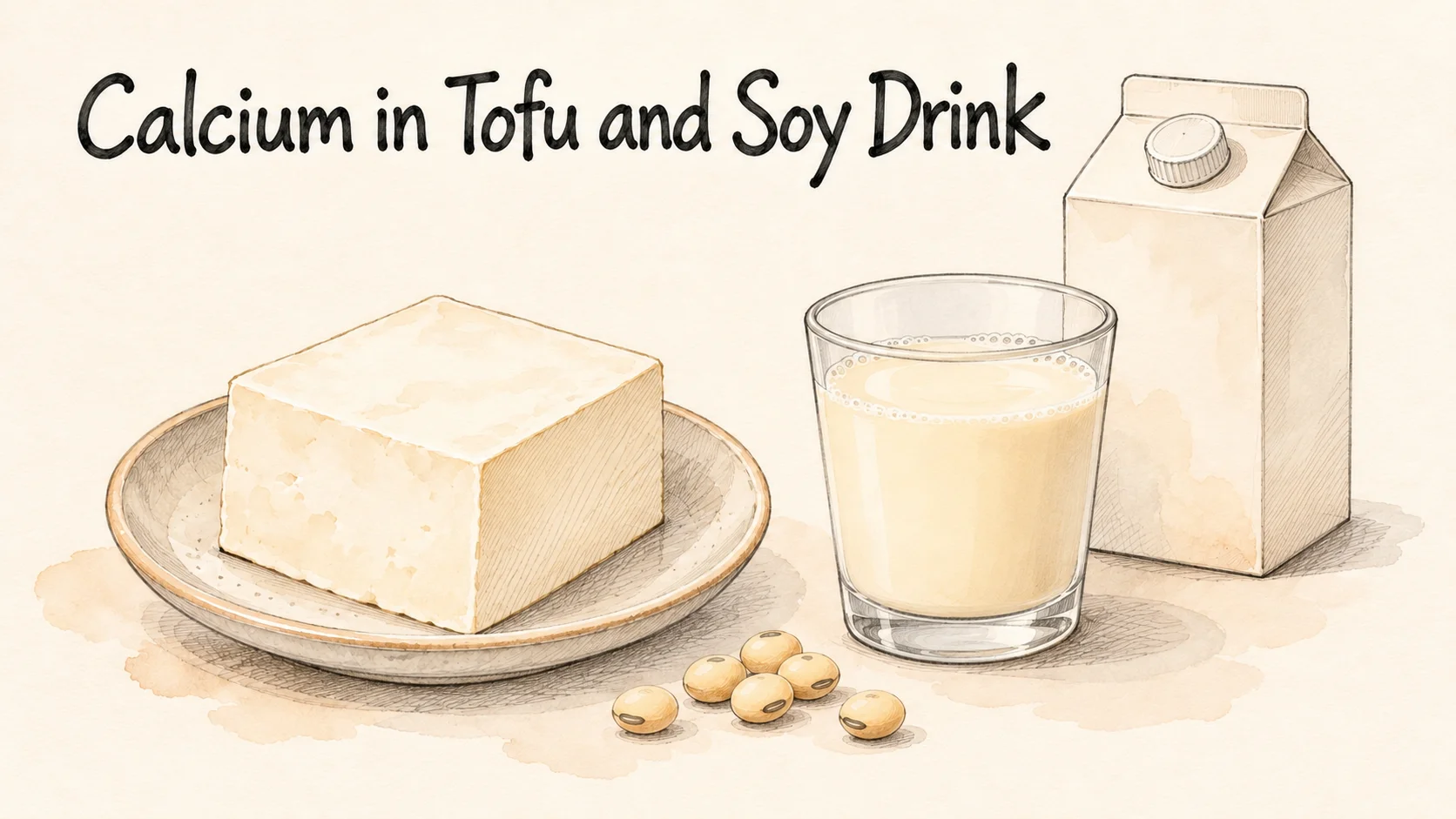
In the refrigerated aisle, two blocks of tofu look almost identical. On the next shelf are several cartons of unsweetened soy milk. You want tofu for soup and soy milk for tomorrow morning. Since they come from the same bean, can you use one number to estimate their calcium?
For tofu, look for what was used to set it. For soy milk, check whether calcium was added. In a table from the U.S. National Institutes of Health, half a cup of one firm tofu made with calcium sulfate contains about 253 milligrams of calcium. Half a cup of a soft tofu example made with calcium sulfate has about 138 milligrams. A cup of calcium-fortified soy milk is listed at about 299 milligrams. Those amounts apply to the foods and portions in the table [1].
At what step can calcium go into tofu?
When you heat soy milk and cool it again, you typically still have a liquid that you can pour. Tofu adds another step. A coagulant helps the soy proteins that were dispersed in the liquid gather into a soft curd. Some styles set with their water in the box. Others are pressed to remove some of that water, giving you a firmer block [2].
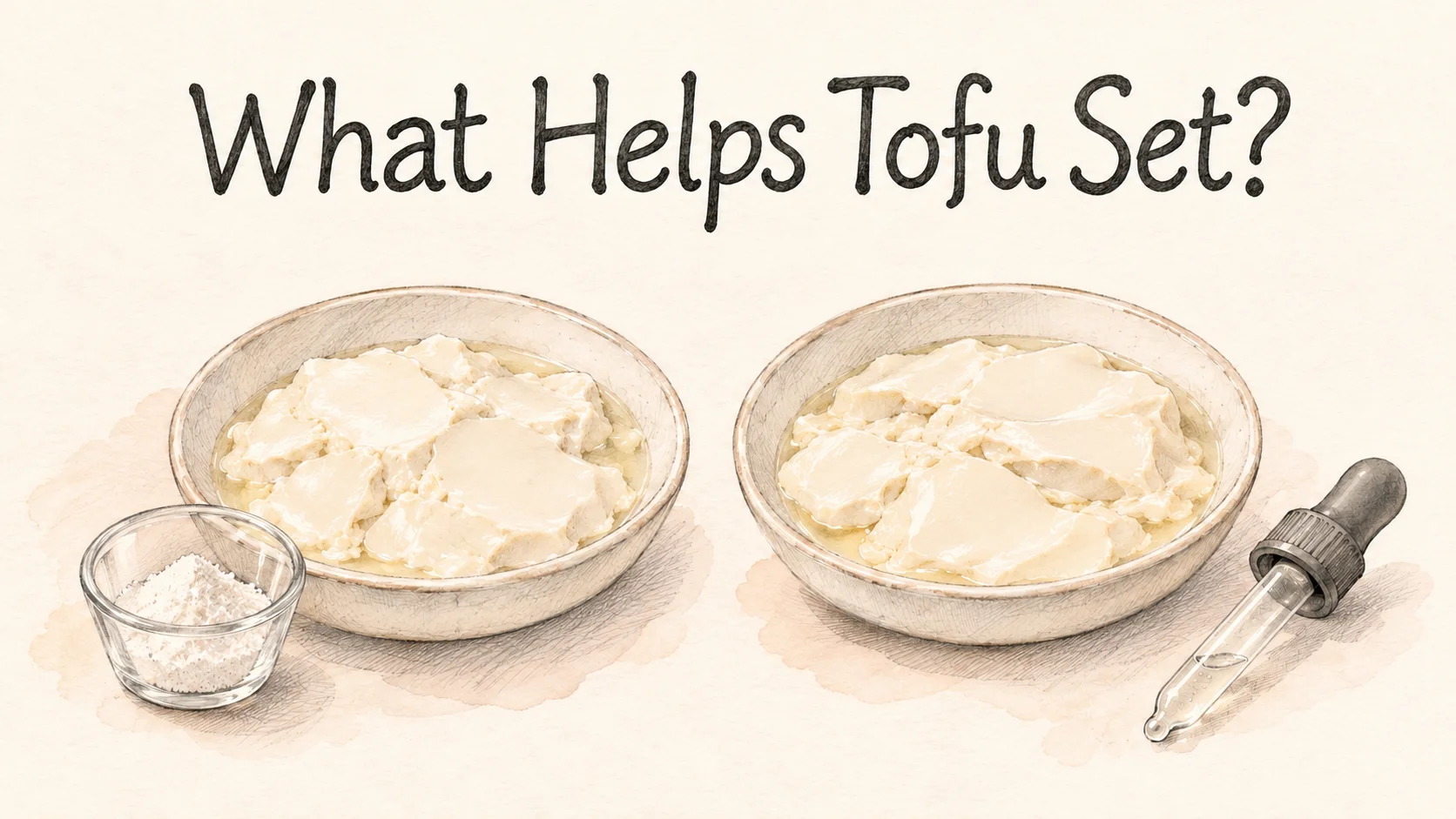
A coagulant can be a source of calcium itself. Calcium sulfate and calcium chloride both contain calcium. Magnesium chloride is a different salt. Nigari often supplies magnesium chloride, but it can be a mixture. When a pack says nigari, look for which ingredients appear alongside it if you want to know whether the producer also used a calcium salt [2].
The ingredient list is a good place to start. It can tell you that a calcium salt was used. The calcium row tells you how much is in the particular product. The two tofu examples in the NIH table both use calcium sulfate, yet the half-cup figures are 253 and 138 milligrams. How much tofu fits in that half-cup, the recipe and the water content can all differ. There is no single calcium number that comes with the words “calcium sulfate” [1].
The ingredient list and nutrition panel answer different questions. First identify the coagulant if it's listed. Then check the calcium amount on the specific package or product specification. Without that amount, a similar entry in a food composition table can give you a rough reference.
The texture tells you how a block may hold up when you lift it out of soup. It doesn't tell you the dose of calcium salts used to make it. You can look at two firm packs side by side and learn more from the back than you can by pressing the front of either block.
The table compares two half-cup portions by volume. To compare equal weights, you'd need to know how many grams of each tofu fit in half a cup. At home, if the package gives you calcium per 100 grams, weigh the tofu you're about to put in the soup and use the package's figure. That gives you an estimate on the scale you're actually using.
Where is the calcium information on unsweetened soy milk?
Soy milk is a drink, and adding calcium to it is a separate recipe decision. A carton may contain soybeans and water. Another may include a calcium ingredient through fortification. “Unsweetened” tells you something about the drink's sweetening, while the row marked calcium tells you how many milligrams it contains [3].
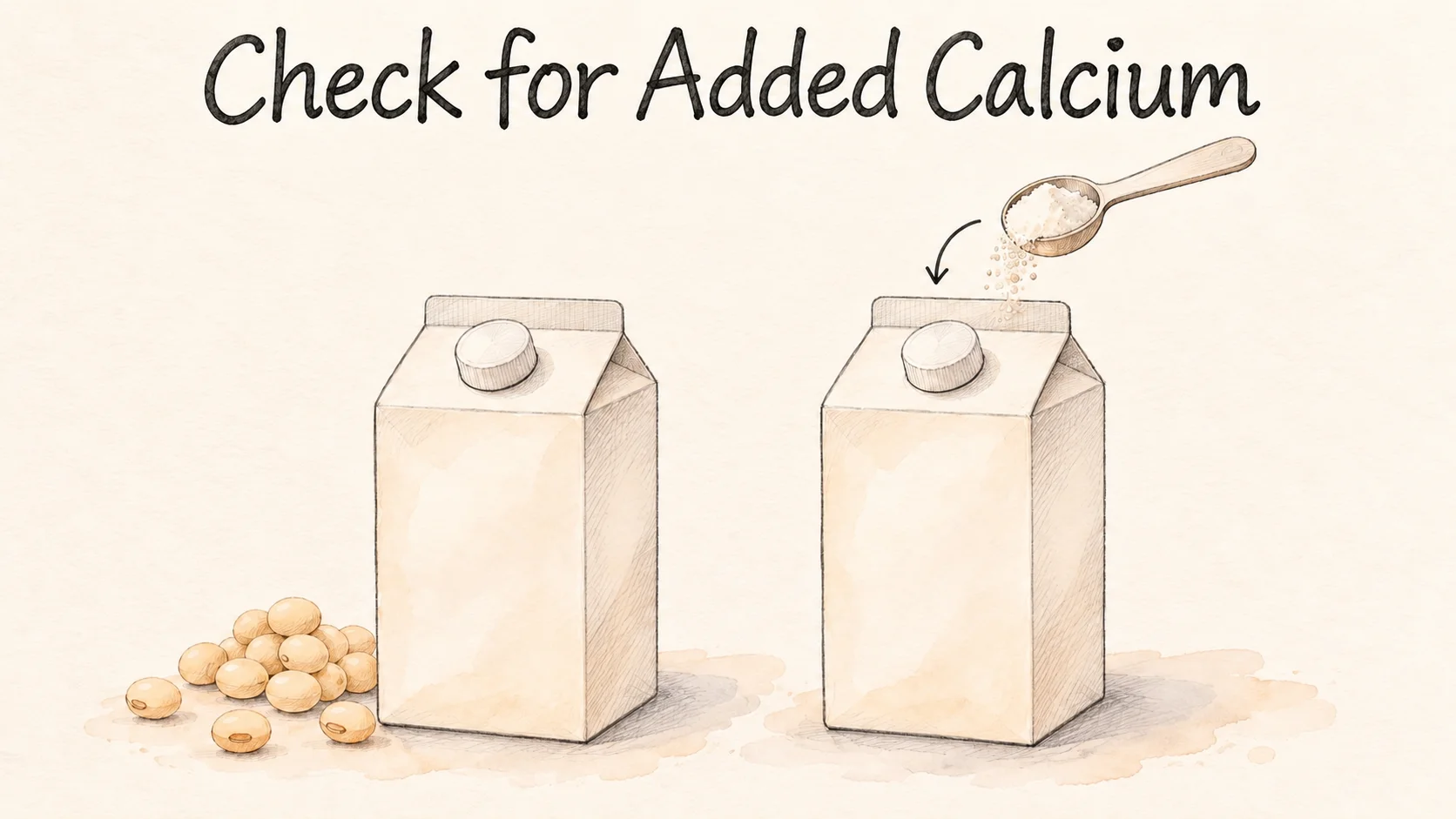
The cup with 299 milligrams in the NIH table is a calcium-fortified example [1]. If a breakfast shop pours soy milk out of a pitcher, the recipe and calcium amount may be hard to find. “Thick soy milk” describes what it tastes and feels like. If calcium is the reason you're comparing drinks, ask how it's prepared or look for a label that lists the amount.
If you have two labeled cartons, look at the unit next to the number. One might show its calcium per carton, while the other shows it per 100 mL. Compare equal volumes first. Then use the amount you actually pour. Protein and vitamin D have their own numbers, so you can check them separately if they matter to your comparison.
Suppose you are shopping with a glass you know holds less than the box you just picked up. Even if you'll use one carton over two breakfasts, the amount of calcium in the carton is an estimate for both breakfasts together. Look at what you pour on one day to find that day's amount.
How much goes into the bowl or glass you're serving?
Suppose you're making soup with a 300-gram block of tofu. The fictional label lists 150 milligrams of calcium per 100 grams. You divide it into three equal pieces and eat two of them. That's about 200 grams of tofu. Multiply 150 by two and the tofu supplies about 300 milligrams of calcium.
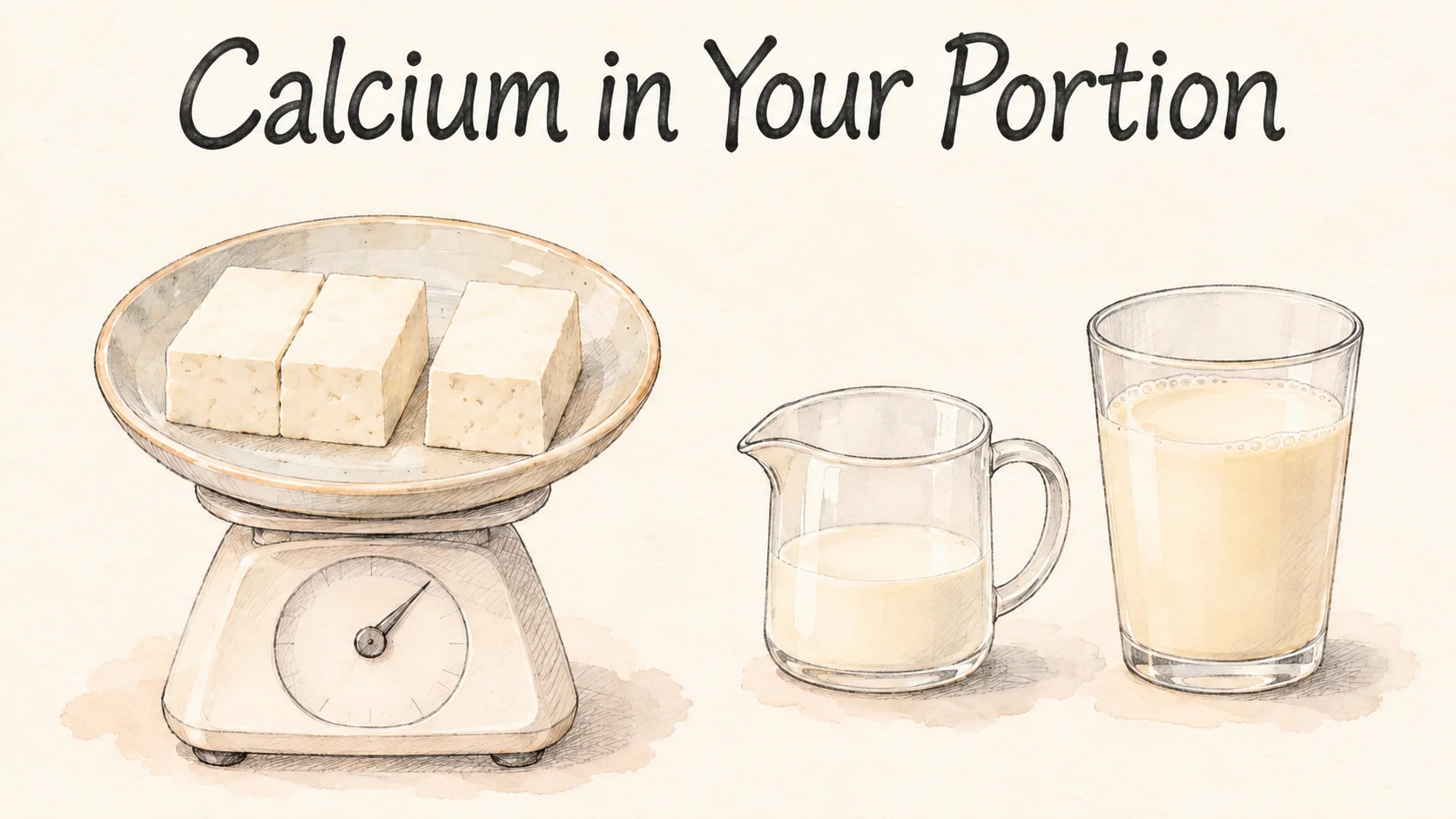
For a separate soy milk example, a label shows 120 milligrams of calcium per 100 mL. If you pour 200 mL, you get about 240 milligrams. When you use a splash of soy milk in coffee, you can measure how much you usually add. For tofu, use grams of the food. For soy milk, use milliliters of the drink if that's how the label is written. The arithmetic works with the real labels once you have the portion.
You might add the whole block of tofu to a family pot and end up with two small cubes in your own bowl. The amount on the carton estimates what went into the whole recipe. If you cut pieces of a similar size, counting the pieces you eat can give you an idea of your share. The amount of soup in the bowl won't tell you how much tofu is under the broth.
You're estimating the calcium in what you eat. The table alone won't tell you exactly how much your body absorbs [1]. If you swap the tofu in tonight's soup or change what you drink in the morning, the amount in the portion is one thing you can compare directly.
What can you check while you're still at the shelf?
Turn the tofu over and look for the coagulant. Turn the soy milk over and look for calcium beside a serving volume. If the tofu is sold unpackaged, you may be able to ask what the producer uses to set it. That's still useful when you can only make a rough estimate.
If you keep buying the same product, you can try the calculation once with the amount you usually eat. If you switch to a bigger pack or use a smaller glass next time, update the amount of food you're counting.
When you get home, look at how much tofu is going into the soup and how much soy milk goes in the glass. The two foods started with the same bean. You can use the ingredient and portion information for each to see how much calcium that dinner or breakfast provides.
References
[1] NIH Office of Dietary Supplements. Calcium: Fact Sheet for Health Professionals, Table 2. Updated June 22, 2026.
[2] USDA Agricultural Marketing Service. Magnesium Chloride technical evaluation report. 2016. Types and uses of coagulants in tofu.
[3] U.S. Food and Drug Administration. Milk and Plant-Based Milk Alternatives: Know the Nutrient Difference.