
After a Hot, Sweaty Day, What Does an Electrolyte Drink Add?
The amount of sweat and the amount of sodium in it are separate measurements. Here's how researchers collect sweat and how to read the sodium in a bottle.
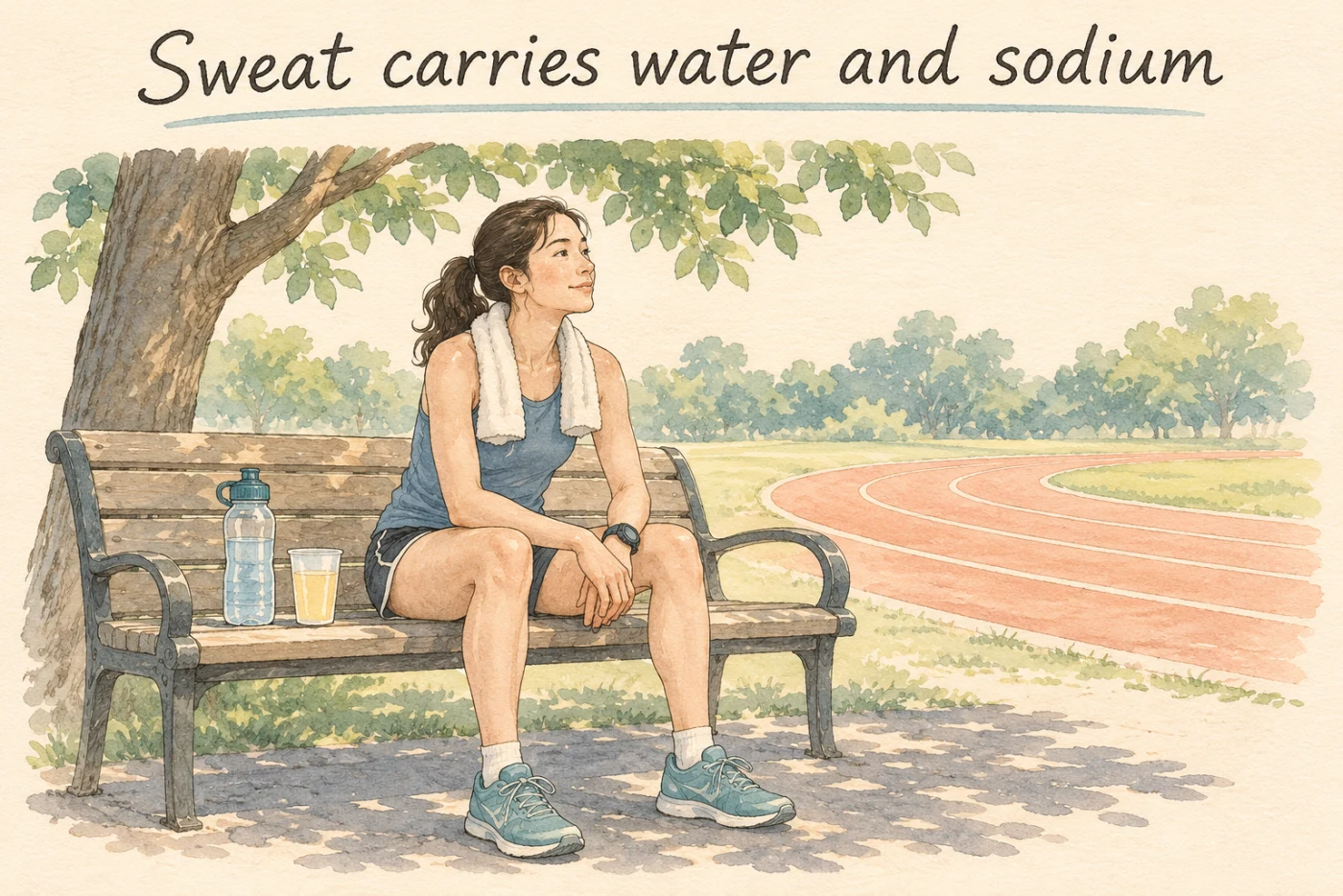
Walk home on a hot afternoon and there's a wet patch on your collar. Ride for a few hours another day and a white line dries on the brim of your cap. Both are sweat. If you have water in one hand and a drink that says electrolytes in the other, what would the second bottle add?
Sweat carries water and electrolytes, including sodium. The fluid in the bottle and its sodium are two amounts you can read separately. What you lose is also two measurements: the volume of sweat and the concentration of sodium in it. A shirt soaked through can tell you it was a sweaty day. It can't tell you how much sodium left your body.
The same volume of sweat can carry different amounts of sodium
Electrolytes are substances that form charged particles in body fluids. Sodium is one of the main ones in sweat, which also contains chloride and smaller amounts of other ions. To estimate the sodium lost, you need both the volume and the concentration. Concentration tells you how much sodium there is per liter, while the total tells you how much was in all the sweat produced [1].
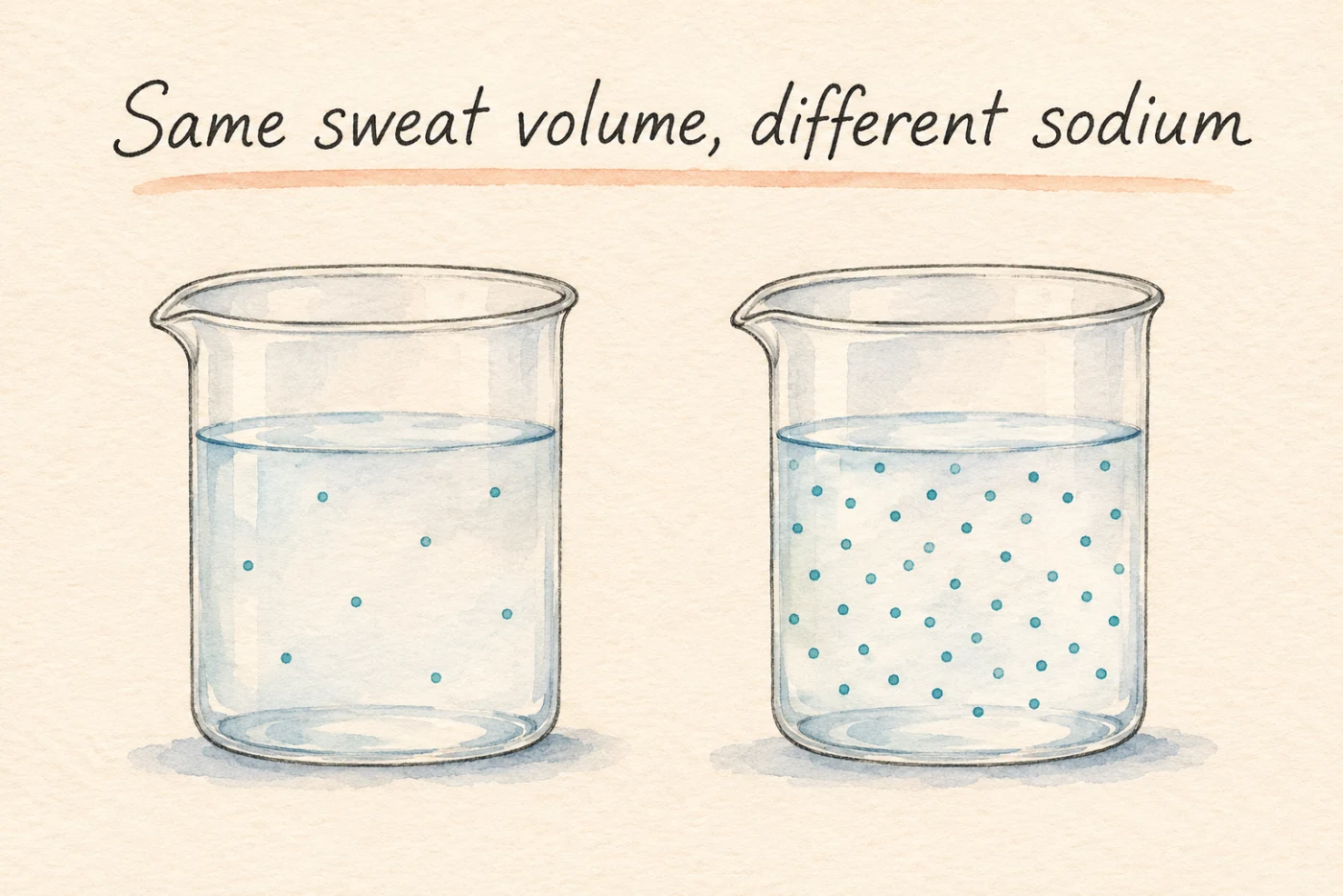
Say two people each produce a liter of sweat. In an example, one person's sweat has 30 millimoles of sodium per liter and the other's has 50. A millimole of sodium is about 23 milligrams, so these two liters contain about 690 and 1,150 milligrams of sodium, respectively. If the first person had produced half a liter at the same concentration, they would have lost half as much. The example shows how the two variables interact. It isn't a prescription for what either person should drink.
Sweat can cool you as it evaporates. Some of it does that on your skin, some wets your clothes, and some drips from your body. A breeze can leave your shirt less damp without making the shirt a measure of what you lost. On a cap, the water can evaporate and leave part of the dissolved salts behind. The white mark is a trace of that process [4].
What the patch on an athlete's arm measures
A paper may also switch between a total and a rate. A liter of sweat in half an hour averages two liters per hour. A liter over two hours averages half a liter per hour. If the average sodium concentration happened to be the same, the two sessions would have the same total sodium loss. The rate column is useful when the sessions take different amounts of time. The example's 690 milligrams, by contrast, came from one liter over the whole session.
One study compiled sweat testing from 506 athletes who were training or competing in different sports. Researchers collected sweat in a patch placed on the forearm and measured how much sodium was in the sample. They used the forearm measurement to predict the average concentration in sweat across the body. The measurements at the forearm ranged from 12.6 to 104.8 millimoles per liter. The predicted values for the whole body ranged from 18.2 to 70.8 [1].
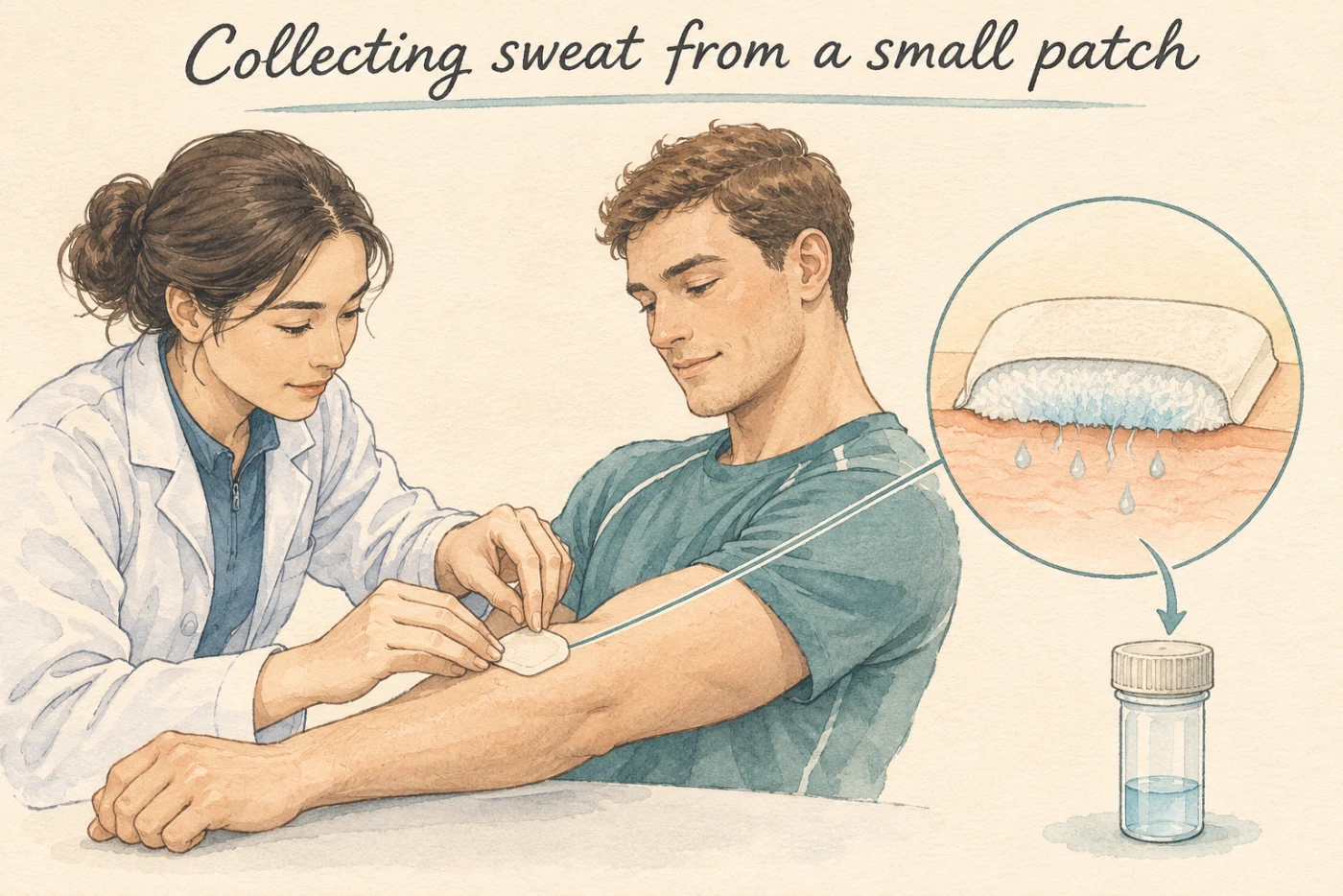
The paper used a previously published equation: multiply the forearm value by 0.57, then add 11.05. A forearm result of 50 millimoles per liter would give a predicted whole-body result of about 39.6. Both numbers have the same units and describe different sampling areas. The equation belongs to the forearm collection method in the study. A patch used on another part of the body doesn't automatically give you the same prediction [1].
Those ranges describe two different things. One is what researchers collected at one spot, the other is what they estimated elsewhere from the patch. People in the study also did different activities in different conditions. That gives you a sense of the variation seen in training. It doesn't tell you which number to assign to yourself when you come home from a walk.
The team separately estimated sweating rate from the change in body mass before and after exercise, accounting for food and fluid taken in and urine passed. The average was 1.21 liters per hour, with observations from 0.26 to 5.73. Keep the per-hour unit with the result. The athlete with the highest volume may have had a different concentration from the athlete with the saltiest sweat. Multiplying the two group maximums wouldn't describe either person's measured loss [1].
A salt mark on a cap is a clue that sweat contained sodium. To calculate the amount lost, you would still need a reliable estimate of how much you sweated and the average concentration of that sweat.
Does the same person lose more sodium when they work harder? In a second experiment, 11 recreational athletes cycled in 30°C conditions for 90 minutes at each of two intensities. The researchers used a whole-body washdown method to recover sweat electrolytes. From the lower to the higher intensity, average sweat volume rose from 0.86 to 1.27 liters, and average concentration rose from 32.6 to 52.7 millimoles per liter [3].
The researchers estimated each participant's sodium loss, then averaged the results: 659 milligrams at the lower intensity and 1,565 milligrams at the higher one. The two variables moved in the same direction in those cycling sessions. Both research teams included investigators affiliated with the Gatorade Sports Science Institute, and the authors of the cycling study disclosed employment by PepsiCo. This was a comparison of what was lost in sweat during different workloads. It didn't compare drinks [1, 3].
Match the bottle to the day you're having
The U.S. National Institute for Occupational Safety and Health distinguishes work in the heat with regular meals from situations that involve sweating for several hours. Water and regular meals can often provide fluid and replace salt. When sweating continues for hours, a drink with electrolytes is another option. That guidance is intended for workplaces. The work being done, opportunities for rest and shade, and access to water all matter [2].
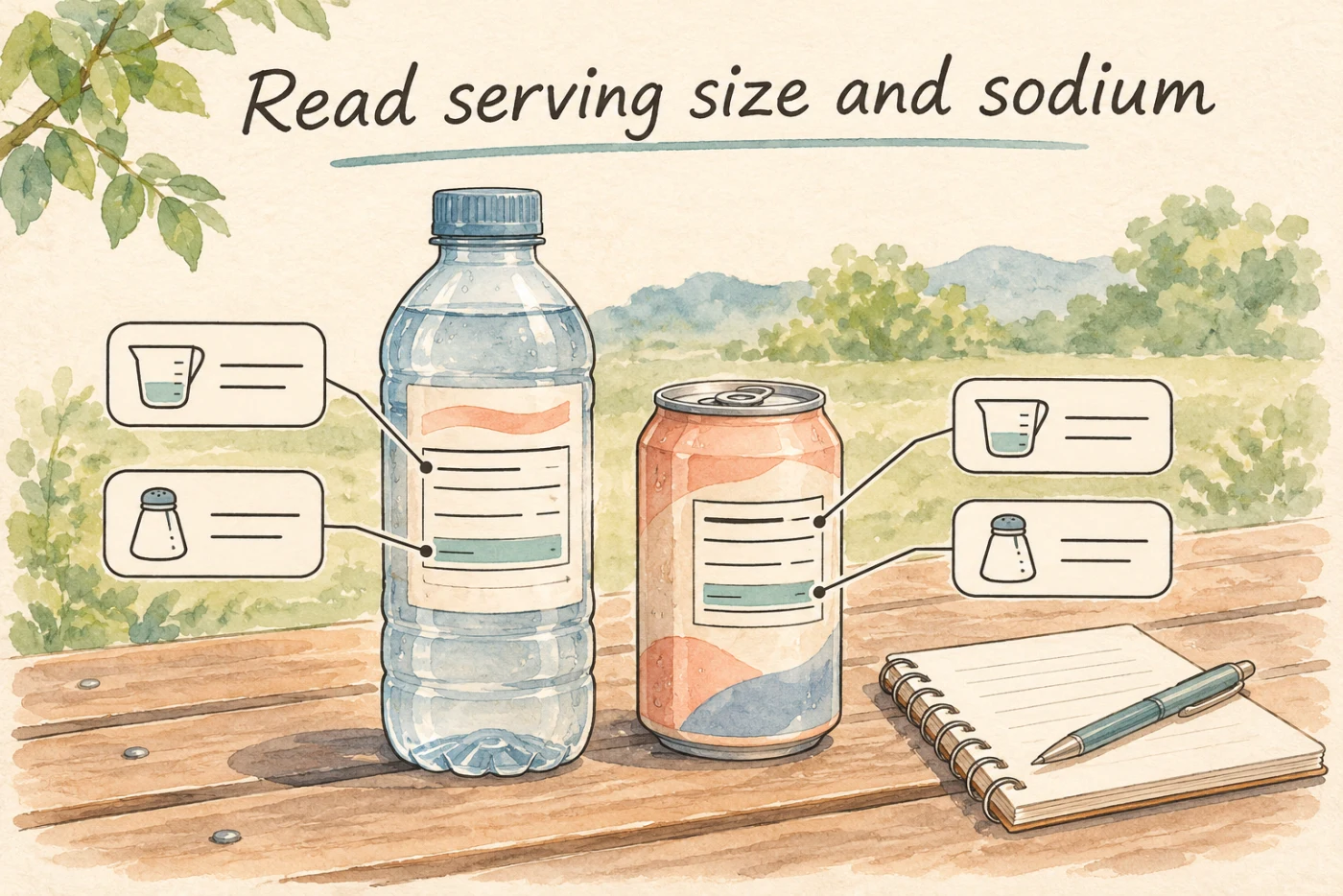
Imagine a 500 mL bottle labeled 24 milligrams of sodium per 100 mL. The whole bottle supplies 120 milligrams, and half supplies 60. If another product lists sodium per serving or per bottle, convert both to the amount you plan to drink before comparing them. If you also want to know how much sugar it supplies, find that separate line on the nutrition label. The word electrolyte on the front doesn't give you either number.
You might see 120 milligrams on one bottle and 80 on the next. If the first number is for the whole bottle and the second is per serving in a two-serving bottle, drinking each bottle gives 120 and 160 milligrams. This is a useful calculation to do even before you decide what to bring. It tells you the amount in the bottle. The numbers that describe sweat loss come from a separate measurement.
A short walk home with lunch and water waiting presents a different problem from hours in the sun at a place where you can't stop whenever you like. When you're planning what to bring, look at when you can take a break, how long you'll have water on hand, and when you'll eat. That line on the cap can tell you there was sodium in your sweat. You can keep sodium and water separate when you think about what put them back.
References
- Baker LB, et al. (2016). Normative data for regional sweat sodium concentration and whole-body sweating rate in athletes. J Sports Sci. 2016;34(4):358–368.
- CDC and NIOSH. (2017). Heat stress and hydration.
- Baker LB, et al. Exercise intensity effects on total sweat electrolyte losses and regional vs. whole-body sweat sodium, chloride and potassium. Eur J Appl Physiol. 2019;119(2):361–375.
- CDC and NIOSH. (2016). Criteria for a recommended standard: Occupational exposure to heat and hot environments.