
Do You Need 7,000 Steps a Day? Here's What Researchers Compared
One study divided 2,110 middle-aged adults at 7,000 steps. Another found a difference among older women at about 4,400. Here's where both numbers came from.
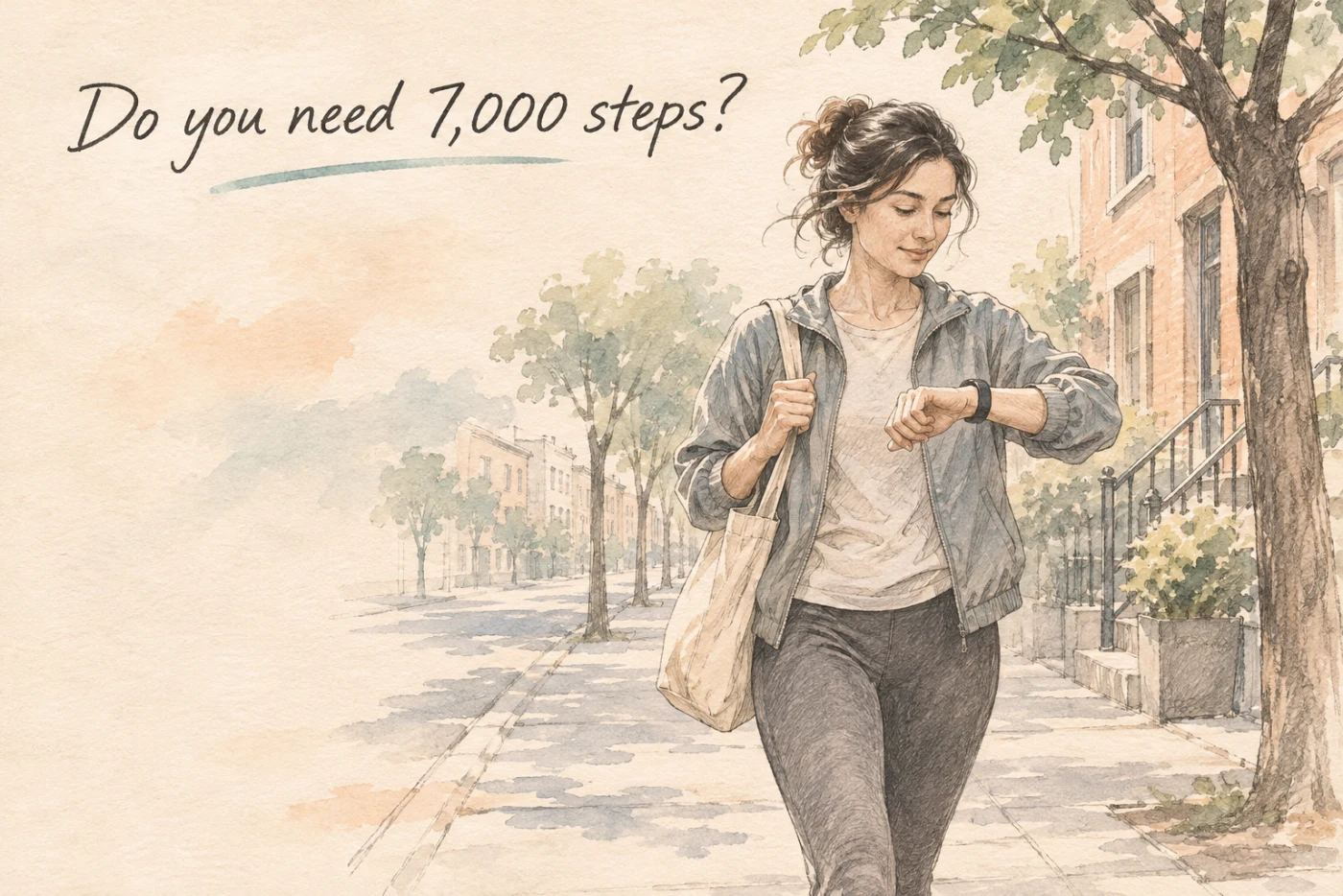
After dinner you check your wrist. It says 6,930 steps. Should you walk around the living room until the number turns over? If you're worried that those last 70 steps will make or break the day, you can put the watch down for a minute. In a widely cited study, 7,000 was a line the researchers used to sort people into groups. The study wasn't designed to reveal what happens when a person takes 70 extra steps.
Another study, in women with an average age of 72, found a difference between people who averaged about 4,400 steps and those who averaged 2,700 [2]. To see why the numbers differ, start at the point when both research teams handed out activity monitors.
One week with a tracker, a decade of follow-up
The 2021 CARDIA analysis included 2,110 adults in the United States. Between the ages of 38 and 50, participants were asked to wear a monitor on an elastic belt at the hip for seven days during waking hours, taking it off for water activities. To be included, they had to wear it for at least 10 hours a day on at least three days. The researchers averaged the counts from a person's valid days [1].
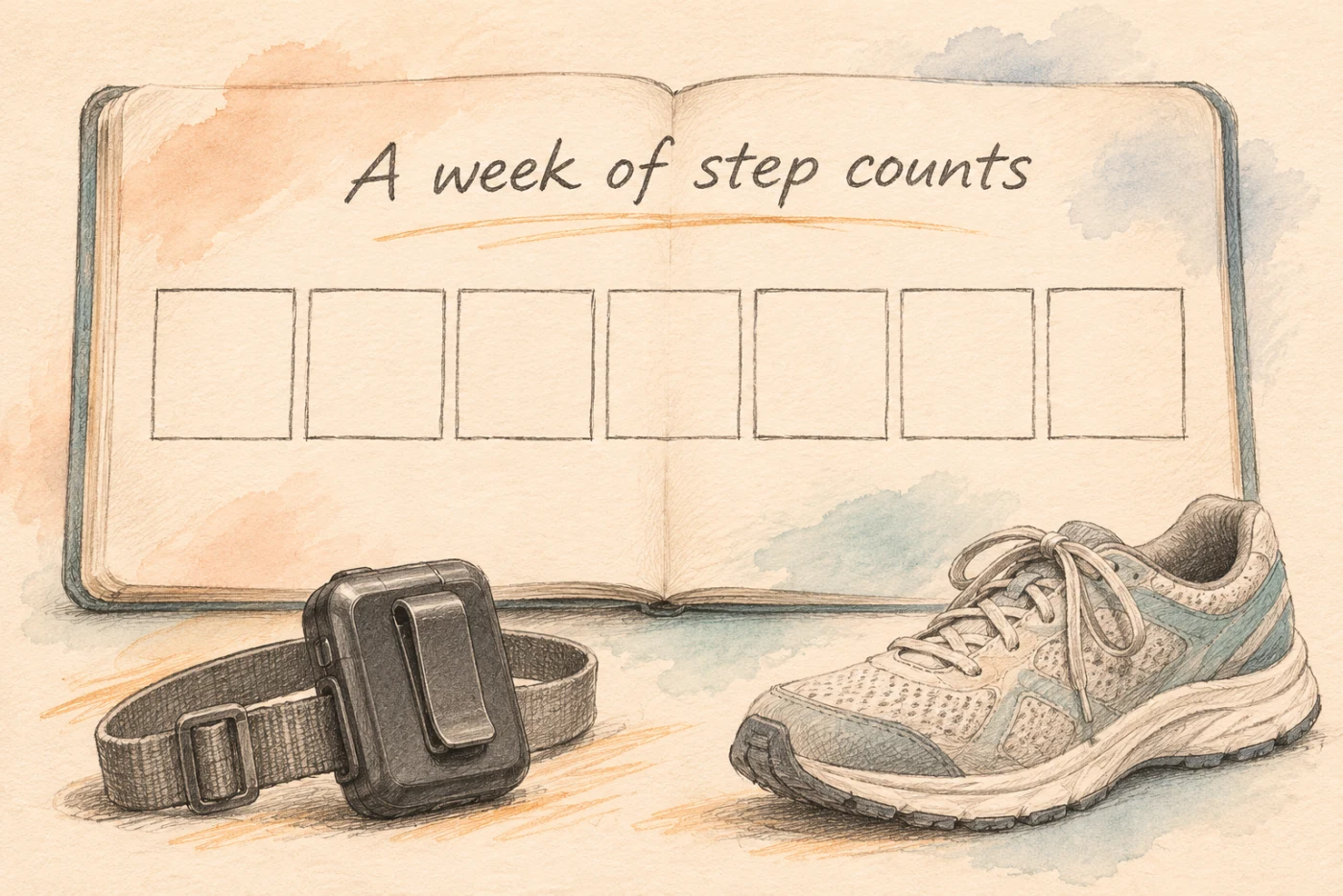
Think of two workdays: one when you walk home from the train, and one when you work from home. The two counts don't have to match. The team wanted an estimate of what an ordinary day looked like across that measurement period. Swimming didn't become steps. A device worn on the hip can also yield a different count than a device worn at the wrist. The number on a watch today may not be interchangeable with the number recorded by the study's device [1].
Participants then went into one of three groups based on their average: below 7,000, from 7,000 to 9,999, and 10,000 steps or more. No one was assigned a walking goal. Researchers followed the group for 10.8 years on average, during which 72 participants died [1].
Read the percent alongside the people
Both groups that walked more had lower estimated mortality than the group below 7,000. The middle group's adjusted hazard ratio was 0.28, and the highest group's was 0.45. The bigger relative difference can turn into a headline that says mortality was 72% lower. The paper also reported an estimated difference of 53 deaths per 1,000 people for the middle group compared with the lowest. Expressing the comparison both ways helps put the percentage in perspective. It wasn't 72 fewer deaths out of every 100 people [1].
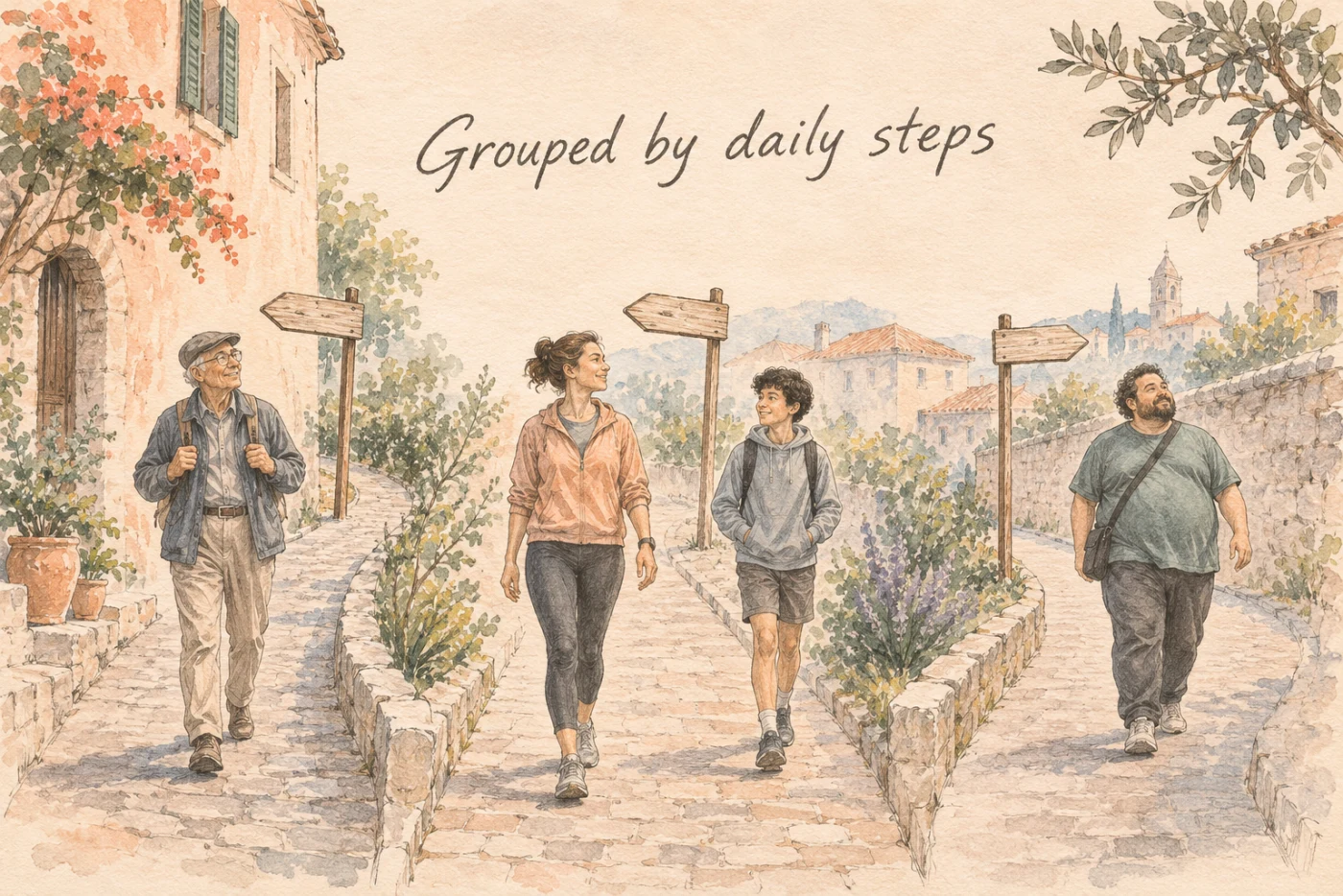
The middle group had a median of 8,502 steps. The lowest group's median was 5,837. The estimated difference between those groups doesn't tell you whether 6,930 and 7,000 differ in any meaningful way. The two hazard ratios also don't show that the highest group was worse off than the middle group. There were relatively few deaths, the estimates had overlapping uncertainty intervals, and each group was compared with the lowest group [1].
The models adjusted for factors such as smoking, age, and health history. Health can still have an influence on both how much a person walks and what happens to them later [1].
Imagine two people in the same apartment building. One walks to the grocery store every day. The other feels unwell and needs a ride to go out. Their step counts tell you something about their lives, including differences that were already there when the tracker went on. A cohort study follows people as they go about their lives. It can find a relationship between activity and future outcomes without establishing exactly how many years of life anyone would gain from changing their route.
Where did 4,400 come from?
A 2019 study followed 16,741 women with an average age of 72. Researchers divided them into four groups according to measured steps. The lowest group's median was about 2,700 steps a day. The next group's was about 4,400. Over 4.3 years of follow-up on average, the adjusted hazard ratio for the second group was 0.59, about 41% lower than the first group's. The team also estimated a curve across the range of steps, which leveled out at roughly 7,500 in that cohort [2].
These women started out at different activity levels and were followed for a different length of time from the middle-aged adults. Their lowest step group had a typical count more than 3,000 steps below the typical count of CARDIA's lowest group. The 4,400 and 7,000 figures answer different comparisons. A headline can make them look like dueling thresholds for the same person. Look for who was measured and what their steps were compared against.
What about walking faster?
CARDIA also looked at two measurements of pace. One took the 30 minutes in a day with the highest step counts, which could be scattered throughout the day. The other measured how many minutes people walked at least 100 steps per minute. The researchers didn't find a clear association between either measure and mortality in this group [1].
Picture hurrying to the train in the morning, crossing town on foot for lunch, and taking a brisk walk back before dark. The fastest minutes from all three trips could count toward your 30 minutes. It would be a different measurement from how fast you can walk for half an hour without stopping. Mortality was the outcome the team followed, so the result can't tell you whether setting a faster pace would improve your ability to cover a particular route. If you want to know whether a familiar walk is getting easier, its duration and how you feel on the same hill tell you things the count misses. Cycling and swimming don't necessarily register as steps at all.
Keep the tracker the same and check an ordinary week
To see whether you're walking more, start by looking at one ordinary week. If your phone usually sits in your bag, keep carrying it the same way. Compare the days to your schedule. Would a walk to pick up a parcel fit on some of the quieter days? Try the route and look at the following week's average.
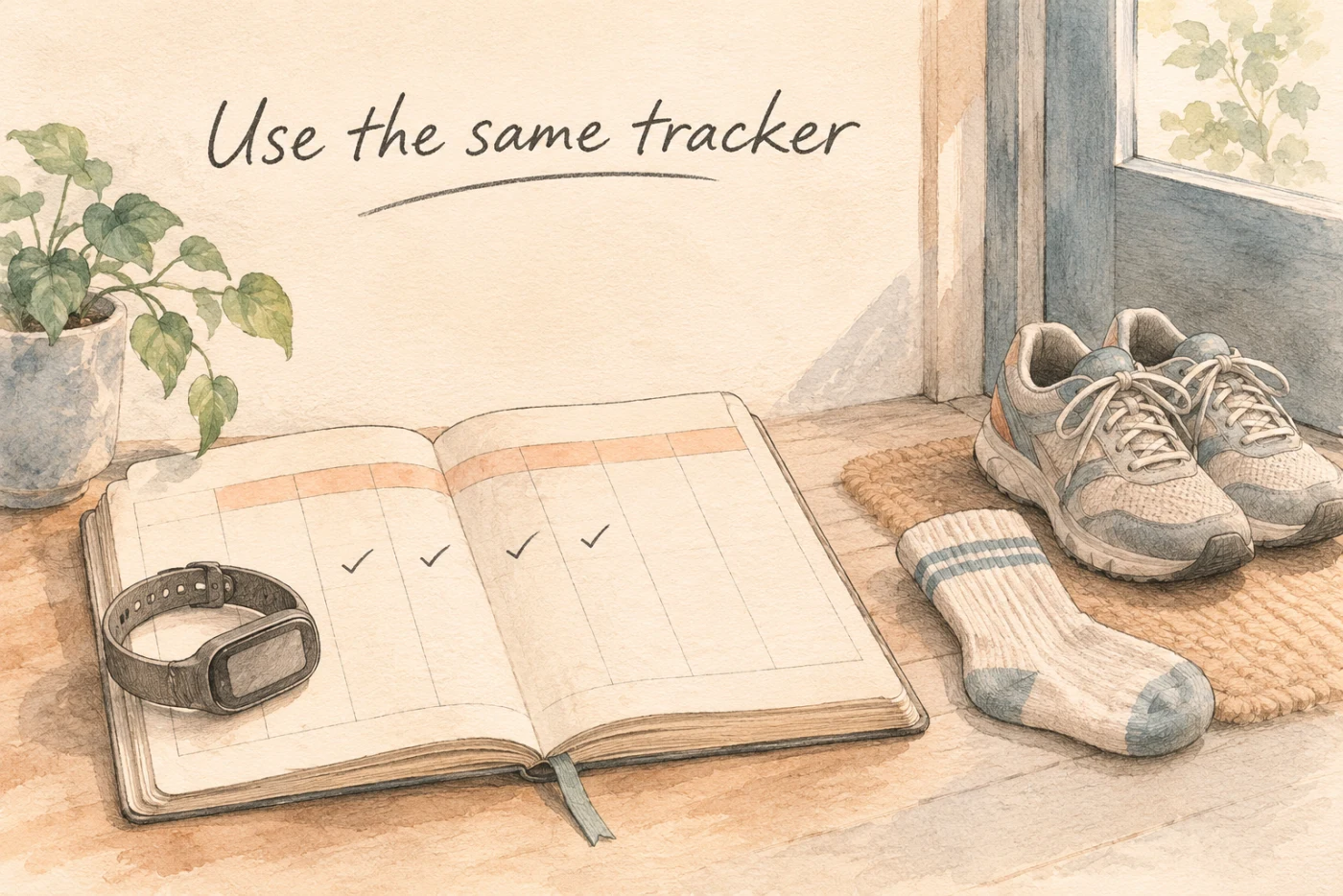
Suppose you average 4,200 steps a day. You add a 600-step errand on five days and keep the remaining days about the same. Divide the 3,000 extra steps across seven days and your daily average rises by about 429 steps. That number makes it easier to see how the change fits into the week. The mortality numbers in the studies don't translate it into a personal risk estimate. If you switch devices, use a new ordinary week as your point of comparison.
Back at 6,930 after dinner, go out again if a short walk sounds good. If you need the rest, take it. The number will be more useful when you've got a few ordinary days to set alongside it.
References
- Paluch AE, et al. (2021). Steps per day and all-cause mortality in middle-aged adults in the CARDIA study. JAMA Network Open.
- Lee IM, et al. (2019). Association of step volume and intensity with all-cause mortality in older women. JAMA Internal Medicine.