
Does Running Before Breakfast Help You Lose More Body Fat?
People used more fat for fuel on a fasted exercise day in one lab study. A four-week trial measured something else entirely. Here’s how to read both results.

It's 6:30 a.m. Your shoes are tied, and you have one hand on the doorknob. The banana on the kitchen counter presents a last-minute choice. A friend said that going for a run before breakfast burns more fat. Would you get more out of the run if you left the banana where it was?
In some experiments, people did use more fat for fuel when they exercised before breakfast. In a four-week trial that assigned people the same amount of exercise, researchers didn't find a greater loss of body fat in the group that worked out before eating. The tests were looking at different things. One asked what provided energy over a day. The other asked how much fat people had left after four weeks.
Your muscles use a mix of fuels
When you run, your muscles can draw on both carbohydrates and fat. After a night without food, you haven't absorbed the nutrients from breakfast yet. Insulin hasn't risen in response to that meal, either. Fat tissue can release more fatty acids for your muscles to use. How much of each fuel you end up using also depends on the pace, the length of the run, and what else you do and eat that day.
Picture running the same loop at the same pace on two mornings. The total energy you expend on the run might be much the same, even if more of it comes from fat on one morning and more from carbohydrates on the other. When you hear that a workout burns more fat, ask whether the measurement covers the workout itself or the rest of the day as well.
And ask where the fat came from. An estimate based on the air you breathe tells researchers how much fat the whole body used. It doesn't identify whether it arrived from fat tissue, was already stored in muscle, or came from food eaten that day. A laboratory number for fat used as fuel can't tell you what happened to fat around your waist.
A day inside a room that measures your breathing
A research team in Japan recruited 10 young men, each of whom completed four trials. On one visit they did no exercise. On the other visits they cycled for an hour at half their measured maximal oxygen uptake, before breakfast, after lunch, or after dinner. The researchers scheduled additional food on exercise days and designed each day to come as close as possible to matching intake and expenditure [1].
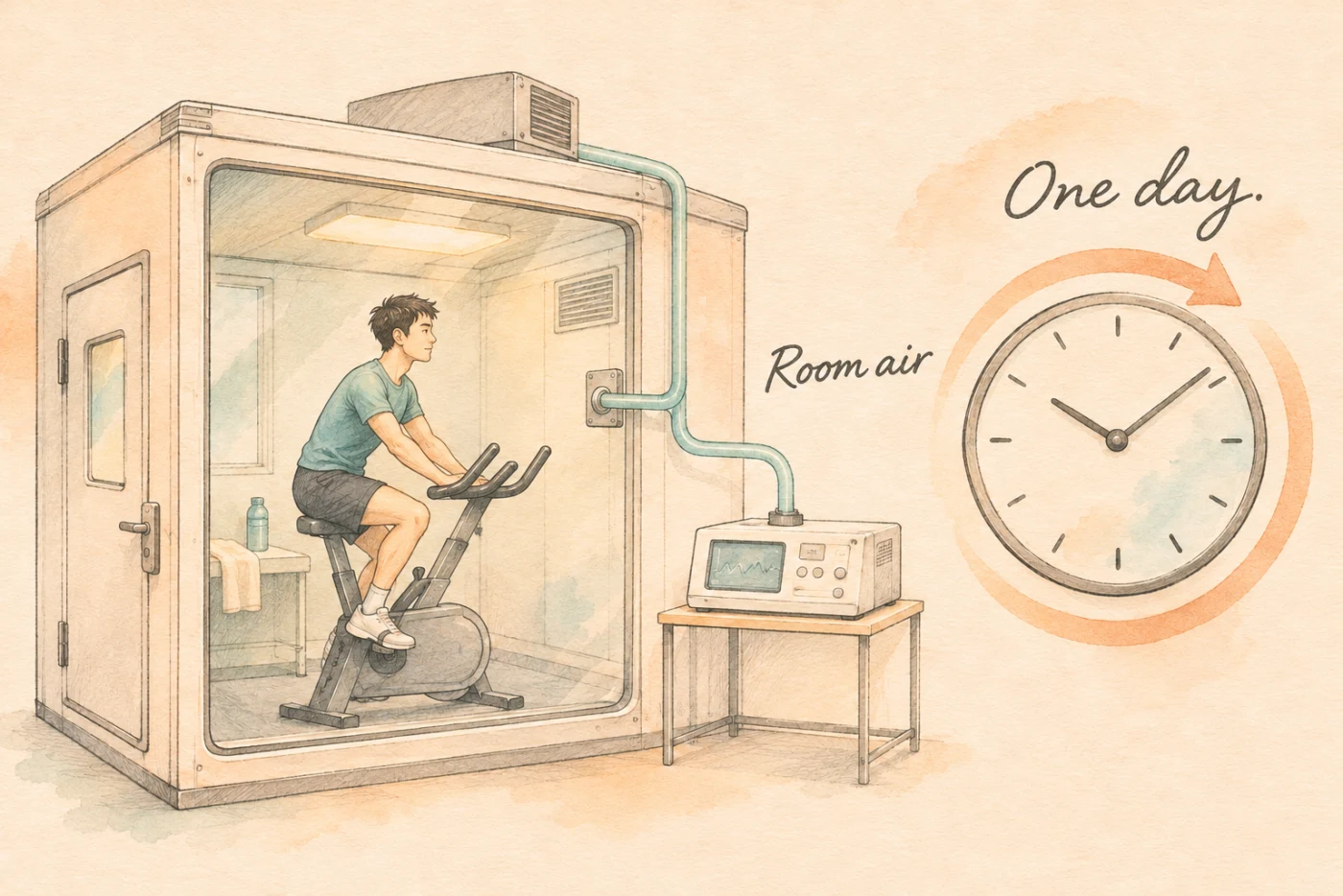
The men ate, moved around, and slept inside the chamber. Equipment measured oxygen consumption and carbon dioxide production, and the team used urinary nitrogen to help account for protein use in the calculation. They estimated how much of the day's energy came from fat. This is called fat oxidation, the process of breaking down fat to get usable energy.
Before-breakfast cycling produced an average of 717 calories of energy from fat over the day. After-lunch cycling came to 446 calories, after-dinner cycling to 432 calories, and the day without exercise to 456 calories [1]. Because the same men did every trial, the comparison was less likely to reflect differences between people. It was still a short experiment with a small group and a fixed cycling intensity. The researchers observed a larger temporary shortfall in carbohydrate on the morning exercise day. They didn't isolate it as the cause.
The before-breakfast trial used less carbohydrate over the day than either of the other cycling trials. The shift in fuel mix ran both ways [1].
Subtract 446 from 717 and you get 271 calories. That's a difference in how much energy came from fat. The study didn't find that the morning session created a 271-calorie larger total energy expenditure. Exercise days also had extra food planned into them. To know what happened to body fat across several weeks, you'd need to measure it across several weeks.
Move the drink, keep the workout
Another trial randomly assigned 20 healthy young women to two groups. Everyone did an hour of aerobic exercise on a treadmill, three times a week for four weeks, and got the same type of meal replacement shake. One group took the drink immediately before each workout. The other worked out after an overnight fast and took the drink immediately afterward. All received individual meal plans designed to reduce calorie intake. The researchers supervised the timing of the shakes, and participants reported their other meals [2].
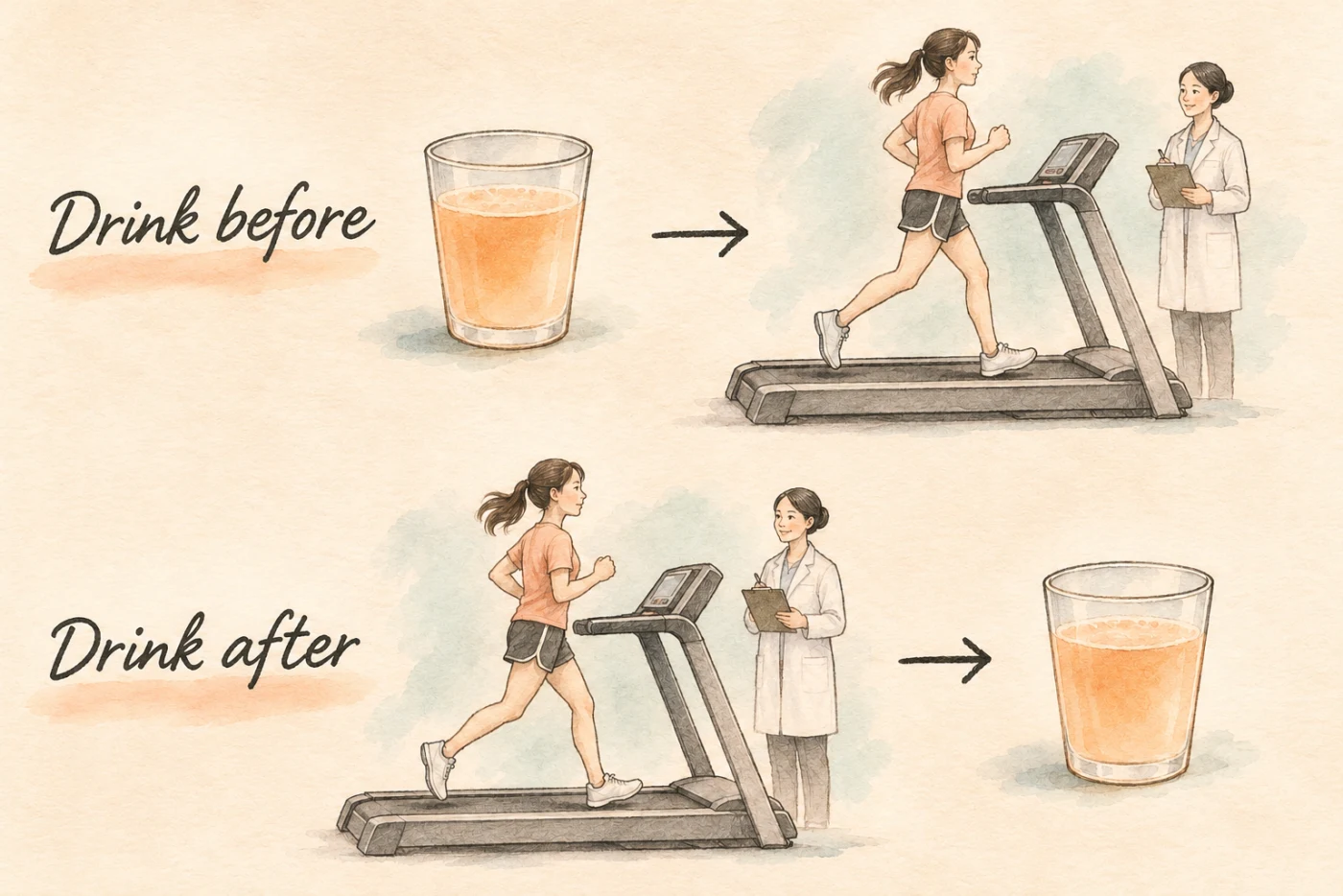
Before and after the program, the participants sat inside a machine that measures how much space the body takes up. The researchers used body volume together with weight to estimate fat mass. Instead of working backward from breathing to the amount of fat used during the day, they compared how much fat the women were estimated to carry at the beginning and end.
Weight and fat mass went down across the study, without a statistically clear difference between the groups. With 10 participants per group and four weeks of follow-up, a small difference could have been hard to detect. The results apply most directly to this population and schedule. A runner who switches to mornings and then starts missing sessions would also change the amount of exercise, even if the only change they planned was moving breakfast [2].
At the door, think about the next run too
Suppose you have half an hour before getting ready for work, and no chance to run after breakfast. An easy outing before breakfast might fit the day. If you feel distracted by hunger from the first hill, a familiar snack beforehand may make the outing more enjoyable. Some people find that they need time to digest a meal before running. The research leaves room to work with your schedule and your stomach.
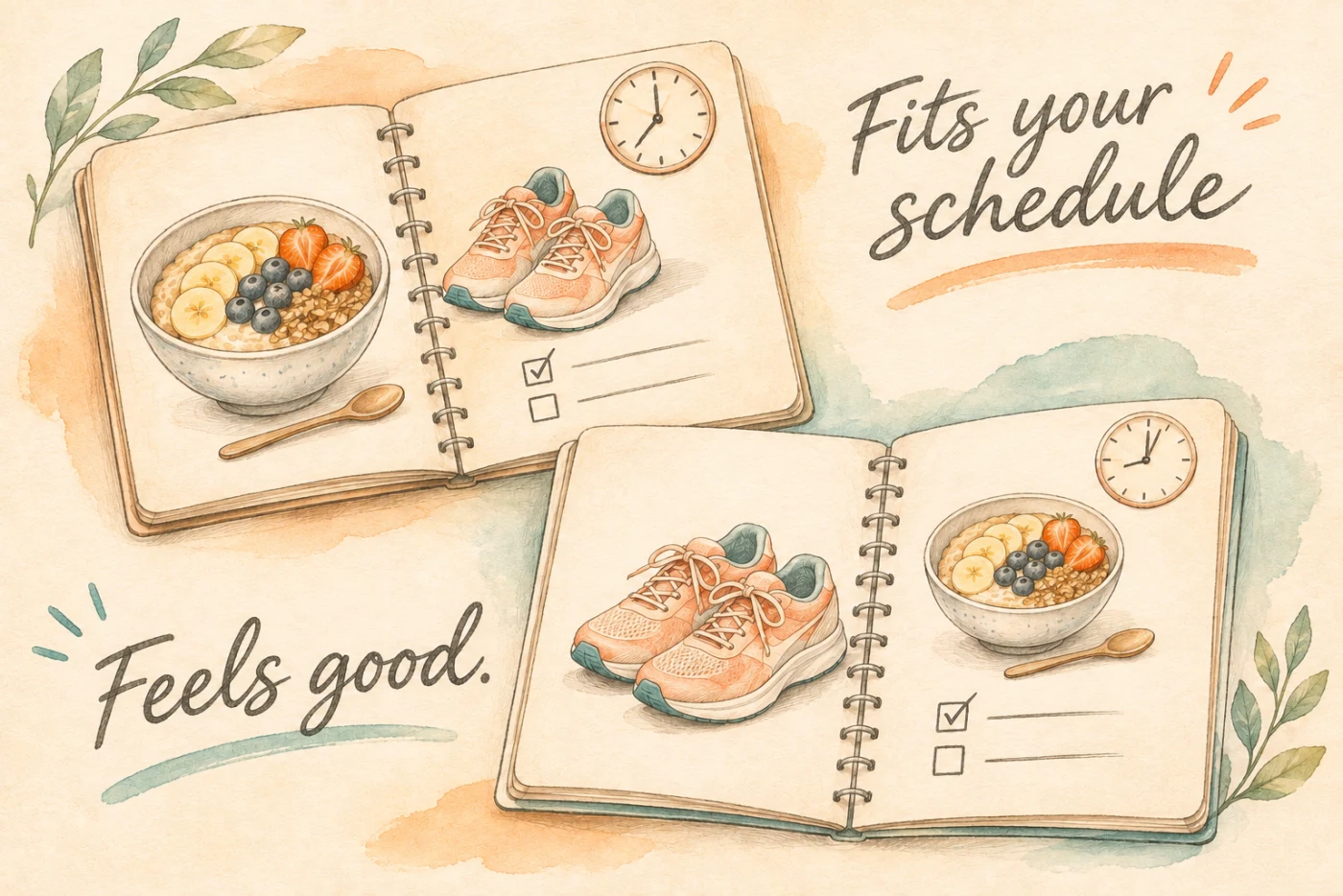
If you're curious, pick two ordinary mornings and repeat the same easy route. Keep the rest of your routine as similar as you can. Run once at your usual interval after breakfast, and eat afterward on the other day. When you get home, jot down whether you got out the door as planned, whether you felt comfortable, and which version you'd be more inclined to repeat. A post-run weight comparison won't tell you much here. Sweat and the water you drink after the run can easily move the scale.
If you have a history of exercise-related low blood sugar or use medication that needs to be coordinated with meals, follow the schedule you've worked out with your care team. A study comparing meals in healthy volunteers is a poor reason to push past how you feel on a routine run [3].
If that banana makes the run feel better, have it. If breakfast fits more comfortably on the other side of the run, leave it on the counter. The more informative test comes the next time you put on your shoes.
References
-
Iwayama K, et al. (2015). Exercise increases 24-h fat oxidation only when it is performed before breakfast. EBioMedicine.
-
Schoenfeld BJ, et al. (2014). Body composition changes associated with fasted versus non-fasted aerobic exercise. Journal of the International Society of Sports Nutrition.
-
American Diabetes Association. Understanding blood glucose and exercise.