
A 10-Minute Walk Right After Eating: How Is It Different From Walking Later?
In a crossover study, 12 healthy young adults had lower two-hour glucose averages after either an immediate 10-minute walk or a delayed 30-minute walk than after sitting. Timing was part of the dose.
Dinner is over and the dishes are still on the table. You intend to take a 30-minute walk later, but “later” has a habit of disappearing. If you walk for only 10 minutes now, is that too short to matter?
Not necessarily. In a small crossover trial, 12 healthy young adults drank 75 g of glucose. A comfortable 10-minute walk begun immediately afterward produced a lower two-hour average glucose level and a smaller total glucose curve than sitting. Those results were similar to sitting for 30 minutes and then walking for 30 minutes. Only the immediate walk clearly lowered the glucose peak versus sitting. This was one glucose-drink test, however, not evidence that every meal or person will produce the same numbers [1].
Why timing can matter alongside duration
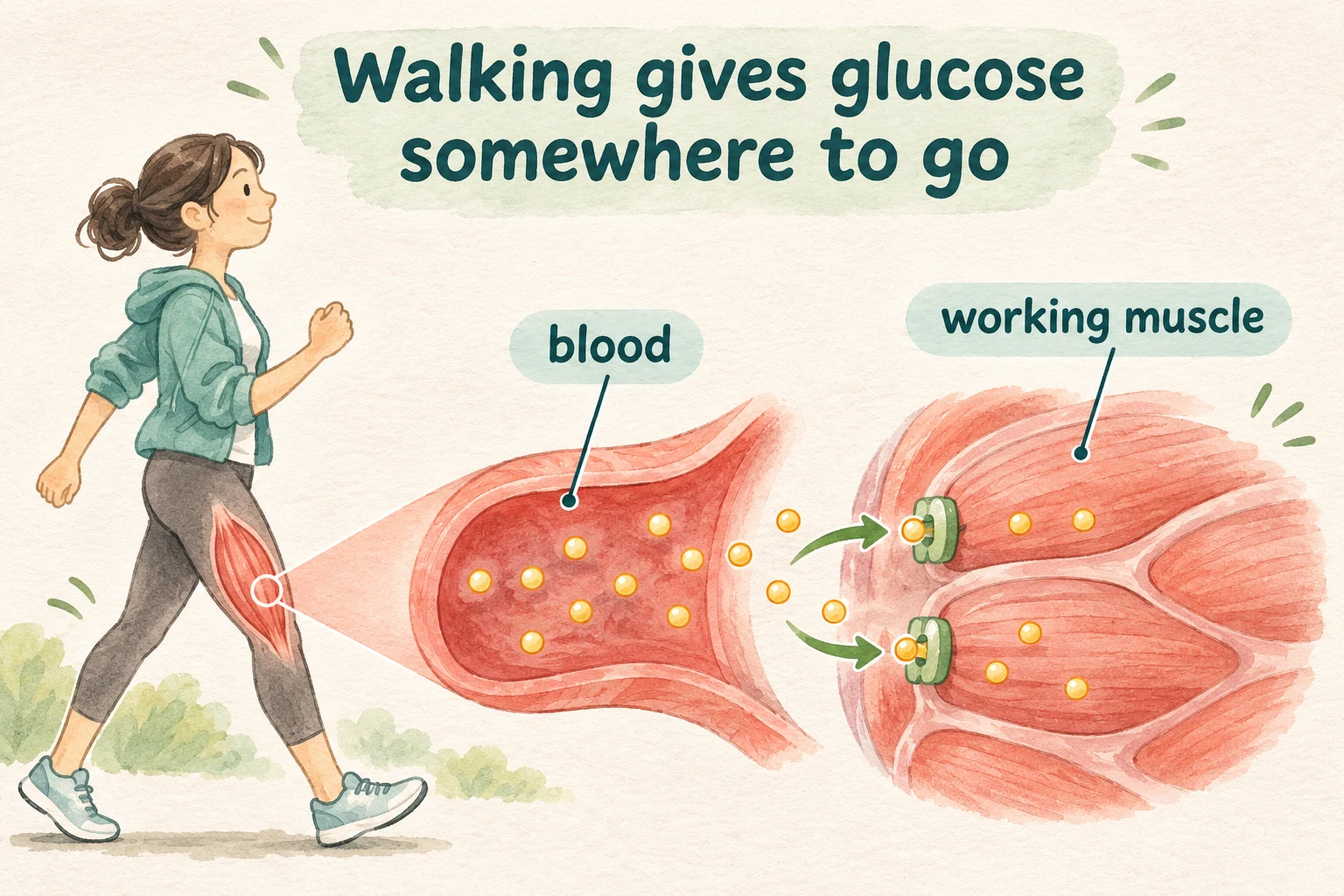
After carbohydrate is eaten, digestion releases glucose that enters the bloodstream. Insulin helps cells take up that glucose. Contracting leg muscles also activate routes for glucose uptake that do not depend entirely on insulin. The illustration simplifies this as glucose moving toward working muscle; the real response also involves the liver, other tissues, blood flow, and several signaling pathways [1].
Starting to walk while glucose is entering the blood overlaps muscular demand with the rising part of the curve. That may blunt the peak. If the walk begins 30 minutes later, it can last longer while still missing part of the early rise. This is a plausible explanation for the trial’s result, not a complete measurement of where every gram of glucose went. The researchers did not establish timing as the only mechanism.
Three measurements also need to be kept separate. The peak is the highest reading during the test. The mean averages readings over two hours. The area under the curve, or AUC, combines glucose concentration with time. An activity pattern can reduce the mean and AUC without a small study detecting a clear change in the peak.
The same 12 people tried three different mornings
The 2025 randomized, counterbalanced crossover trial enrolled 12 healthy young adults, six women and six men, with a mean age of 20. Each person attended three morning sessions after fasting. They consumed 75 g of glucose in one minute, then completed one of three conditions [1]:
- walk immediately for 10 minutes at a self-selected, comfortable pace;
- sit for 30 minutes, then walk for 30 minutes;
- remain seated for the full two hours.
Each participant used the same treadmill speed in both walking conditions. The average was about 3.8 km/h, or 2.4 mph. Researchers measured finger-stick glucose every 10 minutes for 120 minutes. This tightly controlled the carbohydrate dose and timing. It did not resemble the digestion of a dinner containing rice, vegetables, fat, and protein.
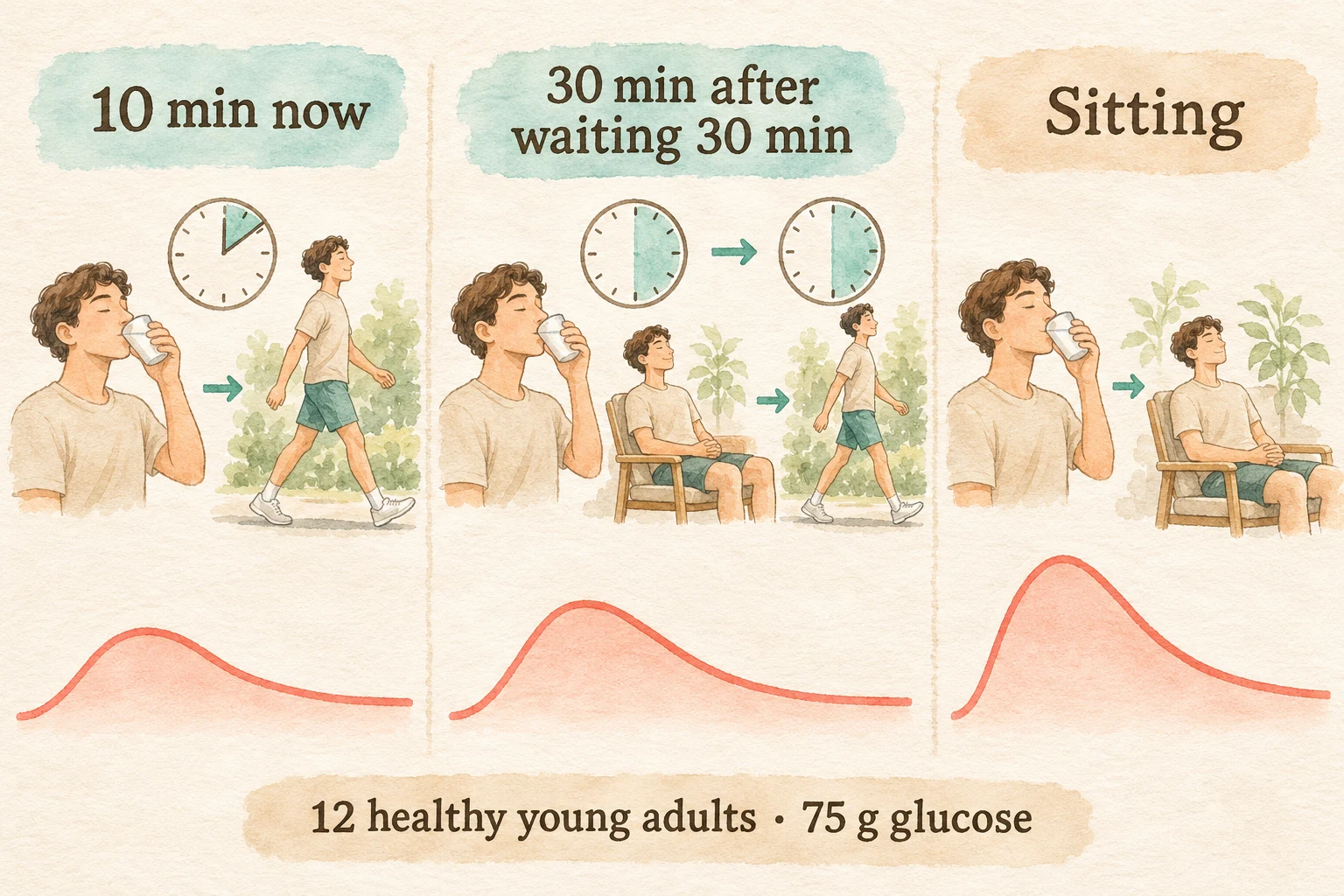
The two-hour mean glucose levels were 127.9, 128.9, and 135.8 mg/dL, respectively. Both walking conditions were lower than sitting, while the two walks did not clearly differ from each other. Peak values were 164.3, 175.8, and 181.9 mg/dL. The immediate 10-minute walk was about 17.6 mg/dL lower than sitting at the peak. The delayed 30-minute walk was not statistically different from sitting at the peak, and the two walking conditions were not clearly different from each other [1].
That does not mean “10 minutes beats 30 minutes.” A more faithful reading is narrower: in this test, a short walk placed immediately after glucose intake performed about as well over two hours as a longer walk begun later. For the peak, only the immediate-walk comparison with sitting was clear. With only 12 participants, an uncertain difference should not be treated as proof that the conditions are identical.
The total AUC values were 15,607 mg·min/dL after the immediate walk, 15,732 after the delayed walk, and 16,605 after sitting. These are total areas, including glucose present at baseline, not percentages of glucose “removed.” They are useful for comparing the three mornings under the study protocol, not for predicting a personal glucose monitor trace.
What happened when people ate ordinary meals?
A second randomized crossover study followed 41 adults with type 2 diabetes in daily life. Their mean age was about 60, and they had lived with diabetes for an average of 10 years. For two weeks at a time, they received one of two prescriptions: walk for 30 minutes once per day at an unspecified time, or walk for 10 minutes within five minutes after each main meal. Continuous glucose monitors recorded values every five minutes for seven days, and accelerometers tracked activity [2].
During the post-meal walking period, the three-hour incremental AUC after meals was 0.88 times that of the once-daily walking period. In other words, it was about 12% lower. After dinner, the ratio was 0.78, or about 22% lower. Dinner contained the most carbohydrate and was followed by the most sedentary time [2].
This trial used ordinary meals and a free-living schedule, but its population was not healthy 20-year-olds. Its percentages should not be transferred to people without diabetes. Although both prescriptions called for 30 minutes of walking per day, measured overall activity was higher during the post-meal condition. Timing may therefore be only part of the explanation. Two weeks also cannot tell us whether HbA1c, body weight, or cardiovascular outcomes will change over months or years.
Together, the studies answer two different questions. The laboratory trial isolated immediate versus delayed movement after a fixed glucose load. The free-living trial tested whether attaching three short walks to meals worked better than giving the same nominal daily target without a time. Neither establishes a universal 10-minute threshold.
A practical way to try it
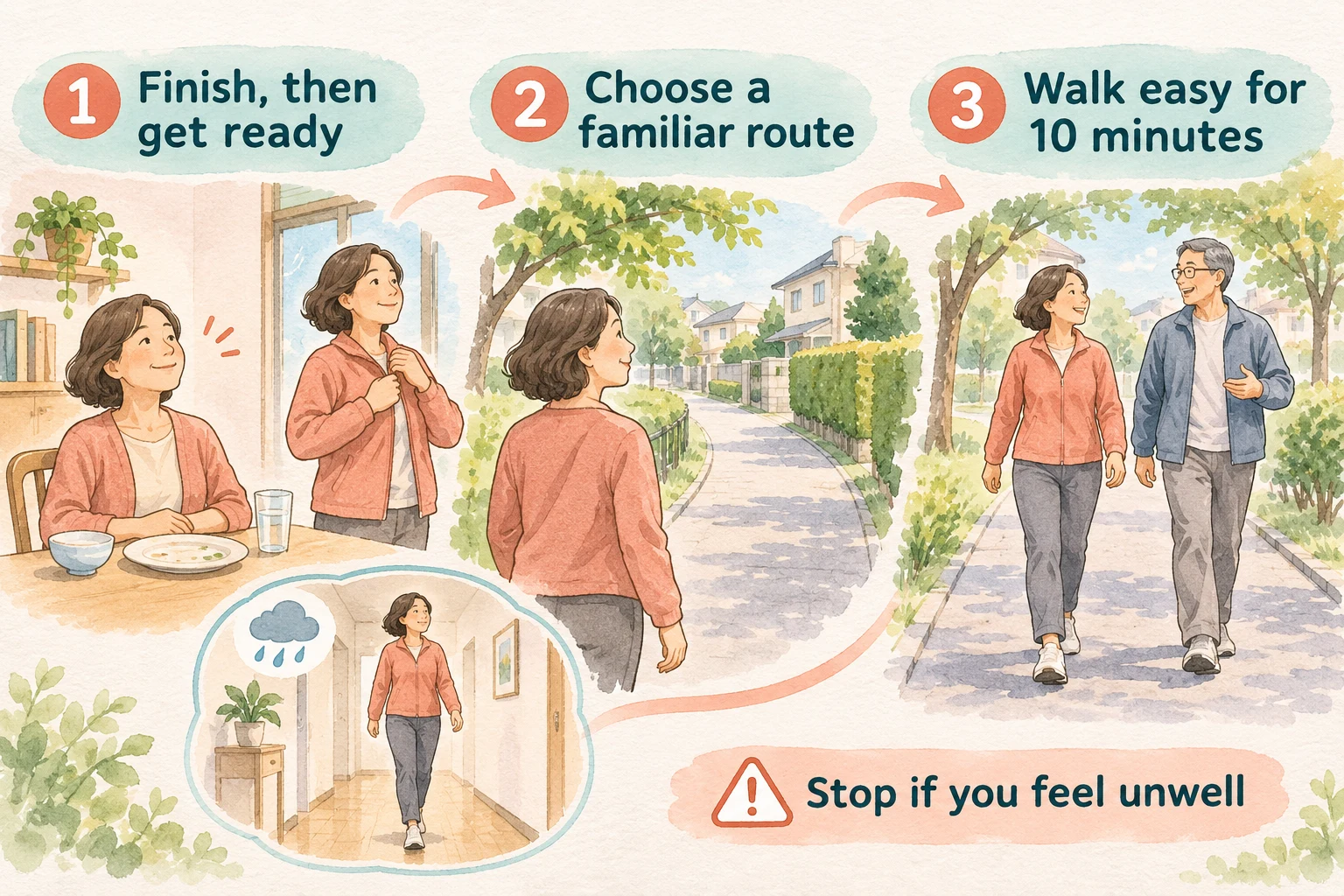
Start with one meal rather than changing the entire day. Put away food that needs refrigeration, wear stable shoes, and choose a flat, familiar route with an easy place to turn back. Walk at a pace that still lets you speak in complete sentences. The study used a relaxed pace, not a run. On a rainy day, a building corridor or repeated laps through the home can serve the same scheduling purpose.
For several days, record only whether the walk happened and whether it caused discomfort. A single wearable or home glucose reading is not enough to judge the experiment. Meal composition, sleep, stress, recent activity, and measurement error can all move one value. A walk that is easy to repeat is more useful than chasing a particular number after one dinner.
If you use insulin or a medication that can cause hypoglycemia, have chest discomfort or dizziness with walking, or have a fall risk or foot wound, ask your care team about appropriate timing and intensity. A short post-meal walk does not replace medication, structured exercise, or weekly physical-activity goals.
The evidence offers a practical clue rather than a magic rule: the dose of walking includes when it happens. If a later 30-minute session repeatedly vanishes from the day, a short loop begun after the meal may be both easier to complete and better aligned with the post-meal rise the studies measured.
References
[1] Hashimoto K, et al. Positive impact of a 10-min walk immediately after glucose intake on postprandial glucose levels. Scientific Reports. 2025;15:22662.
[2] Reynolds AN, et al. Advice to walk after meals is more effective for lowering postprandial glycaemia in type 2 diabetes mellitus than advice that does not specify timing: a randomised crossover study. Diabetologia. 2016;59:2572–2578.