
Fat Cells Shrink After Weight Loss. Do You Have Fewer of Them?
How researchers measure fat cell size, estimate cell number, and look for lasting changes in gene activity after weight loss.
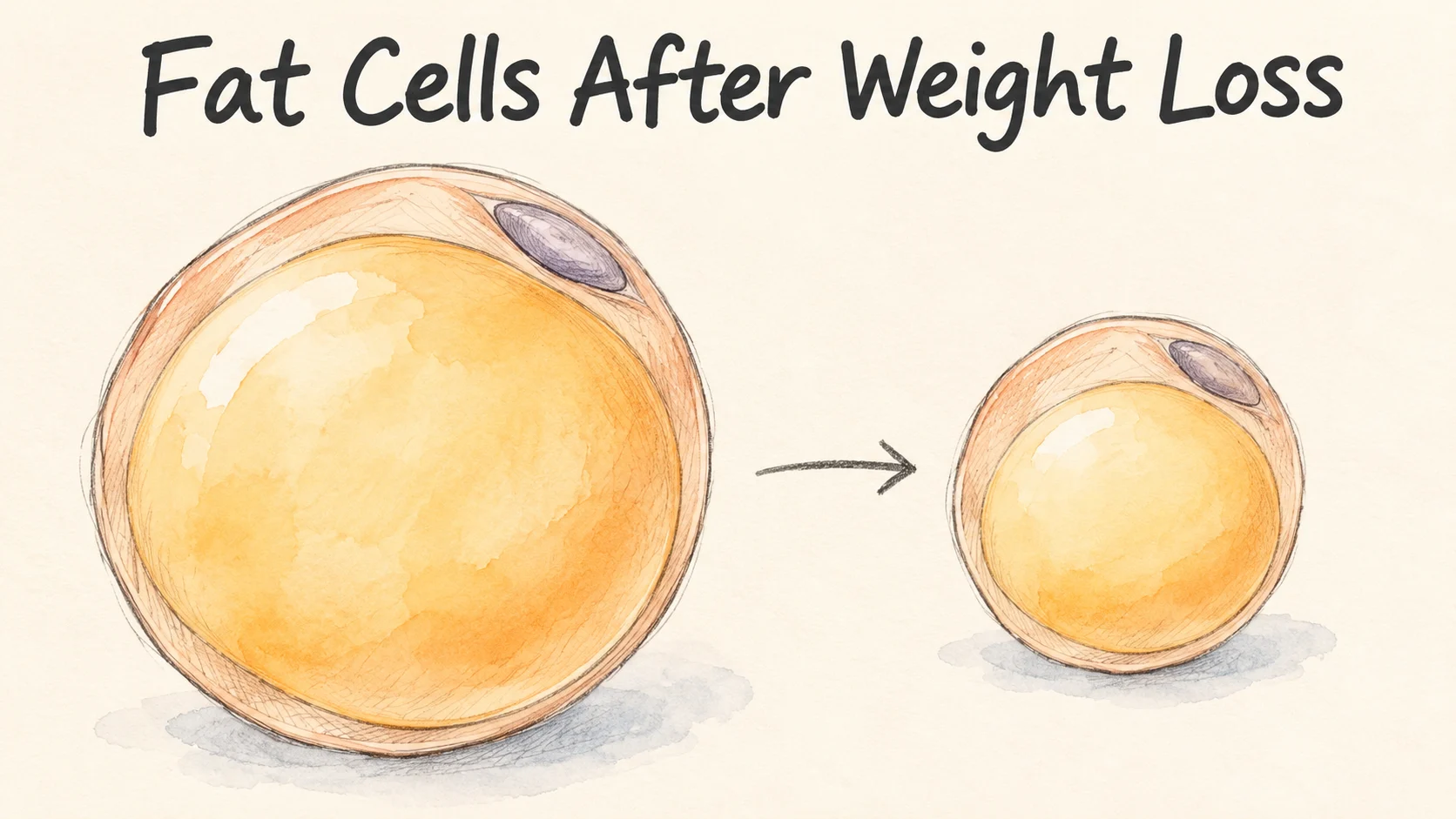
Your weight and waist measurement are lower than they were a few months ago. You know that your body can store less fat. Did it get there by losing the cells that stored the fat, or by shrinking them? When researchers followed adults after bariatric surgery, fat cells became smaller on average while the estimated total number stayed roughly stable. The individual cells could hold less fat [1].
Imagine weighing a box full of small containers. The box can get lighter because each container holds less, because there are fewer containers, or because both changed. The scale gives you one total. To work out what's happening in the box, you need a way to check how much each container holds.
How do you measure the size and number of fat cells?
Under a microscope, a mature fat cell has a large droplet of stored lipid. It fills much of the cell and pushes the nucleus toward the edge. The droplet can shrink as the cell stores less lipid. A tissue sample includes cells of different sizes, so researchers measure many of them to arrive at an average.
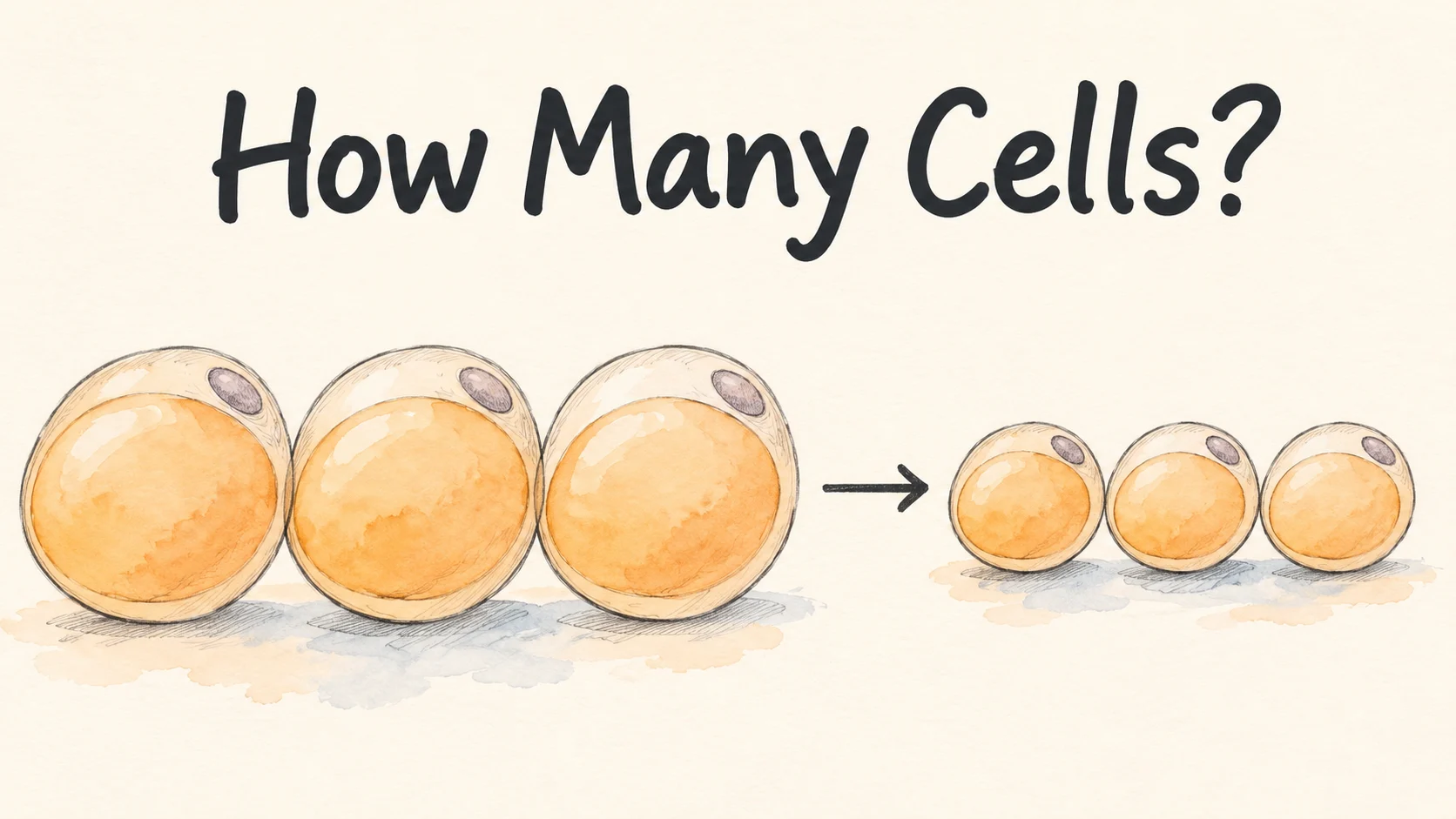
In a 2008 study, researchers at the Karolinska Institute examined fat cells in adults, including people who had lost substantial weight after bariatric surgery. They used measurements of average cell size and total body fat to estimate total cell number. After weight loss, average cell volume was lower. The estimated number stayed roughly stable. The count is an estimate based on the measured samples and total fat, rather than an inventory of every cell in the body [1].
Here's a simple calculation. Suppose 100 cells store an average of four units of fat each. That makes 400 units in total. After a period of weight loss, those 100 cells might hold an average of three units each. The total falls to 300, a drop of one quarter, with the same number of cells. You could also get 300 units from 75 cells holding four units each. The two scenarios end at the same total. A separate measurement of cell size helps you tell them apart. These are made-up numbers to show the arithmetic. Turn the example around. If you know the total is 300 units and the average is three per cell, dividing those numbers gives you an estimated count of 100.
A stable total can include new cells
To see whether fat cells are replaced, researchers needed a way to tell when they had formed. Atmospheric carbon-14 rose during the era of aboveground nuclear weapons testing and declined in the decades that followed. Carbon enters the body through food. When cells make DNA, the carbon-14 left in it can give researchers a clue about when that happened. The team measured DNA from fat cells in 35 adults and built a model using the historical record of atmospheric carbon-14 [1].
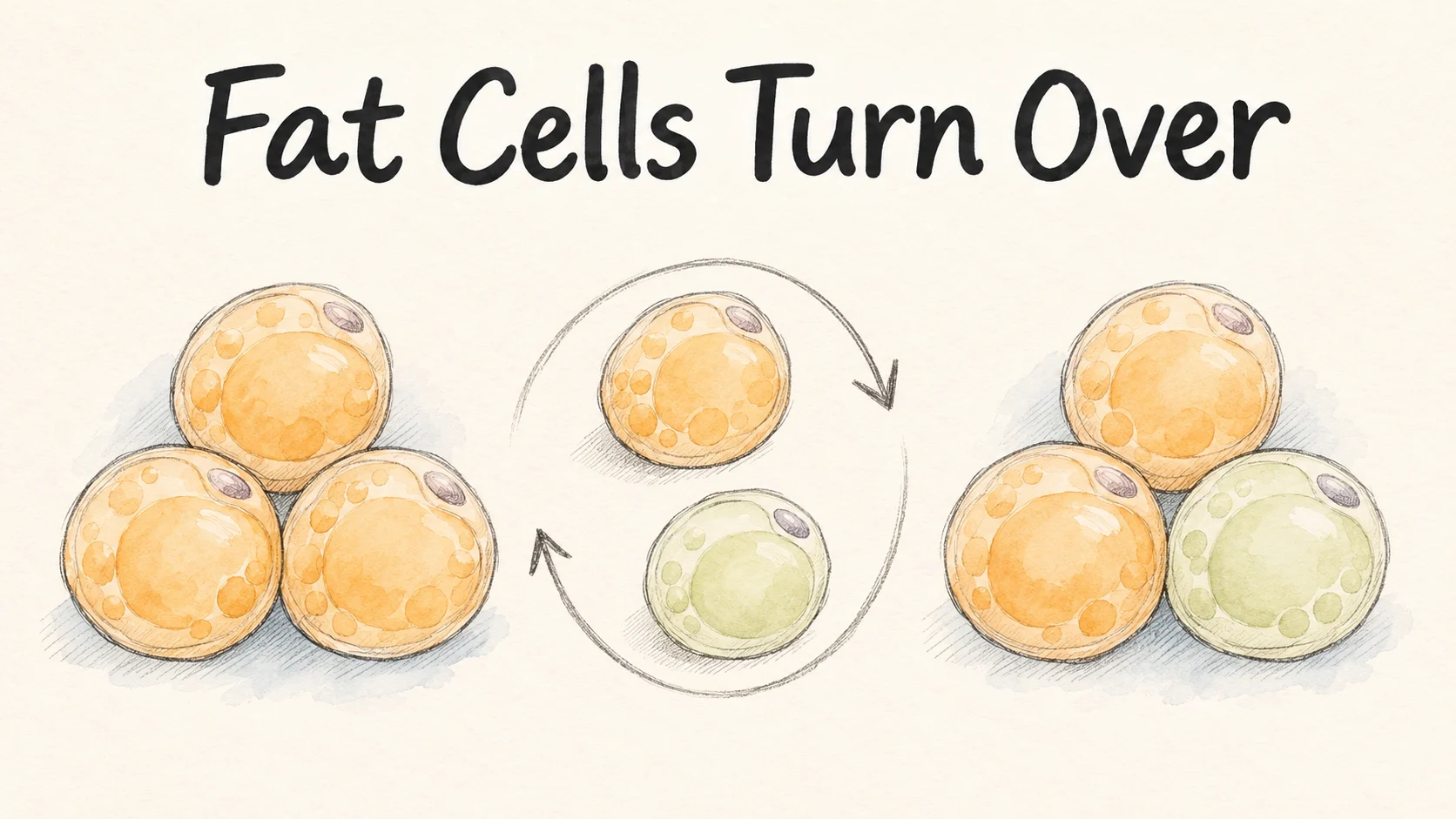
The researchers estimated that roughly one in ten adult fat cells is renewed each year. The population can stay roughly the same size while cells are lost and replaced [1].
Picture the hundred cells in our example as a room with one hundred seats. In a year, about ten seats get new occupants. At the end of the year, the number of occupied seats can look much the same. Over another year, a different group of seats may change hands. The estimate describes the rate across a cell population. It cannot tell which of one person's cells will be replaced next, or when that will happen.
Where the body stores fat changes the picture
A Mayo Clinic team asked a different question. They overfed 28 adults whose weight was in the normal range at the start. Their average age was 29. After eight weeks, the researchers compared fat just underneath the skin in the upper and lower body. In the upper body, gain showed up mainly as larger fat cells. Lower-body fat increased by around 1.6 kilograms, and the researchers estimated an increase of about 2.6 billion cells there [2].
The lower-body figure comes from the size of the fat depot and measurements of cells in that area. A gain of 1.6 kilograms does not translate into a fixed number of new fat cells for everyone. The surgery study estimated the overall cell count after substantial weight loss. The overfeeding study looked separately at regions after eight weeks of gain. A result for one region in one study doesn't tell us what happened in every other fat depot.
What researchers mean by a fat tissue “memory”
Cell size is one measurement. Gene expression gives researchers another way to look at what cells are doing. Think of DNA as a set of instructions. When a cell uses a gene, it makes copies of that part of the instructions in RNA. Measuring those copies helps researchers tell which genes are active and to what extent. Fat tissue contains blood vessel and immune cells as well as fat cells, so a tissue sample contains signals from several kinds of cells [3].
In 2024, a team analyzed fat tissue from people at bariatric surgery and about two years later. The visceral samples from a layer of fat called the omentum came from 13 surgery participants across two cohorts. They included people whose body mass index, or BMI, had dropped by at least 25 percent, and compared them with healthy-weight controls. Some differences in gene expression were still detectable two years later. For a numerical example of the study cutoff, a change in BMI from 40 to 30 is a 25 percent reduction. Those values illustrate the inclusion rule and are separate from the actual study measurements. This persistence is what the team described as a transcriptional memory in the human samples [3].
The team also ran a feeding experiment in mice. One group had been fed a high-fat diet and then switched to standard food, bringing their weight back down. When both groups were given a high-fat diet, the mice with the earlier exposure gained weight faster. The team looked at marks in mouse fat cells that help regulate how genes are used. Some of those marks persisted after weight loss. The team did not run the corresponding analysis of those marks in the human samples. They offer a possible explanation for changes in how the cells responded the next time. The study authors said their data could not establish that the fat tissue memory itself caused the faster regain, even in the mouse model [3].
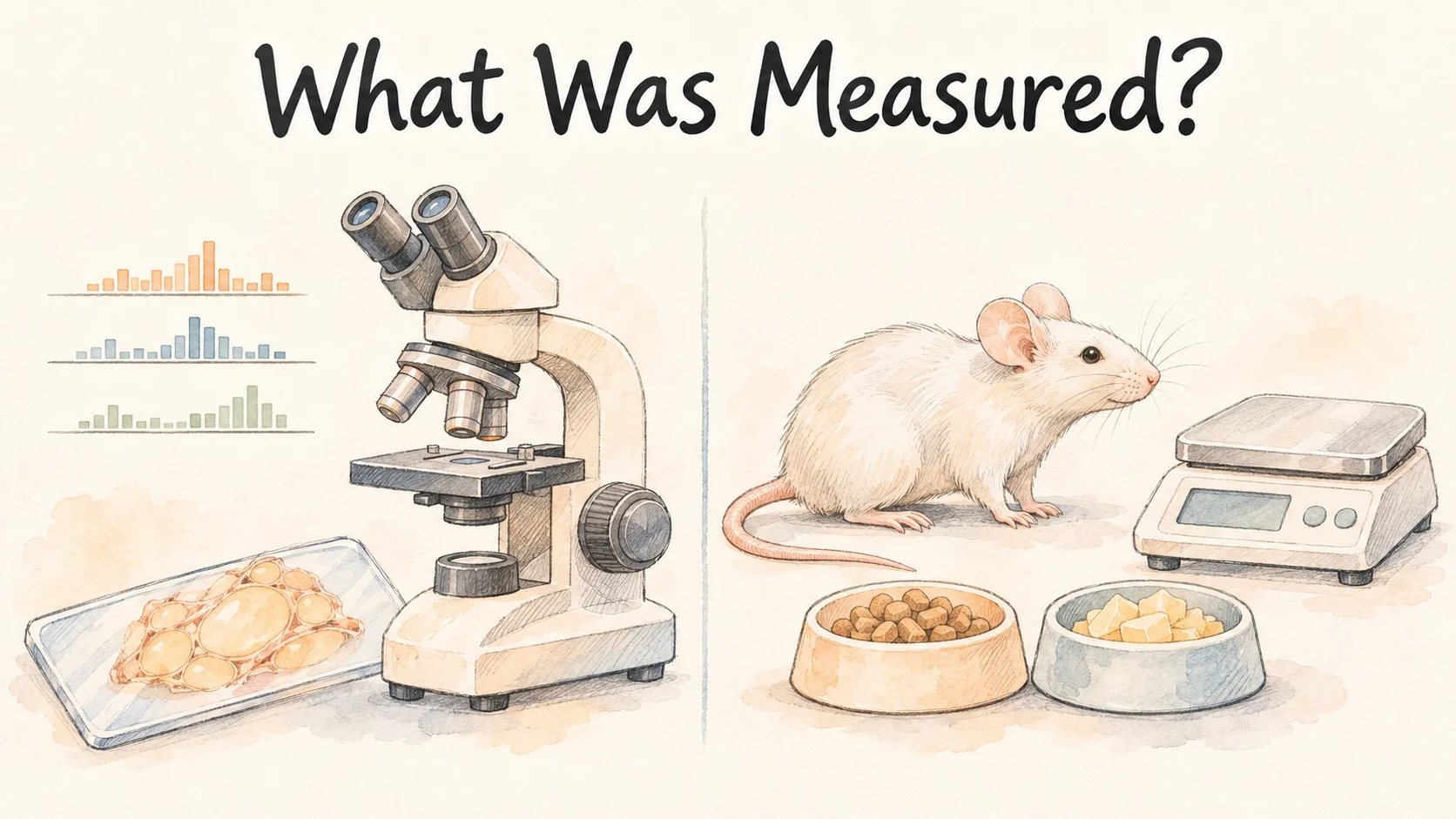
Back at the scale, you can see how your own weight has changed. If a headline says that fat cells remember, look for the measurement behind the word. Check where the samples came from, how much time passed between them, and whether researchers measured cell size, estimated the cell count, or looked at gene activity. The human study gives us a before-and-after comparison of gene expression. It cannot tell who will regain weight or how long the difference in activity will last.
Sources
[1] Spalding KL, et al. Dynamics of fat cell turnover in humans. Nature. 2008;453:783–787.
[2] Tchoukalova YD, et al. Regional differences in cellular mechanisms of adipose tissue gain with overfeeding. Proc Natl Acad Sci USA. 2010;107(42):18226–18231.
[3] Hinte LC, et al. Adipose tissue retains an epigenetic memory of obesity after weight loss. Nature. 2024;636:457–465.