
What Your Menstrual Cycle Can Change on the Scale
Weight and the feeling of bloating can move during a menstrual cycle. See what two studies measured and how to compare readings over time.
On the first day of your period, you weigh half a kilogram more than you did a few days ago. Your ring feels tighter too. It's easy to read the scale change as a change in fat. Water can shift through the menstrual cycle, and the scale includes that water in the weight it displays. To look for a longer trend, mark where the measurements fall in your cycle and compare a few similar days.
Some people do notice more bloating several days before their period and less on the first day. The timing and the feeling are worth noting separately. Your weight, how tight your ring feels, and the first day of bleeding each give you a different piece of information.
The scale weighs that water along with everything else
Some of your body's water is inside cells. Another part is outside them, in places such as the spaces between cells and in blood plasma. Researchers call that portion extracellular water. The amount contributes to body weight alongside fat, muscle and other tissue. [1]
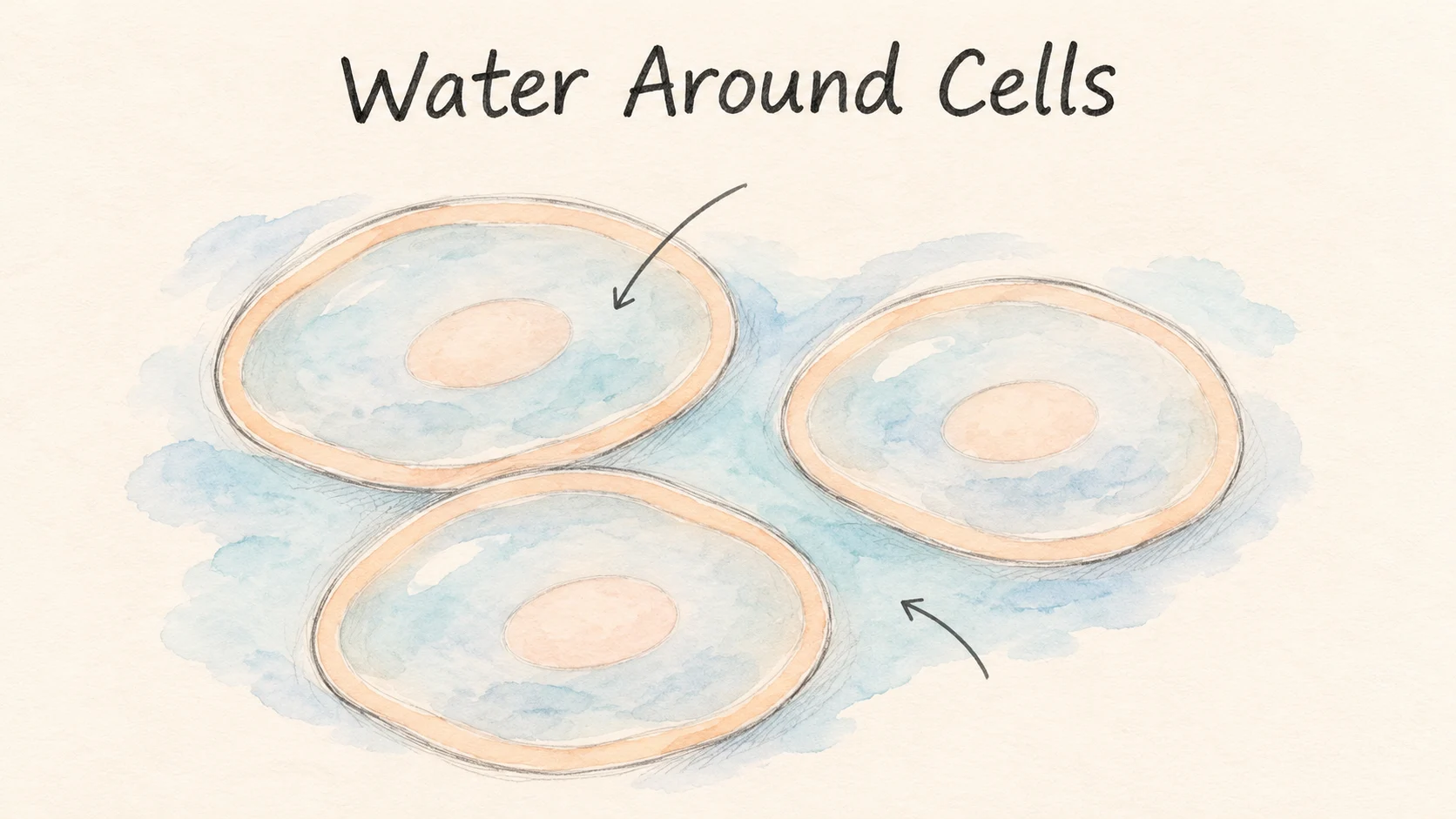
In a study in Greece, 42 women aged 19 to 35 were measured twice a week, from the start of one period to the start of the next. The researchers used bioelectrical impedance as well as a scale. The device estimates body composition and water from how tissues respond to a weak electrical current and how those measurements fit a model. The water value is an estimate. [1]
The investigators compared the first day of menstruation with a later measurement still well before ovulation. At the later point, average weight was about 0.45 kilograms lower. Estimated extracellular water was about 0.47 kilograms lower. The two averages were close, and the investigators considered changes in body water a likely explanation in this group. The timing and the size of the change can vary from person to person. [1]
In the Kanellakis study, the 0.45 kilograms is the difference between two group averages. It describes those measurements at those points in the cycle.
If your scale also estimates body composition, you can keep track of which number came straight from the scale and which came from the model. A shift in one body water estimate can affect other displayed estimates even within days. To see what happened to the reading, compare the same device and measuring conditions over several similar points in your cycle.
A simple example shows what a scale can pick up. Drink half of a 500-milliliter bottle of water and then step onto it. You have brought about 250 grams of water onto the scale with you. Water shifts within a menstrual cycle can also be part of a change in weight. The weight itself gives you the total, with the relative contributions of water and other tissue still to work out.
If your device shows body fat, water, and weight, note which readings are direct and which are calculated. The device weighs you, then uses a model to estimate composition. The readings can respond differently if you change the time of day or measure just after eating. Similar measurements give the short-term changes a clearer context. [1][3]
Bloating and weight can have different timing
Another observational study followed 62 women in Canada for one year. The participants wrote down how much fluid retention or bloating they felt each day, covering 765 menstrual cycles. On a self-rating scale from 0 to 4, the group average peaked on the first day of flow. That result describes the participants' experience. It answers a different question from the instrument estimates in the Greek study. [2]
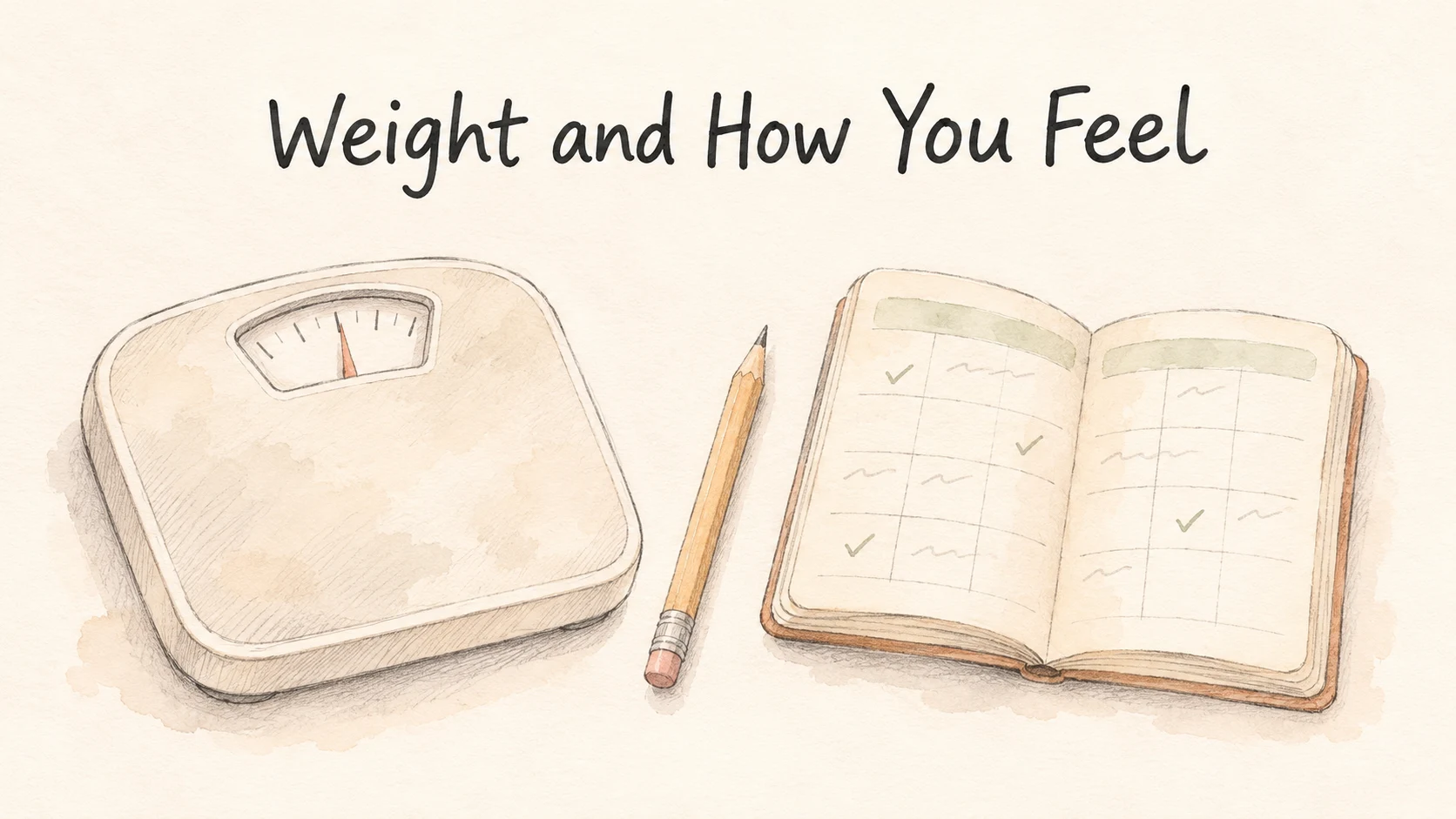
Feeling bloated at night may not show up the same way in your weight the next morning. You might also get a higher reading on a morning when you hardly notice anything. If you want to see where your own pattern falls, leave two places in the diary. Use one for the scale reading and one for any bloating. If the two move together, that is useful context. If they move separately, each is still a record you can use.
Other work has found different results. A study comparing four points in a menstrual cycle, in women with and without hormonal contraception, found no significant differences in body composition over the cycle. [3] The sample and its methods matter. If your own entries show no consistent high point from one cycle to the next, the group results give you room for that too.
If you like keeping a diary, leave room for the start of bleeding, a scale reading when you have one, and a note about how you felt. You can write each one at the time it happens. Months later, it's easier to see if the discomfort regularly preceded a higher reading or appeared on completely different days. A travel week or a change in work shifts can go in the margin, giving you another detail to consider when a pattern varies.
Compare similar points to see what's happening over longer periods
Say your scale reads 60.5 kilograms on the first day of your period and 60.0 a few days later. Those are readings at different points in one cycle. To see whether there's a more lasting weight change next month, you could compare the first day with the next first day, or choose another point in both cycles that you recognize and can measure under similar conditions.
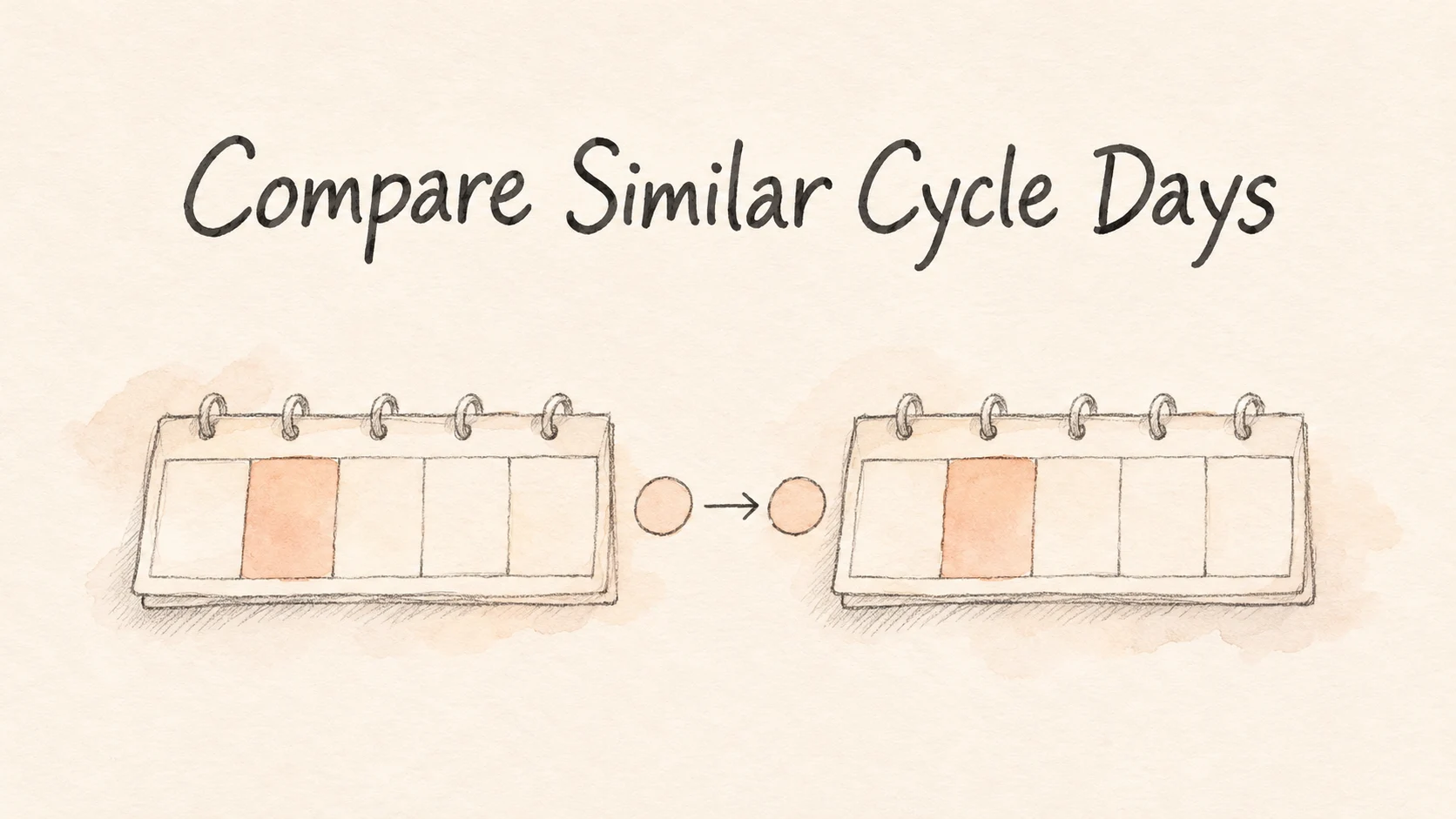
Use the day bleeding starts as a date you can identify. You might record weight in the morning on the same scale or make a single entry at the weekend. If you can't weigh on the exact same day each time, write down how many days have passed since the period started. When your cycle length changes, the dates you actually have can help you interpret several weeks of readings together.
Suppose three first-day readings are 60.5, 60.4, and 60.6 kilograms. Those three measurements are close. A 60.0 in the middle may have come several days after bleeding began. You can still keep it as a measurement from that cycle and compare it with measurements at a similar time in other cycles.
A note can be brief. “First day,” “ring feels tight,” or “nothing unusual” is enough. Cycle timing can be irregular, and a weight pattern by itself can't establish when ovulation took place. If a change is uncomfortable or keeps happening in a way that's unusual for you, dated observations can help you describe it to a health professional.
Next time the scale is up around the start of your period, note the day and how you feel. Open the record again at a similar point in the next cycle. Then you can see both the short-term movement and any direction that continues across several cycles.
References
[1] Kanellakis S, et al. Changes in body weight and body composition during the menstrual cycle. Am J Hum Biol. 2023;35:e23951.
[2] White CP, et al. Fluid retention over the menstrual cycle: 1-year data from the Prospective Ovulation Cohort. Obstet Gynecol Int. 2011;2011:138451.
[3] Stein-Brüggemann D, et al. Are body composition estimates affected by the menstrual cycle in females with or without hormonal contraception?. 2025.