
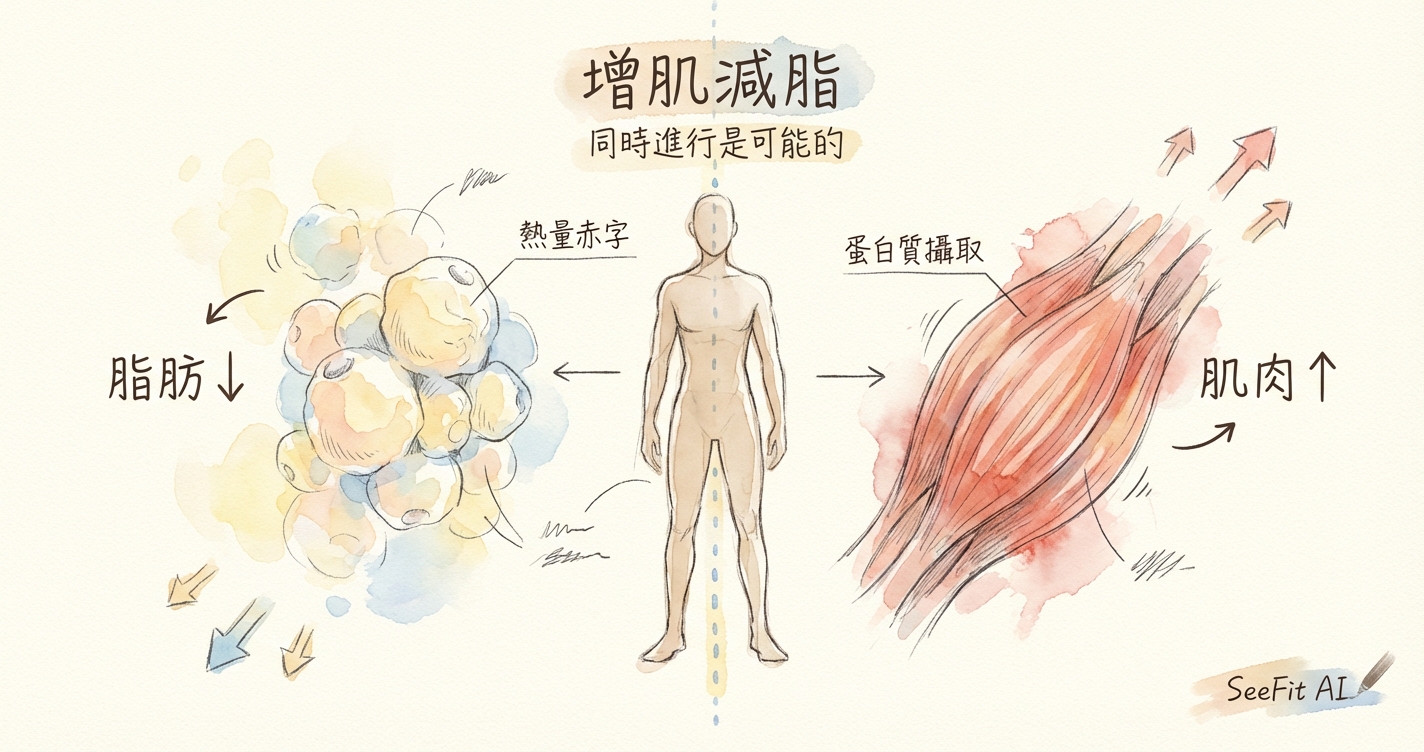
"You have to bulk first, then cut." You've probably heard this a thousand times. But what if science has already proven that, under the right conditions, you can do both at once?
What Is Body Recomposition?
Body recomposition refers to simultaneously losing body fat and gaining muscle mass, often with little to no change in overall body weight. Sounds like it defies physics? It doesn't.
The traditional view says: building muscle requires a caloric surplus, and losing fat requires a caloric deficit — so you can't do both. But your body isn't a simple equation. Fat tissue and muscle tissue operate on relatively independent metabolic pathways.
Your body can draw energy from fat stores while using protein and exercise signals to synthesize new muscle protein.
What the science says right now: A 2020 systematic review of RCTs found that trained individuals can gain muscle while losing fat when protein intake and training are optimized (Barakat et al., Strength & Conditioning Journal). Evidence quality: moderate, based on multiple small-to-medium RCTs.
What Does the Science Say?
Even Trained Individuals Can Do It
In 2020, Barakat et al. published an influential systematic review in the Strength & Conditioning Journal. They analyzed multiple randomized controlled trials conducted on resistance-trained individuals, and the findings were encouraging:
- Even people with a training background can simultaneously lose fat and gain muscle with proper nutrition and training strategies
- Beginners see the most dramatic results, but intermediate lifters can achieve it too
Your Caloric Deficit Can't Be Too Large
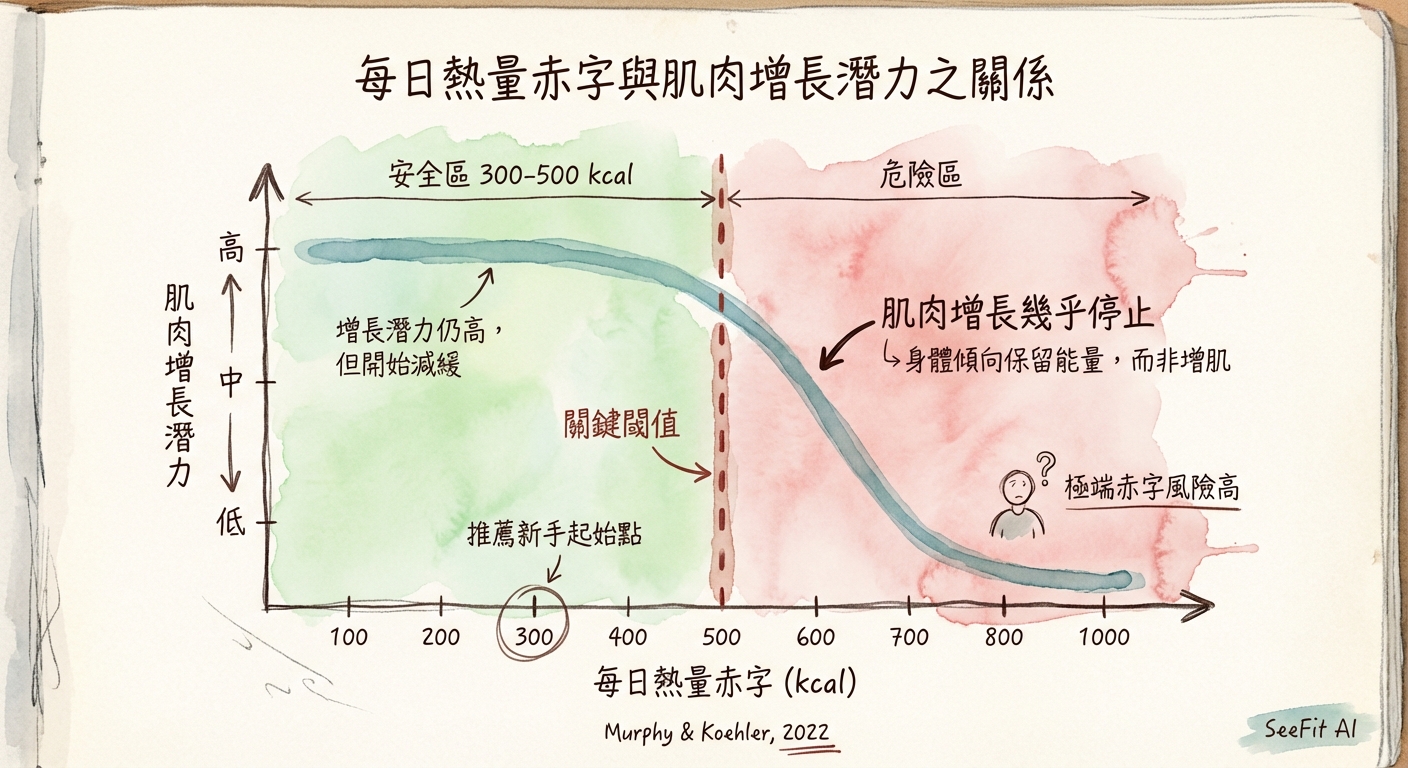
A 2022 meta-analysis by Murphy and Koehler in the Scandinavian Journal of Medicine & Science in Sports identified a critical threshold:
- A daily caloric deficit exceeding 500 kcal significantly impairs muscle growth
- Strength gains remain relatively unaffected
- Recommendation: aim for a moderate deficit of 300–500 kcal per day
What the science says right now: Meta-regression data show a dose-response relationship between energy deficit size and lean mass loss. Deficits above ~500 kcal/day nearly eliminate muscle gains even with resistance training (Murphy & Koehler, 2022). Evidence quality: strong, based on meta-analysis of 15 controlled studies.
Protein Is the Single Most Important Factor
Hector and Phillips (2018) in the International Journal of Sport Nutrition and Exercise Metabolism found:
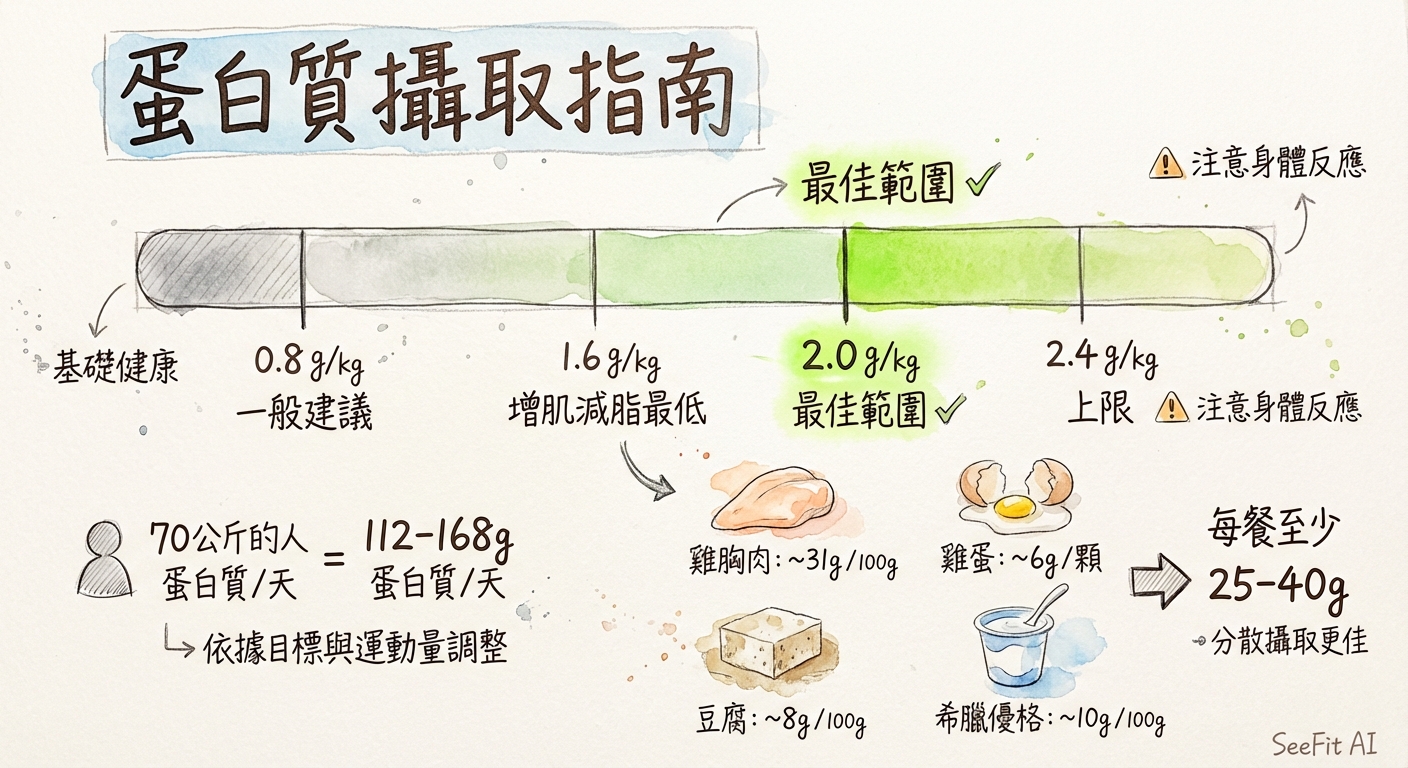
- During a caloric deficit, protein intake should increase to 1.6–2.4 g per kg of body weight per day
- A high-protein diet effectively preserves and even increases muscle mass
- Consuming protein before and after training suppresses exercise-induced muscle protein breakdown
In 2022, Ribeiro et al. published findings in Medicine & Science in Sports & Exercise showing that even older women achieved body recomposition when combining resistance training with moderate-to-high protein intake.
What the science says right now: Protein supplementation during resistance training increases lean mass gains by an average of 0.30 kg compared to placebo, with a plateau around 1.6 g/kg/day for most people (Morton et al., 2018). Evidence quality: strong, based on a meta-analysis of 49 RCTs with 1,863 participants.
Five Evidence-Based Strategies
Based on the latest research, successful body recomposition requires getting several factors right simultaneously.
What the science says right now: A 2025 network meta-analysis of 62 studies (4,429 participants) found that moderate-to-high intensity resistance training during caloric restriction produced the best outcomes for preserving lean mass while reducing fat (Xie et al., Frontiers in Nutrition). Evidence quality: strong, based on a large-scale network meta-analysis.
1. Maintain a Moderate Caloric Deficit
- Reduce intake by 300–500 kcal per day — no crash diets
- Use SeeFit to track your daily intake and keep your deficit precisely controlled
2. Increase Protein Intake
- Target: 1.6–2.4 g of protein per kg of body weight
- Distribute evenly across meals (at least 25–40 g per meal)
- Quality sources: chicken breast, fish, eggs, tofu, Greek yogurt
3. Commit to Progressive Resistance Training
- At least 3–4 sessions of weight training per week
- Continuously increase load (progressive overload)
- Focus on compound movements: squats, deadlifts, bench press, rows
4. Prioritize Recovery and Sleep
- 7–9 hours of quality sleep per night
- Sleep deprivation lowers testosterone and raises cortisol, directly impairing muscle synthesis and fat metabolism
- Schedule adequate rest days
5. Stay Patient and Consistent
- Body recomposition is a slow process
- Your weight may not change much, but your body composition will
- Track progress with body fat percentage, photos, and measurements — not just the scale
Who Has the Best Chance of Success?
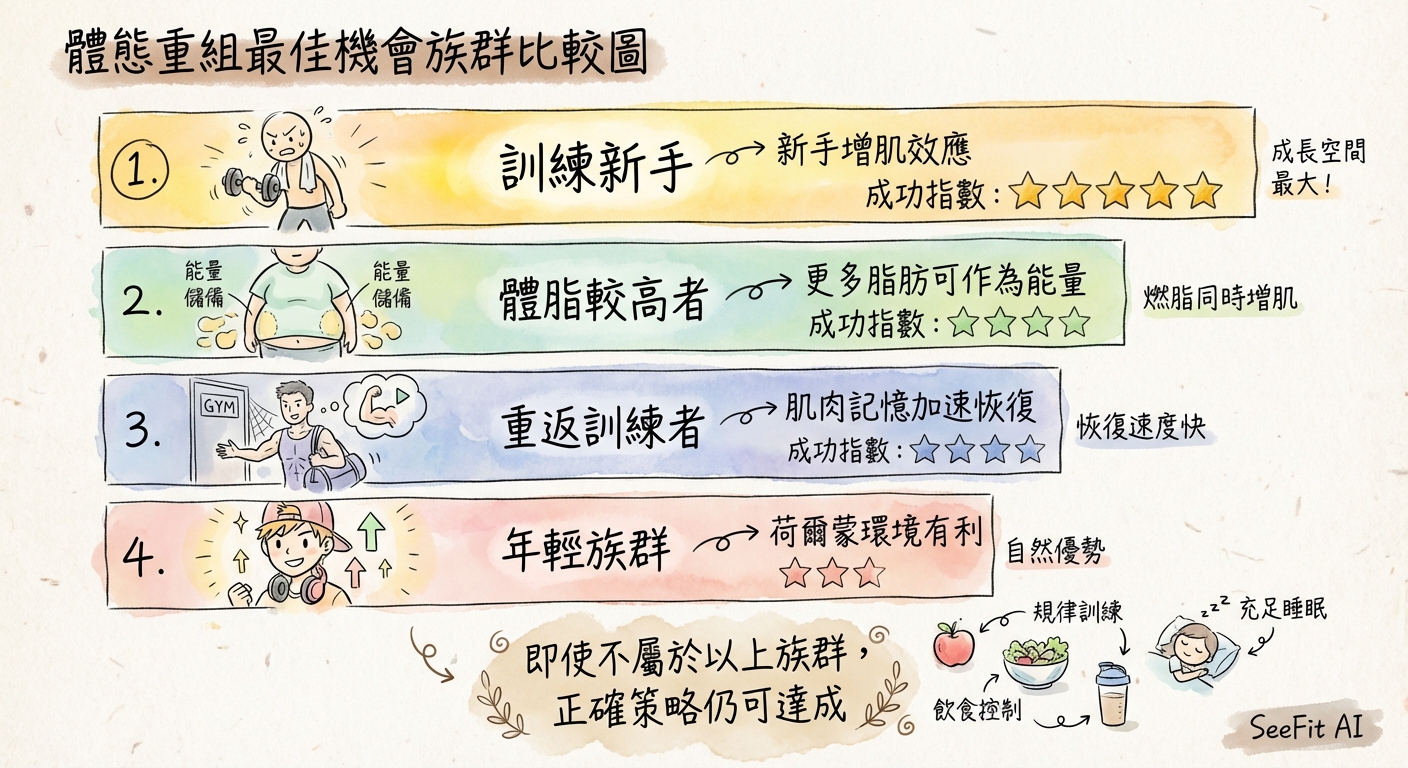
Research suggests the following groups have the greatest advantage:
| Group | Why | |-------|-----| | Training beginners | "Newbie gains" make the body hyper-responsive to training stimuli | | Higher body fat individuals | More fat reserves available as an energy source | | Returning trainees | Muscle memory accelerates muscle rebuilding | | Younger individuals | Hormonal environment favors muscle synthesis |
Even if you don't fall into these categories, body recomposition is still possible with the right strategy — it just takes longer.
Common Myths Debunked
Myth: "Cardio is the best way to lose fat" Fact: Pure cardio burns both fat and muscle. A 2025 network meta-analysis in Frontiers in Nutrition showed that resistance training is far superior to cardio alone for preserving muscle while losing fat.
Myth: "You can't build muscle while cutting" Fact: As multiple studies above demonstrate, muscle gain during a moderate deficit with high protein intake is entirely achievable.
Myth: "Too much protein damages your kidneys" Fact: For healthy adults with normal kidney function, there is no evidence that protein intake up to 2.4 g/kg causes kidney damage.
Track Your Recomposition with SeeFit
The key to body recomposition is precise nutritional control. SeeFit's AI food recognition analyzes your macronutrients in seconds, helping you confirm:
- Whether you're hitting your protein target
- Whether your caloric deficit is in the safe range
- Whether your micronutrients are balanced
You don't need a perfect plan — you need a sustainable, data-driven strategy.
Try It Yourself: The 4-Week Recomp Check
- Take baseline measurements — Record your weight, take progress photos (front, side, back), and measure your waist, chest, and arms.
- Set your nutrition targets — Calculate a 300--500 kcal deficit and aim for 1.6--2.0 g of protein per kg of body weight.
- Follow the training plan — Do 3--4 resistance training sessions per week, focusing on progressive overload.
- Reassess at week 4 — Retake all measurements. If your waist has shrunk but your weight is stable or your arms have grown, congratulations -- you are recomping.
- When to consult a professional — If you feel chronically fatigued, lose strength consistently, or experience unusual symptoms, see a sports dietitian or physician.
References
-
Barakat et al. (2020). "Body Recomposition: Can Trained Individuals Build Muscle and Lose Fat at the Same Time?" Link
-
Murphy & Koehler (2022). "Energy deficiency impairs resistance training gains in lean mass but not strength: A meta-analysis and meta-regression." Link
-
Hector & Phillips (2018). "Protein Recommendations for Weight Loss in Elite Athletes: A Focus on Body Composition and Performance." Link
-
Ribeiro et al. (2022). "Moderate and Higher Protein Intakes Promote Superior Body Recomposition in Older Women Performing Resistance Training." Link
-
Morton et al. (2018). "A systematic review, meta-analysis and meta-regression of the effect of protein supplementation on resistance training-induced gains in muscle mass and strength in healthy adults." Link
-
Xie et al. (2025). "Comparing exercise modalities during caloric restriction: a systematic review and network meta-analysis on body composition." Link
This content is for informational purposes only and does not constitute medical advice. Consult a qualified healthcare professional for personal health concerns.