
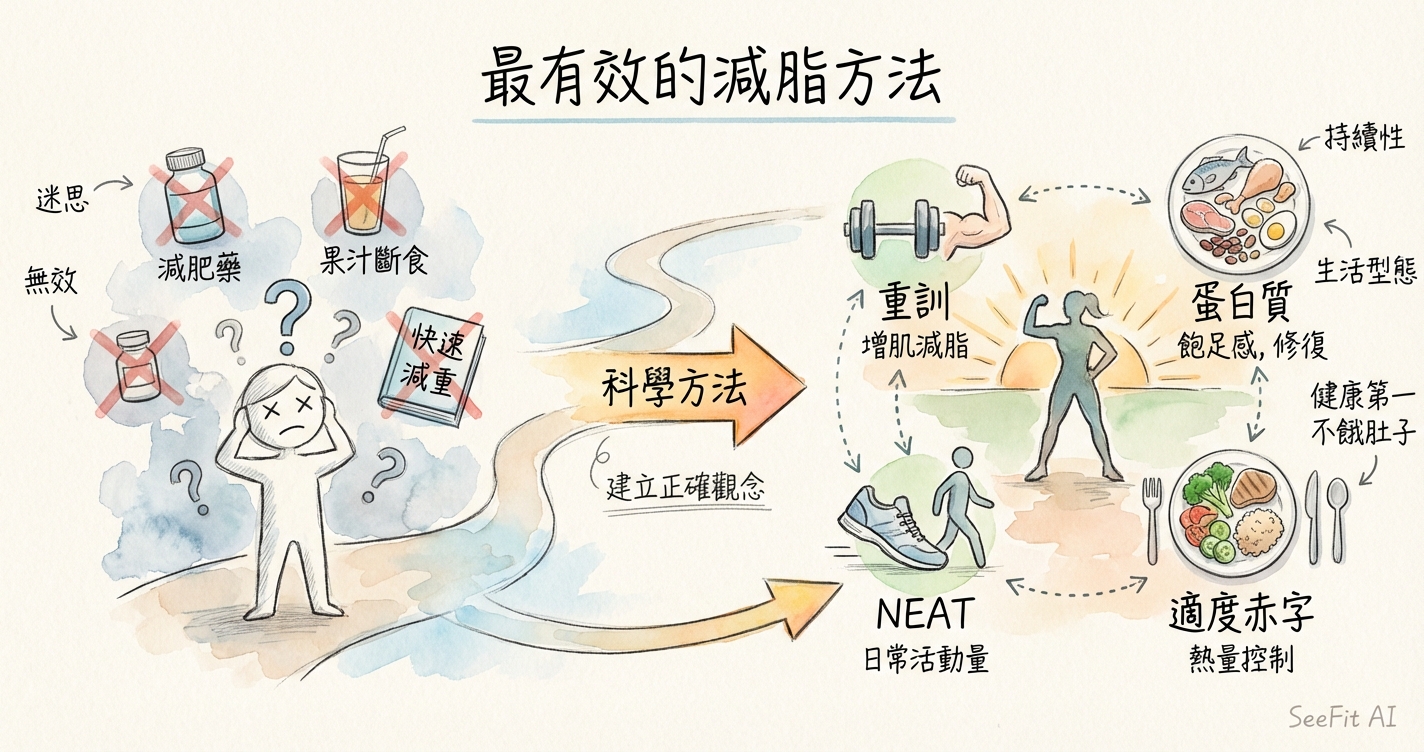
Tired of trying every diet and workout plan without seeing real results? Let's look at what science actually says about effective fat loss.
The Core Principle: Caloric Deficit
No matter how many trendy diets you've heard of, fat loss comes down to one thing — caloric deficit. You need to burn more calories than you consume.
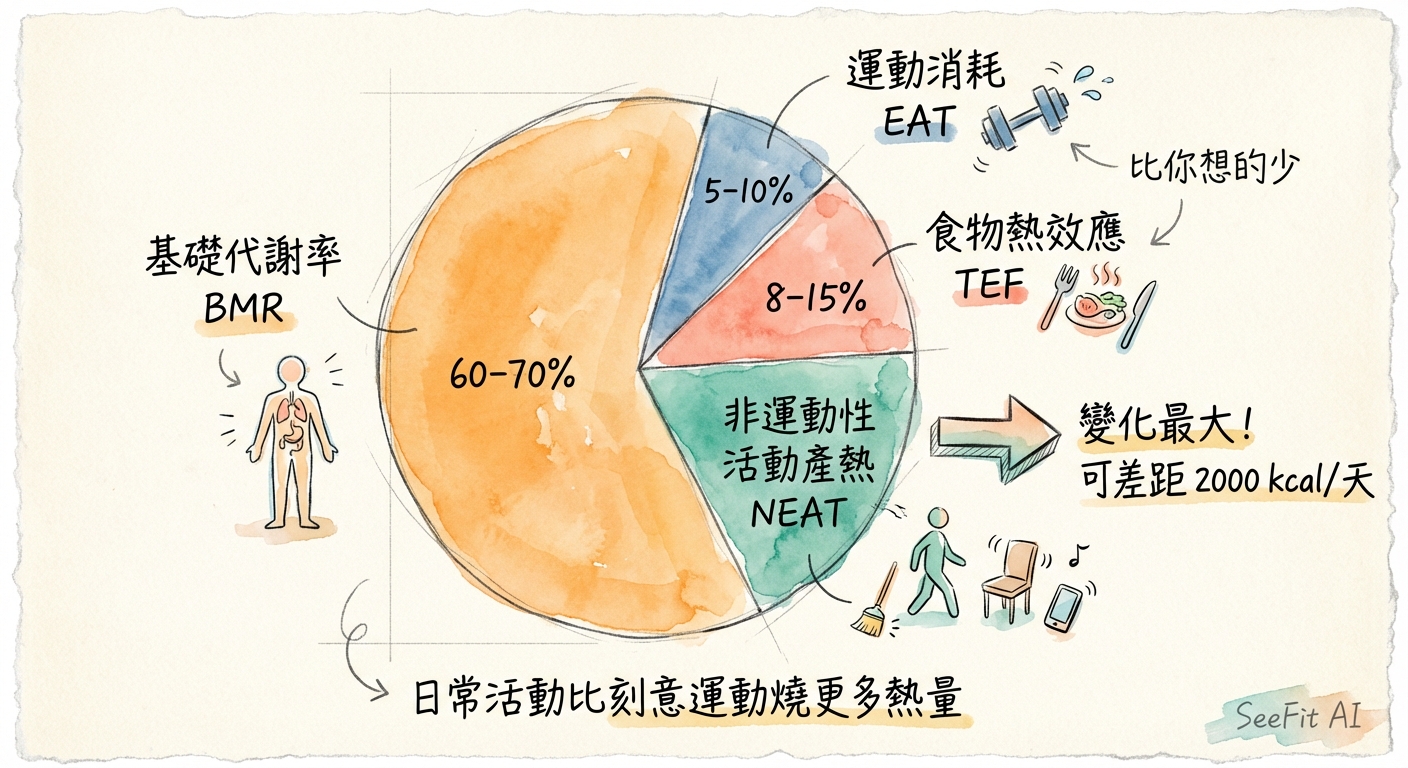
Your Total Daily Energy Expenditure (TDEE) has four components:
- Basal Metabolic Rate (BMR): 60–70% — energy your body needs just to stay alive
- Thermic Effect of Food (TEF): 8–15% — energy spent digesting food
- Exercise Activity Thermogenesis (EAT): 5–10% — calories burned through intentional exercise
- Non-Exercise Activity Thermogenesis (NEAT): 15–30% — energy spent walking, standing, fidgeting, and other daily movements
Your daily movements (NEAT) typically burn more calories than intentional exercise. Research shows NEAT can vary by up to 2,000 calories per day between individuals.
What the science says right now: A 2017 review in Gastroenterology found that total calorie balance, not the specific macronutrient mix, drives body weight change (Hall & Guo, 2017). Evidence quality: meta-analysis of 32 controlled feeding studies.
The Most Effective Fat Loss Strategies (According to Science)
Based on systematic reviews and meta-analyses from 2018–2025:
1. A Moderate Caloric Deficit (Not Extreme Dieting)
A 2024 network meta-analysis in the International Journal of Behavioral Nutrition and Physical Activity compared multiple caloric restriction methods:
- Alternate-Day Fasting (ADF) showed the most significant short-term weight loss
- Time-Restricted Eating (TRE, such as 16:8) had the smallest weight regain and more stable long-term results
- Both showed positive effects on cardiovascular metabolic markers
The key takeaway: any method that creates a moderate deficit works — aim for 300–500 calories below your TDEE, not 1,000+.
Extreme dieting leads to significant muscle loss, metabolic slowdown, and reduced NEAT — setting you up for rebound weight gain.
What the science says right now: A 2024 network meta-analysis of 47 RCTs (3,363 participants) found time-restricted eating had the smallest weight regain among caloric restriction methods (Kheniser et al., 2024). Evidence quality: high (systematic review with network meta-analysis).
2. Resistance Training Makes the Biggest Difference
Many people think fat loss is all about cardio, but science tells a different story.
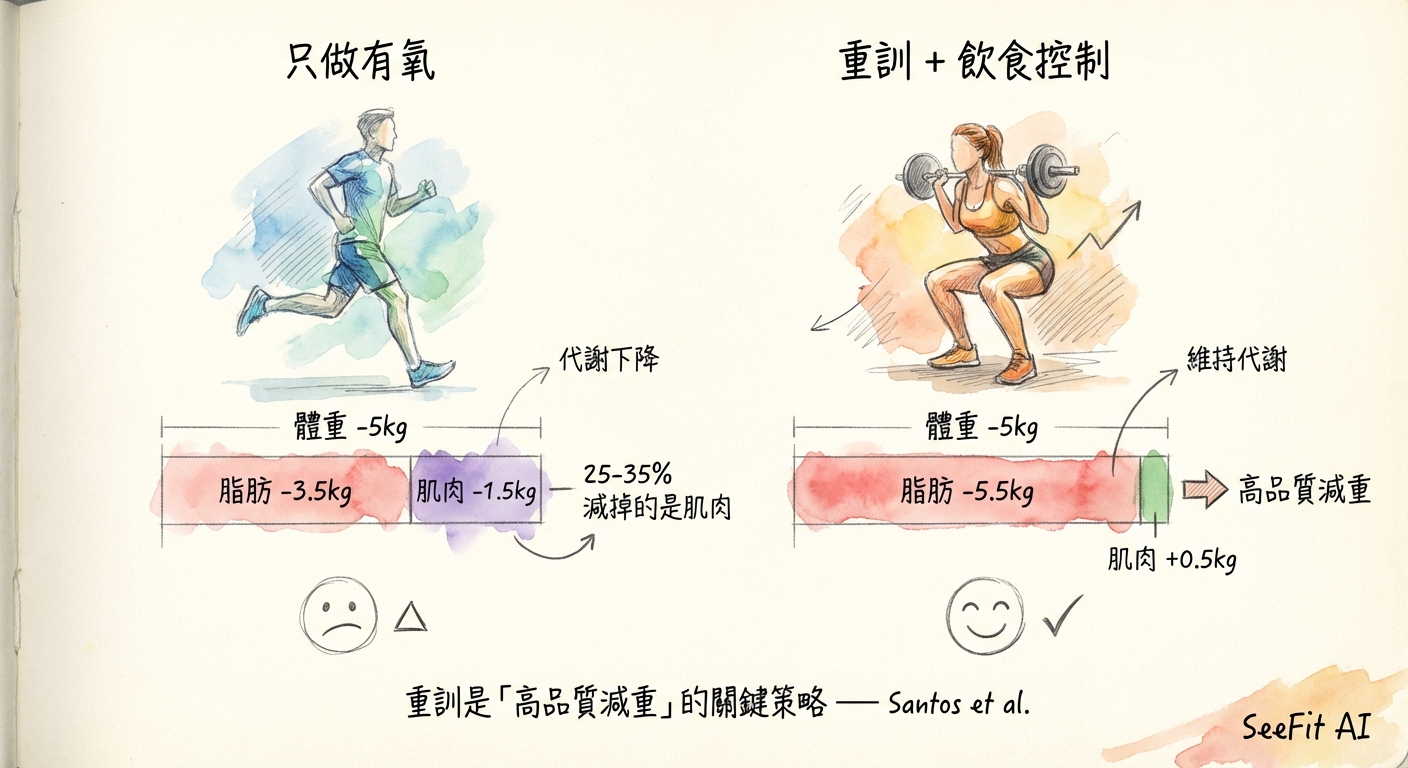
A 2025 study in Frontiers in Endocrinology found that resistance training is the key strategy for "high-quality weight loss" — meaning you lose fat, not muscle.
Why does this matter?
- During weight loss, roughly 25–35% of weight lost comes from non-fat tissue (mostly muscle)
- More muscle mass means a higher metabolic rate, making fat loss easier to maintain
- Resistance training stimulates muscle protein synthesis, preserving or even building muscle during a deficit
A 2025 systematic review in BMJ Open Sport & Exercise Medicine confirmed that people who combined resistance training with caloric restriction retained significantly more muscle than those who only did cardio.
What the science says right now: Across 25 RCTs, adding resistance training to a calorie-restricted diet preserved fat-free mass and increased fat loss compared to diet alone (Murphy et al., 2025). Evidence quality: high (systematic review and meta-analysis).
3. High Protein Intake Protects Your Muscles
A 2024 systematic review in Clinical Nutrition ESPEN analyzed high-protein diets for adults with overweight/obesity:
- Consuming 1.2–1.6 g of protein per kg of body weight daily effectively preserves muscle during fat loss
- Compared to the standard 0.8 g/kg, the high-protein group showed greater improvements in body composition
- Protein also increases satiety, helping you control appetite naturally
Example: A 70 kg (154 lb) person needs at least 84–112 g of protein daily — roughly 3–4 chicken breast servings.
What the science says right now: Protein supplementation beyond ~1.6 g/kg/day showed no further benefit for muscle gains during resistance training in a meta-analysis of 49 studies (Morton et al., 2018). Evidence quality: high (systematic review, meta-analysis, and meta-regression).
4. Cardio + Resistance Training Combined
A 2024 dose-response meta-analysis in JAMA Network Open found:
- 150+ minutes of moderate aerobic exercise per week significantly aids fat loss
- Combining it with resistance training is even more effective for simultaneous fat loss and muscle preservation
- You don't need to exercise every day — 3–4 sessions of 45–60 minutes per week produces noticeable results
5. Increase Your Daily Movement (NEAT)
Research published in the Journal of Exercise Nutrition & Biochemistry (2018) showed that NEAT is the most variable component of daily energy expenditure:
- Sedentary individuals: NEAT accounts for only 6–10% of TDEE
- Active individuals: NEAT can reach 50%+ of TDEE
- Simple changes — walking more, standing desks, taking stairs — can dramatically increase calorie burn
Instead of stressing about adding 30 more minutes of cardio, aim for 8,000–10,000 steps daily. It's easier and more sustainable.
How Long Until You See Results?
This is the question everyone asks. Based on clinical research:
Weeks 1–2: Internal Changes
- Improved energy and better sleep
- Weight may drop 1–2 kg quickly, but this is mostly water and glycogen — not actual fat
Weeks 2–4: Real Fat Loss Begins
- A safe and sustainable rate is about 0.5–1 kg (1–2 lbs) per week
- Clothes start fitting looser, but mirror changes may be subtle
Weeks 4–8: Visible Changes
- Most people start seeing noticeable body composition changes
- Facial features become more defined, waistline shrinks noticeably
- If you're doing resistance training, muscle definition starts to appear
Weeks 8–12: Others Notice Too
- Research shows that when you've lost 5–10% of your body weight, people around you will notice
- For a 70 kg person, that's losing 3.5–7 kg
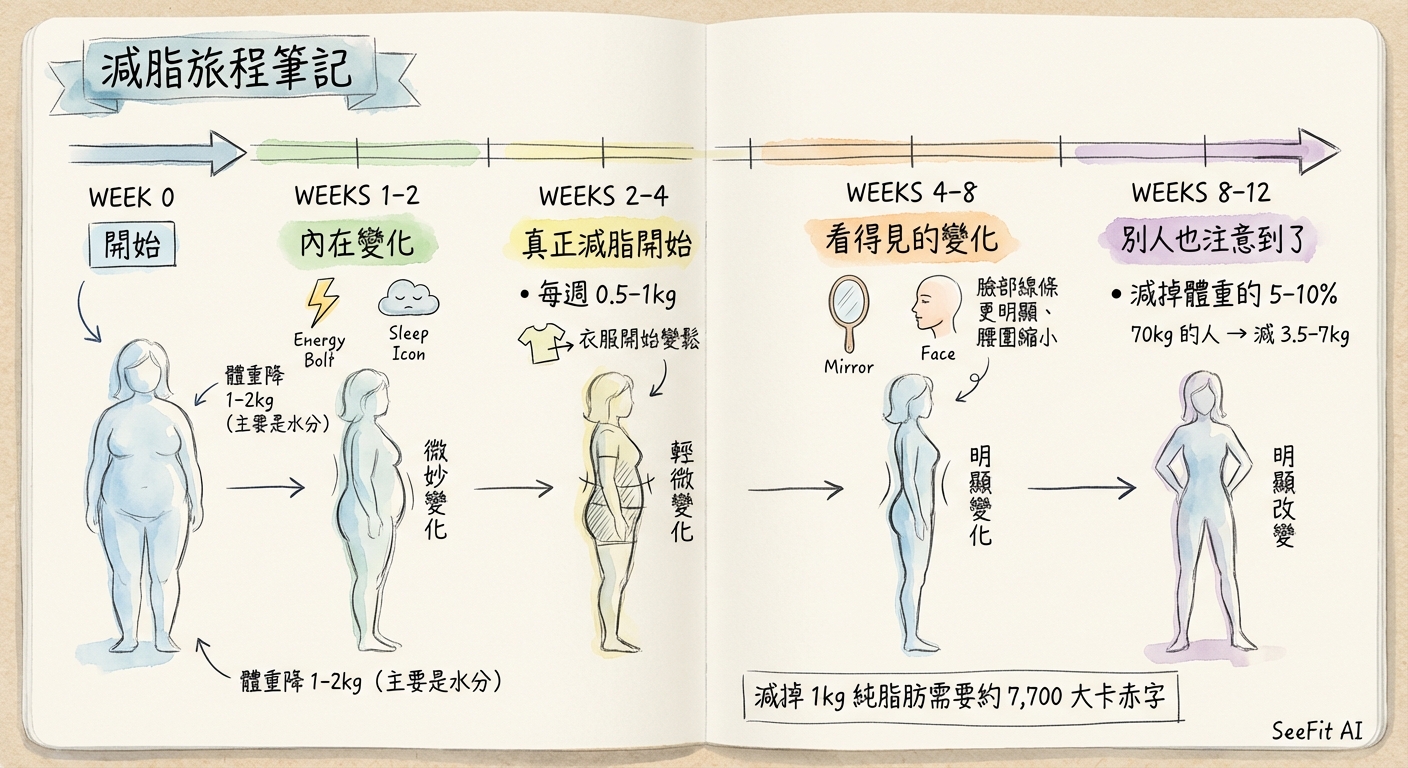
Patience is key. Losing 1 kg of pure fat requires a deficit of about 7,700 calories. At 500 calories per day deficit, that takes roughly 15 days.
What the science says right now: A dose-response meta-analysis of 116 RCTs found that each extra 30 minutes of weekly aerobic exercise was associated with an additional 0.52 kg weight loss (Jayedi et al., 2024). Evidence quality: high (large-scale dose-response meta-analysis).
How SeeFit Helps You Lose Fat Smarter
SeeFit's AI tailors your approach by:
- Calculating your TDEE and optimal caloric deficit
- Tracking daily protein intake to keep you in the 1.2–1.6 g/kg target range
- Analyzing nutritional density to prevent deficiencies during fat loss
- Adjusting your nutrition plan weekly based on your progress
Try It Yourself: Track Your Fat Loss for Two Weeks
- Calculate your TDEE — Use an online calculator or SeeFit to estimate your total daily energy expenditure based on your age, weight, height, and activity level.
- Set a moderate deficit — Subtract 300–500 calories from your TDEE. That's your daily intake target.
- Log your meals for 7 days — Track everything you eat. Most people are surprised by how much they underestimate their intake.
- Add resistance training — If you're not already doing it, start with 2–3 sessions per week of basic compound movements.
- Weigh yourself daily, but track the weekly average — Daily fluctuations are normal (water, sodium, glycogen). The weekly trend tells the real story.
- Reassess at week 2 — If your average weight dropped 0.5–1 kg per week, you're on track. If not, adjust your intake by 100–200 calories.
- When to consult a professional — If you feel extremely fatigued, lose your period (women), or experience persistent dizziness, see a doctor or registered dietitian.
The Four Pillars of Effective Fat Loss
- Moderate caloric deficit: 300–500 calories below TDEE, no extreme dieting
- Resistance training: 3–4 times per week to preserve muscle and boost metabolism
- Adequate protein: 1.2–1.6 g per kg of body weight daily
- More daily movement: Walk more, sit less, increase NEAT
Fat loss isn't a sprint — it's a marathon. Choose the right methods, stay patient, and you'll see significant changes within 4–12 weeks.
References
-
Kheniser et al. (2024). "Comparing caloric restriction regimens for effective weight management in adults: a systematic review and network meta-analysis." Link
-
Santos et al. (2025). "Resistance training as a key strategy for high-quality weight loss in men and women." Link
-
Murphy et al. (2025). "Effect of resistance exercise on body composition, muscle strength and cardiometabolic health during dietary weight loss in people living with overweight or obesity: a systematic review and meta-analysis." Link
-
Gao et al. (2024). "Enhanced protein intake on maintaining muscle mass, strength, and physical function in adults with overweight/obesity: A systematic review and meta-analysis." Link
-
Doostan et al. (2024). "Aerobic Exercise and Weight Loss in Adults: A Systematic Review and Dose-Response Meta-Analysis." Link
-
Chung et al. (2018). "Non-exercise activity thermogenesis (NEAT): a component of total daily energy expenditure." Link
-
Morton et al. (2018). "A systematic review, meta-analysis and meta-regression of the effect of protein supplementation on resistance training-induced gains in muscle mass and strength in healthy adults." Link
-
Stokes et al. (2018). "Recent perspectives regarding the role of dietary protein for the promotion of muscle hypertrophy with resistance exercise training." Link
-
Hector & Phillips (2018). "Protein recommendations for weight loss in elite athletes: A focus on body composition and performance." Link
-
Hall & Guo (2017). "Obesity energetics: body weight regulation and the effects of diet composition." Link
This content is for informational purposes only and does not constitute medical advice. Consult a qualified healthcare professional for personal health concerns.