
How to Maintain Weight After a Period of Weight Loss
Maintenance has a routine of its own. An 18-month trial shows how regular feedback and support can fit alongside habits you can keep on busy days.
The first busy Monday after you finish a weight-loss phase includes a surprise meeting. Your usual lunch and walk disappear from the calendar. To maintain your weight, keep a few habits that fit ordinary days and decide what you can return to when your routine or weight trend changes. A routine with some room for changes is easier to use in the weeks you are actually going to have.
Maintaining weight means finding a roughly steady direction over time. Your meals can look different from one week to the next, and individual readings can move up or down. Look at a few weeks of records alongside what those weeks were like, then decide whether anything needs attention.
Give a regular workday a version you can repeat
Think of something that used to work. Maybe you packed lunch the night before, walked a familiar route after work, or regularly sat down to eat dinner with family. Make a version for a day when plans change. If you forget your lunch, choose a place where you can buy a combination of a staple, a protein food, and vegetables. If a meeting runs late, you could use part of your break for a walk or plan to go on the next day.
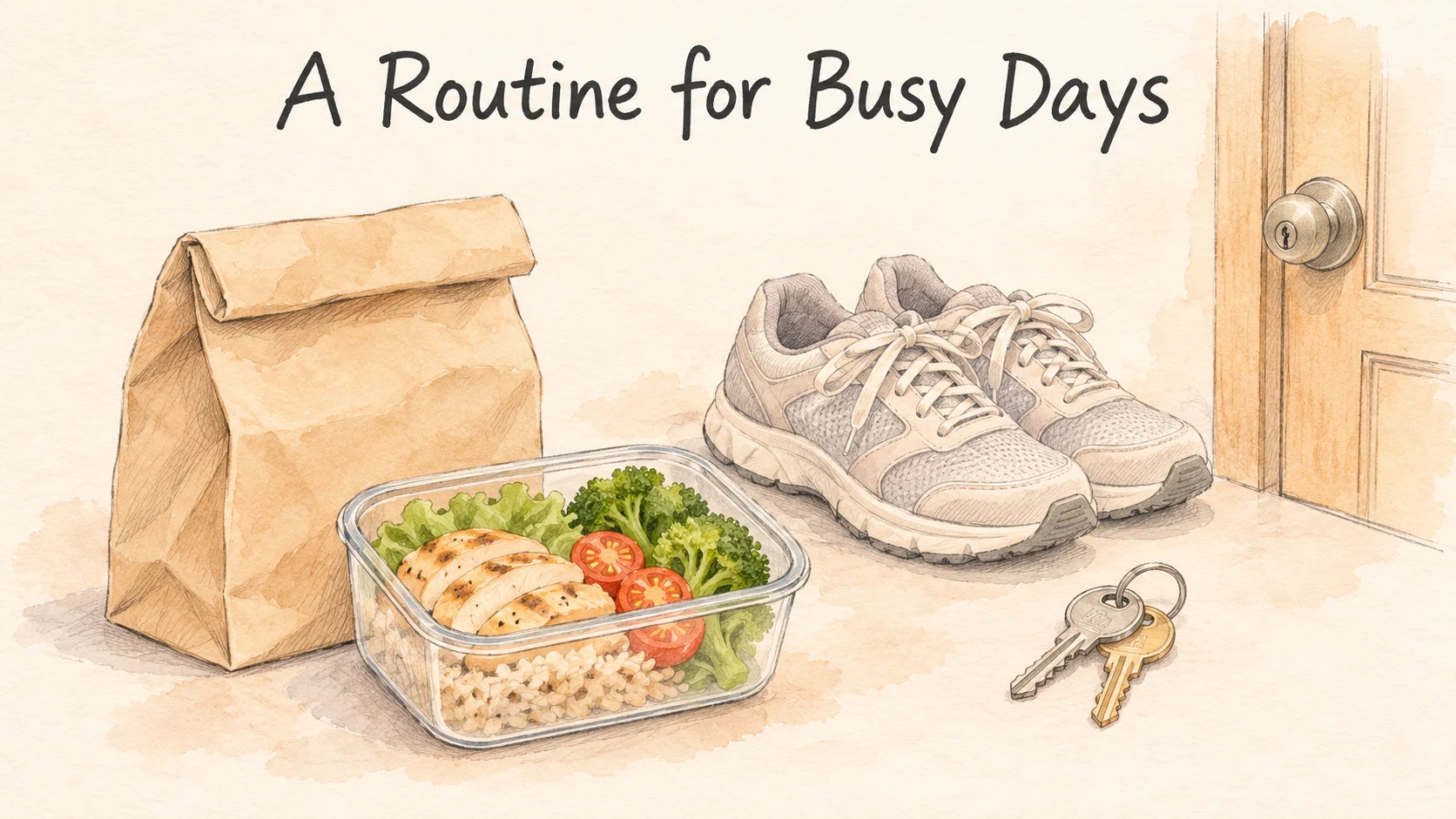
A backup can be as small as knowing where to pick up a meal. A tightly scheduled menu is harder to use when a shift moves. Keep a food option you can find and the kind of activity you feel comfortable doing. Then look back later to see whether you used that option on a day you actually needed it.
Keep the backup easy to find. A meal you can heat can sit in the fridge, or a short walking route can go in a note on your phone. The point is to make one decision ahead of time for the evening when your shift changes. If a meal stays in the fridge every week, replace it with something you actually look forward to eating.
You can also decide who to ask when you want to check in. Some people arrange to walk with a friend. Others talk with a dietitian about meals on a later shift. Keep the discussion close to something that keeps happening. If the last place to buy your usual dinner closes before you finish work, you can find another choice and see how it fits on the next late day.
The same idea can cover a trip or a holiday. Your usual walk might become a short walk between two places you're visiting. When you're back from a meal with friends, you can use your usual plan for the next meal. If the trip was busy, think about what would help you return to your regular routine,.
What happened when a study offered regular support?
Wing and colleagues randomly assigned 314 adults who had previously lost weight to face-to-face support, internet support, or a control group that received newsletters. The two support programs used the same topics and contact schedule, including frequent weighing, noticing a change, and learning how to respond. After 18 months, about 46% in the face-to-face group, 55% in the internet group, and 72% in the newsletter group had regained at least 2.3 kilograms. [1]
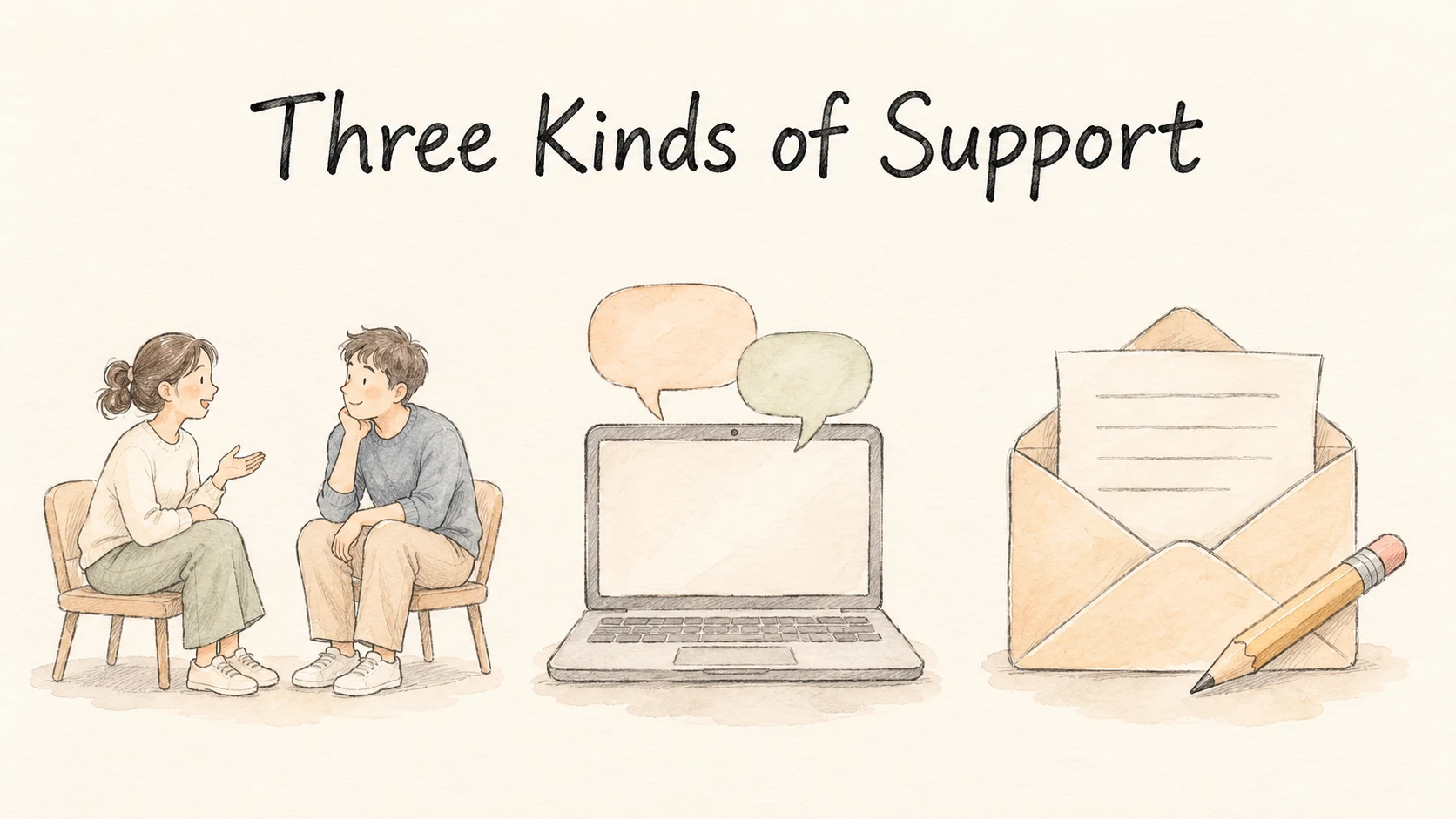
The Wing trial compared support programs. The researchers chose 2.3 kilograms as a study threshold. The percentages describe the share of each group that reached it.
The paper also reports mean kilograms regained, which is a different way to read the result. A few people with a large change can move an average. In a threshold analysis, each person counts once depending on which side of the threshold they fall. For something you can use yourself, focus on the people having regular chances to look back, ask questions, and respond to changes. The trial combined those steps, so it can't assign all the difference to the scale or to one conversation.
If you would like a regular check-in, choose a time and a question to bring. “Which of my late shifts was the easiest one to plan dinner for?” gives you something concrete to discuss. Ask what made the workable choice easier. You can have that conversation as soon as the routine changes. The study's threshold doesn't need to become your date for asking for support.
Another randomized study offered support by phone and in person to US veterans after an initial weight-loss program. The 222 adults in the maintenance trial had each lost at least four kilograms before randomization. The program covered planning for interruptions, social support, and self-monitoring. By week 56, estimated regain was about 0.75 kilograms in the maintenance group and 2.36 kilograms in usual care. Most participants were men, and the intervention ran in a particular health-service setting. [2]
The studies answer how groups responded to organized support. To decide what would suit you, think about which part is hard to arrange on your own. If evenings are the problem, a short discussion about what you can get after work may be more relevant than getting a reading more often.
When something changes, review one thing you can check
If you choose to track weight, pick a frequency you can repeat comfortably. One weekly reading under similar conditions can become a useful record over time. Keep a single higher reading in the record. If several readings sit away from your usual range, look back at whether you switched the time or place you weighed, or whether meals, walking, or sleep changed over those weeks.
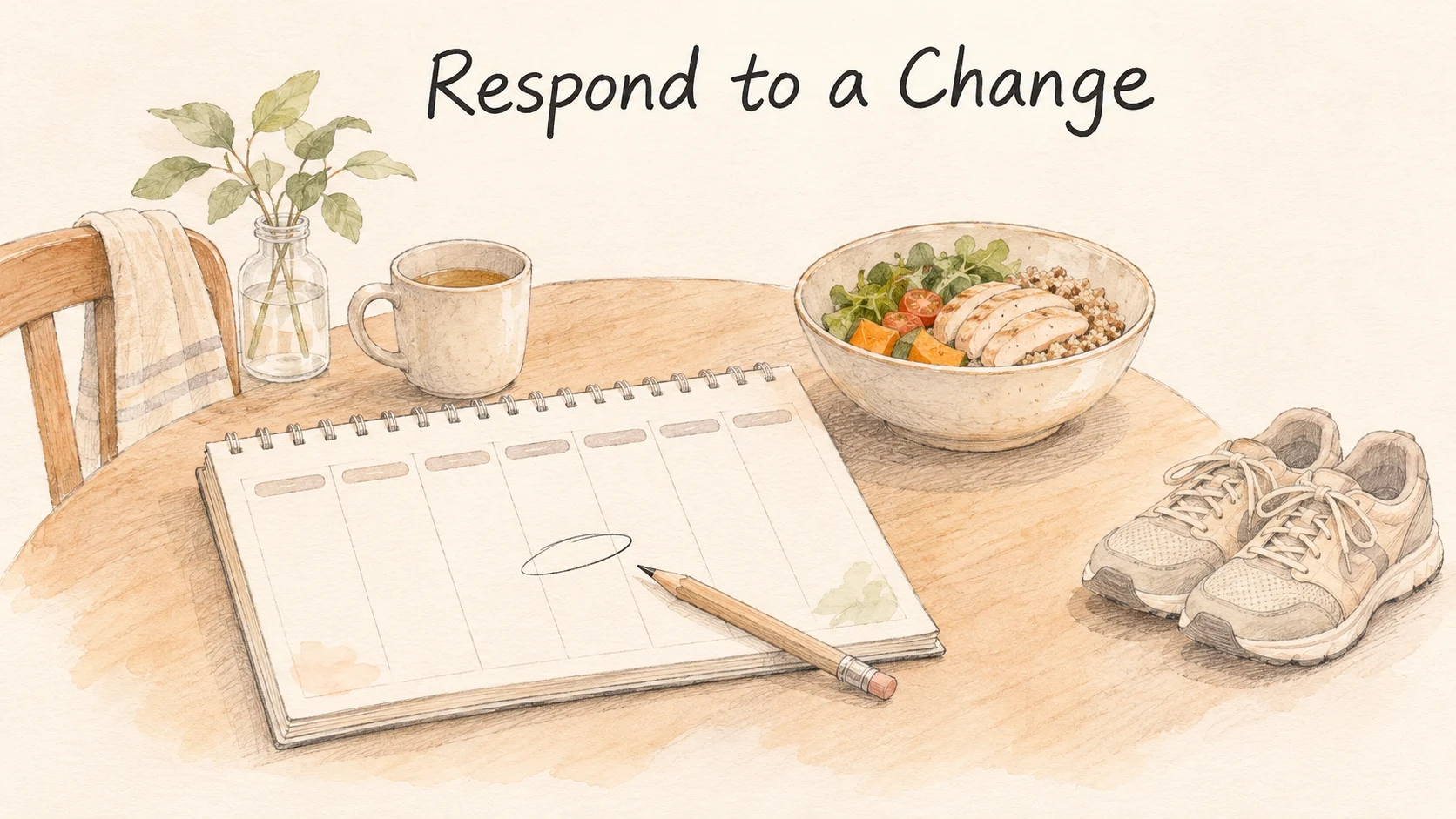
You might notice that Tuesday and Wednesday meetings have been finishing late, and that you arrive at dinner hungry enough to take the first thing you can find. Try making a convenient plan for those two evenings and then look at how the next few weeks felt. You might also find you're still happy with lunch and activity and would benefit from talking through the nights you work late. Choosing one adjustment gives you something you can revisit.
After you try a change, give it time to show up in your routine. Say you pack an extra lunch twice a week. At the end of a couple of weeks, look at what happened. Perhaps you ate one and left the other in the fridge. If you forgot it, set it by something you already bring to work. If a different lunch sounded better both times, change what you pack.
If weight is less useful as feedback for you, you can track a behavior you want to keep. You could count how often you sat down for a meal or how often you took the route you enjoy. On another busy Monday, think of the one option you can still use. In a few weeks, you can look back and see which choice actually fit into the days you had.
References
[1] Wing RR, et al. A self-regulation program for maintenance of weight loss. N Engl J Med. 2006;355:1563–1571.
[2] Voils CI, et al. Maintenance of weight loss after initiation of nutrition training: A randomized trial. Ann Intern Med. 2017;166:463–471.