
Does Serving Water by Default Change What People Drink?
A drink listed in a combo, a drink ordered, and a drink finished are three different things. Three studies follow different steps between the menu and the cup.
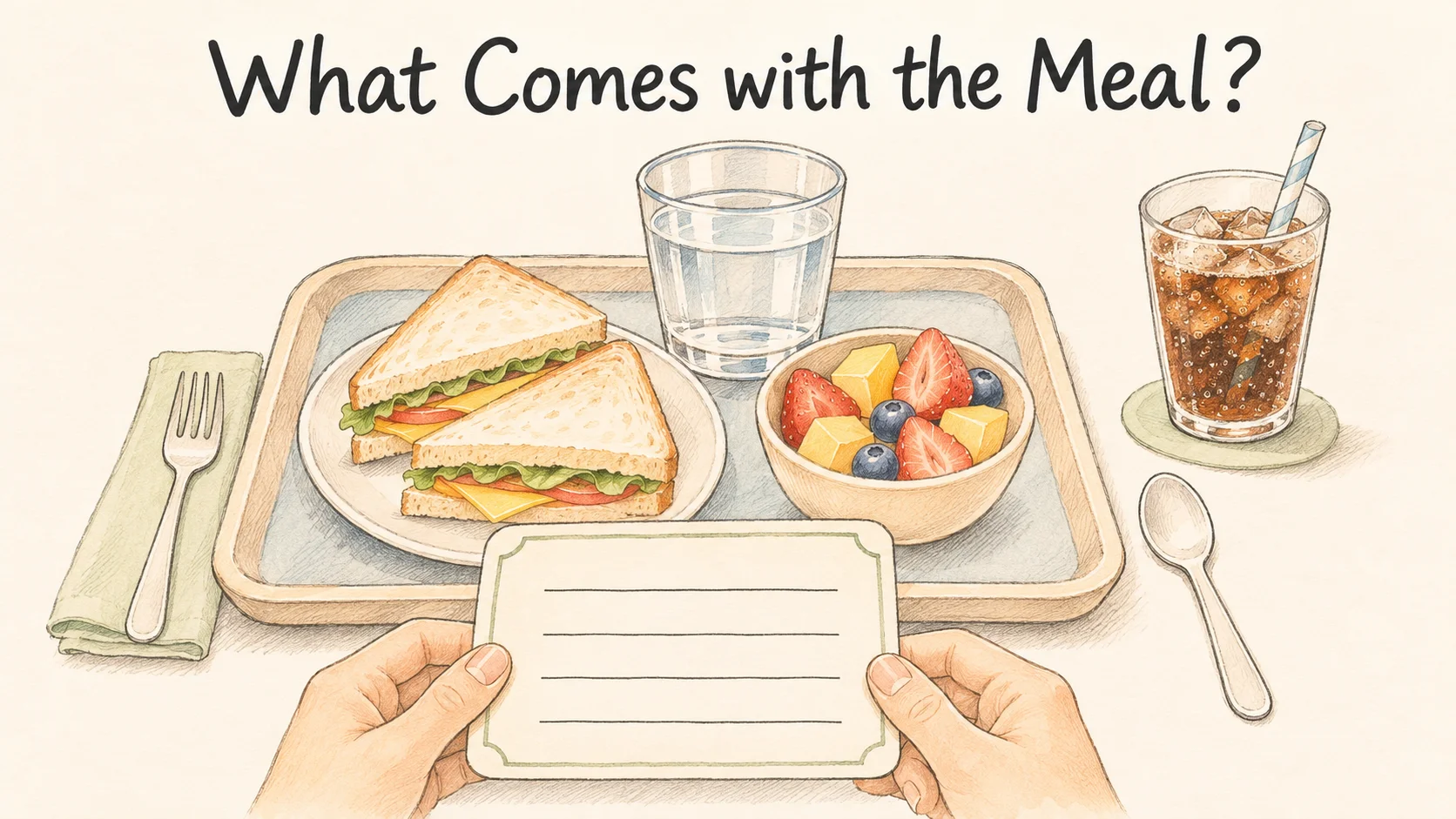
You order a sandwich combo and the cashier asks, “Cola with that?” You say yes while you are still reading the menu. If they had offered water instead, you might have said yes to that too. The drink a restaurant pairs with a meal can change who has to ask for a swap. What people order and how much they actually drink take more steps to find out. In one randomized study of children's menus, listing water, milk, or 100% juice as defaults showed no clear decrease in the calories people put into their hypothetical drink orders at either of the two restaurants tested [1].
What changes when default water goes on the menu?
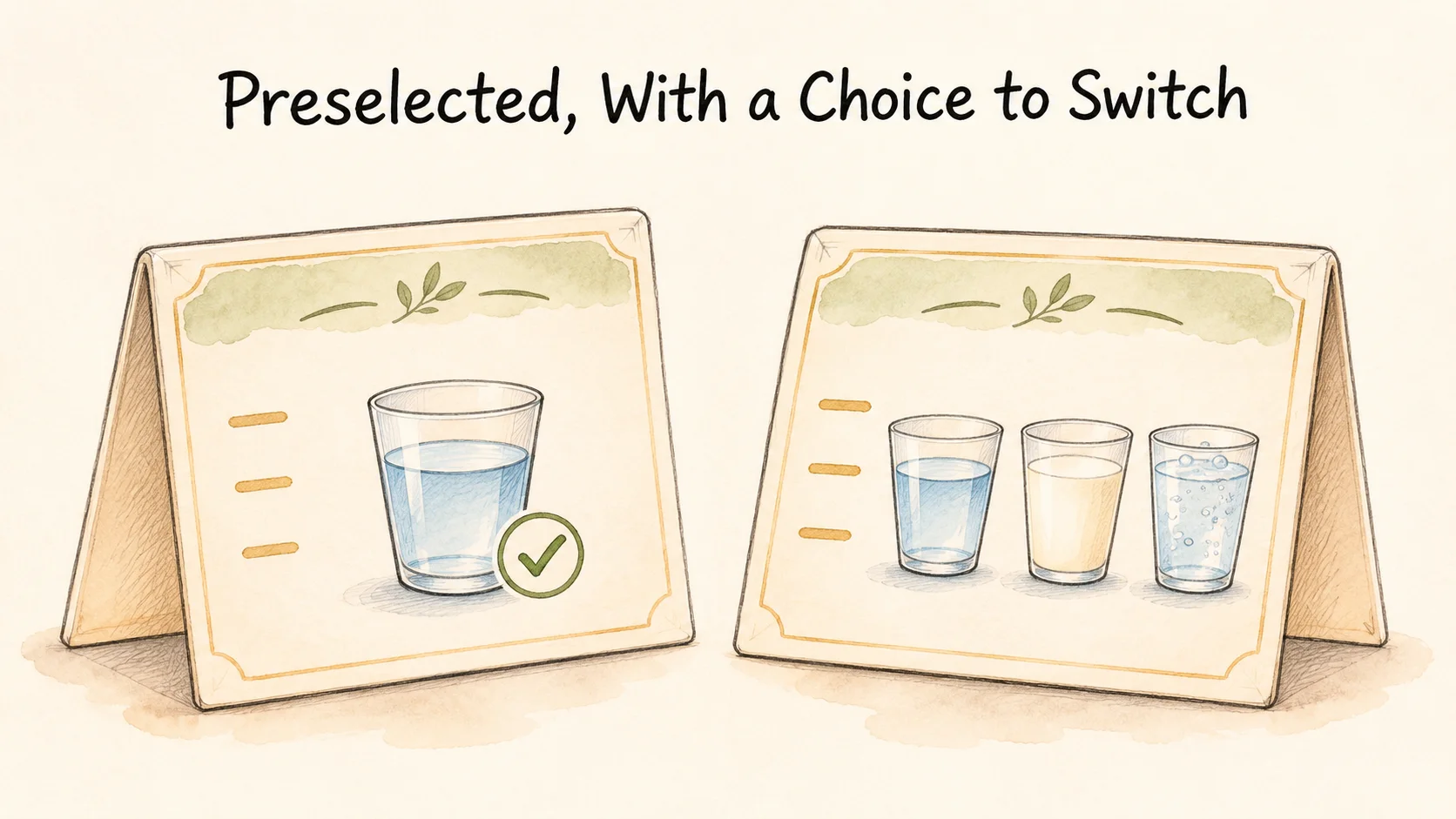
Imagine two signs outside the same café. One says the sandwich comes with cola, with water available if you ask. The other says it comes with water, with cola available if you ask. Both drinks are available either way. With the first sign, anyone who wants water has an extra request to make. With the second, that step falls to the person who wants cola. The default is what comes with the meal when you order it as listed.
When you are trying to get back to work and only have time to pick a sandwich filling, the default might settle the drink question. If you came in looking forward to a cold cola, a different listing might simply mean asking for it. A printed option also has to reach the person making the choice. You may be following what the cashier says aloud or what the kiosk shows right before payment. The same phrase on a menu can come with a different experience at the counter. A digital menu that makes every customer tap a drink before checking out works differently again. Even if water comes first in that list, it takes a choice to get through the screen.
What happened when researchers changed the drink list?
A 2020 online trial asked 479 caregivers in the United States to order a hypothetical dinner for their youngest child, aged two to six. Each person saw two children's menus, one from a fast-food chain and one from a sit-down chain. The researchers randomly assigned each person to see the same type of menu at both restaurants. One group saw the standard beverage options. A second saw water, milk, or 100% juice listed as defaults and could still choose alternatives such as sugary drinks. The last group saw the same defaults with those alternatives removed [1].
In the fast-food menu task, the average calorie totals for ordered beverages were 96.5 for the standard menu, 90.2 for the new defaults, and 89.0 for the restricted menu. The study found no statistically clear difference between the menu conditions at either restaurant. There was a narrower result at the sit-down chain. People shown the restricted menu ordered an average of 3.0 calories from regular soda, compared with 13.4 in the standard group. That difference did not extend to total calories ordered from drinks [1].
There are two ways to count these orders. To see what happened to regular soda, you isolate the calories from that item. To see what happened to beverages overall, you also include anything else someone selected, including milk or juice where applicable. Total drink calories and grams of added sugar answer different questions. To count the added sugar, you would need the recipe and serving size for each drink. Then there is the step from picking a drink to taking a sip. A caregiver clicked an item on a screen, and the child was never served that cup. What the researchers had was a record of the choice each caregiver made under the experiment's conditions.
A new menu board tells you what shops offer
A study published in 2025 stood closer to the counter. Researchers photographed and audited menu boards at 43 restaurants from three fast-food chains between 2019 and 2022. At the start, none of those locations listed only the lower-sugar drinks allowed by the relevant default policies with their kids' meals. By the follow-up, 39 did. That included eight of the nine locations in an area without such a policy, and the study found no statistically clear difference in board changes between the policy and comparison areas [2].
Those 39 locations are a count of shops that updated their boards. A separate study used receipts and sales data to see what customers picked. In 2015, researchers reported on 352,192 children's meals ordered before and after a menu change at a US chain. Fountain drinks, the study’s category for soda and lemonade, came off the printed children's menu. Customers could still ask for them. Among beverages captured in the orders, the share of fountain drinks went from 34.7% to 29.7%. Water could be ordered but did not appear in those data. The new menu also changed main courses and sides. A before-and-after comparison of that redesign cannot isolate the impact of the drink list [3].
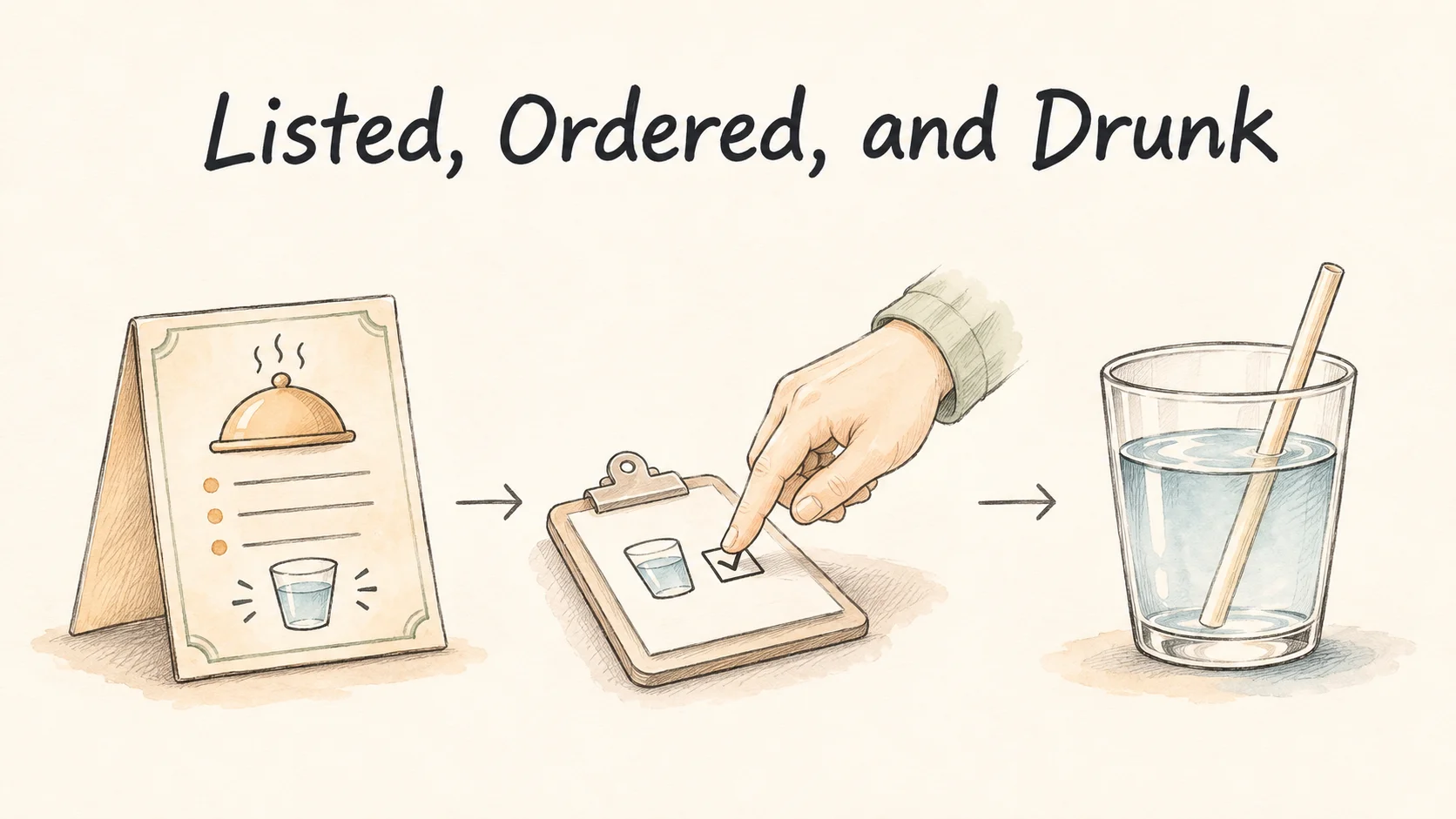
Imagine a shop sells 100 combos on a given day and lists water with all of them. Suppose 30 customers ask for soda instead, with no other changes. The kitchen can send out 70 waters and 30 sodas. The number of people who drank soda is still open. Two children could share a single cup, or someone could leave it untouched. If a family takes a drink home, the restaurant can count the cup it served and still have no record of whether the family finishes it. The figures in this example are made up. Keeping track of the unit, whether it's a board, an order, or a person actually drinking, explains why results farther along can differ even when the listing is identical.
One question at the counter
A breakfast shop in Taiwan might list “drink included” next to an egg pancake set, with the name of the drink or the swap price in smaller print. If you already know you want water or unsweetened tea, a natural question is, “What drink comes with the set, and can I swap it for water or unsweetened tea?” You might find that the shop allows a simple swap, that the tea can be made without sugar, or that the pancake is also available on its own.
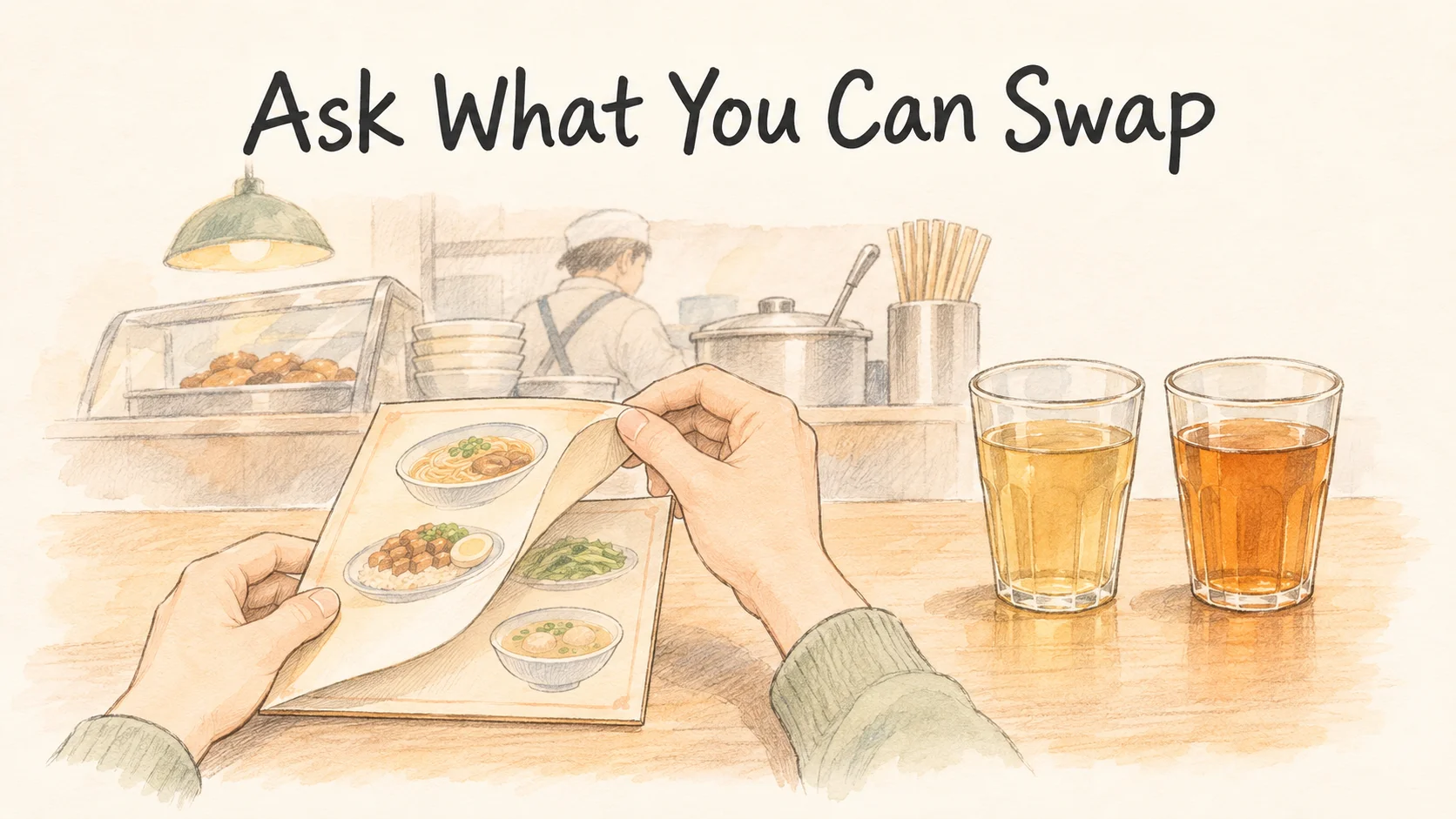
If you are carrying a bottle of water, take a look at what the main item costs on its own. When you are ordering for several people, include their preferred drinks as you order each meal. A regular customer can say “the egg pancake with unsweetened tea, please” in the same breath. You are making the drink decision when the choice is still easy to act on.
When a headline says a menu helped people drink less soda, look for what the researchers counted. A photo of a sign can tell you what the restaurant made easy to order. A receipt gives the order, subject to what the register records. To see what people drank, someone has to follow the cup to the table.
Sources
[1] Rummo PE et al. (2020). An online randomized trial of healthy default beverages and unhealthy beverage restrictions on children's menus.
[2] Cradock AL et al. (2025). A natural experiment on kids' meal beverage listings across three communities.
[3] Anzman-Frasca S et al. (2015). Children's meal orders before and after a restaurant chain's menu redesign.