
Does Adding Fiber Back to Juice Make It as Filling as Fruit?
An apple becomes a different food when you slice, purée, or juice it. Researchers weighed the next meal and watched how long each form stayed in the stomach.
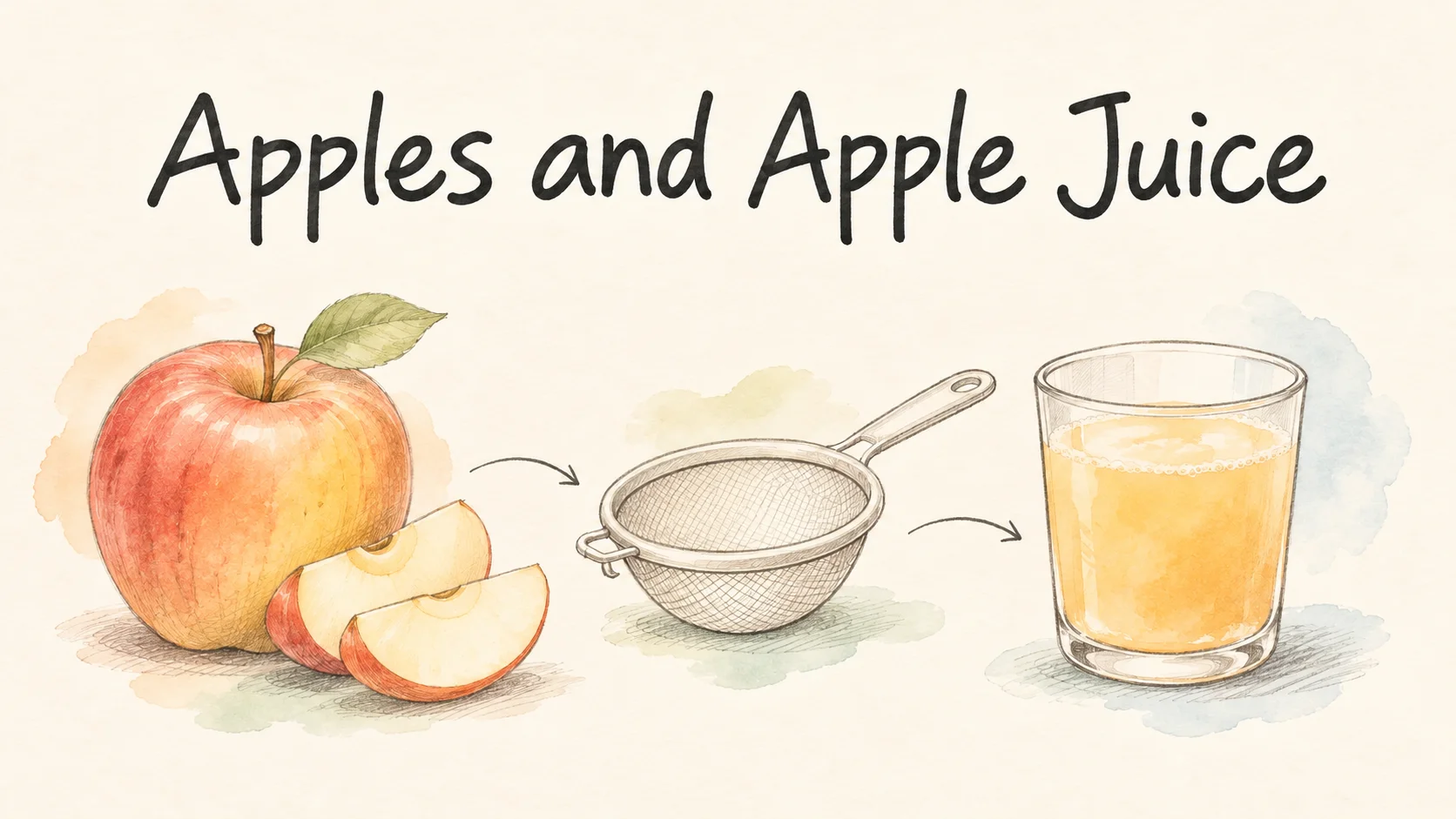
Cut an apple into wedges and you’ll eat it one bite at a time. Blend it into a purée and you’ll probably reach for a spoon. Squeeze the juice out and a glass will do. It’s tempting to think that keeping the pulp, or adding fiber to juice, makes the drink as filling as the original fruit.
Two preparations can have the same amount of fiber and still have a different structure. In one trial, people felt fuller and ate fewer calories at lunch after eating apple pieces than after drinking apple juice with added pectin. In another trial, whole apples took longer to leave the stomach than purée or juice [1][2].
What changes when you cut, blend, or juice an apple?
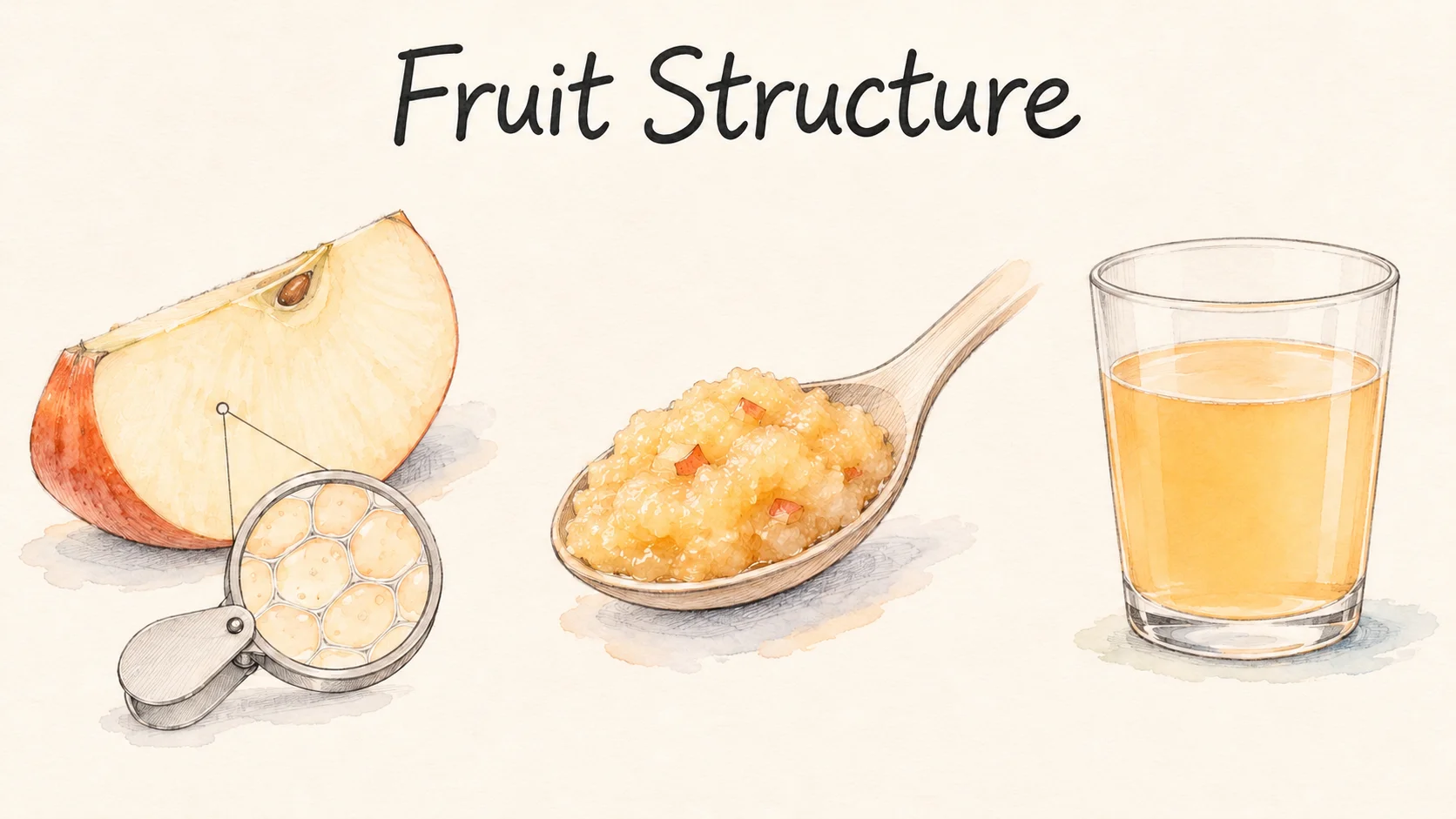
A knife breaks through the flesh at the cut surface. Inside each wedge, many of the original cells remain arranged together. When you chew, the flesh cracks and breaks apart into smaller pieces. A blender can break up the flesh further while keeping it in the drink. With juicing and straining, some of what started on the cutting board ends up in the pulp instead.
Think of the apple's structure as a wall and its fiber as part of the building material. You can keep the rubble after knocking down the wall. You can also add more of the material from somewhere else, as the researchers did with pectin, a soluble fiber. Both affect how much fiber you eat. Neither recreates the wall that was there.
The exact result depends on the recipe. A coarse purée and a thoroughly blended drink can feel different, and juices vary in how much pulp they contain. There’s also the pace of a sip versus a bite. To ask what remains different when people take the same amount of time to eat or drink, the researchers brought out timers.
With the same 4.8 grams of fiber, what happens at lunch?
A Penn State University team brought in 58 adults once a week for five lunches. Four times, the participants started with an apple preparation. They tried peeled apple pieces, applesauce, plain apple juice, and apple juice with added pectin. On another visit they had no starter. Each starter weighed 266 grams and supplied around 125 calories. Participants took ten minutes to finish it. The main course arrived 15 minutes after the starter had been served, and participants could eat as much as they wanted [1].
The apple pieces, applesauce, and juice with added pectin all provided 4.8 grams of fiber. The researchers could ask a more precise question because of that match. Would topping up fiber in the glass bring the lunch result closer to the one after eating an apple?
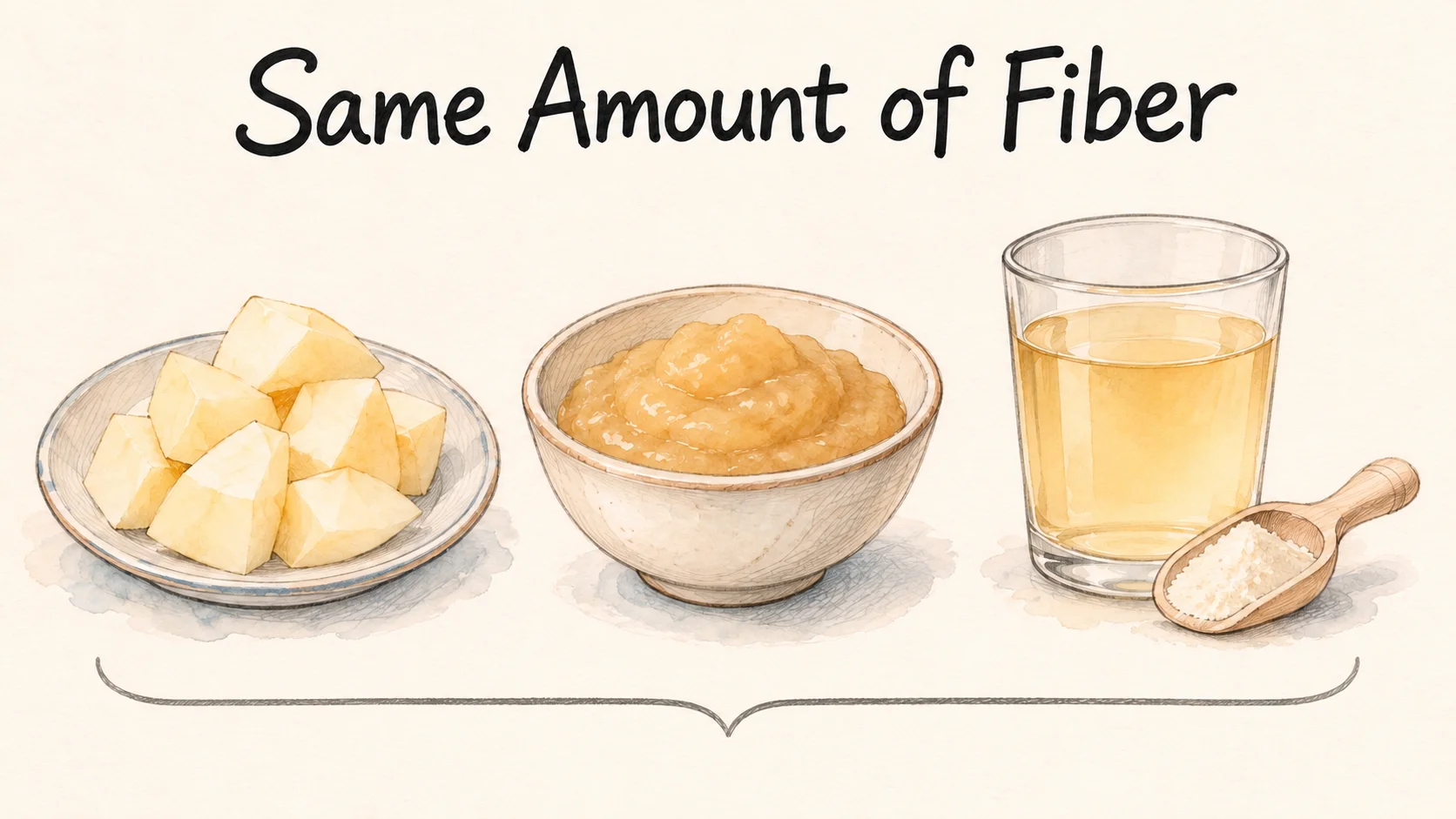
After the apple pieces, people consumed 187 fewer calories than when they went straight to lunch. The paper reported a reduction of about 15%. Compared with the pectin-added juice, the apple pieces came with 152 fewer calories across the meal [1]. The difference remained even though they took the same length of time to consume the first course.
What the calorie comparison includes. Researchers counted the starter and the main course together. The 187-calorie difference already includes the apple. They compared lunches eaten by the same set of people on different days [1].
The foods differed in other ways. At the same weight, the apple pieces occupied more space in the researchers’ volume measurements than applesauce or juice. Chewing, the physical structure of the fruit, and the mix and type of fiber were part of the package. This experiment compared those preparations as served and did not isolate each property separately.
If you sip as slowly as you chew, is there still a difference?
Researchers in Bristol asked a version of that question back in 1977. Ten healthy adults tried apples, purée, and juice, with each serving providing 60 grams of digestible carbohydrate. With the usual way of eating and drinking, the participants could consume the fiber-free juice about 11 times as fast as the apples and about four times as fast as the purée. The same amount of digestible carbohydrate went down at very different speeds [3].
When the researchers matched the time taken to consume the servings, people still rated whole apples most filling, purée in the middle, and juice least filling. The study had only ten people, and these ratings describe how they felt. The researchers did not weigh a later meal in that comparison. The finding gave later researchers another question to ask: what might happen inside the stomach even when the clock is accounted for?
What an MRI shows after each form of apple
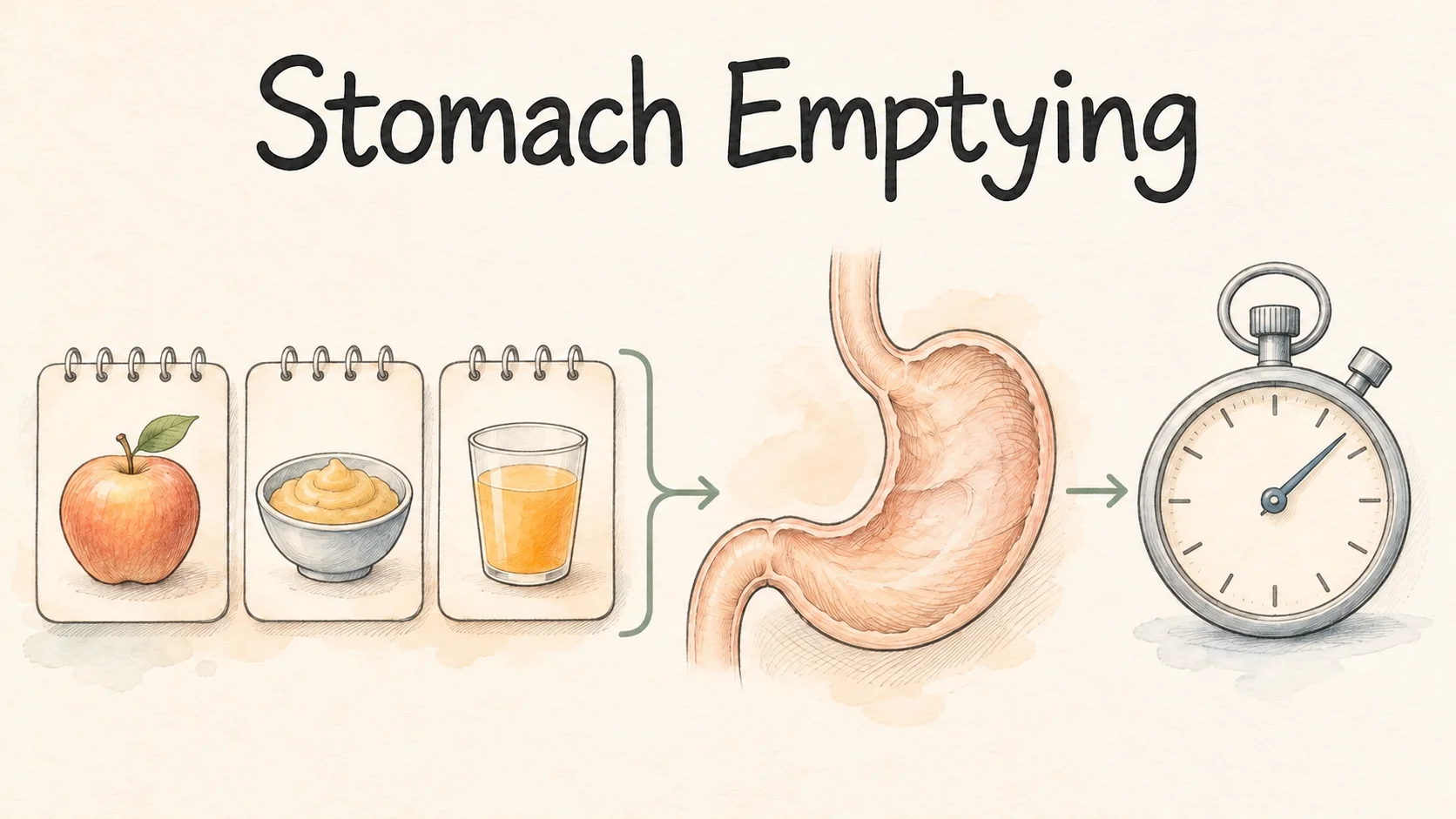
A University of Nottingham team studied 18 healthy adults, about 25 years old on average. They each ate whole apples, purée, or juice on three visits a week apart. The portions provided the same 178 calories, and the researchers used a series of MRI scans to measure how the amount in the stomach changed [2].
On average, the stomach emptied half its contents in about 65 minutes after the whole apples, 41 minutes after the purée, and 38 minutes after the juice. Apples and juice differed by 27 minutes, close to half an hour. The purée and juice times did not differ significantly. People also reported feeling fuller after eating apples than after drinking juice in the hours that followed. This team measured stomach emptying and fullness ratings. They did not serve a second meal to see how much people would eat [2].
Together, the studies describe different parts of the experience: the time it takes to eat, what happens to a later plate, and what can be measured in the stomach. Each has its own recipe, timing, and participants, so the numbers belong to those experiments.
Before you fill the glass, look at the cutting board
If you make a drink at home, count the fruit first and see where the pulp ends up. Cutting one apple into pieces and blending two similar-sized apples changes the amount as well as the form. Taking the same amount of fruit, then blending and drinking all of one portion, gets closer to a comparison of form. The water matters to the volume in the glass, too. If you buy a prepared drink, check whether the other ingredients are water, another fruit, or milk. Adding ingredients changes the snack as well as the texture.
A glass of juice can be just what you want when you’re after a drink with an apple flavor. When you want an afternoon snack, try apple pieces and see when you next feel like eating. One bag of apples can be used both ways. The fiber count helps explain what went into your glass. The bite gives you a clue about what kind of food reached your stomach.
References
[1] Flood-Obbagy JE, Rolls BJ. The effect of fruit in different forms on energy intake and satiety at a meal. Appetite. 2009;52(2):416–422.
[2] Krishnasamy S, et al. Processing Apples to Puree or Juice Speeds Gastric Emptying and Reduces Postprandial Intestinal Volumes and Satiety in Healthy Adults. J Nutr. 2020;150(11):2890–2899.
[3] Haber GB, et al. Depletion and disruption of dietary fibre. Effects on satiety, plasma-glucose, and serum-insulin. Lancet. 1977;2(8040):679–682.