
Why Are Some Ultra-Processed Foods Gone in a Few Bites?
A soft sandwich disappears quickly. Researchers measured how fast people eat and how much energy each gram contains to see how both shape a meal.
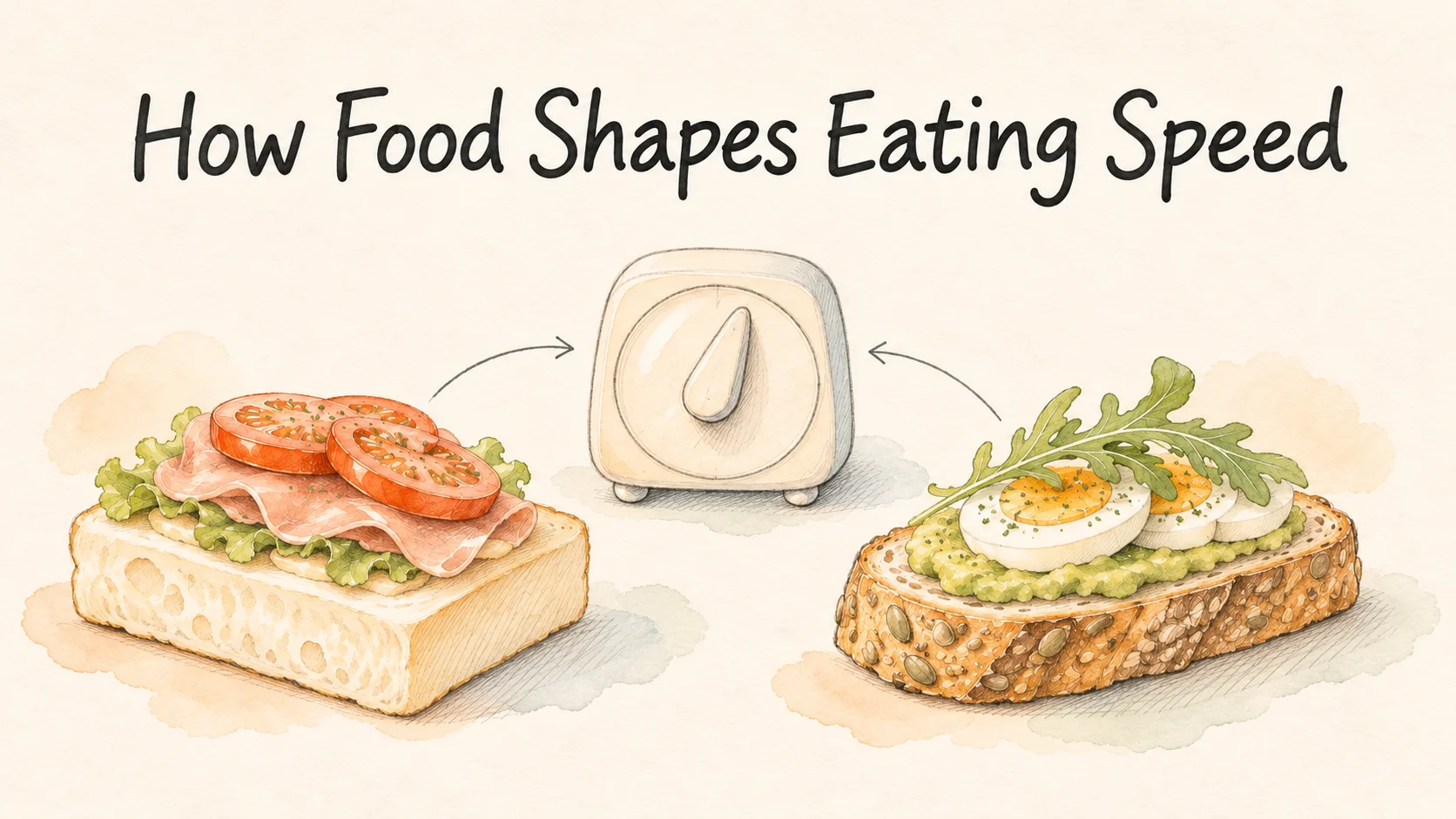
There are fifteen minutes left on your lunch break. You unwrap a sandwich on soft white bread and it’s gone in a few bites. A sandwich on chewy, seeded bread takes longer. You’re still working through a bite when you would normally be reaching for the next one. Both sandwiches can fall into the same category of ultra-processed foods. Why does one go down so much faster?
A food’s texture helps set the pace of a meal. Its recipe determines how much energy comes with each bite. Researchers in the Netherlands compared two menus with the same average energy density as served. When the foods were designed to take longer to eat, the participants consumed fewer calories on average over two weeks [1].
Two numbers describe how much energy goes down in a minute
Think of a crisp rice cracker and a piece of jerky. The cracker breaks on the first bite and quickly crumbles. The jerky still needs work after that first bite. How hard a food feels at first gives you one clue. What happens as it breaks, softens, or sticks together helps determine how much you take in a bite and when you’re ready to swallow.
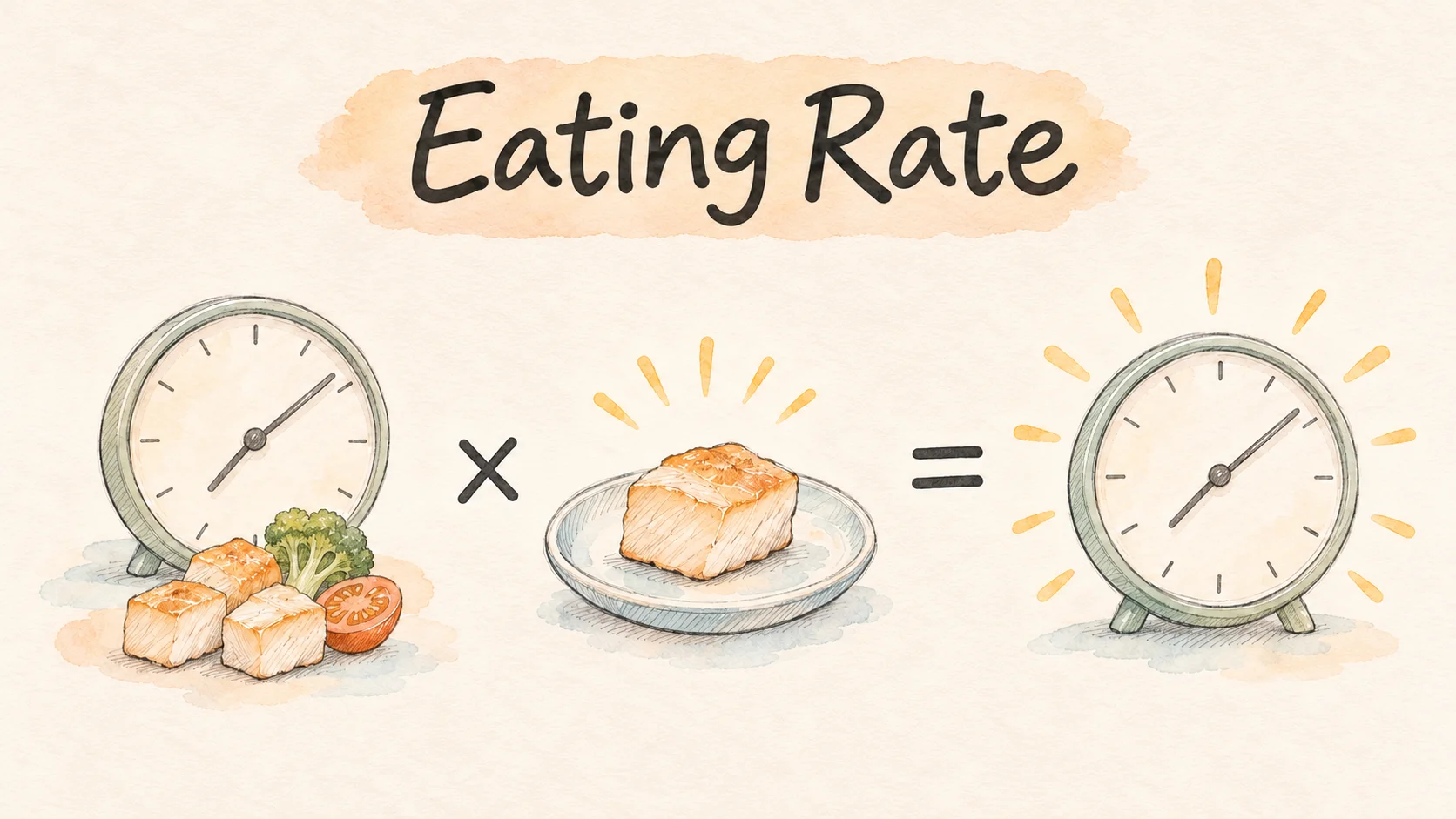
Researchers call the weight of food eaten per minute the eating rate. The second number, energy density, is the number of calories in a gram of food. Multiply the eating rate by the energy density of what you ate, and you get calories consumed per minute. You need a measure of the food’s weight and its energy to work that out.
Consider a simple calculation, separate from the trials. At 30 grams per minute and 2 calories per gram, you eat 60 calories per minute. At 15 grams per minute and the same density, you eat 30. If the slower food contains 4 calories per gram, the result goes back to 60. To calculate the whole meal, you’d also need to know how long you ate and how much of each item you finished.
Two weeks on a slower menu
A team at Wageningen University in the Netherlands brought in 41 adults, whose average age was 27. Each person tried two menus made up mostly of ultra-processed foods, for 14 days per menu with a two-week break in between. The researchers randomized which menu came first. Participants could decide how much to eat from the food provided.
Both menus had the same average energy density as served. The foods on one menu were easier to eat quickly, and the textures on the other encouraged slower eating. On the slower menu, participants ate 369 fewer calories per day on average, roughly one-seventh less than on the faster menu. The difference persisted over two weeks. Body weight did not differ significantly between the two menus [1].
What the study compared. The estimated difference was 369 calories per day, with a 95% confidence interval of 221 to 517. The researchers changed recipes along with the texture. The menus had similar fiber content and differed in the proportions of fat and sugar. They compared two complete menus with these properties [1].
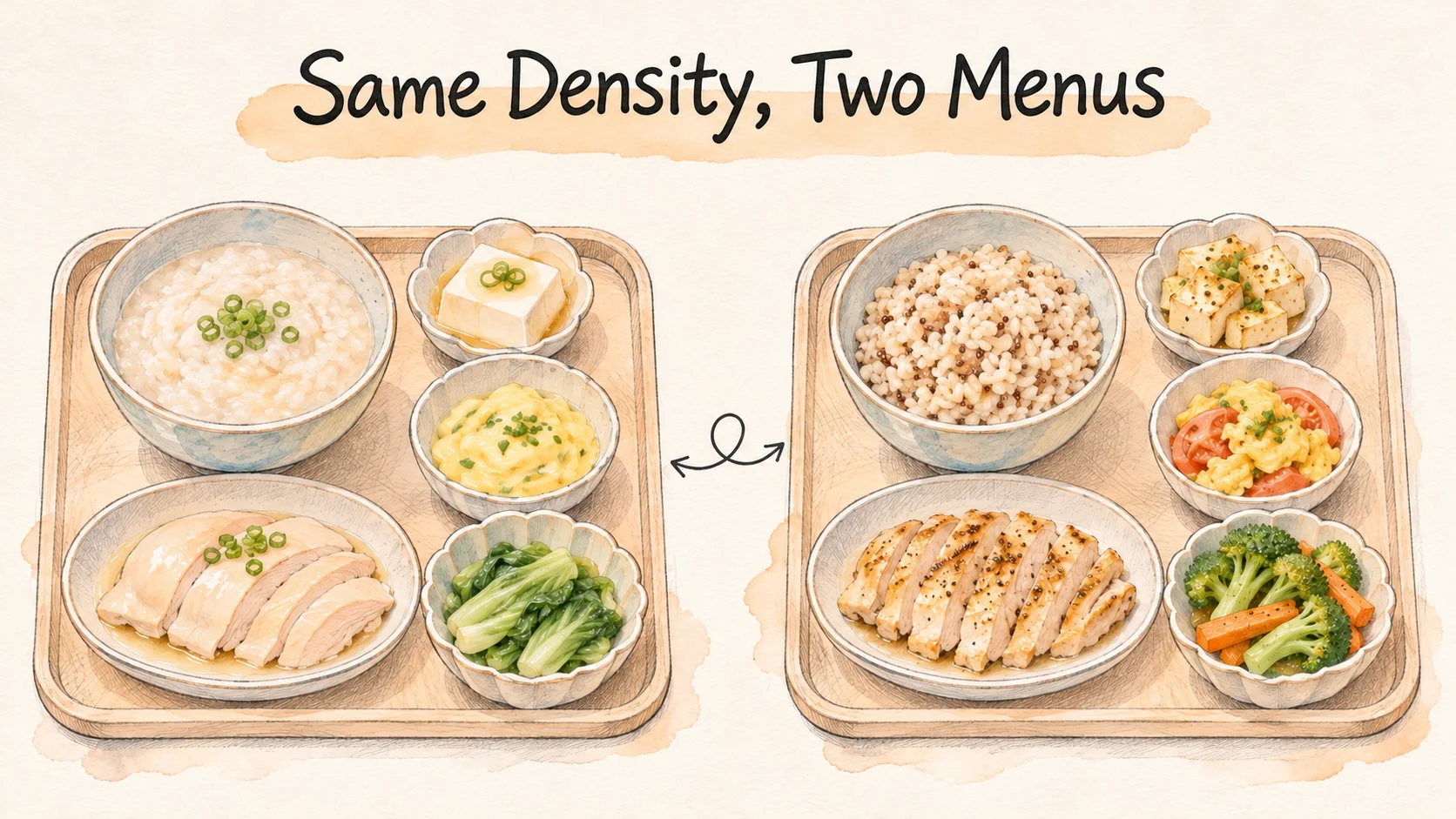
The trays illustrate contrasting textures. The researchers used specifically designed menus.
Having each participant eat both menus helps account for differences in appetite between people. A person who usually eats larger meals contributed to both conditions. There’s still a distinction between the food offered and the food eaten. Someone can finish the bread and leave some filling on one menu, then do the reverse on the other. Matching what’s served does not ensure that what comes off the plate is matched too.
Changing the bread and the filling
Another Wageningen study served 69 adults, about 25 years old on average, five sandwich lunches each. The researchers varied how easy the sandwiches were to eat quickly and how much energy they contained per gram. The low-density versions supplied 1.9 calories per gram. The high-density versions supplied 3.8 [2].
A 30-gram bite would contain 57 calories at the lower density and 114 at the higher one. Chewing both bites for exactly the same amount of time leaves that difference intact. When participants could eat until they wanted to stop, they ate an average of 570 calories in the slower, lower-density condition and 1,143 calories in the faster, higher-density one. Those are the two extremes, with both factors changed at the same time [2]. The difference is about twofold across the lunches as a whole.
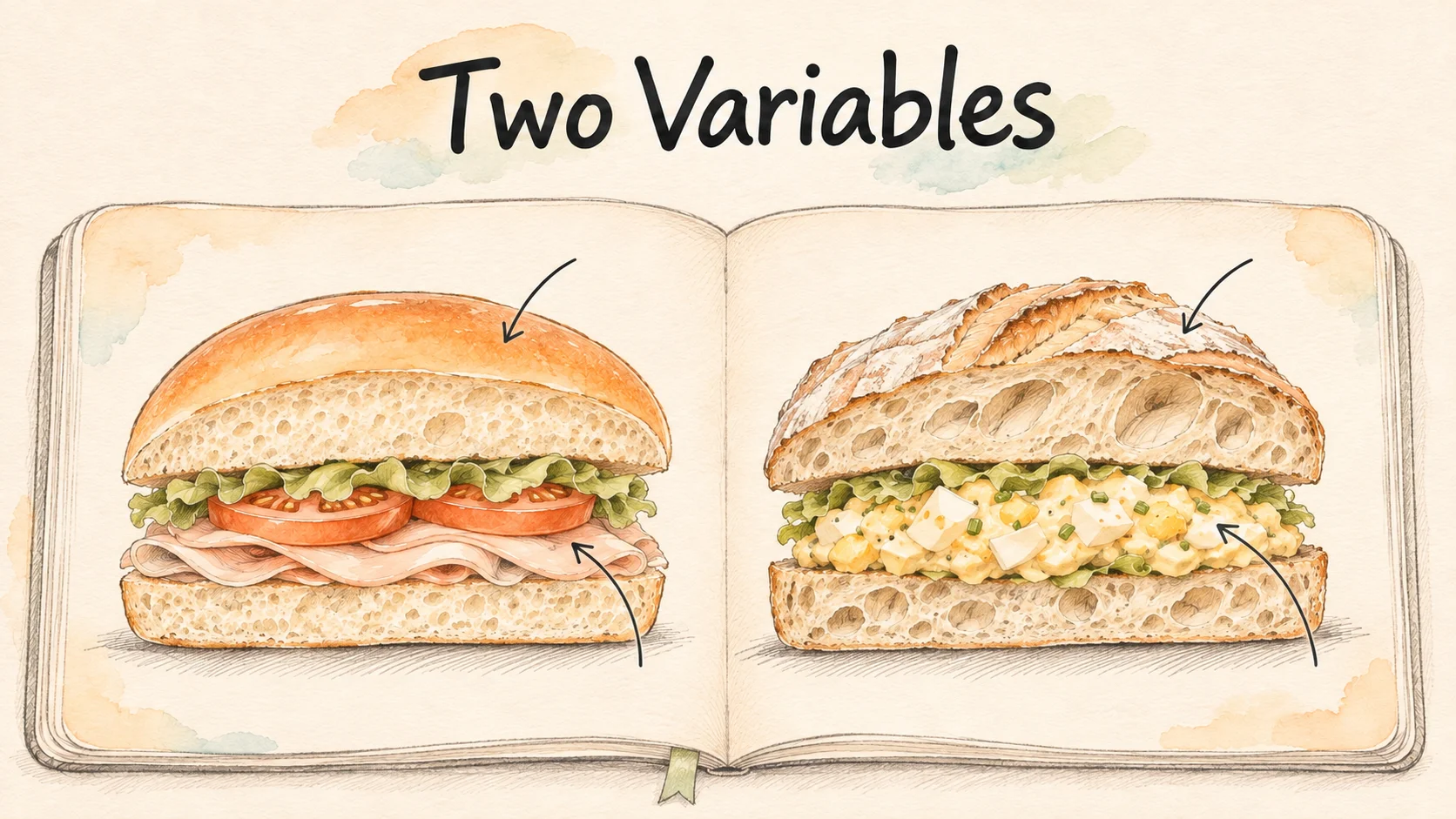
At the store, a description like “seeded” gives you a clue about the bread. A sandwich still has a filling, and a thick layer of dressing changes what comes in each bite. If you want to compare similar products, check how much each package weighs and how many calories it contains. Putting both on the same weight basis makes a small sandwich and a large one easier to compare.
Does this happen only with ultra-processed food?
A Singapore team served 50 adults in a healthy weight range four lunches. They crossed two categories of processing, minimally processed and ultra-processed, with softer and firmer textures. In both categories people ate the firmer lunches more slowly. Averaged across the two firmer meals, people ate 21% less by weight and took in 26% fewer calories than with the softer lunches [3].
The trial compared four particular combinations of food, with different recipes and a single lunch on each test day. It gives an example of texture shifting eating rate in both categories. A soft piece of tofu can go down quickly, and a chewy piece of bread can take some work. Processing categories describe how foods were made. Eating rate describes what happens when people sit down to eat them.
Take a closer look at one familiar lunch
Next time you buy a bento, try keeping the rice, main dish, and portions familiar. Pick one side you normally eat quickly and swap it for vegetables cut into pieces you enjoy chewing. Then notice a few things as you eat at a comfortable pace.
- Look at bite size. How much do you usually pick up in one go? Do you split the vegetables into smaller bites?
- Notice the pauses. When you reach for another bite, have you finished the previous one? Which part of the meal moves fastest?
- Look back at what you ate. The swap can also change the energy density. Treat the observation as a way to notice your eating pace and which foods contribute to it. The study's average difference cannot be used to calculate your lunch.
A short lunch break can make the whole meal feel fast. The useful detail is which bites take the least time and which deliver the most energy. If you have a chronic condition or an eating disorder, are pregnant, or take medication, discuss dietary changes with a physician or dietitian.
References
[1] Forde CG, et al. Eating rate has sustained effects on energy intake from ultraprocessed diets. Am J Clin Nutr. Published online November 26, 2025.
[2] Lasschuijt MP, et al. The Effect of Energy Density and Eating Rate on Ad Libitum Energy Intake in Healthy Adults. J Nutr. 2025;155:2602–2610.
[3] Teo PS, et al. Texture-based differences in eating rate influence energy intake for minimally processed and ultra-processed meals. Am J Clin Nutr. 2022;116(1):244–254.