
What Happens When a Chocolate Craving Comes and Goes?
Short experiments show how thoughts about chocolate can change and why that doesn't tell us how much people eat.
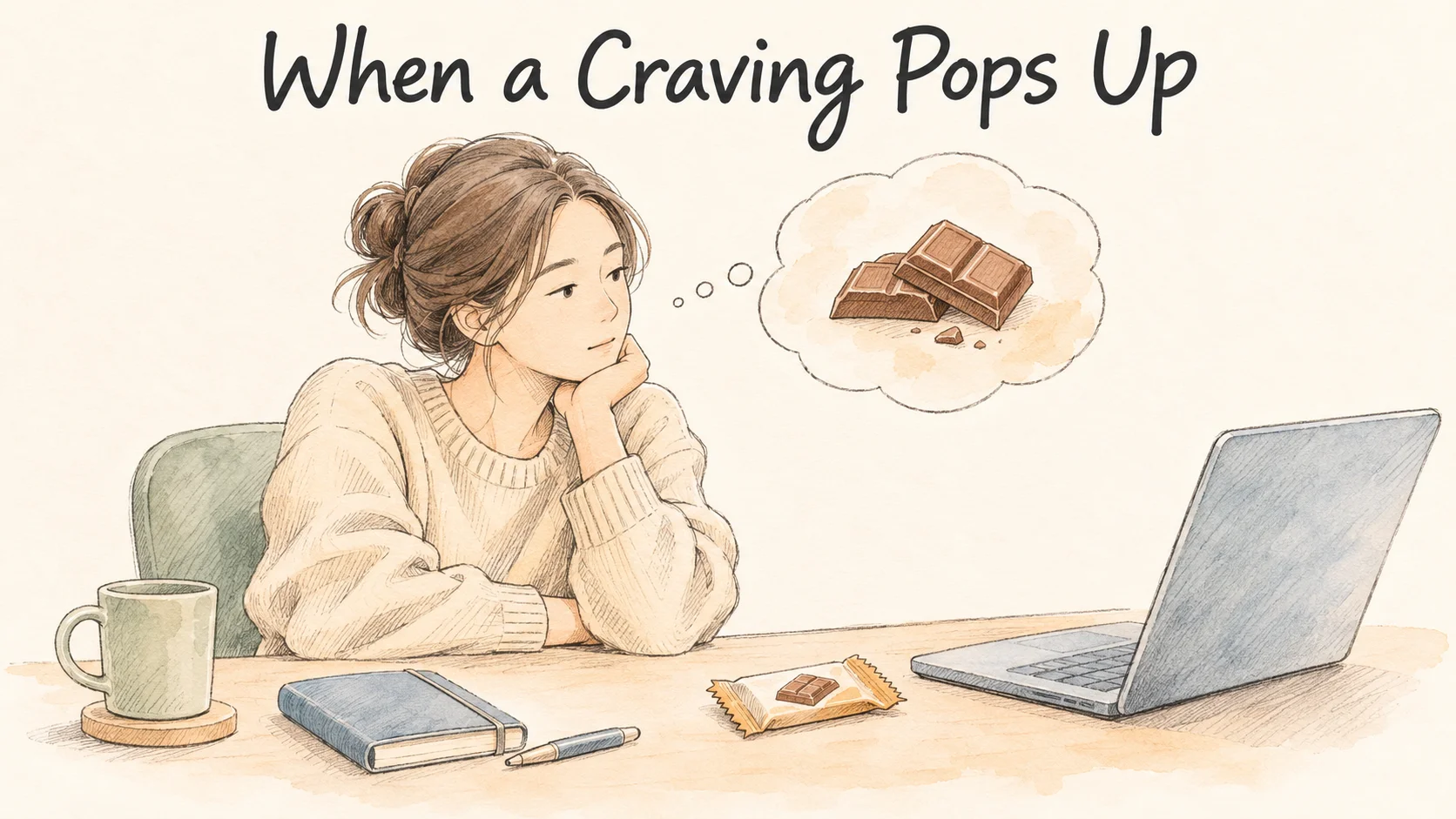
You get back from a meeting and see a square of chocolate someone left on your desk. A second ago you were thinking about an email. Now you can almost taste the chocolate. That strong desire for one particular food can fade. In chocolate experiments, noticing the thought as a thought sometimes reduced how strong the craving felt. In another experiment, ratings fell after a few minutes whether people used that technique, imagined something else, or let their minds wander [1][2].
If you haven't eaten lunch and are hungry, having something to eat makes sense. The question here is what can happen when a specific food keeps coming to mind before you've even decided whether you want it.
Seeing the wrapper and imagining the taste
A wrapper on the desk, the smell from a bakery, or a friend saying they brought dessert can bring a food to mind. In one account of cravings, the first thought can pop up on its own. A person may then add detail by imagining the smell, the feel of the wrapper, and the taste of the first bite. As the image gets more vivid, the desire can get stronger [1].
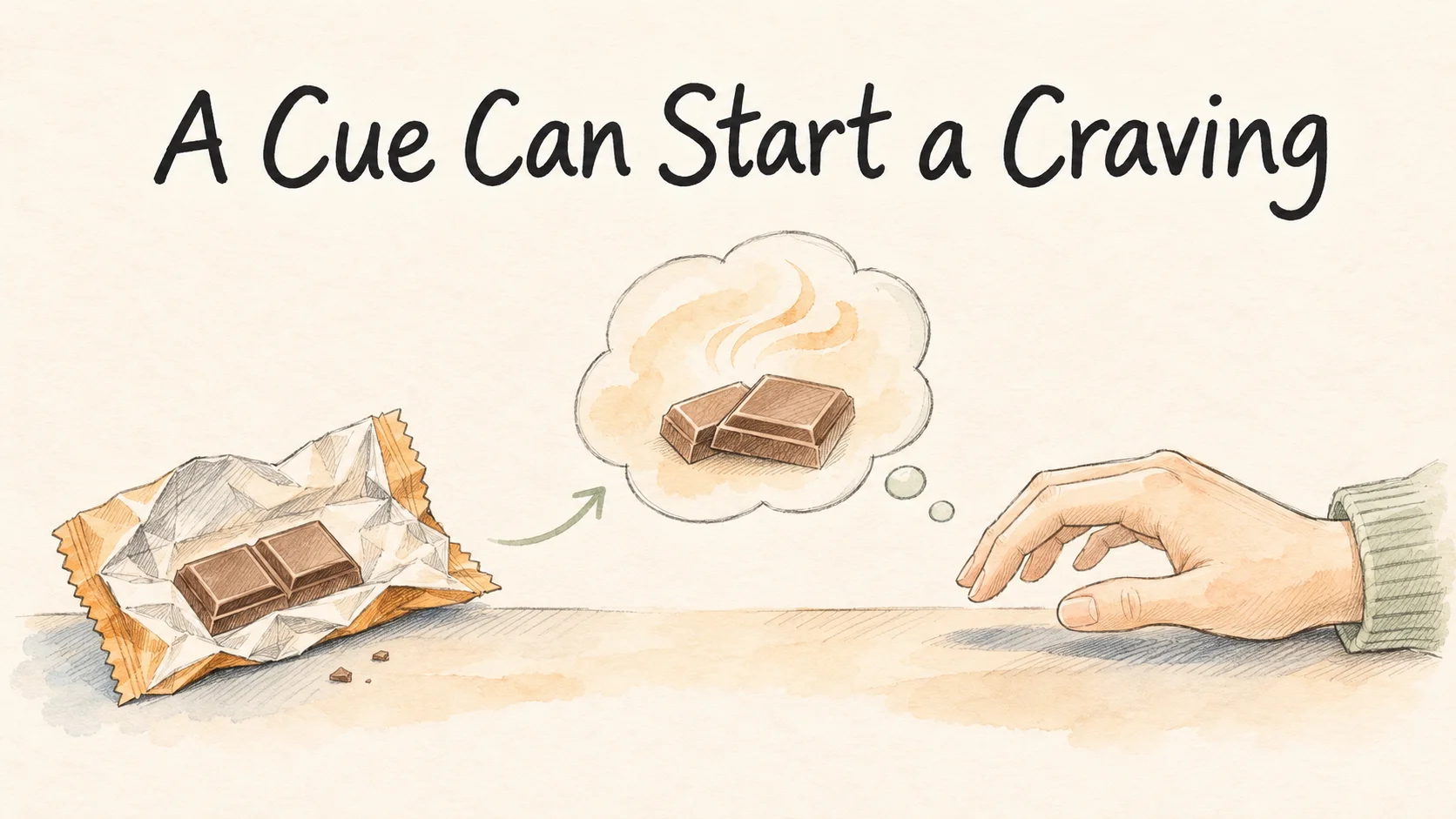
Sometimes you'll look at a piece of chocolate and return to your email. Other times the image comes back through the next few messages. Researchers can ask how often a thought intrudes, how vivid it is, or how strongly you want to eat. They can also measure how much you actually eat. Each answer describes a different part of that experience.
A thought that keeps returning during an afternoon and a desire you notice on many days are different observations. One takes several checks over a short interval. The other needs information from several days. In these lab experiments, prompting a chocolate craving gave the researchers a starting point for measuring what happened within the session.
What does it mean to notice a thought?
A research team ran two experiments in 2017. One involved 94 young women. The other involved 97 people who often craved chocolate and wanted to eat less of it. In each experiment, participants were randomly assigned to three approaches. One encouraged people to observe thoughts about chocolate as thoughts. Another gave them instructions for imagining something else. A third allowed their minds to wander [1].
The first approach is sometimes called cognitive defusion. In an everyday example, you might notice, “I'm having the thought that I'd like chocolate.” You can notice it once and see where your attention goes next. The study compared ratings before and after the exercise. It asked how intrusive the thought felt, how vividly the person pictured chocolate, and how strong the desire was. The team recorded chocolate intake separately [1].
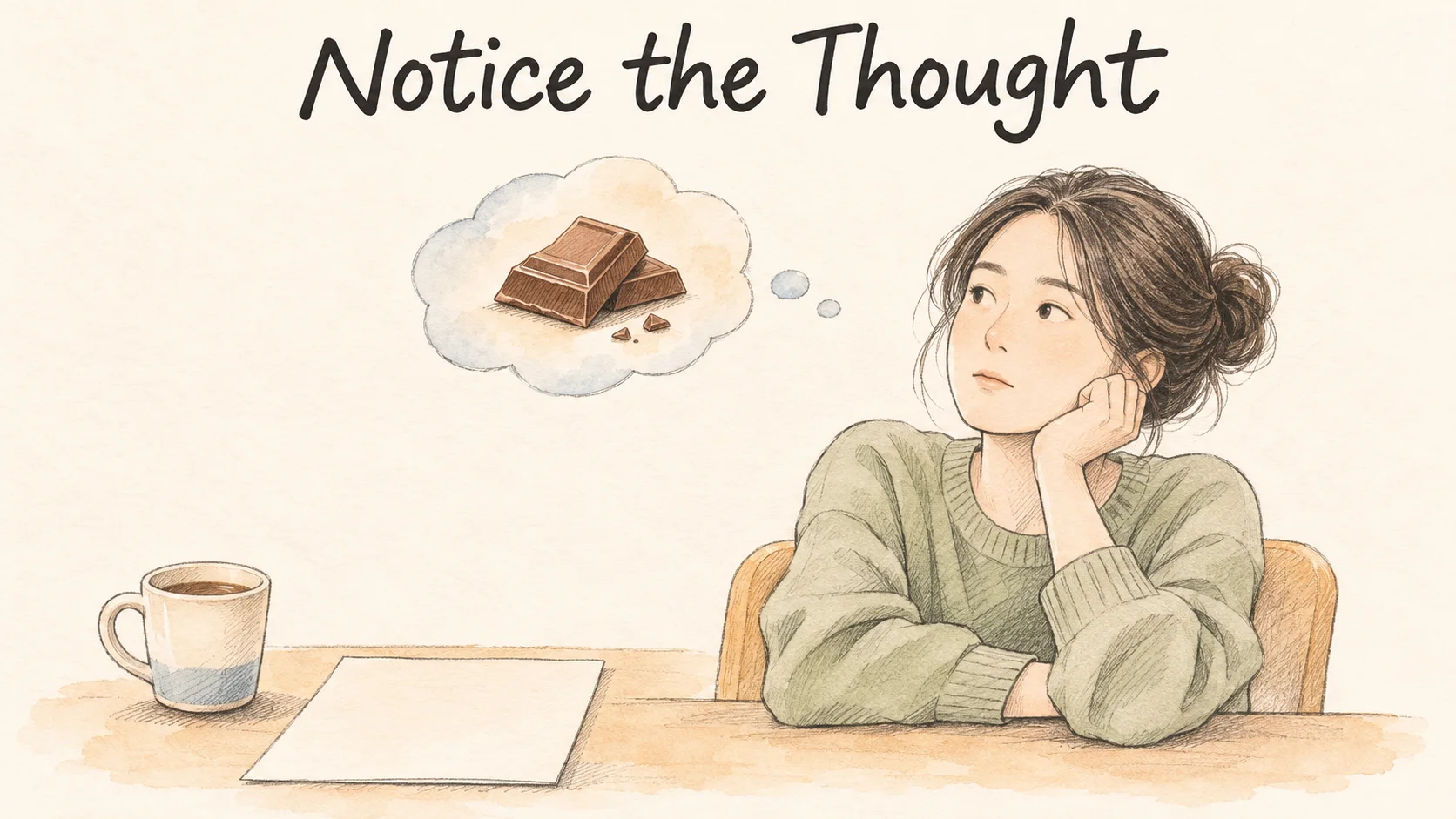
In both experiments, the group that observed their thoughts reported lower craving intensity and less vivid images after the exercise. Imagining something else reduced craving in the group recruited for frequent cravings, with no clear effect in the first sample. Neither experiment detected a difference between groups in how much chocolate they ate [1].
For an everyday illustration, imagine that you mark a craving as an eight out of ten when you see the wrapper. Later you give it a five. The three-point difference describes a change in how it feels. It can't be translated into a certain number of pieces of chocolate. If you want to know whether you chose to eat it, that's something to observe separately.
A separate trial tested two weeks of practice. The researchers compared a distraction exercise with combinations of mindfulness skills. In the group trained to recognize cravings as thoughts, participants reported less intense cravings after encountering chocolate at the end of the training than people who had practiced distraction [3]. Rehearsing a response over two weeks is a different comparison from giving people a single recording. The studies can each describe the setting they tested.
Would a different four-minute activity do the same?
In 2018, a team brought on a chocolate craving in 101 people and then had them listen to a four-minute recording. One recording encouraged the listener to see thoughts and feelings as passing events. Another used guided imagery, and the third let thoughts wander. Participants rated their desire for chocolate before and after the craving task and after listening [2].
Craving ratings were lower after the recording in all three groups and had returned to around their starting levels. The researchers did not detect a clear difference among the recordings [2]. Everyone passed the same amount of time and moved on from the original task. The experiment cannot show what would have happened if people had stayed with the original task or simply waited without a recording. Four minutes was the chosen study interval. It does not tell you how long a particular craving will last.
Both studies looked at responses to chocolate in specific conditions. The comparison tells you more about the moment when the urge was measured than about how much anyone would eat over a week. A different food, a different setting, or the same chocolate after missing lunch could lead to a different experience.
For example, imagine two afternoons. On one, you eat lunch on time and spot some chocolate when a colleague leaves it out. On the other, lunch is late and you happen to walk past a bakery. Those are different situations, with different ways for food to come to mind. An observation on the first afternoon does not establish how you should respond to the second.
Notice the context, then decide what you'd like
Back at your desk, you could make a single observation. “I saw the wrapper and started thinking about the first bite.” If you want to return to the next email, do so and see how the thought feels when you look up again. The desire might be quieter or it might still be there. You can choose to enjoy the chocolate at either point. If the thought is a reminder that lunch got pushed back, you can make time for a meal.
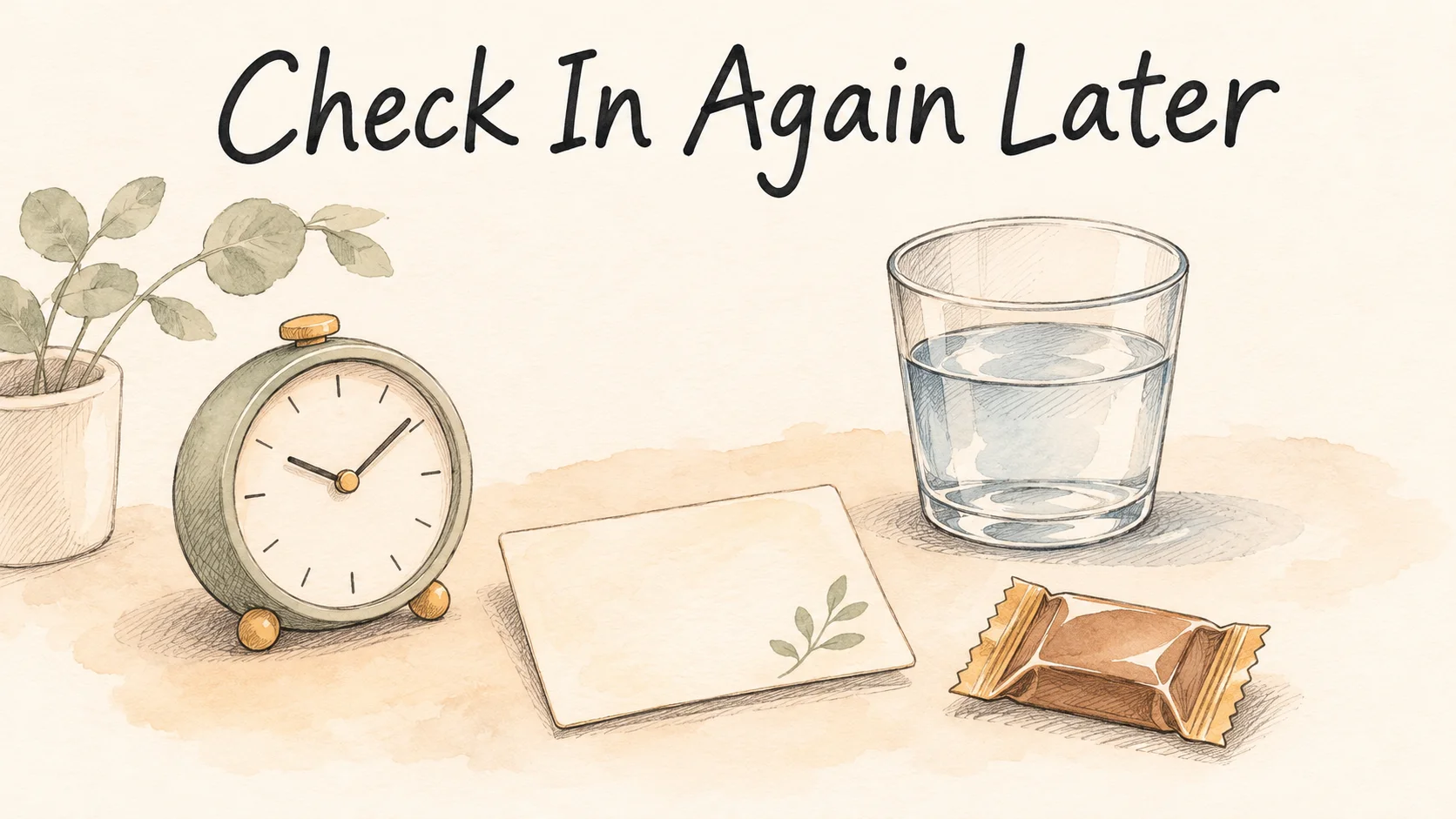
You can also choose to sit down and taste the chocolate, paying attention to whether you still want it after the first bite. That's a way of noticing what you enjoy, and it leaves the next choice open.
If it happens often, see whether one situation keeps coming back. The food might be next to your keyboard, you might be on a familiar coffee break, or your last meal might have been early. Notice the first cue and then the next thing you do. That gives you a better description of that moment than treating every thought about chocolate as an instruction to eat it.
Sources
[1] Schumacher S, Kemps E, Tiggemann M. Acceptance- and imagery-based strategies can reduce chocolate cravings: A test of the elaborated-intrusion theory of desire. Appetite. 2017;113:63–70.
[2] Tapper K, Turner A. The effect of a mindfulness-based decentering strategy on chocolate craving. Appetite. 2018;130:157–162.
[3] Lacaille J, et al. The effects of three mindfulness skills on chocolate cravings. Appetite. 2014;76:101–112.