
Oats Thicken with Water. Does That Still Matter in the Stomach?
Shortening the chains in four grams of oat beta-glucan changes how the same breakfast flows. A breath test and a pizza lunch show what that difference can change.
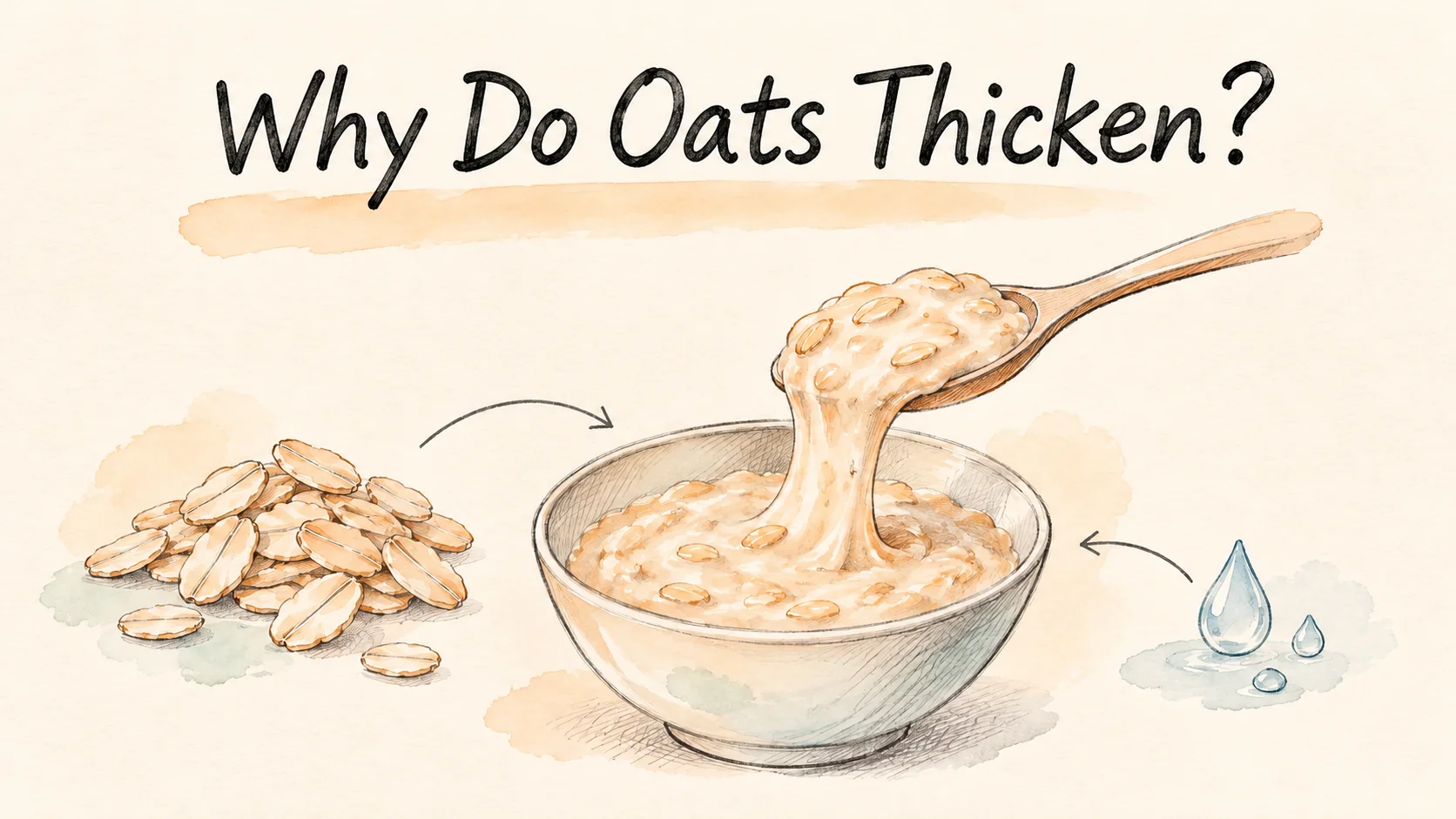
Pour hot water over rolled oats and stir. A spoonful that would have run straight off the spoon a minute ago now takes its time. One ingredient that makes the mixture harder to pour is beta-glucan, a soluble fiber in oats. In a breakfast trial, researchers put four grams of the fiber into two versions of the same porridge. The version made with longer fiber chains was estimated to take longer to leave the stomach [1].
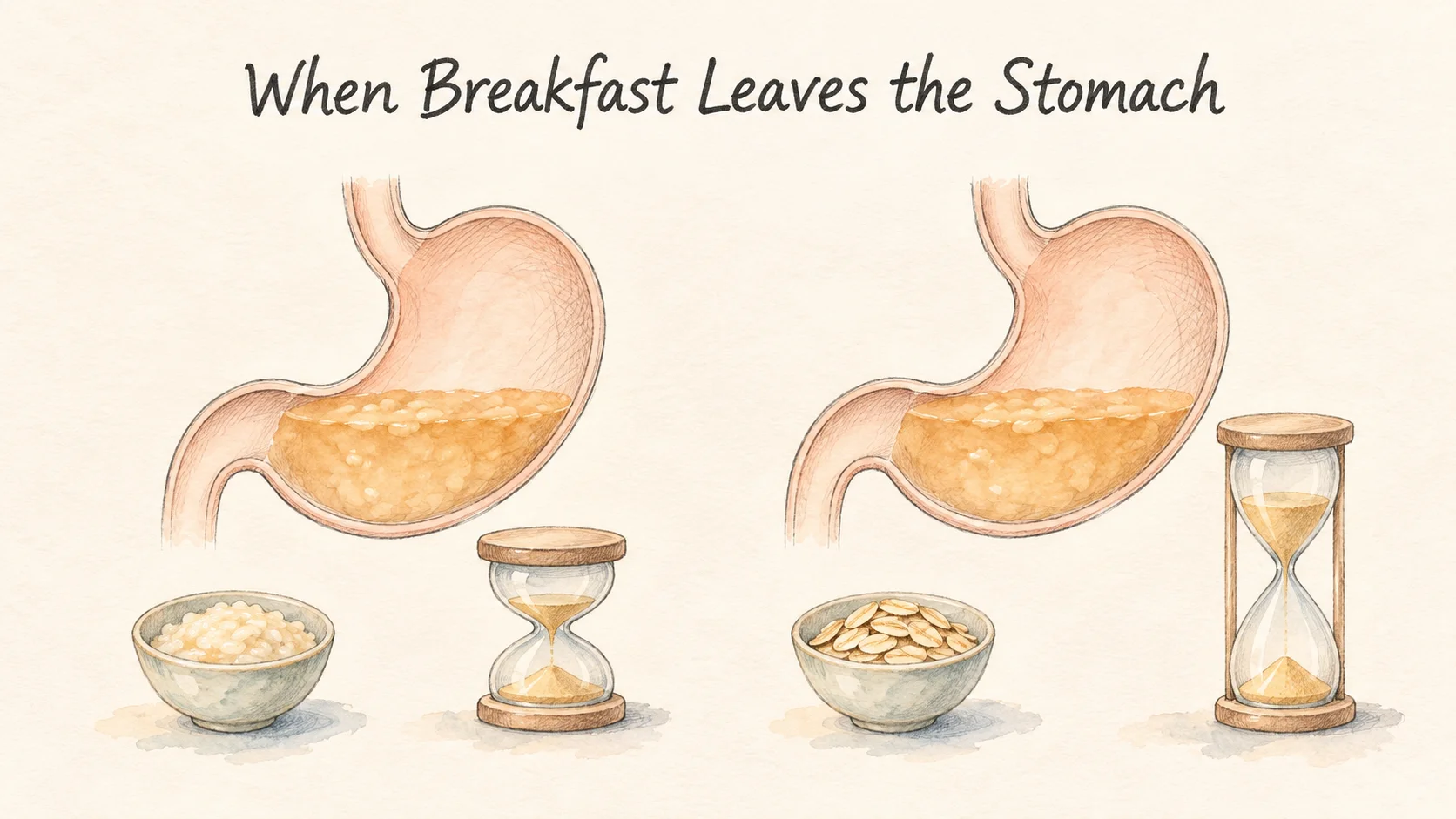
How much longer? The estimated time for half the porridge to leave was 107 minutes with the shortened chains and 285 minutes with the longer ones. The researchers also asked people how hungry they felt and weighed the pizza they ate for lunch. Those measurements would tell a different part of the story [1].
How can two servings contain the same fiber and flow differently?
Oat beta-glucan is a series of glucose molecules joined into chains. Picture threads in two glasses of water. The longer threads can get in each other's way when you stir. Short pieces have fewer opportunities to do that, even when the amount on the scale is the same. Researchers call the resistance a liquid offers as it flows viscosity. A sticky ribbon coming off a spoon offers a kitchen example of what that word means [1, 2].
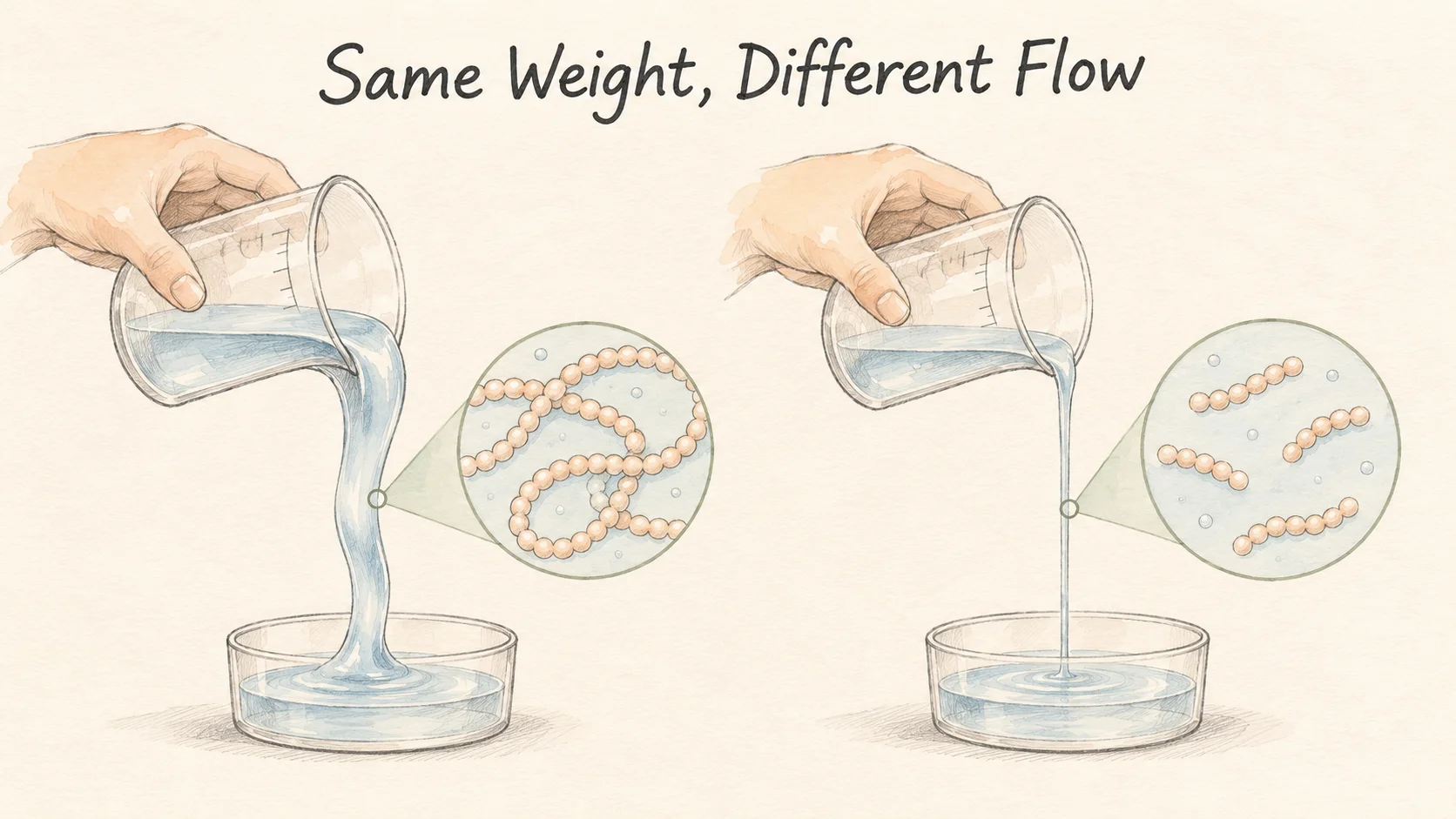
How thick a bowl of oatmeal gets also depends on how much water you add and how you cook it. The cooked starch changes the texture, too. To get at the fiber itself, the researchers kept the recipe similar and used an enzyme to cut the chains in one batch. Before measuring the mixtures' viscosity, they used enzymes in the lab to break down some of the other components that can thicken a mixture. That gave them a way to compare the cereals under conditions closer to those after digestion [1].
In the same units, the researchers measured about 5,060 for the original oat cereal and 135 once the chains were shortened, a roughly 37-fold gap. The two breakfasts were both 378 calories and contained the same quantity of the fiber. The readings compared the mixtures on the bench. Next came the question of how large a difference that would make in people [1].
A stomach keeps moving the mixture around. It adds digestive fluids, and portions of the meal move on into the small intestine. Showing that two porridges flow differently on a lab bench left another question. Would the difference be detectable once the two breakfasts had been eaten?
What can a breath test tell us about a bowl of porridge?
The researchers brought in 28 adults aged 18 to 60 without diabetes. Each person ate four breakfasts on separate visits in random order. Each breakfast included white bread, butter, jam, and milk. The hot cereal was either rice cereal or one of three oat recipes. Two bowls used the same quantity of oat bran and supplied four grams of beta-glucan. An enzyme shortened the fiber chains in one of those bowls [1].
The team mixed a carbon-13 tracer into the hot cereal. As it reached the small intestine and was absorbed and metabolized, some of the labeled carbon appeared in breath as carbon dioxide. Researchers collected breath samples over three hours. They fitted those data to a curve to estimate how long half the cereal took to leave the stomach. The model can estimate times beyond the collection window. The way the tracer was absorbed also affects the curve, so the numbers are best read as comparisons of the cereals under these conditions [1].
| Hot cereal in the trial | Estimated time for half to leave |
|---|---|
| Rice cereal control | 105 minutes |
| 4 g beta-glucan, shortened chains | 107 minutes |
| 4 g beta-glucan, longer chains | 285 minutes |
The table shows three of the four trial meals and uses the geometric mean for each. In clock time, the rice cereal estimate was one hour and 45 minutes. The more viscous oat breakfast came in at four hours and 45 minutes. Compare just the two oat versions, and the difference is also about three hours. Holding the grams of beta-glucan steady makes that comparison especially helpful for understanding what the chain length can change. The timing depends on the recipes and the breath-test model used in this study [1].
The 95% confidence interval for the 285-minute estimate ran from 184 to 442 minutes. That range expresses uncertainty in the study estimate. The table is more useful for comparing the recipes than for predicting when any one person's breakfast will leave their stomach [1].
The fourth version used two grams of beta-glucan. Its estimated half-emptying time was 130 minutes, which wasn’t significantly different from the rice cereal. That comparison changes the amount of fiber. The comparison between the two four-gram versions holds that amount steady and changes the chain length. Combining both comparisons into a claim about a certain number of grams would miss the point of preparing both versions [1].
Would a slower breakfast mean less pizza at lunch?
Throughout the morning, the researchers checked how hungry or full people said they felt. Three hours after breakfast, they served pizza and let each person decide how much to eat. The plates were weighed before and afterward. On the rice cereal day, participants ate an average of 887 calories of pizza. On the more viscous oatmeal day, the average was 834 calories. The difference of 53 calories in the group averages wasn't statistically significant. The appetite ratings for the oat breakfasts also didn't differ significantly from the rice cereal control [1].
One result came from a breath test, another from a person's own rating, and another from what was left on a plate. Each answered a different question. You can learn how slowly the cereal left the stomach from the first, and still need the other two to find out what happened at lunch.
What if you drink the fiber before eating instead?
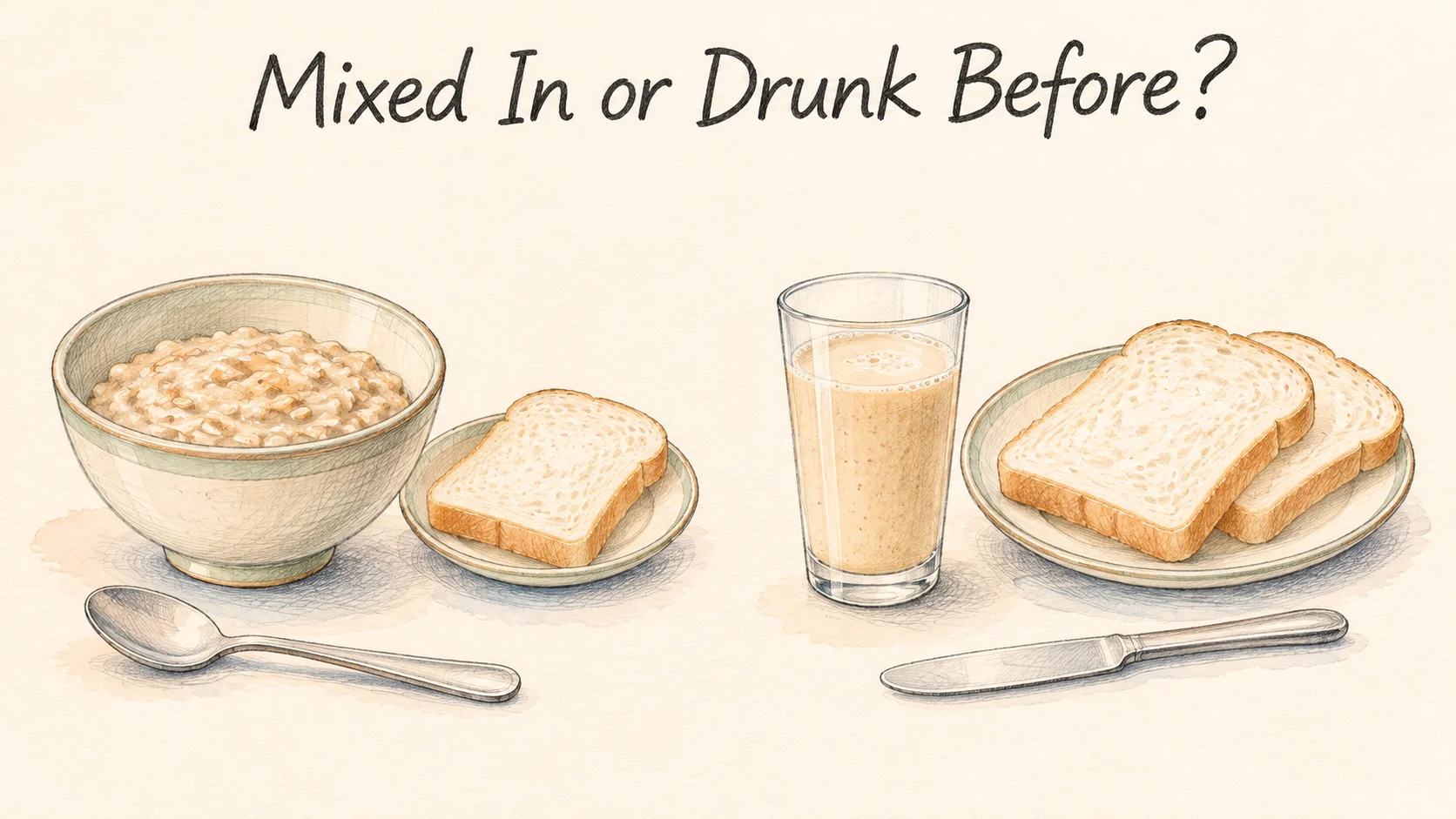
Sixteen healthy adults in another study drank 200 milliliters of water on one visit and tried drinks containing four grams of oat beta-glucan with different chain lengths on other visits. Two or three minutes after the drink, they ate about 113 grams of white bread. The team picked two glucose measurements in advance. One captured how far glucose rose at its highest point. The other measured the area above the starting level over two hours. Neither differed significantly from the water comparison. Some differences in the first 45 minutes emerged in later exploratory analyses, which the study authors said need confirmation [2].
Stirring something into the porridge and drinking it separately bring the fiber into contact with the rest of the meal in different ways. The trials also used different foods and outcomes. If all you know is “four grams,” you still have to look up whether the fiber was in the food, what else was served, and what the study measured [1, 2].
At home, you can see what water does to the texture by cooking equal amounts of oats for the same time in two small bowls with different amounts of water. Lift a spoonful of each and see how it falls. If an article says a thick bowl of oats leaves you eating less later, look for a separate measurement of the food served at the next meal.
References
[1] Wolever TMS, et al. Increasing oat β-glucan viscosity in a breakfast meal: a randomized crossover trial. Am J Clin Nutr. 2020;111(2):319–328.
[2] Wolever TMS, et al. Effect of varying molecular weight of oat β-glucan taken just before eating on postprandial glycemic response. Nutrients. 2020;12(8):2275.