
If Breakfast Is Later on the Weekend, Does Every Meal Move?
Paired weekday and weekend reports show later first eating, breakfast, and lunch, with little detected difference at dinner. Follow the timing on two daily timelines.
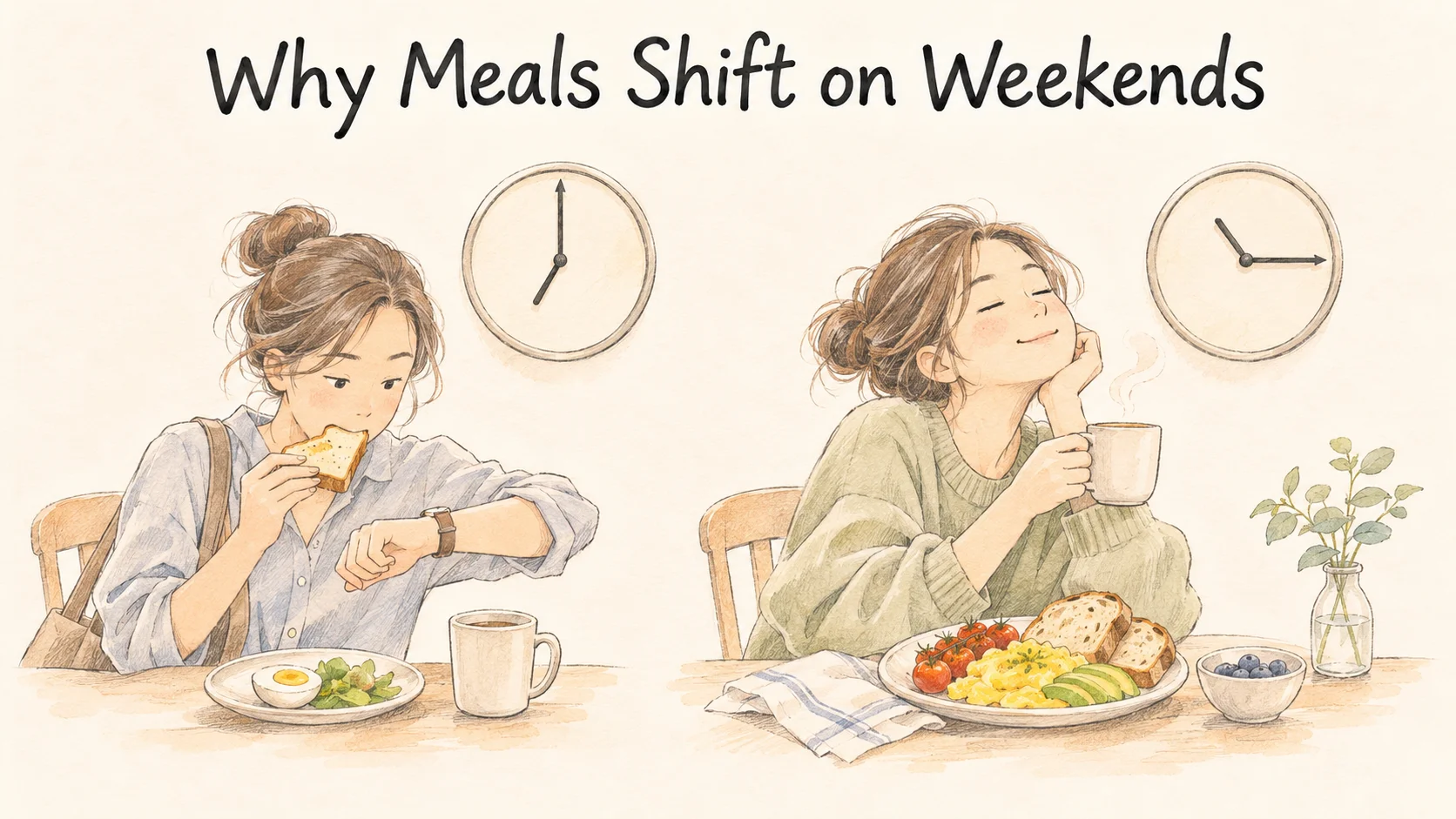
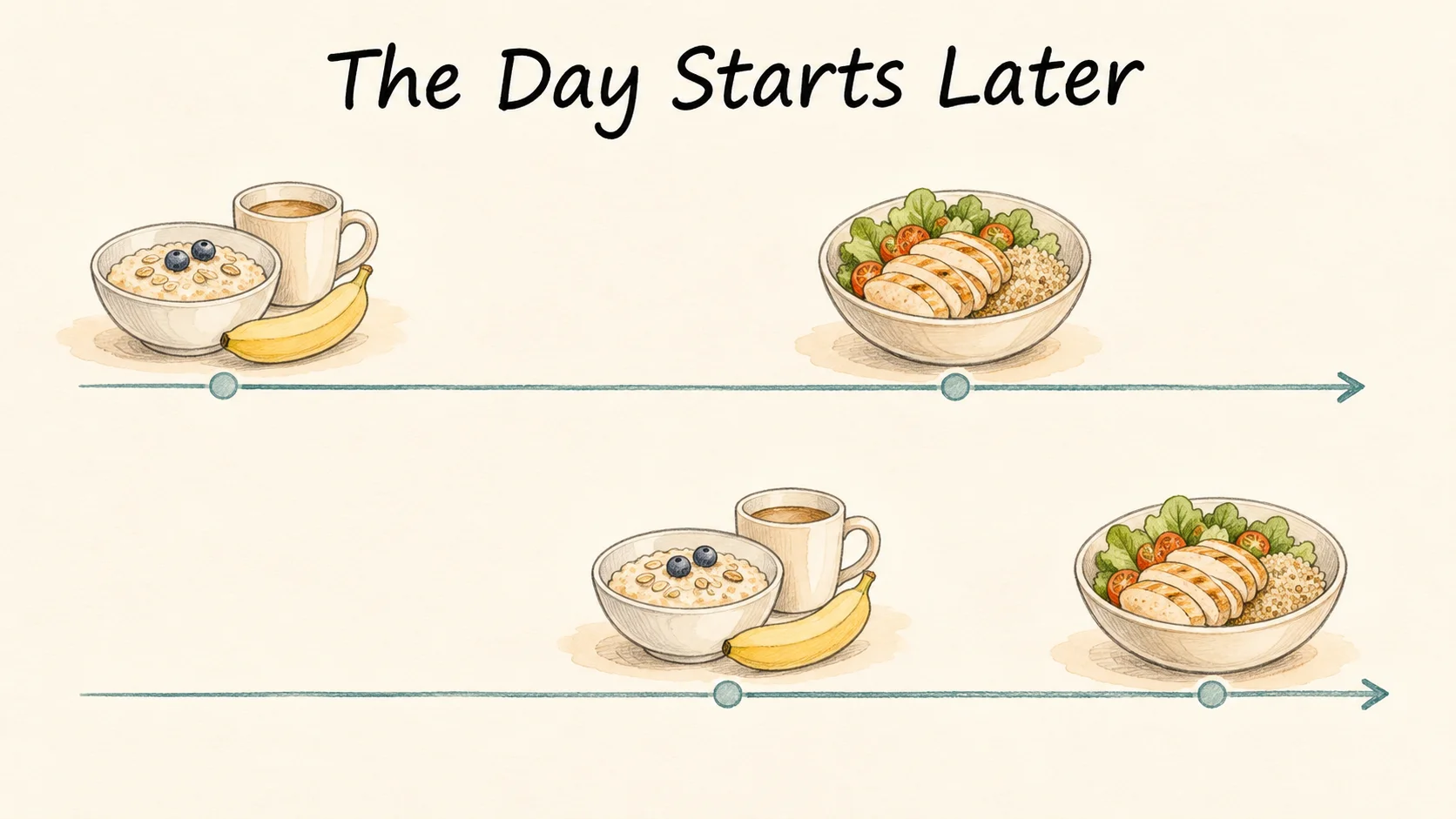
At eight on a workday, you eat toast before you leave. Saturday has no commute, and breakfast moves half an hour later. You meet a friend for a later lunch, then sit down with family for dinner at the usual time. A weekend can shift the first bite, breakfast, and lunch while dinner stays around the usual time. A US dietary survey found that pattern when researchers compared two days reported by the same person. [1]
That also changes how to read the phrase “I eat later on weekends.” If the day starts later and ends around the same time, the interval between the first and last eating events is shorter. How much you ate and drank that day is another question.
The morning moves. What happens later in the day?
A day off can have several different schedules running through it. Without a morning meeting, you can finish what you are doing before eating breakfast. Lunch depends on when everybody can get there. At dinner someone may be waiting for you at home around the same time as on Tuesday. These are everyday examples of how one meal can move while another stays close to its usual time.
Kant and Graubard used US National Health and Nutrition Examination Survey data collected between 2015 and March 2020, before the pandemic. The sample included 3,564 men and 3,823 women aged 20 or older. Each participant recalled what they ate and drank during a weekday and during a weekend day. The researchers treated Monday through Thursday as weekdays and Friday through Sunday as the weekend, then compared the two days within each person. [1]
In both groups, the reported first eating or drinking event, breakfast, and lunch were later on weekends on average. The researchers did not detect a statistically clear difference in the timing of dinner or the last eating event. Those are separate measures. Your first drink of coffee can come before a meal you call breakfast. If you have a snack after dinner, dinner and your last eating event land in different places. The study's main analysis excluded occasions when people reported only drinking water. [1]
The NHANES analysis compared two recalled days within each person. The researchers observed timing differences without assigning a meal schedule.
The paper's timing table puts the first weekend eating event about 21 minutes later on average in both men and women. The analysis did not find the same clear shift at the end of the day. Individual days could move in either direction. Those numbers describe which part of the day shifted across the group, with no target time for anyone's breakfast. [1]
A later start can make the interval shorter
Take a first eating event at 8 a.m. and a last one at 7:30 p.m. The gap is 11 and a half hours. Move the first one to 8:30 a.m. while leaving the last one where it was, and the interval is 11 hours. Lunch can also move half an hour. The calculation still uses the two endpoints. The study's eating window used the same idea, with the time people reported for the first and last events on their recall day.
In the sample, the average weekend eating window was about 24 minutes shorter for men and 18 minutes shorter for women. Reported energy intake for the whole weekend day was higher on average by 168 calories for men and 80 for women. The team found no clear difference in how often people ate or drank. The time between two events, how many events occurred, and the total energy reported each describe something different. [1]
Equal intervals can also hold very different meals. Somebody might keep the same lunch hour and order something bigger than usual. Another person might have a small drink after dinner, moving the final event later. To estimate the energy in a day, researchers also need what was reported in each meal, snack, and drink. The clock alone gives them the sequence.
Using two days from the same person helps account for stable differences among people. One person may always work an early shift while another rarely calls any meal breakfast. Pairing the observations keeps those two people from standing in for weekdays and weekends. Within one person's week, the two recall days can still differ in many ways.
The recall also has some imprecision. Around six in ten eating events were reported on the hour, and around three in ten were reported on the half hour. The researchers suggest that people rounded their times. The survey asked when each event happened and did not record when people finished eating. The gap in the paper uses the reported event times. [1]
Which of your meals moves on a day off?
You can start with two ordinary days and write the first eating or drinking event, approximate meal times, and the last event on two lines. A drink after dinner can have its own dot. When you put the days next to each other, see whether the first event, lunch, or the last event moved. That comparison is easier to see with times than with one description for the whole day.
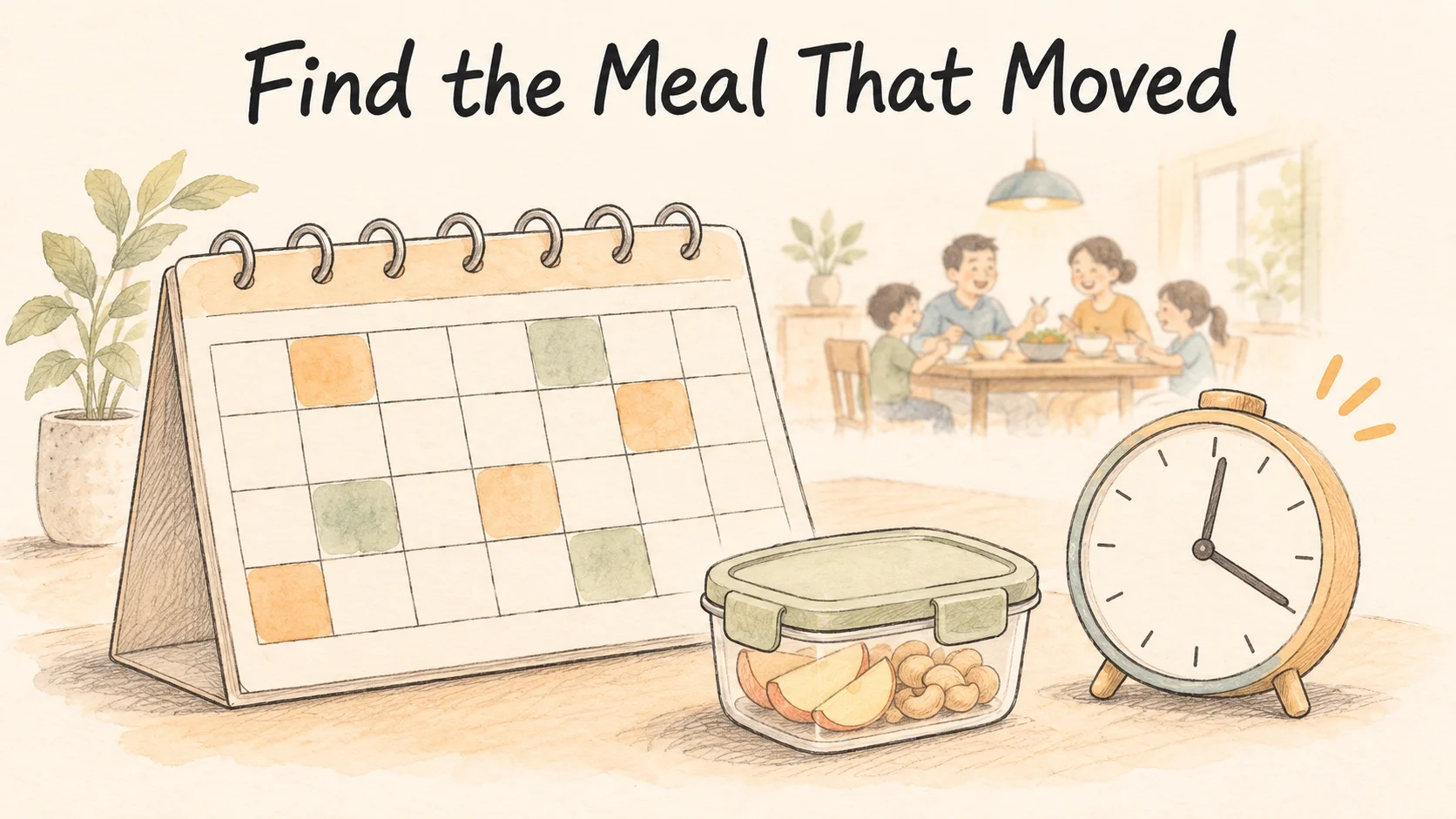
Suppose you meet a friend for an 11 a.m. brunch. On another day you had breakfast at eight and lunch at noon. You can keep the name brunch and write its time on the same timeline. The survey used the names participants gave their meals. If you're interested in the start of the day, look at the first event. If you're interested in how a meal fits around other people, the name and the time can both help. [1]
The US analysis also checked what happened when only Saturday and Sunday counted as the weekend. The direction of the differences in reported energy intake was broadly similar, with smaller differences and some comparisons that were less clear. A Friday with a family meal, a night shift, or a long trip home might feel like a different kind of day from either Saturday or Monday. The categories you choose matter to the comparison. [1]
A single Saturday might include a celebration or a train you had to catch. If you're looking for a pattern, keep a few ordinary workdays and days off. Your first meal might repeatedly move later on a Saturday without a commute, while dinner might move earlier on Sundays when you go out in the evening. Both can be part of the same person's routine.
Next time it feels as though everything moved later, look at the first and last entries. If only one changed, you can see which end of the day was different and what that meant for the time between them.
References
[1] Kant AK, Graubard BI. Self-reported weekend temporal eating patterns of American adults differ from weekday. J Acad Nutr Diet. 2025;125(2):188–203.e10.