
If You Drink the Calories, Will You Eat Less Later?
Soda and jelly beans supplied the same calories in a four-week trial. What changed was the rest of the day's food.
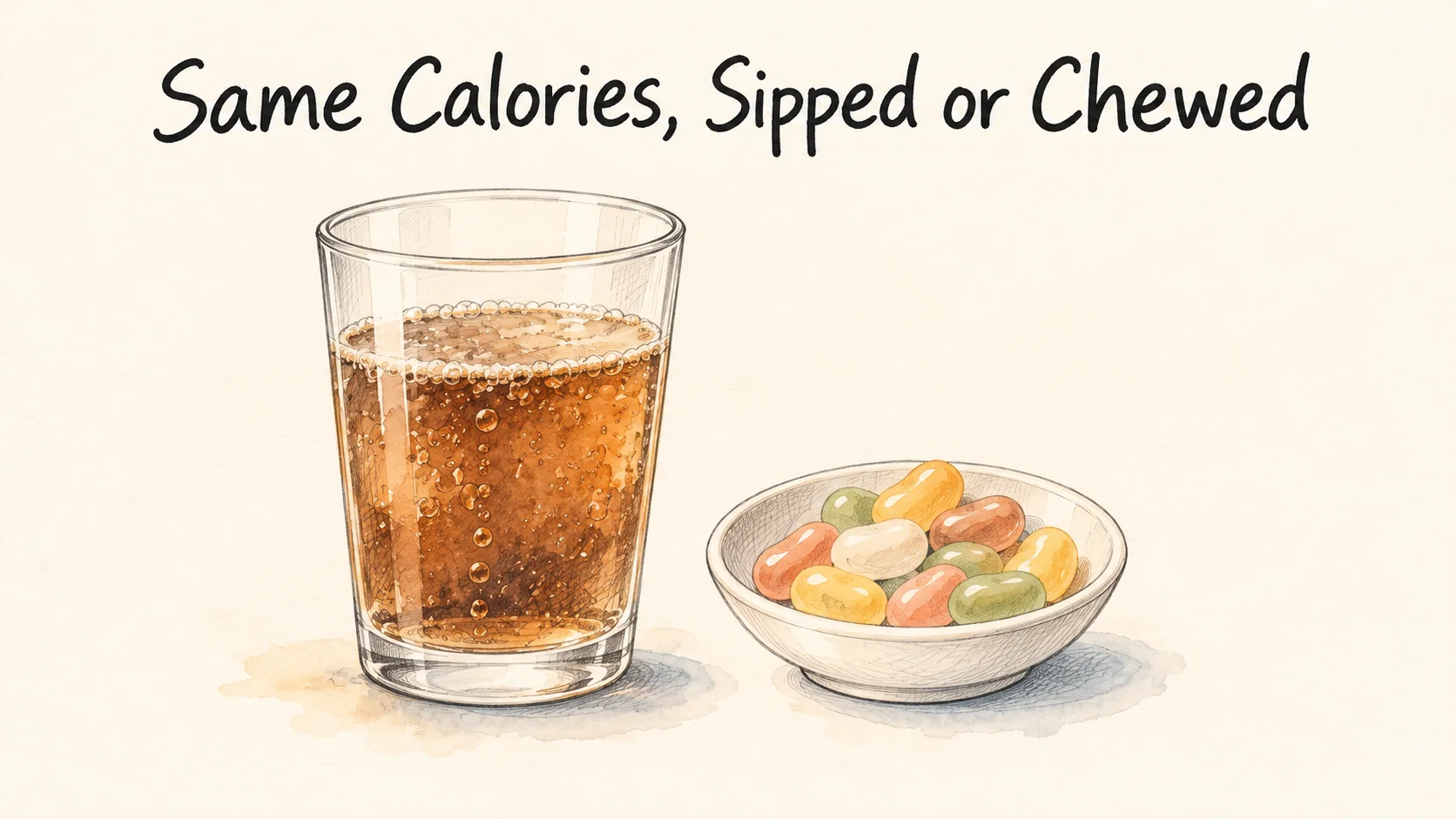
You have a soda with lunch. At three, you reach for your usual snack anyway. Will the drink make you eat less later in the day? In one small trial, researchers provided the same daily calories as soda and as jelly beans in separate four-week periods. Participants ate less of their usual food in the jelly bean period. The researchers did not find the same reduction in the soda period. A shorter test comparing cola and cookies over a single lunch found no clear difference in lunch intake [1][2].
These trials measured different stretches of time. The question in both was how much people went on to eat after receiving extra food or drink. You can measure that at the next meal, over a day, or after the change becomes part of a routine.
What does it mean to compensate for what you drink?
Say you normally eat 2,000 calories on a particular kind of day. You add a 200-calorie afternoon snack. If the rest of your meals stay the same, the day's intake becomes 2,200. If you eat 100 fewer calories later, the day's total is 2,100. That offsets half the snack. If the rest of your day is 200 calories lower, the total stays at 2,000. Researchers call that adjustment dietary energy compensation [1].
How full you feel after a drink is a separate measurement. You could feel full for a time and still eat your customary portion of dinner. You could eat a little less at dinner and have an extra snack later. To see the day's total, count the original food or drink and the meals that follow it.
Using the same example, suppose dinner was 100 calories smaller and an evening snack was 100 calories larger. The smaller dinner was real. Over the whole day, those two changes cancel, leaving the original 200-calorie addition. The result depends on where you end the counting.
The same people tried both soda and jelly beans
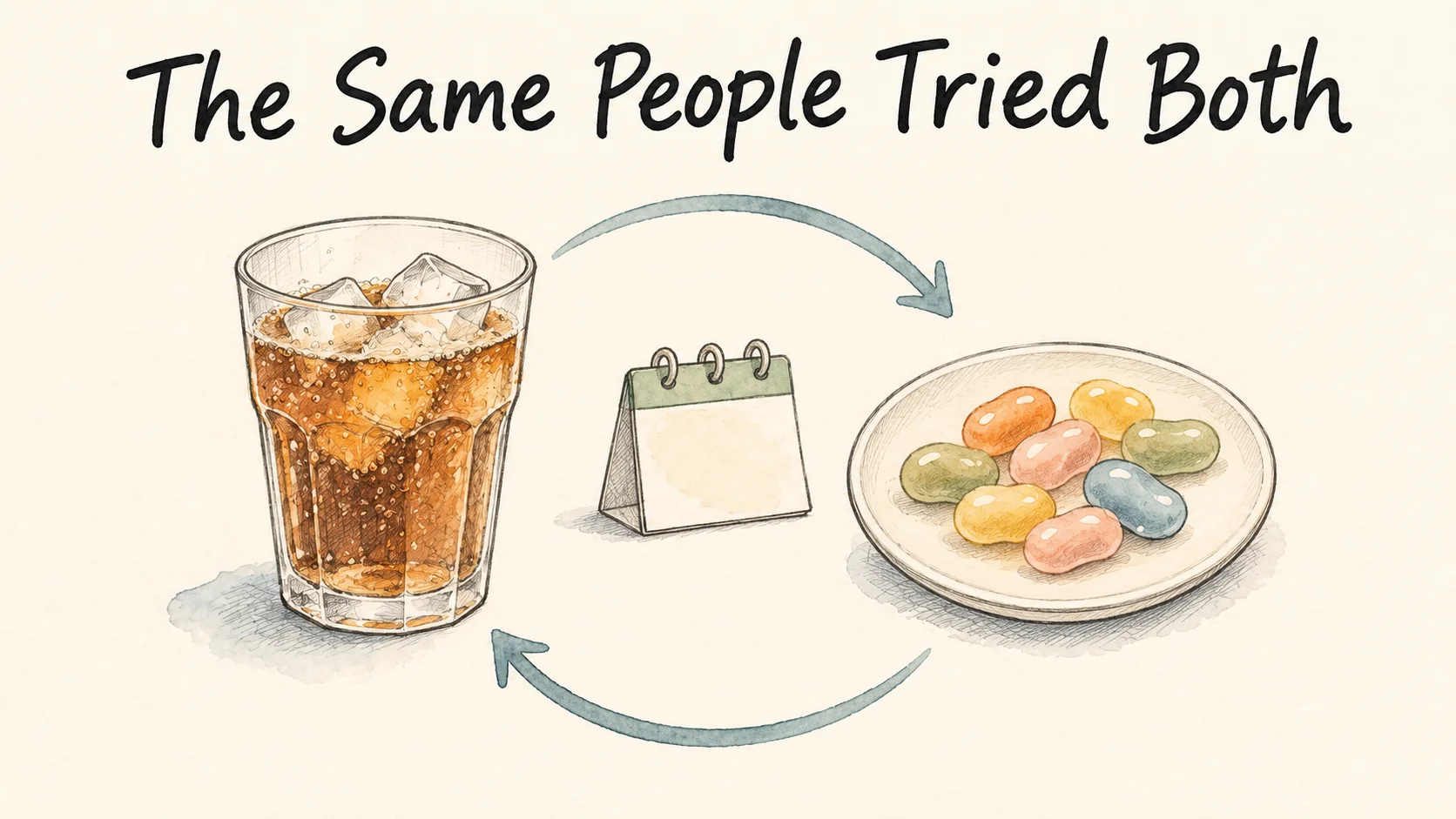
In 2000, two researchers at Purdue University gave 15 adults two four-week treatments. Each person drank sugar-sweetened soda daily in one period and ate jelly beans daily in the other. The periods were separated by four weeks. Each daily serving supplied about 450 calories, mainly from carbohydrates. Participants otherwise chose their own foods. The researchers called on selected days and asked what they had eaten and drunk the previous day [1].
The phone calls sampled days in each period. They gave people a way to report food from their usual setting, where they made their own choices. A detail such as the size of a serving or whether a drink was finished still depended on memory. The researchers supplied the soda and candy, but they did not weigh every food in the rest of the day.
The team measured usual intake before each treatment and compared it with the meals and snacks participants chose during that period, aside from the soda or candy. People did not receive a prescribed amount of food for each meal, and they were not required to have the experimental food at a particular meal. This gave the study a view of how participants fitted it into their normal eating [1].
During the jelly bean period, people reported less energy from their other food, for an estimated compensation of 118 percent. During the soda period, the researchers didn't detect a reduction in intake from other food. With the soda included, total daily intake was higher than at baseline [1].
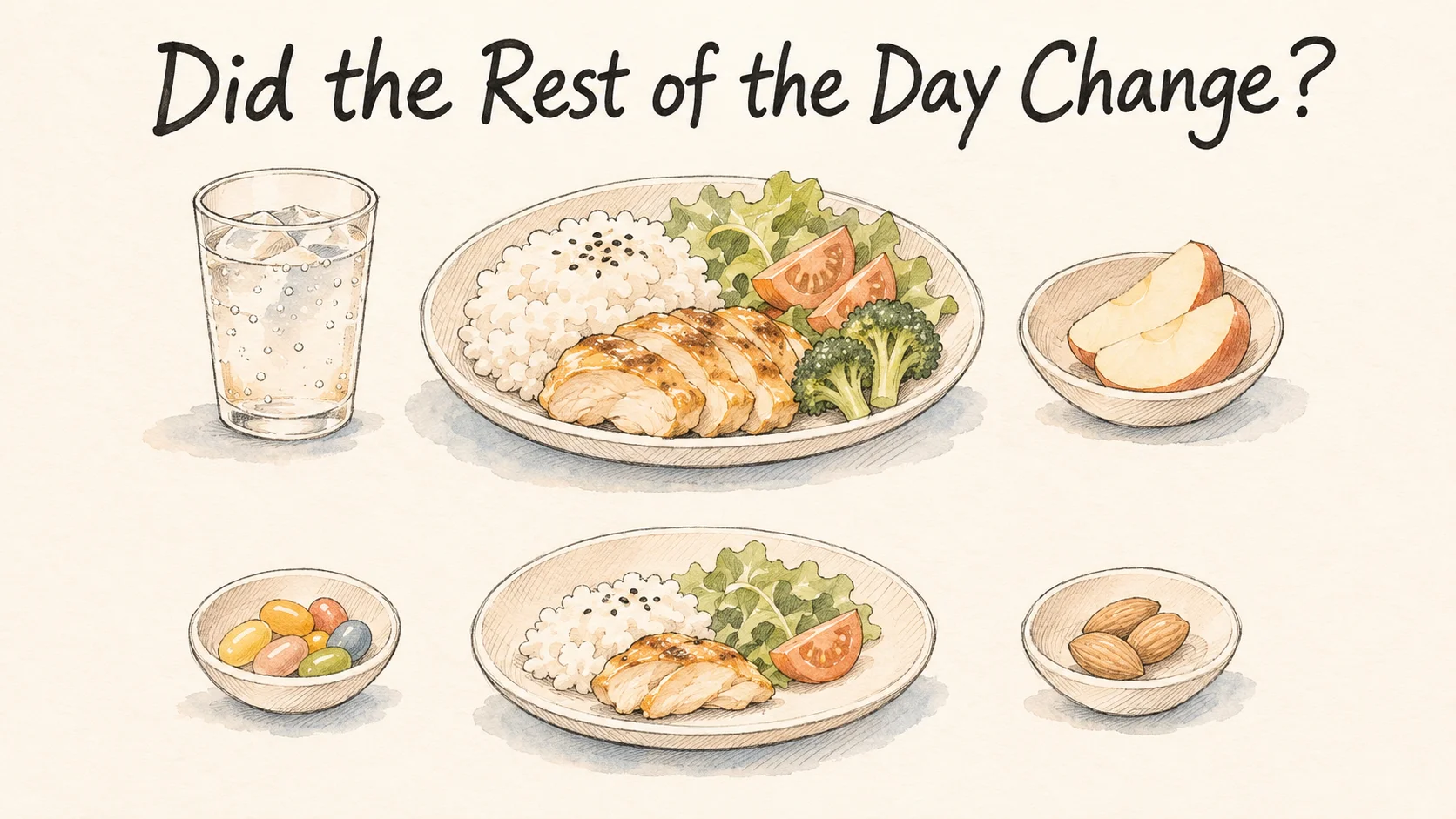
For a worked example, 118 percent of 450 is about 531 calories. That's the estimated change in the rest of the day's food using the reported percentage. The study could not distinguish the 118 percent estimate from 100 percent compensation, which means offsetting the whole serving. The roughly 81 calories between those figures should not be treated as a daily advantage someone would get from candy [1].
Some people did report eating less of their usual food during the soda period. There were only 15 participants, and the estimate of the rest of their diet came from recall. Soda and jelly beans also differ in texture, volume, and how they are consumed. This study cannot assign an independent share of the result to chewing, drinking speed, or the liquid form itself [1].
The same paper also reported a shorter test of hunger after participants received the test foods. The investigators did not find a clear difference in their hunger measures [1]. The four-week result comes from the intake estimates. A rating can be useful when the question is how hungry someone feels, and the food estimate says how much they actually chose.
Another trial looked only as far as lunch
In a 2004 experiment, 32 adults had a 300-calorie portion of cola or raspberry cookies. On different visits, they consumed it 20 minutes or two hours before a test lunch. Lunch intake was lower when the cola or cookies were given 20 minutes before the meal. At the same interval, the researchers did not detect a clear difference in lunch intake between the two foods [2].
The four-week study asked what changed across the day when soda or candy became part of a routine. The lunch study asked what a person ate after a set delay. The time between the drink and the meal can be part of the question. One lunch total also leaves out dinner and afternoon snacks, where someone might eat or drink differently.
Comparing cola two hours before lunch with a cookie 20 minutes before lunch would change both the food and the delay. The second experiment gave participants both foods at both intervals. That helped the team see whether the amount eaten at lunch changed when the interval stayed the same.
Decide whether the drink adds something or replaces something
When you order a drink, ask what usually goes with the meal. Switching from water to a sweetened soda adds the calories in the glass. Swapping a sweet tea for a soda with the same calories leaves the drink's calories the same. What you eat afterward is a separate part of the day.
Think about how much of the drink you actually finished. Two people who split a can get different portions from someone who drinks one alone. Keeping track of the amount you consume also helps when a larger glass has the same drink as a smaller glass.
A label is enough to work out the size of one change. Suppose a drink has 40 calories per 100 milliliters. A full 330-milliliter can provides about 132 calories, and half provides about 66. If you want to understand your own lunch, you can notice what you drank, how hungry you were later, and whether your afternoon food actually changed. You may prefer a sweet drink on one day and unsweetened tea the next. The drink fits into what you eat across the day, including occasions that don't happen in the lunchroom.
Sources
[1] DiMeglio DP, Mattes RD. Liquid versus solid carbohydrate: effects on food intake and body weight. Int J Obes. 2000;24(6):794–800.
[2] Almiron-Roig E, Flores SY, Drewnowski A. No difference in satiety or in subsequent energy intakes between a beverage and a solid food. Physiol Behav. 2004;82(4):671–677.