
Does More Protein at Breakfast Keep You Feeling Fuller?
Two breakfasts with the same calories and different amounts of protein changed reported fullness and evening snacking. See what those measurements can tell us.
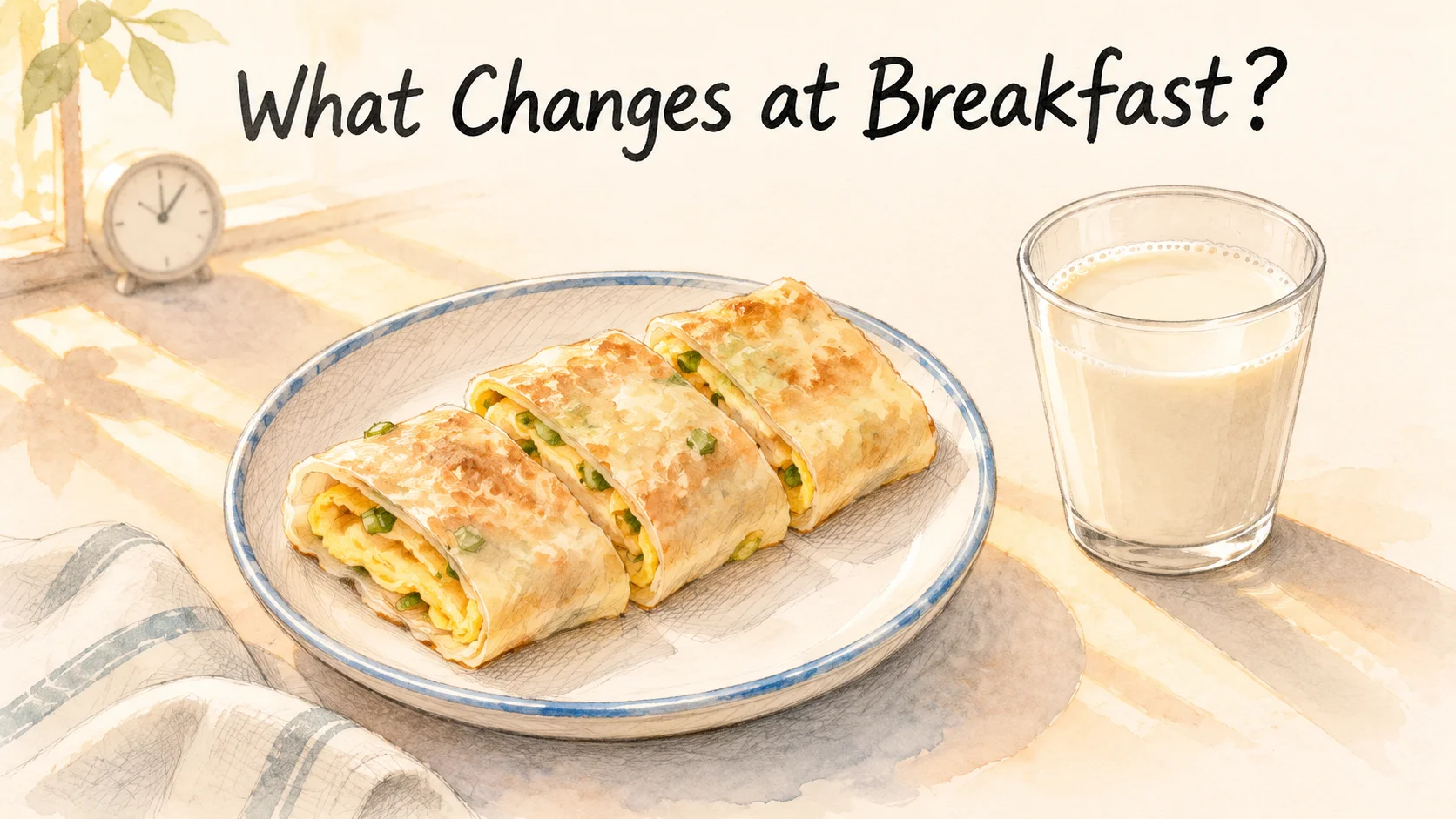
At nine, you finish a Taiwanese egg pancake and a cup of tea. By eleven you're already thinking about lunch. On another morning, you get plain soy milk with the same pancake and still feel comfortably full two hours later. Could the protein have made a difference? In one small study, young women reported greater fullness after a higher-protein breakfast with the same calories. Another study found a similar difference in fullness, with no detectable difference in the total calories eaten that day [1][2].
Feeling full is something you can notice. How much you actually eat later is a separate measurement. By tracking both, the researchers could see whether the difference participants felt after breakfast carried over to dinner, snacks, or the day's total.
What changed in a 350-calorie breakfast?
In 2013, a research team asked 20 young women to follow three breakfast patterns in a random order. They were about 19 years old on average, had overweight or obesity, and rarely ate breakfast. They continued to skip breakfast in one period, ate a cereal-based breakfast in another, and ate a breakfast with more protein from eggs and beef in the third. For the first six days in each period they followed the assigned pattern. On day seven they came to the laboratory. Each person went through all three patterns, so she could be compared with herself [1].
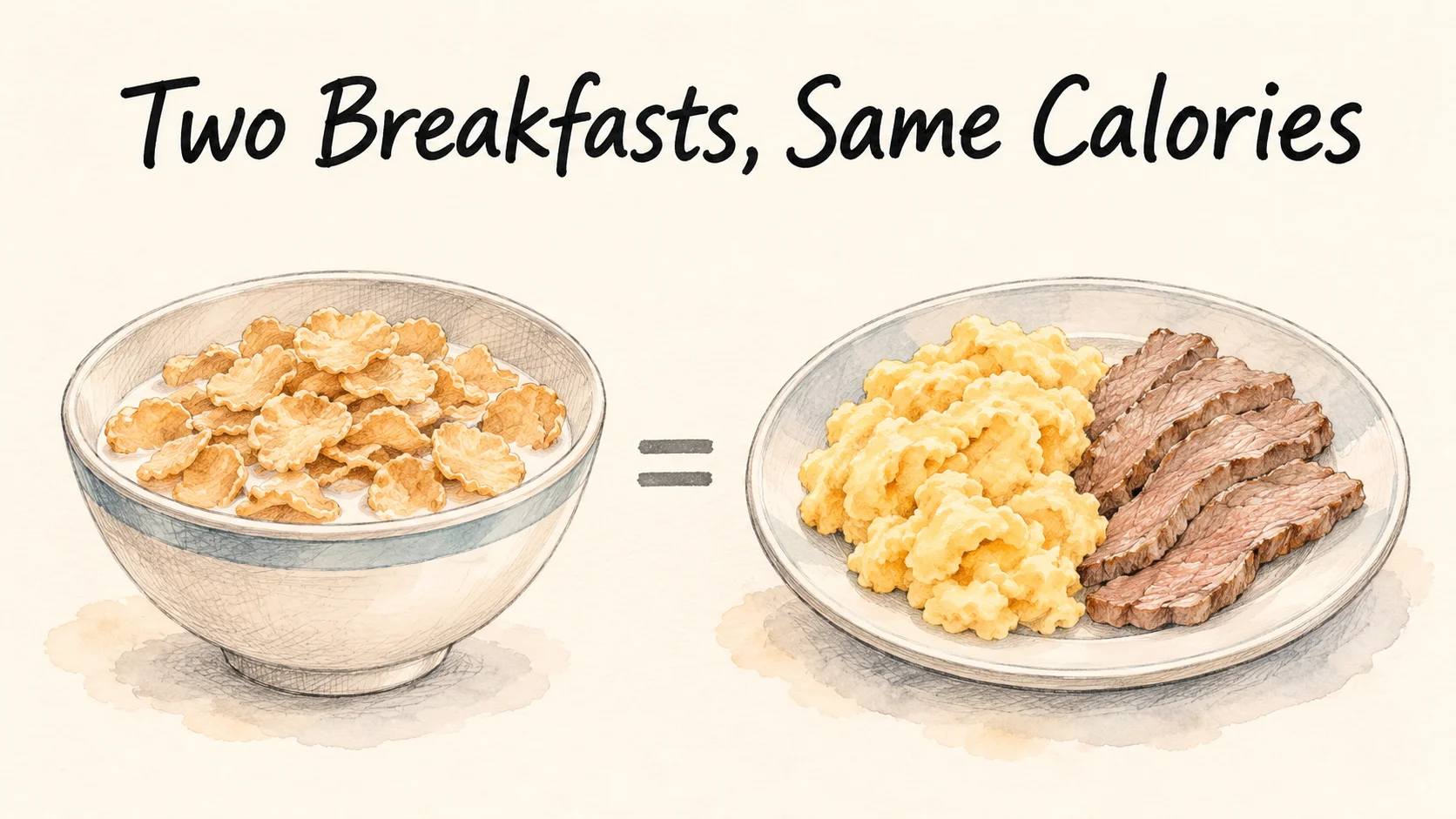
Both breakfasts contained roughly 350 calories. One supplied 13 grams of protein and the other 35 grams. They were close in fat, sugar, and fiber, and rated similarly for how much participants liked them. The higher-protein meal contained fewer carbohydrates. The ingredients also differed. The trial compared two meals as people ate them, so it can't tell how much of the response would come from any one ingredient by itself [1].
Subtract 13 from 35 and you get 22 more grams of protein. At roughly four calories per gram, that's about 88 calories' worth of protein. The total calories were held constant by shifting calories from another part of the meal. A breakfast with an extra egg on top of everything you normally eat is a different comparison from one where an egg takes the place of something else. Both are possible changes at the breakfast counter. The no-breakfast comparison changes several things at once, including whether you eat anything and how many calories you have in the morning. To ask about a larger share of protein at the same calorie level, look at the two breakfasts.
Feeling fuller and eating less are measured separately
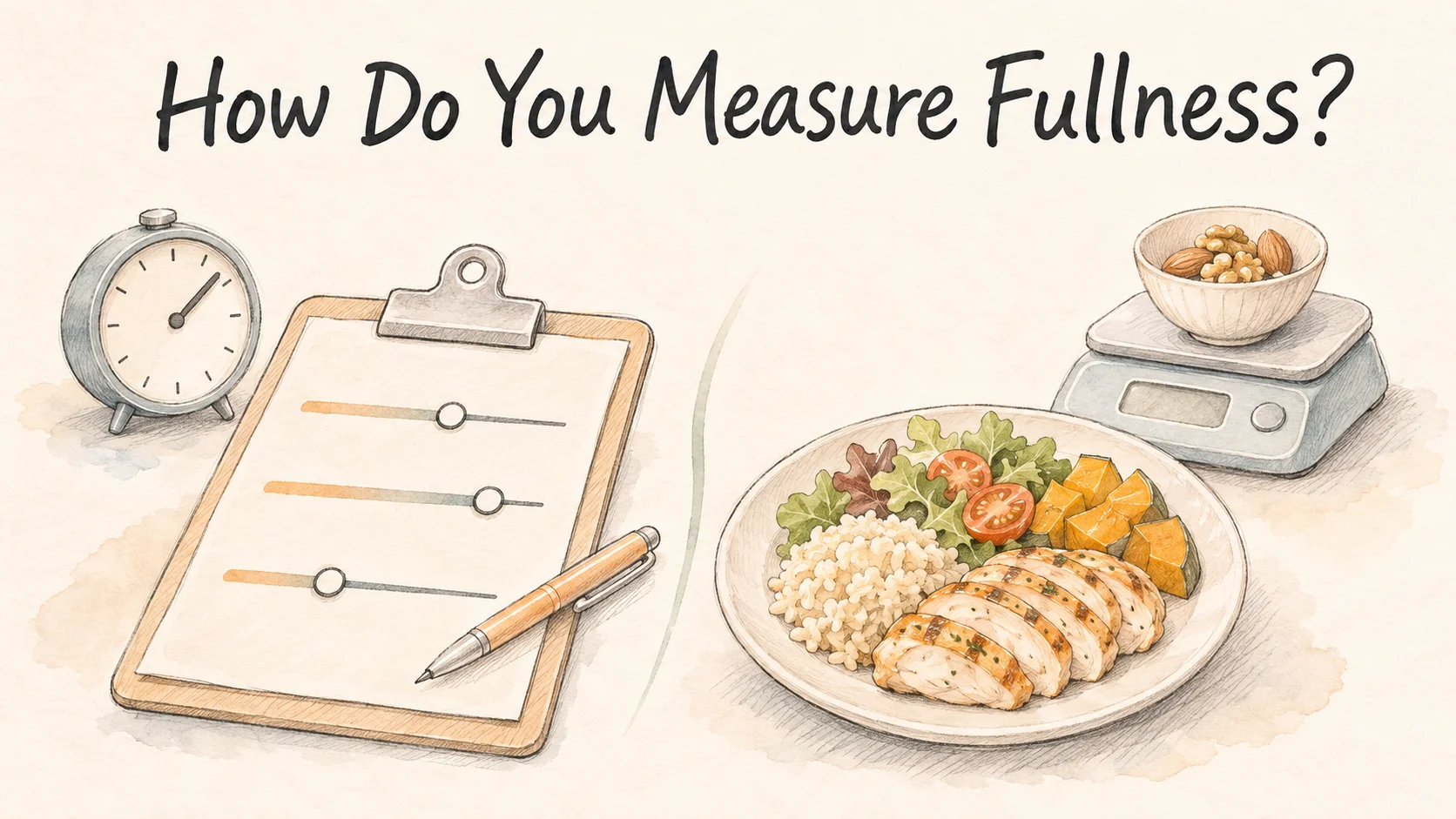
On the test day, the researchers asked participants to mark how hungry and how full they felt, and how much they wanted to eat, on a scale at repeated intervals. They provided everyone with a standard 500-calorie lunch four hours after the breakfast slot. At dinner participants could choose how much to eat. Afterward, they took home a cooler of snacks to eat as they wished. The team summarized the ratings over the day and separately worked out how much participants ate [1].
Participants reported greater overall fullness after either breakfast than when skipping it, and greater fullness after the 35-gram breakfast than after the 13-gram breakfast. Ratings of hunger did not show the same difference between the two breakfasts. Dinner calories did not differ significantly. Evening snacks averaged 486 calories after the higher-protein breakfast and 621 after the other breakfast [1].
The researchers also added the calories from breakfast and lunch to what each person ate later. The higher-protein breakfast day averaged 2,123 calories, compared with 2,292 on the day with the lower-protein breakfast. The day without breakfast averaged 2,002. The difference between the no-breakfast day and the higher-protein day was not statistically significant [1]. Evening snacks differed by 135 calories between the two breakfasts. The daily totals differed by 169. The snacks are already part of the daily totals, so adding those two differences would count some of the food twice. The fixed lunch also means the trial cannot tell you what participants would have served themselves at lunchtime.
In 2019, another study recruited 37 young women who either usually ate breakfast or usually skipped it. It used the same 350 calories and compared 13 and 35 grams of protein. Participants followed each pattern for three days before a day of lab measurements. The higher-protein breakfast again produced greater overall fullness, with no detectable difference in total calories for the day [2]. These trials tell us about short-term responses in a particular group. They did not establish 35 grams as a breakfast requirement or measure how someone's weight would change over a month. Both studies also collected blood measurements. PYY, a signal released by the gut, differed in some comparisons in the earlier trial, but the later trial did not detect a clear difference in overall PYY response between the two meals. The ratings directly describe how full people felt. Establishing which signal changed how they felt would take a different comparison [1][2].
Try a breakfast you can order twice
If you usually have an egg pancake and tea, try keeping the pancake the same and changing the drink to plain soy milk on one of a few mornings with similar routines. You could also keep another usual breakfast and change a single item you have available. The drink changes more than protein, including total calories and other nutrients. The comparison tells you how you feel after two breakfasts you might actually order.
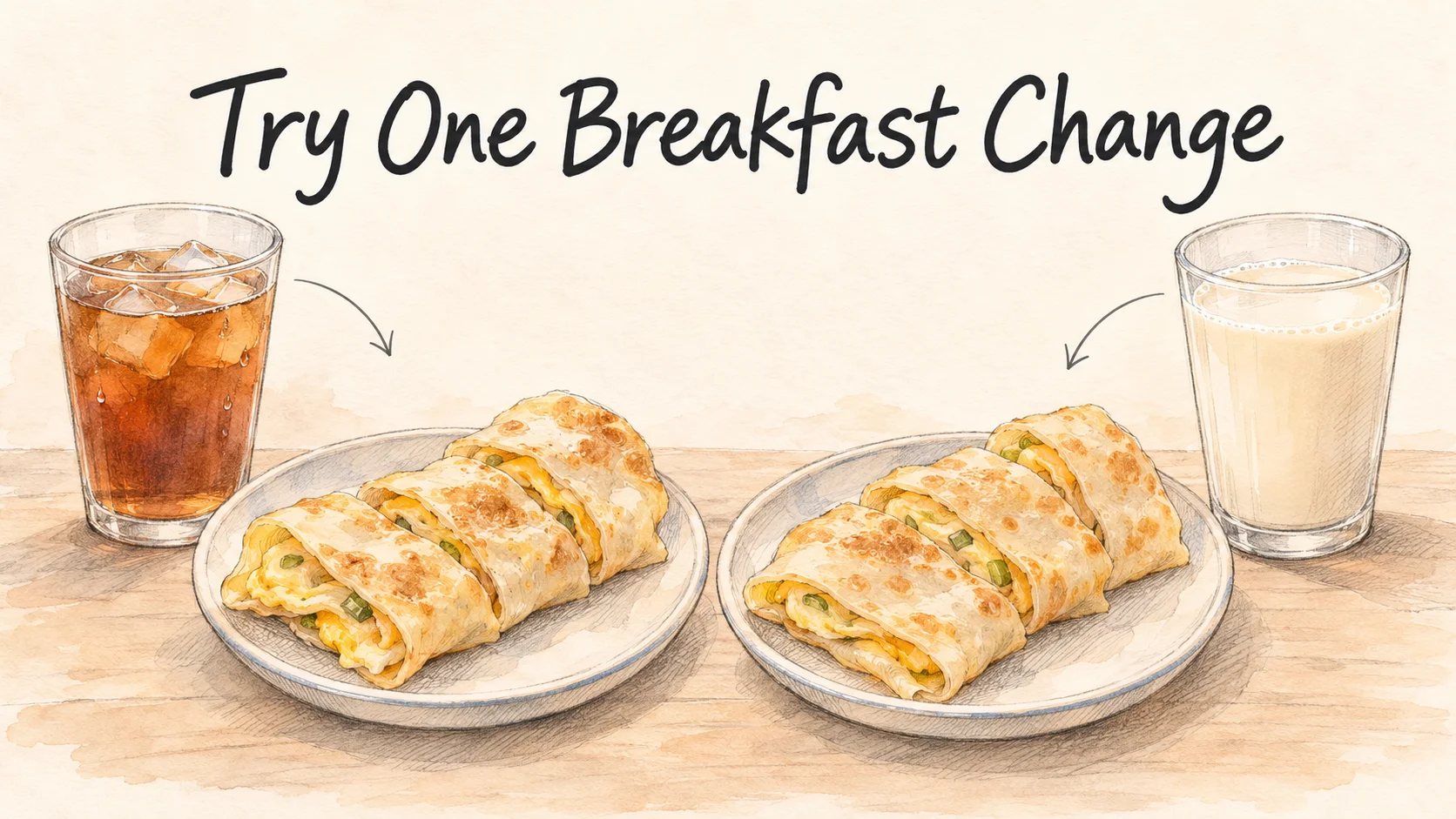
If you use packaged soy milk, read the amount on the panel and scale it to what you drink. Say a carton lists 3 grams of protein per 100 milliliters. If you pour 250 milliliters, that gives you 7.5 grams. You can compare the two breakfasts without trying to copy the exact 35-gram study meal. When you don't know what a shop uses, writing down the cup size and the order can help you remember what you tried. If you split a carton over two mornings, use what you drank on each morning.
Half an hour before your usual lunch time, write down a short description of how you feel. You may be hungry enough to stop for food, comfortably full, or simply thinking about something you'd enjoy eating. Note whether your morning was unusual. A lunch meeting that starts late changes when you get to eat. Poor sleep or a longer-than-usual commute may change how the two mornings feel. If you're still hungry, you can eat when it's time. The point is to see how a breakfast that you can order again fits into your own morning.
Sources
[1] Leidy HJ, Ortinau LC, Douglas SM, Hoertel HA. Beneficial effects of a higher-protein breakfast on the appetitive, hormonal, and neural signals controlling energy intake regulation in overweight/obese, “breakfast-skipping,” late-adolescent girls. Am J Clin Nutr. 2013;97(4):677–688. See Results and Figure 6 for snack and whole-day intake.
[2] Douglas SM, Byers AW, Leidy HJ. Habitual breakfast patterns do not influence appetite and satiety responses in normal vs. high-protein breakfasts in overweight adolescent girls. Nutrients. 2019;11(6):1223.