
When it stays hot outside, do you get less sleep?
One study matched sleep records to outdoor nighttime lows. Another measured the air in people's bedrooms. Here is what each temperature tells you about sleep.
You turn over a few times and check your phone. It is still 29°C outside. In the morning your sleep record shows half an hour less than usual. Was the heat the reason? In a large study, people tended to sleep less on nights when the outdoor low stayed high. How much heat reaches you in bed depends on the room and what is around you under the covers. The weather app and the bedside thermometer give you different pieces of the picture [1, 2].
One night, three places to measure temperature
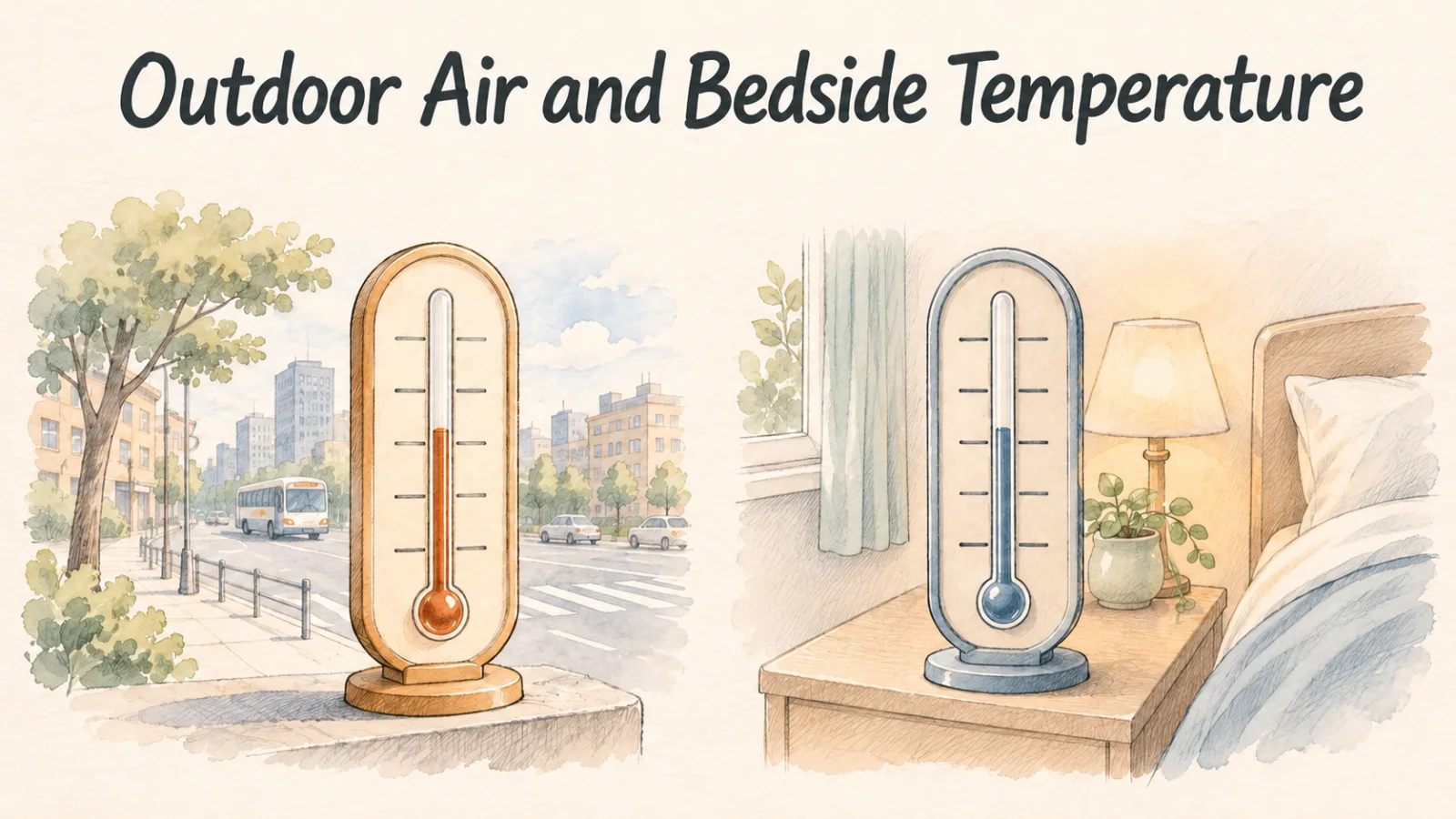
Start outside. The overnight low is the lowest outdoor air temperature recorded or estimated for the night. Next, move into the room. By dawn the air outside may have cooled, while the room still holds some of the heat it took in during the day. Windows, ventilation, and air conditioning can all change the temperature by the bed. Finally, think about the air next to your skin. Pajamas and blankets trap a layer of air. Two people reading the same bedroom thermometer can feel different once they get under different covers [1, 2].
Your body also redistributes heat as you get ready to sleep. Blood vessels in the skin of your hands and feet can widen, giving heat from inside the body a way out through the skin. In a small laboratory study, the warmer the skin of the hands and feet was relative to the trunk in the late evening, the shorter the time from lights-out to sleep as measured by brain activity. A hand that feels warm can be releasing heat. Room air warming up around that hand is a separate change [3].
Picture two bedrooms in the same building. One took the afternoon sun, and the other was shaded. The weather app gives them the same outdoor temperature. They can still cool at different speeds after dark. Within one room, the space under a thick duvet can also feel different from the air near the window. That is why it helps to keep the location attached to every temperature in a study.
To find out whether people sleep differently when the city stays hot, you can put weather records next to sleep records on the same dates. To find out what temperature reached the air next to a particular bed, the measurement has to move indoors. Both approaches benefit from following the same person over many nights.
What happened when the outdoor low stayed above 30°C?
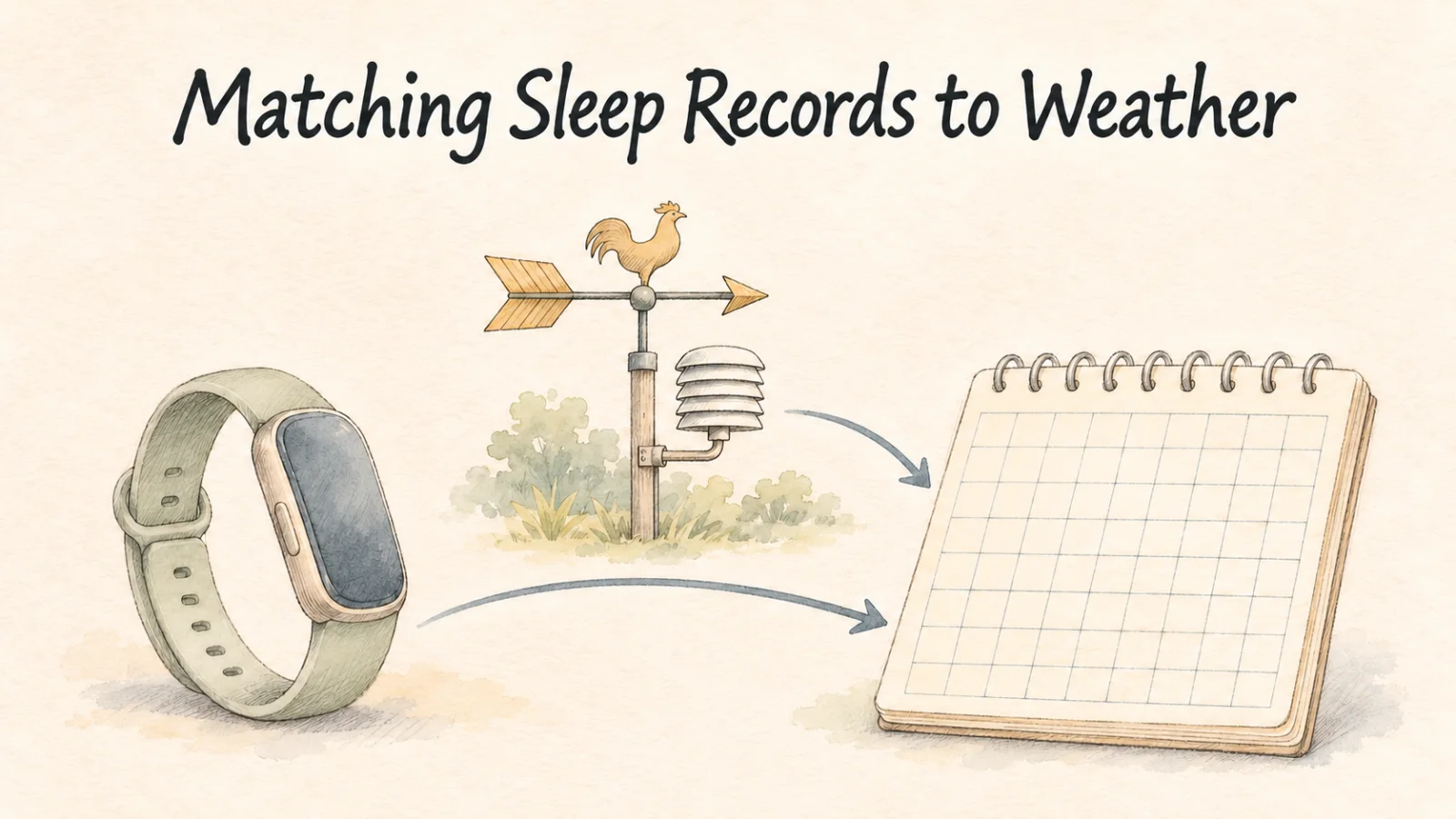
In a 2022 study, researchers matched about 7.41 million nightly sleep records from 47,628 adults across 68 countries to local weather data. Wristbands used movement to estimate sleep duration and timing. The researchers compared warmer and cooler nights for the same person and accounted for the date, seasonal patterns in each region, and other aspects of the weather. Comparing a person with themselves reduces the chance that differences between people's usual schedules get counted as differences due to temperature [1].
On nights when the outdoor low stayed above 30°C, the team estimated people slept about 14 minutes less than on the nights with the least temperature-related sleep loss in the data. The sleep period narrowed at both ends: people tended to fall asleep later and wake somewhat earlier. The estimated delay in sleep onset accounted for more of the narrowing. The fourteen minutes describes the average comparison in the study. Individual sleep records can move by different amounts [1].
The team also asked how much more often sleep fell below seven hours. When the outdoor low was above 25°C, the estimated chance of sleeping less than seven hours was 3.5 percentage points higher than on nights in the outdoor reference range of 5–10°C. If the starting probability were 20%, adding 3.5 percentage points would make it 23.5%. The starting number here is an example of the arithmetic. The change in probability of falling below seven hours and the change in minutes slept are different results [1].
The wristband tracks sleep, and the weather record describes the air outside. The team could not see whether a participant had the air conditioning on, what bedding they used, or how warm their bedroom was. The 5–10°C interval appears in the analysis as an outdoor reference range. Keeping the word outdoor alongside it prevents confusion with a thermostat setting.
What changes when you measure the bedroom itself?
Another team recorded bedroom temperature and humidity in the homes of 50 people aged 65 or older in the Boston area. The study paired those readings with sleep estimates from a wearable ring. There were 10,903 person-nights in the analysis. One person could contribute many nights, giving the researchers repeated combinations of indoor temperature and sleep for the same participant [2].
The home sensors saved a reading every 15 minutes, and the analysis used the average bedroom temperature for the night. Two things have changed from the outdoor study: where the air was measured, and how a night's readings were summarized. A nightly average indoors and a nightly low outdoors can coincidentally have the same number without describing the same conditions [1, 2].
One measure was sleep efficiency, the share of time in bed that the device estimated the person was asleep. If you spend eight hours in bed and sleep for seven, seven divided by eight gives 87.5%. Someone in bed for nine hours could sleep the same seven and get a lower percentage. Hours and efficiency tell you two things about the same night.
The group model estimated higher efficiency and less restlessness at overnight bedroom temperatures around 20–25°C. Comparing model estimates at 25°C and 30°C, the authors reported a 5–10% drop in efficiency. These were temperatures that occurred in people's homes during the study. The participants differed considerably, and they did not follow an assigned sequence of thermostat settings. What you see is a pattern across those older adults and their rooms [2].
The cooler side of the bedroom study makes the distinction clearer. In that model, compared with a bedroom temperature of 22°C, a temperature of 14°C also went with lower sleep efficiency. A regional outdoor low and an average temperature in an older person's bedroom are different exposures. The two results belong beside the measurements that produced them [1, 2].
On a hot night, add a note from next to the bed
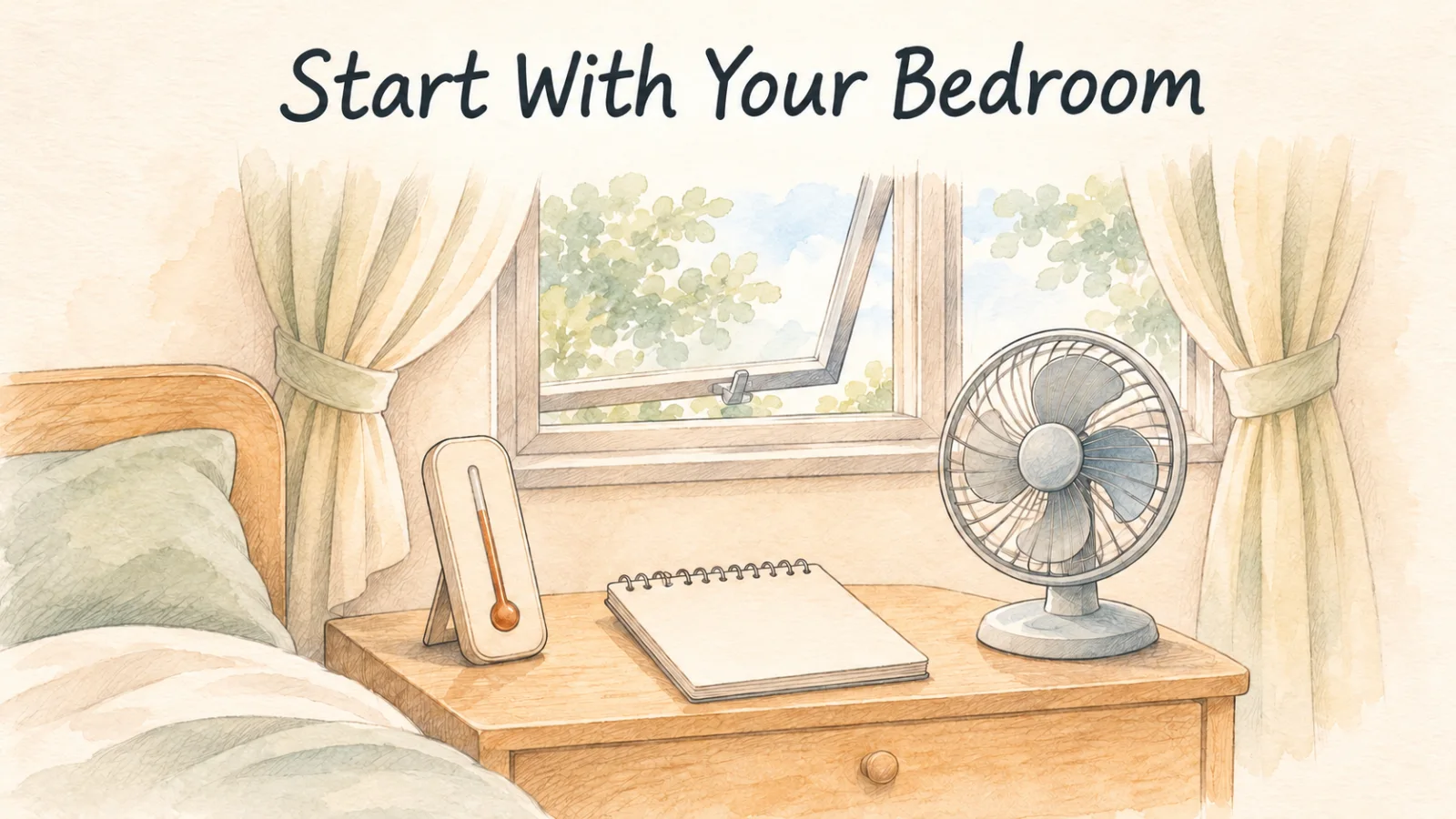
If you have a thermometer, try noting the reading from the same spot around bedtime for a few nights. Alongside it, write when you went to bed, whether you remember waking up, and whether you felt hot or cold. If the fan was on or you changed the bedding, keep that with the record. Call a single bedtime reading exactly that. It gives you one moment in the room, while an outdoor low refers to the lowest point over the night.
Next time the phone shows 29°C, you can put it beside the reading you took at the bed. If the two nights look the same in a weather app and feel different under the covers, you will have a few details from the room to help you see what changed.
References
[1] Minor K, et al. Rising temperatures erode human sleep globally. One Earth. 2022;5(5):534–549.
[2] Baniassadi A, et al. Nighttime ambient temperature and sleep in community-dwelling older adults. Sci Total Environ. 2023;899:165623.
[3] Kräuchi K, et al. Warm feet promote the rapid onset of sleep. Nature. 1999;401:36–37.