
When Habitual Short Sleepers Sleep Longer, Do They Eat Less?
A two-week sleep intervention changed average energy intake by about 270 calories a day, compared with usual sleep. See how the researchers got that number.
It's 11 p.m. You open the fridge to get water and come away with a snack. The next day you wonder whether you would have eaten the same way if you'd gone to bed earlier.
In a group of adults who usually slept less than six and a half hours a night, extending sleep changed how much energy they took in compared with sticking with their usual routine. Researchers estimated the difference over two weeks. They didn't ask participants to skip snacks or cut portions. To see what the widely shared figure of 270 calories a day means, start with what the researchers compared [1].
Two weeks of usual sleep, then two weeks with two routines
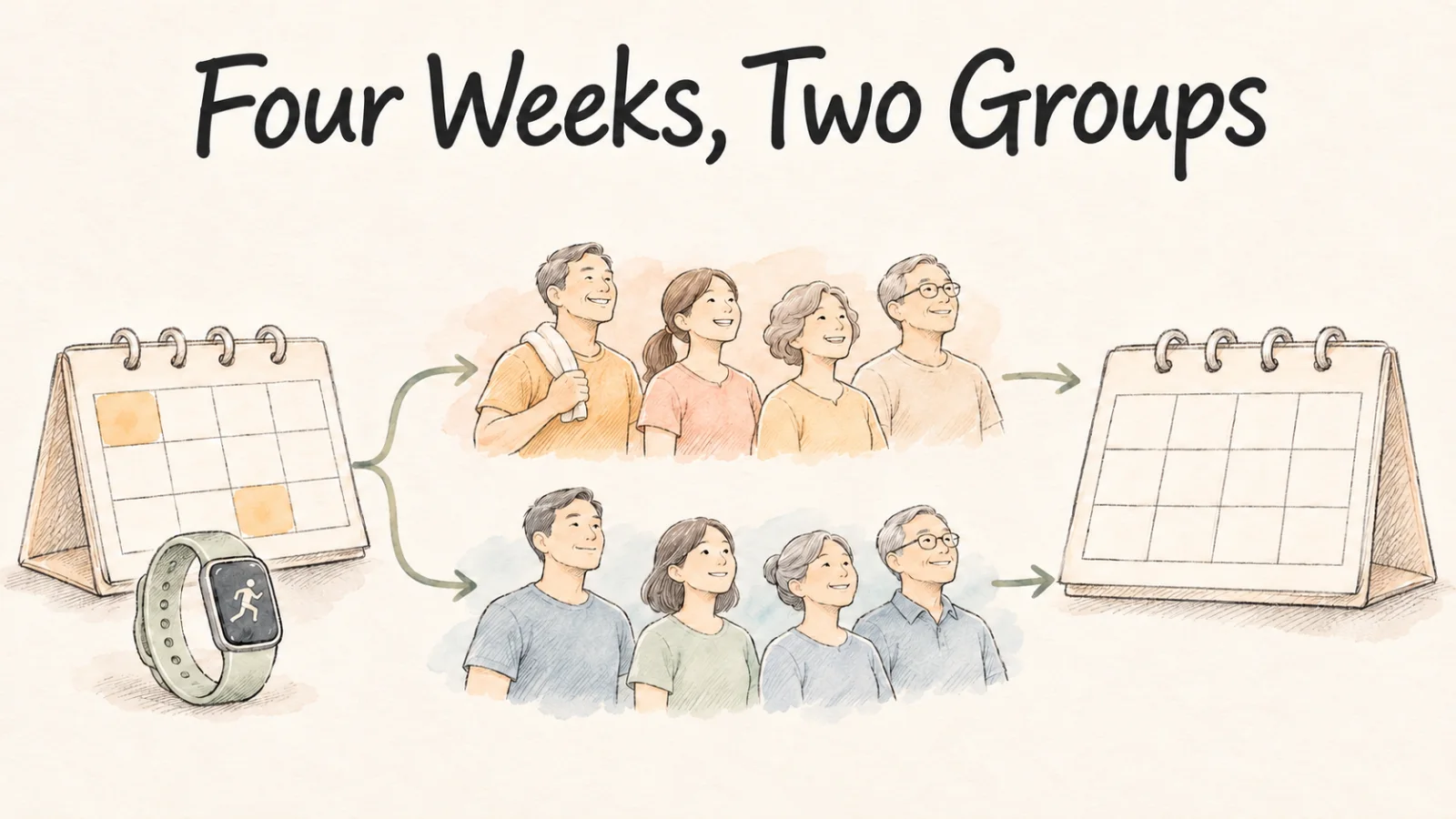
The University of Chicago team analyzed data from 80 adults aged 21 to 40. Their body mass index was between 25.0 and 29.9, and they usually slept less than 6.5 hours a night. At first everyone continued their usual routine at home for two weeks. They wore wrist movement monitors so the team could estimate when they slept. These first two weeks gave each group a starting point [1].
The team then assigned 40 people to each of two groups at random. One group received individual sleep advice and a plan to make more time for sleep at home. Their target was to spend 8.5 hours in bed. The other group was asked to keep its usual sleep routine. Both groups met with study staff, and everyone could go on eating and moving as usual at home [1].
Time in bed is the space you set aside. You're still awake during part of that time, so the study used wrist movement to estimate time actually spent asleep. The group offered advice increased its nightly sleep by about 1.2 hours more than the usual-routine group. The study target and the measured change describe two different moments in the trial [1].
This arrangement helped answer a practical question. Did the plans make a difference when people still had their own work, homes and schedules? The first two weeks show how they lived before the intervention. The usual-routine group shows what changed during the second two weeks even when people received no instructions to extend their sleep [1].
How do you estimate intake without counting every bite?
If you filled out a food diary, you'd have to remember what you put on your toast, how much of the drink you finished and whether you took another helping at dinner. The trial used a different approach. The researchers estimated the energy people used and how much energy their bodies gained or lost from storage during the same period. Putting those together gave them an estimate of intake [1].
To estimate expenditure they used doubly labeled water. Participants drank water containing stable isotopes of hydrogen and oxygen, forms of the elements that can be distinguished from their more common forms. The researchers collected urine samples. The labels leave the body in different ways. The difference in how quickly they disappear helps estimate how much carbon dioxide the body produced, which in turn helps estimate energy use [1].
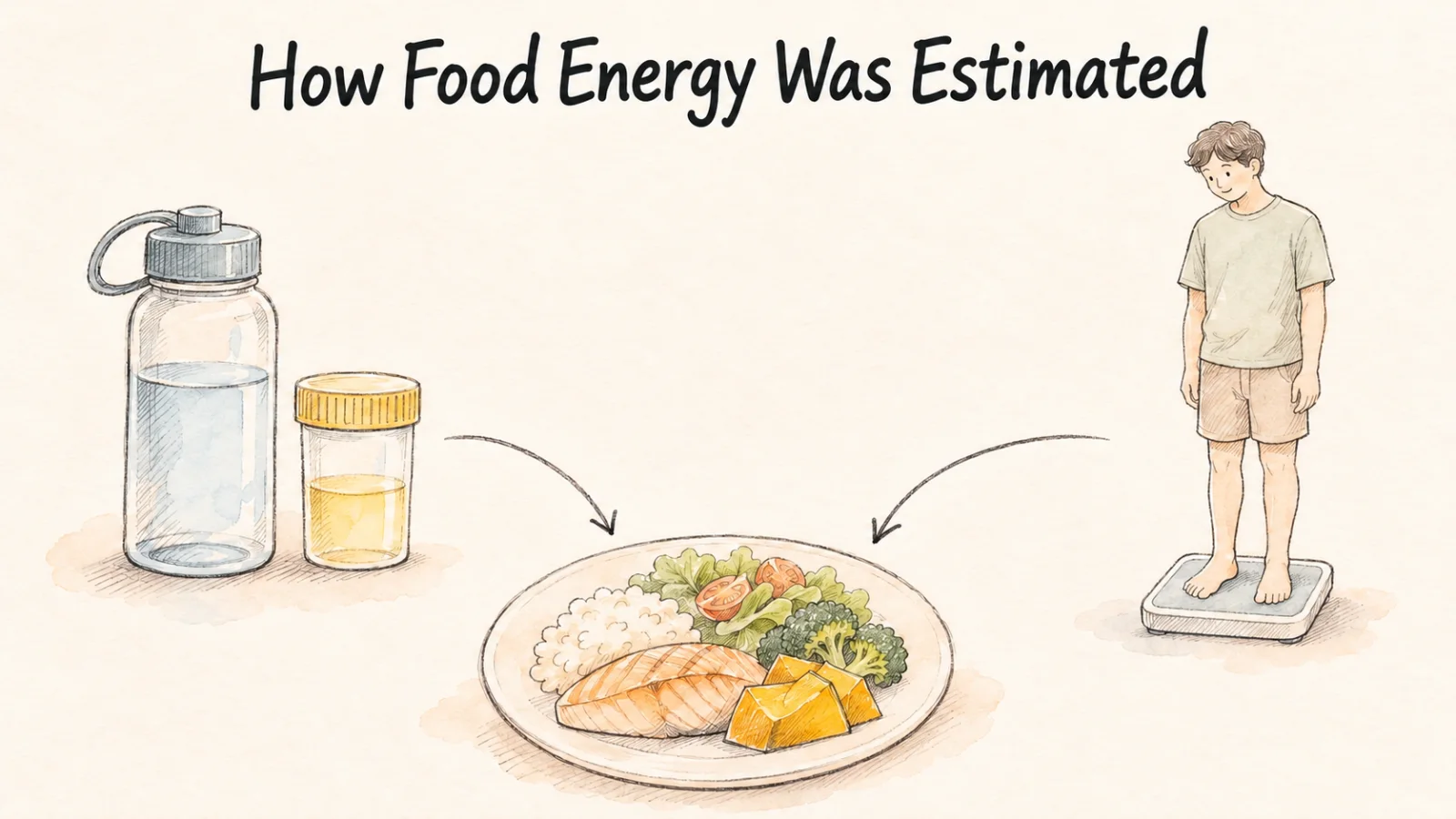
For the other part, the team used trends in daily weights measured at home, together with scans that estimated body composition. That gave the researchers a way to account for changes in how much energy people stored. Here's an example with invented numbers. Suppose a person used 2,200 calories a day on average and stored 100 more calories a day. Their estimated intake would be 2,300 calories a day [1].
The result is an estimate of average daily intake over two weeks. It leaves out the trail of individual meals. It can't tell you whether a person left a spoonful of rice in the bowl, skipped a snack or changed the kind of food they chose. The trial also doesn't tell you how hungry they felt when they decided what to eat [1].
What does 270 calories actually compare?
Start by comparing each group with its own first two weeks. Estimated intake fell by about 156 calories a day in the sleep-extension group. It rose by about 115 calories a day in the usual-routine group. Using the unrounded values in the study table, the change was 270.4 calories a day lower in the sleep-extension group. One change went down and the other went up [1].
Look at the starting points. The group offered sleep advice started with a higher estimated intake. In the second two weeks, its average was about 2,821 calories a day, compared with 2,780 in the usual-routine group. Those final averages alone answer a different question from how much each group changed [1].
Could you divide 270 by 1.2 to get a number for one more hour of sleep? You could do the arithmetic, but people were assigned to receive an individualized plan or continue as usual. They weren't assigned to get exactly 30 minutes or two hours more sleep. To learn how the response varies with different amounts of added sleep takes a study designed to compare those amounts [1].
The difference between the groups' changes in total energy expenditure wasn't statistically clear. And this trial followed the intervention for two weeks. Whether people can keep up the schedule, and whether their eating continues to change months later, are questions for a longer comparison [1].
Another trial did measure when people ate. In a lab study, researchers gave one group a four-hour window in bed, from 4 a.m. to 8 a.m., for five nights, while the control schedule allowed ten hours in bed. In the smaller subgroup whose food intake was measured, people assigned to the restricted schedule ate additional calories during their late-night waking hours. That shows what can happen when a lab schedule creates extra hours awake, with food available. In the Chicago study, there were no meal-by-meal records to tell whether late-night eating explained the difference [1][2].
Get a picture of the evening you already have
If you're curious about your own late evenings, try writing down a few ordinary nights. Record when you turn out the light, when you think you fall asleep and when you get up. Note when you feel like getting something to eat after dinner. Add a short detail when something unusual changes the evening, like a late shift or dinner out.

If the same thing keeps making bedtime slip, look for a night when you can finish it earlier. Maybe work messages can wait after you set your alarm. A few evenings later, see whether the actual time you fell asleep moved along with the plan and how you used the time when you normally went looking for a snack.
The next time you find yourself in front of the fridge, ask what happened earlier in the evening. Were you still getting things done at the time you'd usually go to bed, or had you turned the lights out and spent a long time awake? Two nights can end with the same amount of sleep and give you very different information about where there's room to change the routine.
References
[1] Tasali E, Wroblewski K, Kahn E, Kilkus J, Schoeller DA. Effect of sleep extension on objectively assessed energy intake among adults with overweight in real-life settings. JAMA Intern Med. 2022;182(4):365–374.
[2] Spaeth AM, Dinges DF, Goel N. Effects of experimental sleep restriction on weight gain, caloric intake, and meal timing in healthy adults. Sleep. 2013;36(7):981–990.