
Why Can Alcohol Make It Easier to Fall Asleep and Harder to Stay Asleep?
Two nights in the sleep lab show how alcohol can affect falling asleep and staying asleep differently.
You get home from dinner and fall asleep as soon as your head hits the pillow. Later that night you find yourself checking the clock. In the morning, you remember both falling asleep quickly and spending part of the night awake. Was it an easy night or a broken one?
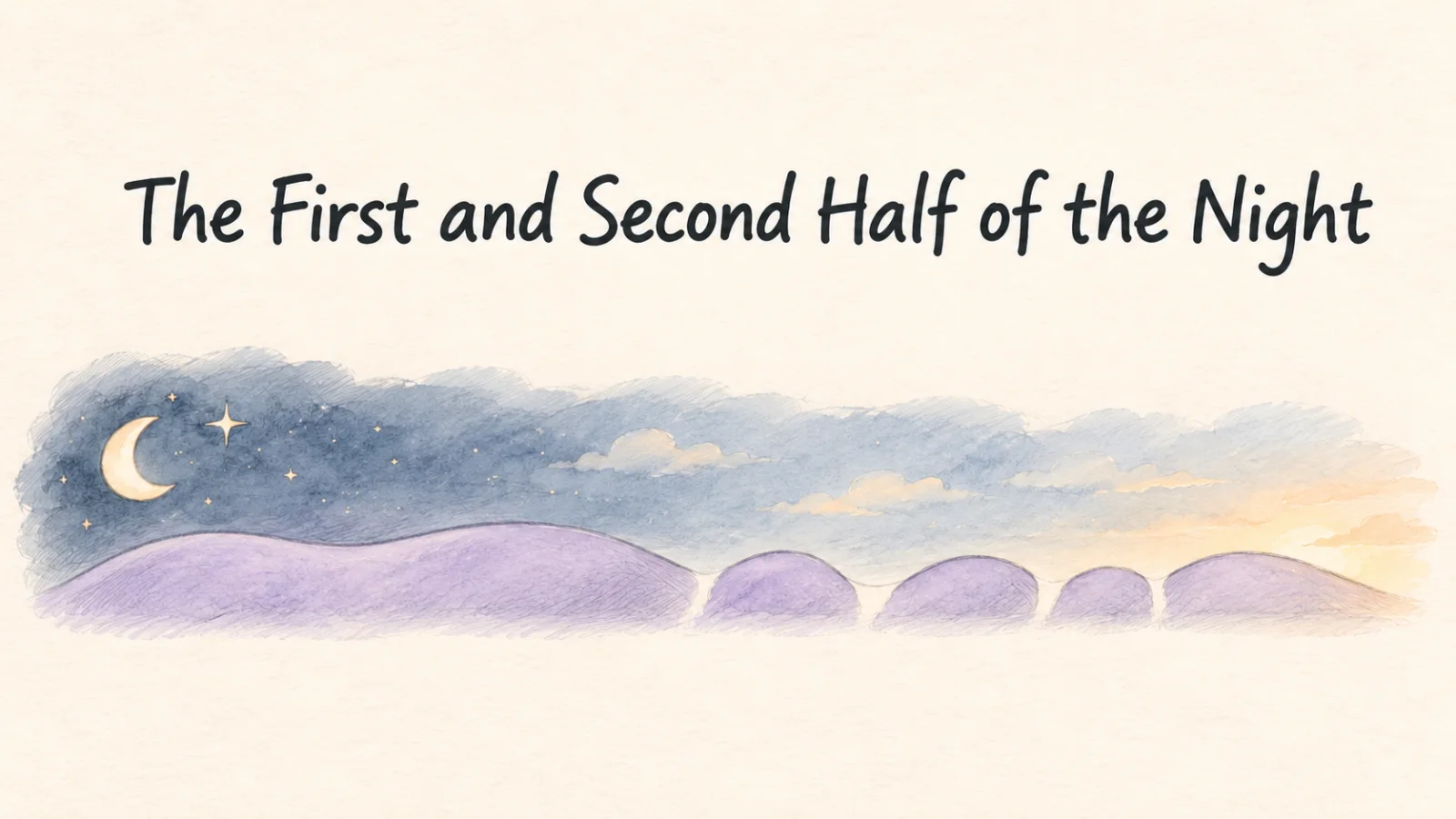
Both can happen on the same night. In a study that brought the same people into a sleep lab for two nights, participants fell asleep a little faster after alcohol on average. Their sleep was more continuous in the first half of the night, then more interrupted in the second half. When researchers separated the night into two parts, they could see each change [1].
Falling asleep and staying asleep use different clocks
In a sleep study, sleep onset latency is the amount of time from lights-out until the recording meets a defined criterion for sleep. After that, researchers can add up minutes spent awake during the night. That second measurement is called wake after sleep onset. The moment you fall asleep marks the end of one measurement and the starting point for the other [1].
Take two imaginary eight-hour nights. On the first, you take 15 minutes to fall asleep and spend 30 minutes awake later. That leaves 435 minutes of sleep. On the second, you fall asleep in five minutes and spend 45 minutes awake later. That leaves 430 minutes of sleep. You gained ten minutes at the start of the second night and lost fifteen after falling asleep.
Sleep efficiency expresses your minutes asleep as a share of the time allowed for sleep. In the example, 435 out of 480 minutes is about 90.6%. The second night comes to 89.6%. The efficiency number sums up the whole night. To explain why it changed, you would still look separately at the time before you first fell asleep and the interruptions afterward [1].
Awakening count and time awake also tell different stories. You could wake once for twenty minutes, or four times for five minutes apiece. Either spends twenty minutes awake. If you remember four separate interruptions, that may feel different from one long stretch of tossing and turning. The experiment recorded both.
The same people came in for two comparison nights
Researchers analyzed both nights of sleep in 93 young adults. On one night they had a drink containing alcohol. On the other they had a matched placebo drink. The nights were about a week apart. Between 11 p.m. and 7 a.m., the team used a sleep recording that included brain activity, eye movements and muscle signals. Those measurements let them tell when a person was asleep or awake and distinguish stages of sleep [1].
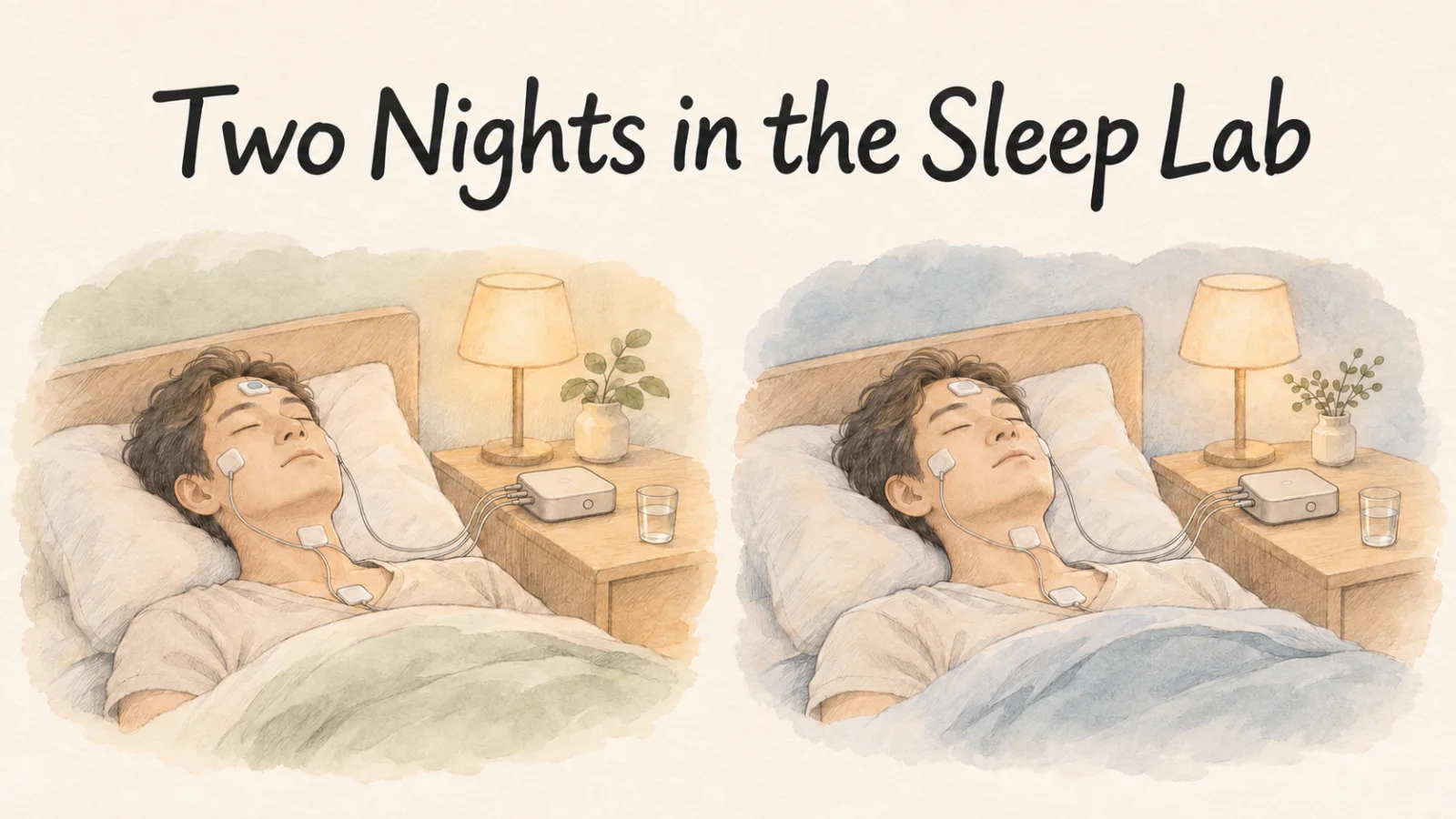
The participants had a separate night to get used to the lab before the comparison. Researchers randomly assigned which drink came first. If everyone had started with the same drink, getting used to the unfamiliar bed and the sensors could have influenced the comparison. Most participants correctly guessed which drink they had. The technician scoring their sleep recordings was kept unaware of the conditions [1].
The alcohol condition involved a level of intoxication higher than some readers might picture when they think of a drink with dinner. Mean peak breath alcohol concentration was about 0.11%. That's a description of the conditions these volunteers experienced. The experiment didn't measure what happens for every kind of drink or amount consumed [1].
The average time to fall asleep was about 8.8 minutes with alcohol and 10.2 minutes with placebo. Across the night, average sleep efficiency was 89.7% with alcohol and 91.8% with placebo. When they looked at the first half of the night, researchers found more continuous sleep after alcohol. In the second half, participants woke more often and remained awake for longer [1].
The difference at the beginning was about a minute and a half. That's the comparison for falling asleep. The study had to read the recording from the second half of the night to know what happened then [1].
The researchers had usable data for both halves for 92 people. During the first half, average wake time was 9.7 minutes with alcohol and 14.8 with placebo. In the second half the order flipped to 17.5 minutes with alcohol and 12.1 with placebo. Separating the halves lets you see effects that pull in opposite directions. The illustration sketches the pattern and the actual average values come from the sleep recordings [1].
A stage of sleep can shift even if you fall asleep quickly
Rapid eye movement sleep, or REM, is one of the stages researchers identify from sleep signals. After alcohol in this study, the first REM period took longer to arrive and REM made up less of the night. Someone's memory of falling asleep quickly doesn't tell you the timing of that first REM period [1].
The word “percent” also covers two different calculations. Sleep efficiency includes the whole time from lights-out to lights-on. For the REM percentage, the researchers started at sleep onset and stopped at the last recorded period of sleep. Waking well before lights-on affects the first calculation. That final awake stretch falls outside the interval used for the second [1].
Another trial compared alcohol and placebo in 24 people aged 18 to 21 who were light social drinkers. There was less REM sleep in the first half of the alcohol night, and more time awake in the second half. The time it took to fall asleep didn't show a significant difference. The early part of the night and the later part can change in different ways without a clear change in time to fall asleep [2].
The two experiments measured what happened after a particular exposure during a lab night. They don't give enough information to tell you exactly why you woke up on a particular Saturday. A late meal, a different bedtime or something that made noise outside could also matter. The controlled comparison gives you a useful set of questions to ask about the night without needing to reproduce it at home [1][2].
Write down the start and the interruptions separately
The next morning, write down when you went to bed and about how long you think it took to fall asleep. On a separate line, note whether you remember waking up, and how long it seemed to take to fall asleep again. If you went out, note when you got home and when you last had a drink. You can leave blank the parts of the night you don't remember.
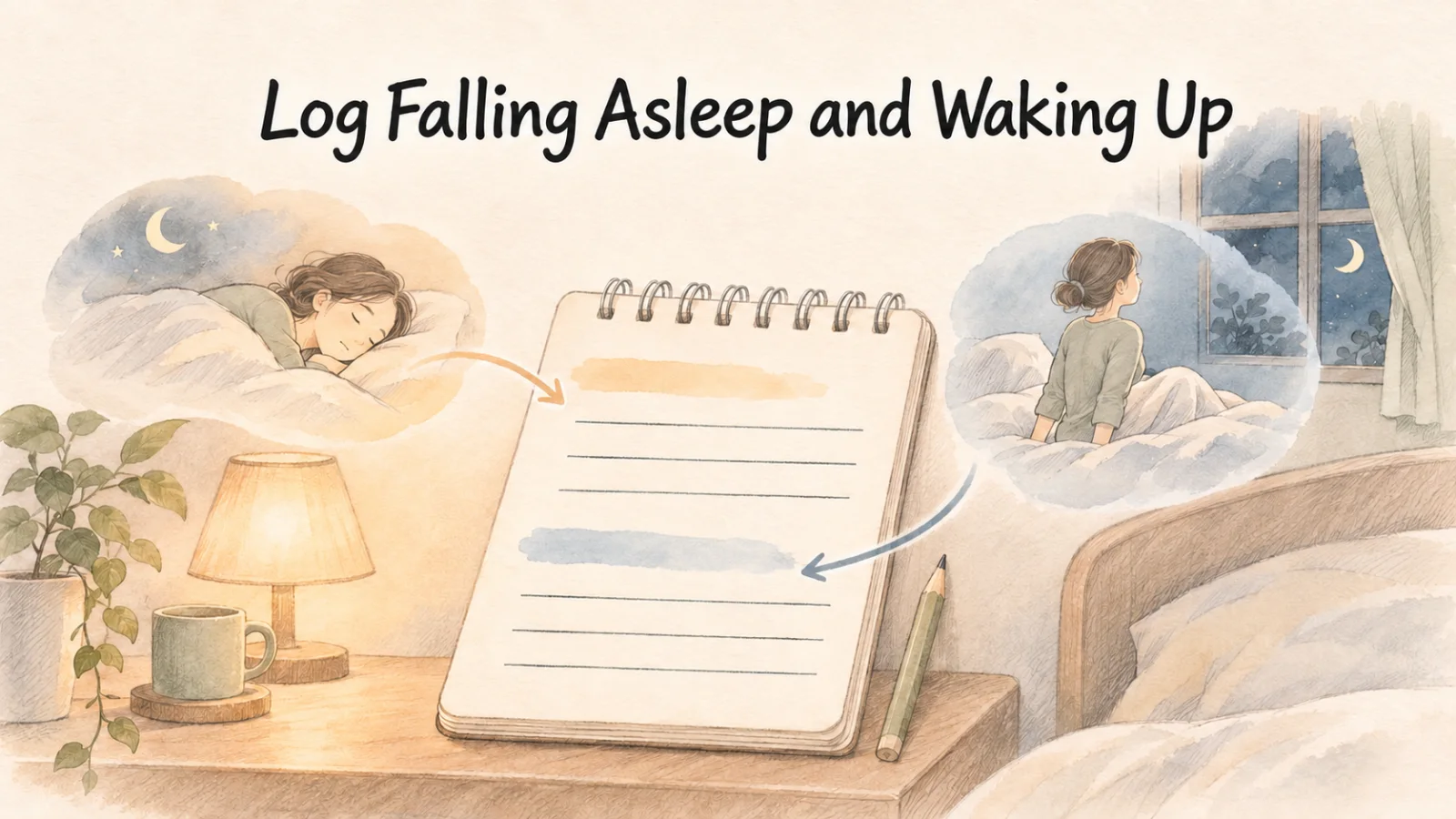
A note might say, “In bed at 11:30, fell asleep quickly. Woke around 3 and took a while to get back to sleep.” You can compare nights that have already happened. When you look at them together, notice whether dinner out, drinking or bedtime all tended to change at once. Those details help you decide how much to make of the difference.
In the first trial, participants thought the alcohol night was worse overall. Their own estimates of awakenings and minutes awake did not clearly differ across nights, even though the lab recordings detected differences. A diary captures the parts you remember [1]. Next time you catch yourself saying, “I fell asleep as soon as I got home,” finish the thought by noticing what happened afterward. Keeping two lines helps you tell the beginning of the night apart from the rest of it.
References
[1] Arnedt JT, et al. Sleep following alcohol intoxication in healthy, young adults: effects of sex and family history of alcoholism. Alcohol Clin Exp Res. 2011;35(5):870–878.
[2] Chan JKM, Trinder J, Andrewes HE, Colrain IM, Nicholas CL. The acute effects of alcohol on sleep architecture in late adolescence. Alcohol Clin Exp Res. 2013;37(10):1720–1728.