
Can the Light You See During the Day Change When You Sleep?
Eight people spent a week in their usual surroundings and a week camping. Brighter days and darker evenings shifted their body clocks and sleep schedules.
You answer messages indoors before work, ride the subway, then spend the day under office lights. The living room stays bright until you're nearly ready for bed. When in that day do your eyes get the most light?
Light gives your body information about what time of day it is. In a small Colorado study, eight adults spent a summer week camping. They got more light while they were awake and less light after sunset. The timing of melatonin, a marker of their biological clock, moved roughly two hours earlier on average. Their sleep started and ended earlier too, while the total amount of sleep was similar [1].
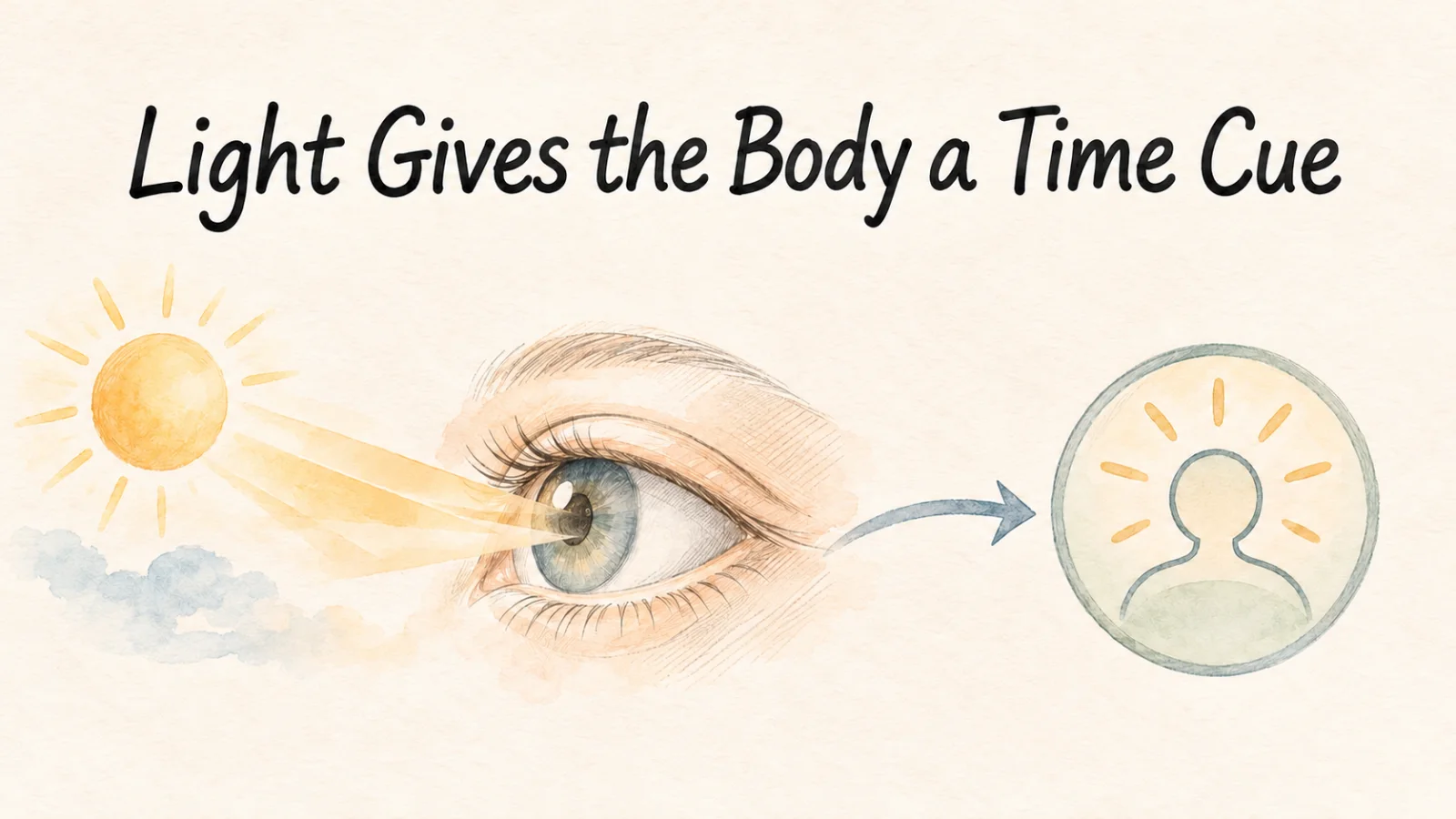
Your eyes tell the clock about the light around you
Light lets you read the words on a desk. It also reaches the system that keeps the body's rhythms in step with the day and night around it. The amount of light you receive over a whole day is one piece of information. When it gets bright and when it gets dark are separate pieces. That is why studies of light and sleep keep track of time as well as brightness [1][2].
One way to check the clock is to measure when melatonin starts to rise. Researchers collect samples at several times in dim light. That reduces the direct influence of bright light during the measurement. They can then look for the point when the level begins rising and use it as a marker of the start of the body's biological night. The camping study used saliva. A separate lab study used blood samples [1][2].
The time you turn off your light tells you when you decided to go to bed. The research marker tells you when a rhythm inside the body reached a particular point. If you stay up to watch another episode, you have a different bedtime that night. You would need a separate measurement to know whether the internal rhythm moved by the same amount [1].
Camping changed both the day and the evening
In 2013, researchers followed eight adults in Colorado. First they spent a week in their usual environment for work, home and social activities. Then they camped for a week in the Rocky Mountains, with light from the sun and campfires. They chose their own sleep times and didn't use flashlights or personal electronic devices. A wrist-worn recorder measured light and activity, which the team also used to estimate sleep [1].
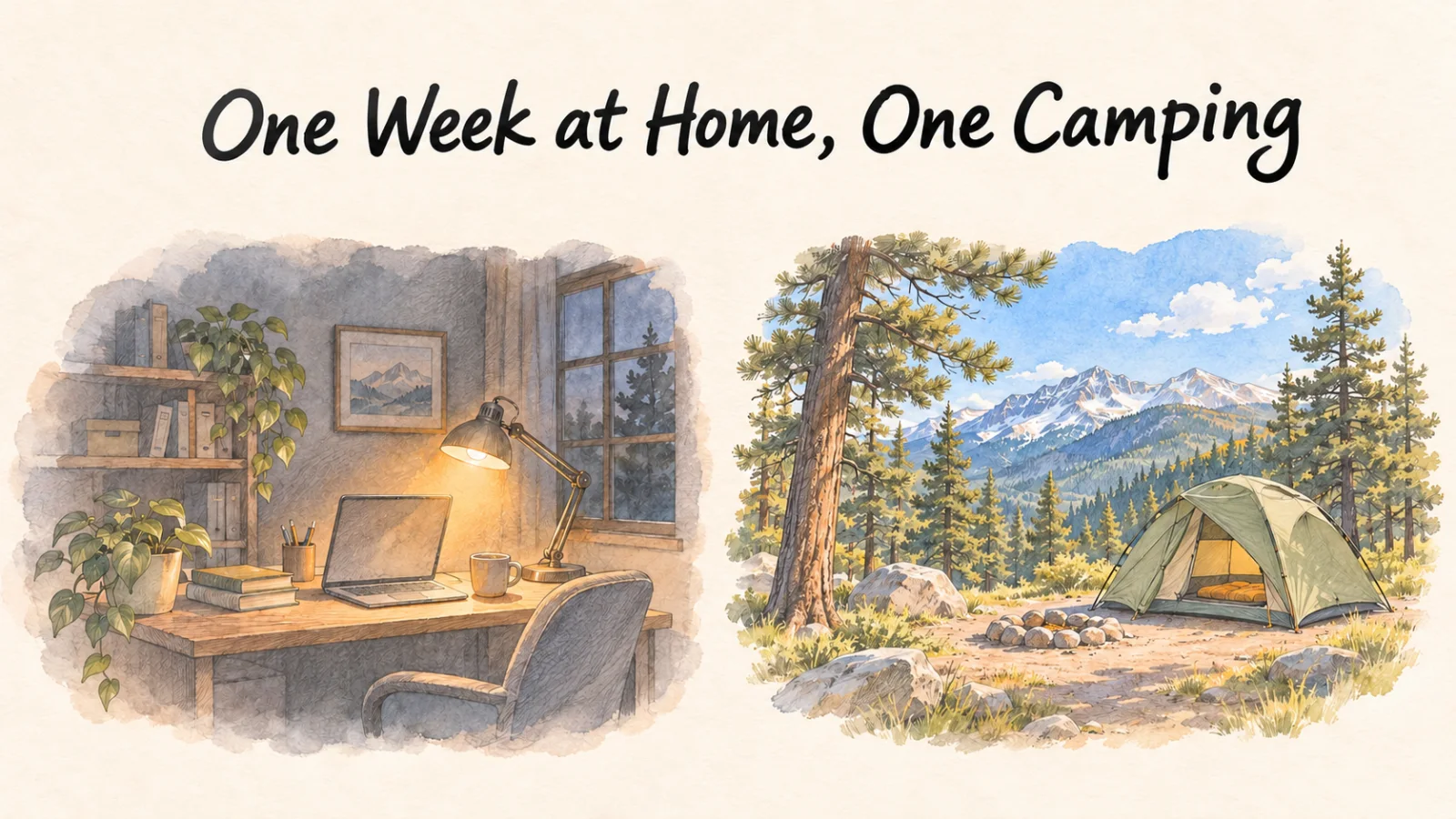
In the usual environment, average light exposure while awake was about 979 lux. During camping it was about 4,487 lux. Between sunset and sleep the order reversed: about 21 lux in the usual setting and 8 lux during camping. Lux is a unit of illuminance, the amount of light falling on a surface. The researchers measured it at the wrist rather than treating the room's lamp rating as a measure of what the person experienced [1].
The first two hours after waking show the contrast more closely. The wrist devices recorded about 934 lux during the usual week and 3,074 lux during camping. In the same trial, the hours after sunset got darker. The group therefore experienced more than one change in its daily exposure. You cannot take either change in isolation and assign it a share of the two-hour shift [1].
After camping, the melatonin markers moved earlier by about two hours. The times people fell asleep and woke up moved earlier by about 1.2 hours. Imagine shifting an eight-hour sleep window from 1–9 a.m. to midnight–8 a.m. Both ends move an hour, and the time asleep stays the same. The study's average sleep duration was about 6.7 hours in the usual setting and 6.8 hours while camping, without a statistically clear difference [1].
Check which clock moved. The roughly two-hour result refers to the melatonin markers. The roughly 1.2-hour result refers to when people fell asleep and woke up. Moving a sleep window earlier can leave its length close to where it was [1].
The melatonin rise after camping occurred near sunset on average. That was the sunset time of those summer days in Colorado, which depends on the season and the location [1].
The eight people did the weeks in the same order. Keeping the weeks close together made sunrise and sunset times more comparable, but the study didn't test the reverse order. Camping also changes things besides the light, including where you are and what you do. The measurements show the different day and evening conditions in this group, while leaving open what an isolated change to morning light would do at home [1].
What happened when researchers changed the evening reading light?
Another team brought 12 young adults into a lab. In one condition, they read for about four hours before bed for five evenings on a light-emitting eReader. In the other, they read from a printed book for the same length of time. Both were done in an otherwise dim room, and volunteers were randomly assigned which to try first. After the eReader condition, the melatonin marker came about an hour and a half later than after the print condition [2].
The comparison narrows down what changed. Everyone did roughly the same evening activity at roughly the same time. The light reaching people while they read was different. The study also had a definite duration, a particular device, and several nights of exposure. A quick look at a message and four hours of reading are different exposures, even if both use a screen [2].
Look at both ends of the day you already have
If you want to notice your own pattern, start with a few ordinary days. Write down when you get up, when you're first outdoors in daylight and when you move from a bright room to a dimmer one in the evening. Work deadlines, early trains and other fixed plans can go in the notes so that you know what else changed.
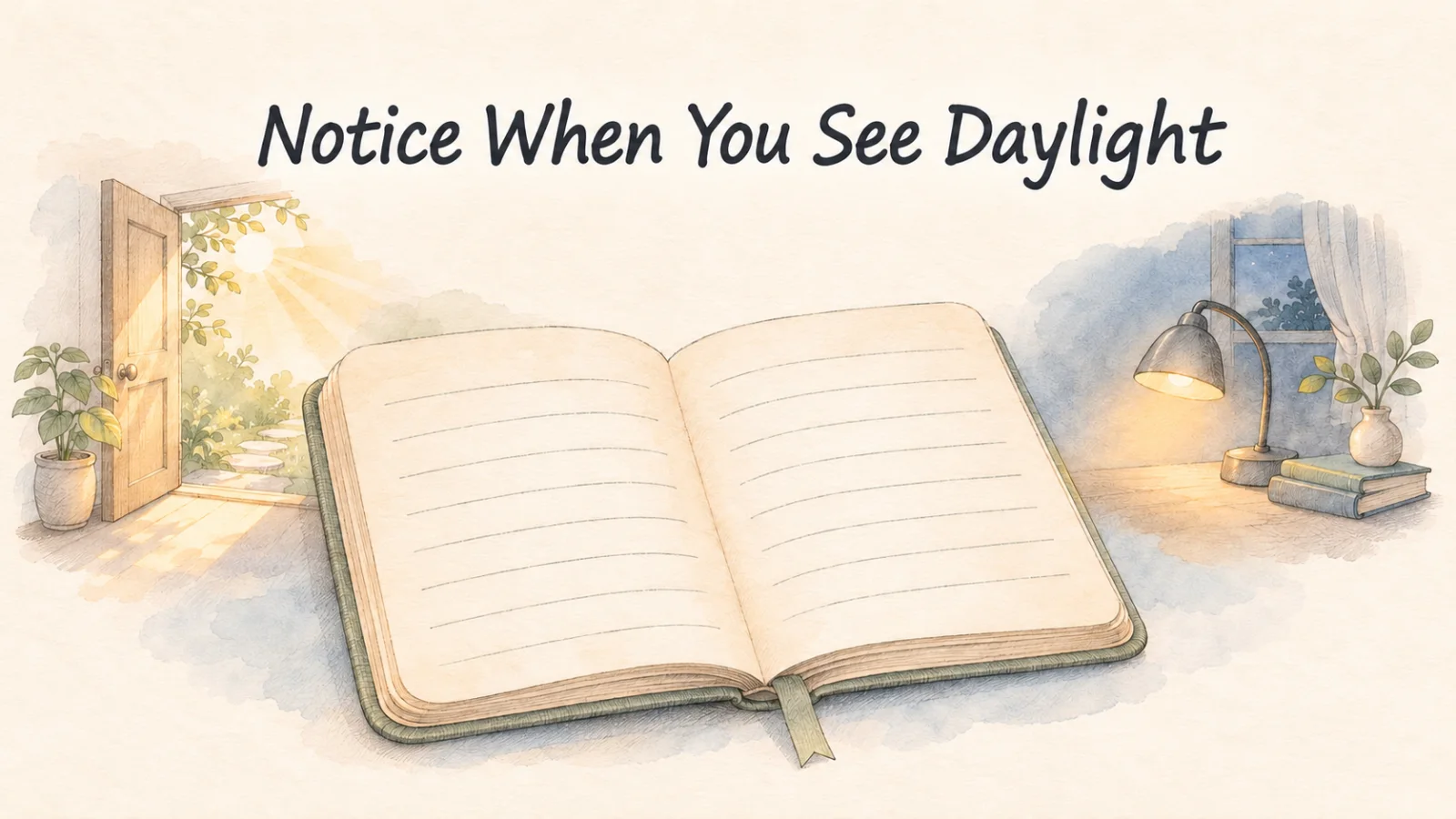
Say you usually get up at seven and leave at nine. One morning, buy breakfast outside at eight and make a note of the change. Ordinary outdoor light is enough to make an observation. There is no need to look into the sun. If you compare several evenings, note when you began to feel sleepy and when you actually switched off the light. The two times may differ, and neither is a direct measurement of melatonin.
If the first daylight you notice today comes through the office window, write down when that happens. After dinner, notice when the places you spend time in get dimmer. With both parts of the day in view, you can see which part of the pattern has room to change.
References
[1] Wright KP Jr, et al. Entrainment of the human circadian clock to the natural light-dark cycle. Curr Biol. 2013;23(16):1554–1558.
[2] Chang AM, Aeschbach D, Duffy JF, Czeisler CA. Evening use of light-emitting eReaders negatively affects sleep, circadian timing, and next-morning alertness. Proc Natl Acad Sci USA. 2015;112(4):1232–1237.