
What Changes When You Chill and Reheat Rice?
Cooling can change the starch in rice. See how much changed in one experiment, what two breakfast trials measured, and how to store leftovers.
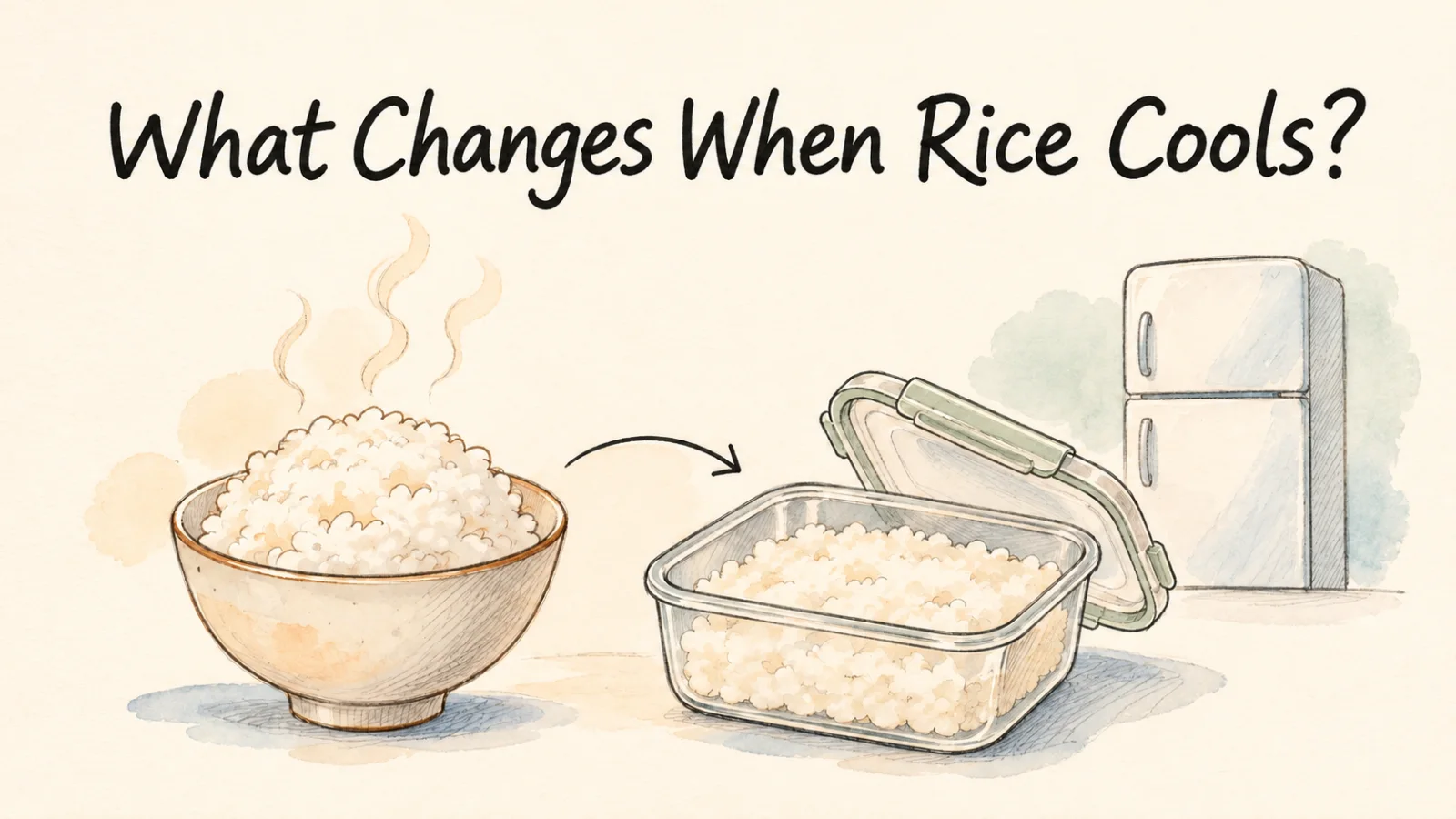
You take last night's rice out of the fridge. The grains feel firmer than when you scooped them from the pot. After a spin in the microwave the rice is steaming again, but something changed while it was cold.
When cooked rice cools, some of its starch rearranges and becomes harder to digest in the small intestine. In one experiment, chilled and reheated rice contained about one extra gram of resistant starch per 100 grams. In another trial, using parboiled rice, chilling and reheating did not produce a clear difference in the two-hour blood sugar response. The two experiments tested specific kinds of rice, and they measured different things [1][2].
What happens to the starch when the rice cools down?
When you cook rice in water, the starch takes up water and swells. The orderly structure of the starch loosens, which helps the grain soften. That is called gelatinization. As the rice cools, portions of those starch chains line up again in a more orderly way. The name for that shift is retrogradation [1].
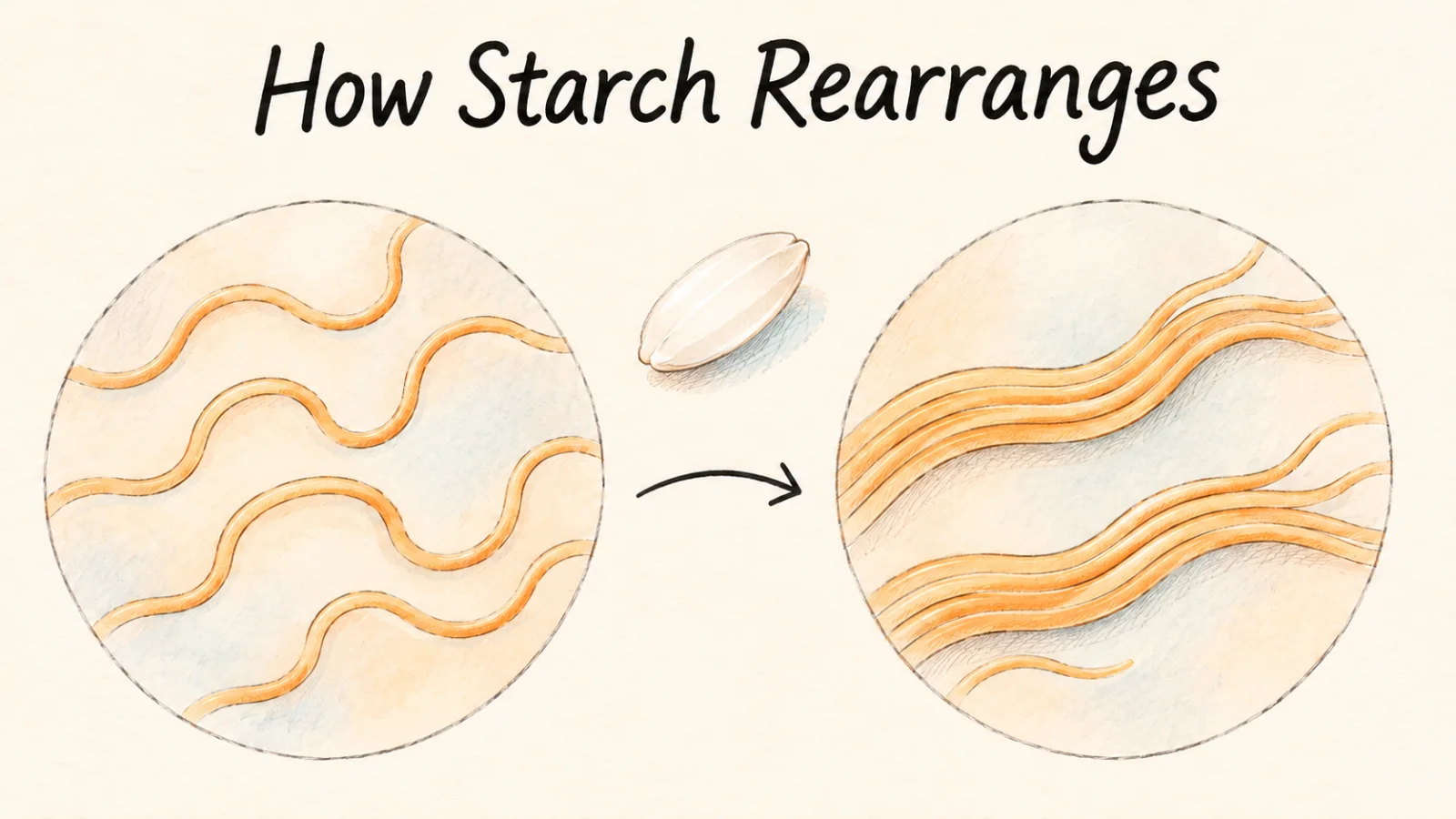
Think of several loose strands of thread laid out on a table. Some sections might come together to form a bundle while other parts still curl away. Digestive enzymes have more trouble breaking down certain structures formed during cooling. Researchers can treat a sample of rice with enzymes and measure starch that resists digestion under the test conditions. That's the part they call resistant starch [1].
A team at the University of Indonesia used a variety of white rice called IR-64. The freshly cooked sample contained 0.64 grams of resistant starch per 100 grams of cooked rice. A batch refrigerated at 4°C for 24 hours, then reheated with added water in a rice cooker, contained 1.65 grams per 100 grams. They measured both samples after preparation, so the second figure includes what remained after reheating [1].
That's about 2.6 times as much resistant starch, or 1.01 extra grams per 100 grams. To put the result on a plate, imagine weighing out 125 grams of each cooked sample. Using the test results, the fresh serving would contain roughly 0.80 grams of resistant starch and the chilled and reheated serving about 2.06 grams. The estimated difference is 1.26 grams in servings weighing the same [1].
The researchers also measured water. There were 59.6 grams of water per 100 grams of freshly cooked rice and 59.9 grams in the chilled and reheated sample. That gives you a useful way to read the starch results. Here, the sample with more resistant starch was not simply a much drier serving, with the same starch squeezed into less weight. The water in the rice was measured in the lab. What a bathroom scale shows after a meal is a different question entirely [1].
The recipe matters when you take those numbers out of the lab. The team had tried different ways of reheating rice to get closer to the texture of the freshly cooked sample. The two figures came from the method they settled on, using that particular rice. You can feel whether your leftovers are firmer. To find out how much resistant starch is in them, you'd need the kind of food analysis the researchers did [1].
Two breakfast visits, with the same people at both
The team recruited 15 healthy adults aged 20 to 40. Each person had two breakfasts on separate days, with the order randomized. One breakfast came with freshly cooked rice. The other came with rice that had been chilled and reheated. Both included 125 grams of cooked rice, a 60-gram omelet and 240 milliliters of water. One participant's blood sugar data were excluded after unusual vigorous activity before a visit, leaving 14 people in the analysis [1].
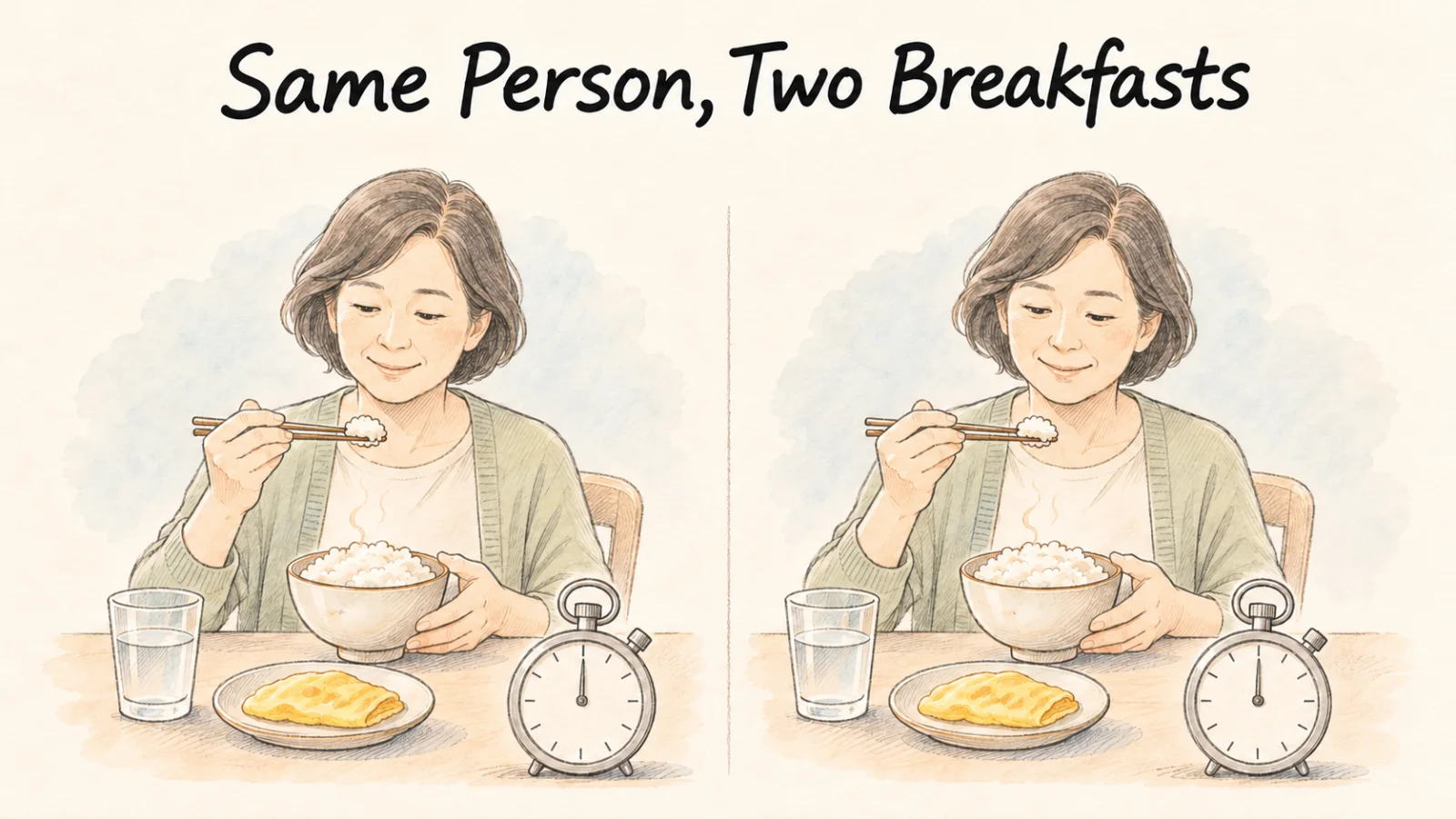
The researchers took blood sugar readings from the first bite and at intervals for two hours. Imagine joining the readings with a line and shading the space above the starting level and below the line. The size of that space is the incremental area under the curve, or iAUC. A response that stays above the starting level for longer can produce a larger area, even when a particular reading is similar [1].
The average area was 152 mmol·min/L after the breakfast with fresh rice and 125 mmol·min/L after the breakfast with chilled and reheated rice. Using the rounded averages in the paper, that's about 18% smaller. At 15 minutes the average reading was higher after the reheated rice. At 45 and 60 minutes it was lower. The percentage describes the area over two hours, which leaves room for the curves to cross [1].
The two measurements came from different tests. The lab analysis measured grams of resistant starch in a serving of cooked rice. The breakfast experiment measured blood sugar over time after people ate the meal [1].
A New Zealand team asked a similar question with 28 healthy adults. Each person ate 140 grams at each of three visits: freshly cooked medium-grain white rice, freshly cooked parboiled rice, and the same parboiled rice chilled overnight and reheated. All three were served warm. The two parboiled rice meals produced no statistically significant difference in the two-hour blood sugar area. The fresh medium-grain white rice produced a larger area than either [2].
Parboiled rice has already been partially cooked as part of processing before you bring it home. Comparing those two versions tested the storage step while keeping the kind of rice the same. Comparing the fresh medium-grain rice with the reheated parboiled rice changed two things at once. That comparison tells you the meals had different results, while leaving open how much of the difference was due to the rice and how much was due to storage [2].
What to do with the rice that's left over
It's easy to see 18% and wonder how it might show up on the scale. The studies above measured blood sugar for two hours after a meal. They didn't measure the difference in calories absorbed or track people's body weight or fat over time. A morning weigh-in includes water and everything else that contributes to your weight. It can't pick out what happened to the starch in yesterday's lunch [1][2].
The next time you have more cooked rice than you need, divide the leftovers into shallow portions so they cool quickly. The UK National Health Service recommends refrigerating leftover rice within one hour and eating it within 24 hours. If you reheat it, heat it until steaming throughout and only reheat it once. The guidance explains that rice left at room temperature for too long can contain toxins that reheating won't remove [3].
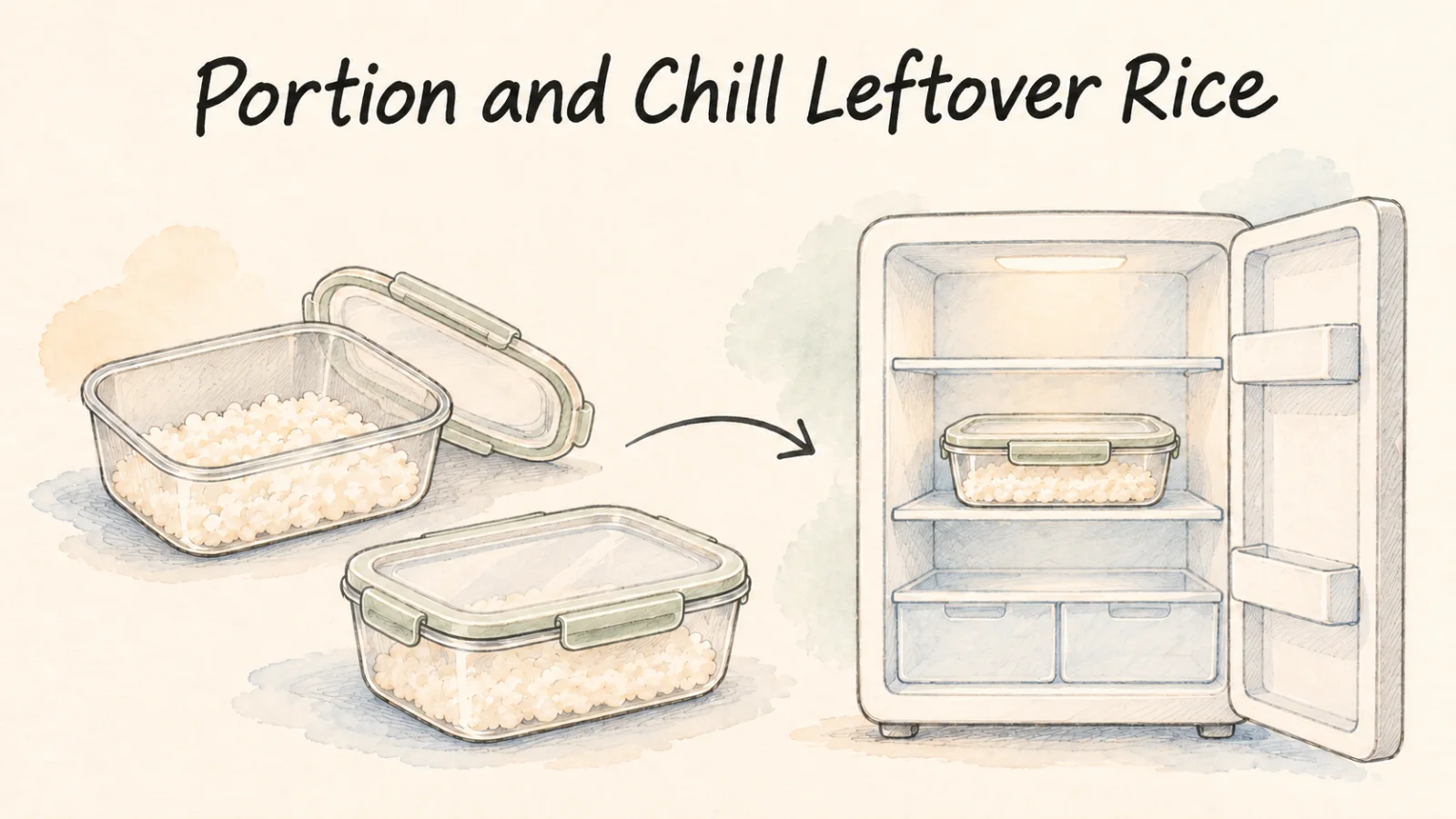
When you open the container tomorrow, there's a simple way to keep the measurements straight. You can taste the texture and weigh the portion you're about to eat. The 18% figure belongs to two hours of blood sugar readings after two specific breakfasts. Tonight, if you want rice to go with lunch tomorrow, put aside a portion and get it into the fridge promptly.
References
[1] Sonia S, Witjaksono F, Ridwan R. Effect of cooling of cooked white rice on resistant starch content and glycemic response. Asia Pac J Clin Nutr. 2015;24(4):620–625.
[2] Lu LW, et al. Effect of cold storage and reheating of parboiled rice on postprandial glycaemic response, satiety, palatability and chewed particle size distribution. Nutrients. 2017;9(5):475.
[3] UK National Health Service. Starchy foods and carbohydrates: rice and grains.