
Eggs, Butter, and LDL Cholesterol. What Did Three Diets Show?
A University of South Australia trial compared dietary cholesterol and saturated fat across three five-week diets. Here's what people ate and what their blood tests showed.
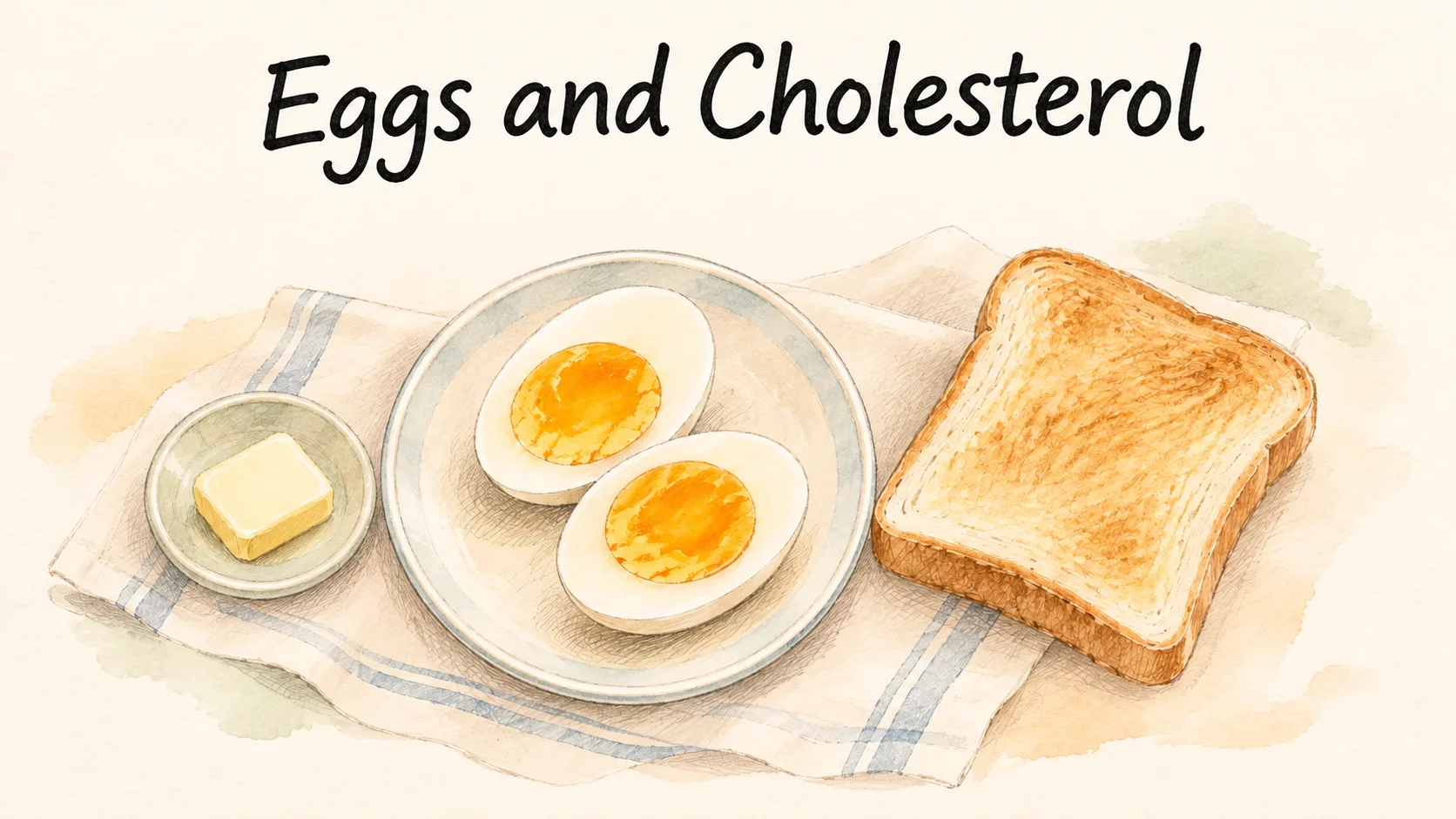
Breakfast arrives with an egg and buttered toast. When an LDL-C number comes back on a blood test, the yolk might be the first thing you think about. In a University of South Australia trial, the diet with two eggs each day and less saturated fat resulted in an LDL-C level 5.7 mg/dL lower than the control after five weeks. Both diets were designed to contain the same amount of dietary cholesterol [1, 2].
The change came from a diet that extended well beyond breakfast. The researchers varied which meats, dairy products, and plant proteins people ate. A third diet left out eggs. Understanding what the three diets changed is how you make sense of the number on the blood test.
Milligrams on the menu and milligrams per deciliter in blood
Dietary cholesterol is usually counted in milligrams consumed in a day. Saturated fat can be expressed as a share of the day's calories. Both can show up in the same breakfast. Put them in separate columns and researchers can design meals with similar amounts of one and different amounts of the other.
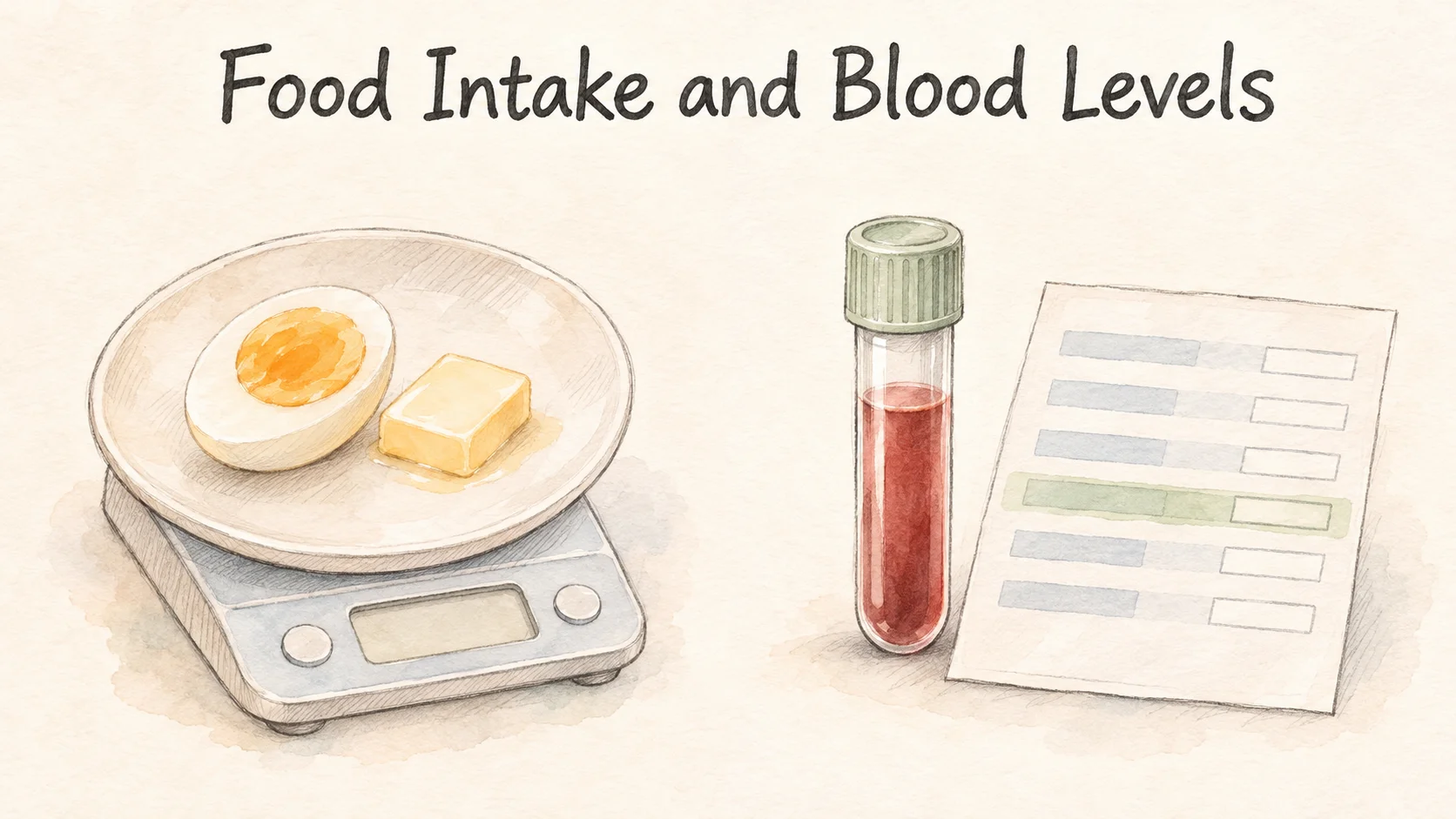
LDL-C measures the concentration of cholesterol carried by low-density lipoprotein in a blood sample. The unit mg/dL means milligrams per 100 milliliters. A diet record describes how much cholesterol went onto the plate over a day. A blood test describes how much is present in a given volume of the sample at the time of the draw. The trial paired the two records so researchers could compare blood concentrations after different diets [1].
A percentage of calories has another denominator. For a hypothetical 2,000-calorie day, six percent is 120 calories and twelve percent is 240 calories. That arithmetic illustrates the study's percentages. The researchers tailored the energy target to each person and considered the foods eaten across the day [1].
An egg and a pat of butter also contain mixtures of nutrients. Swapping buttered toast for something else changes what the meal contains. Even when the egg stays on the plate, the kinds and amounts of fat beside it can change. That is why comparing the egg counts alone would miss much of what differed between the trial's diets.
How the trial arranged three five-week diets
The trial enrolled 61 nonsmoking adults aged 18 to 60. They were 39 years old on average, and their LDL-C before the study was below 3.5 mmol/L, about 135 mg/dL. They were assigned at random to start with different diets, with each diet lasting five weeks. Fifty-four people finished at least one phase, and 48 finished all three [1].
A dietitian provided meal plans and recipes. Participants recorded their food on checklists and weighed what they ate for five days near the end of each phase. Researchers took fasting blood samples at the end of the diet periods. The plans aimed to give a participant the same calorie total on each diet [1].
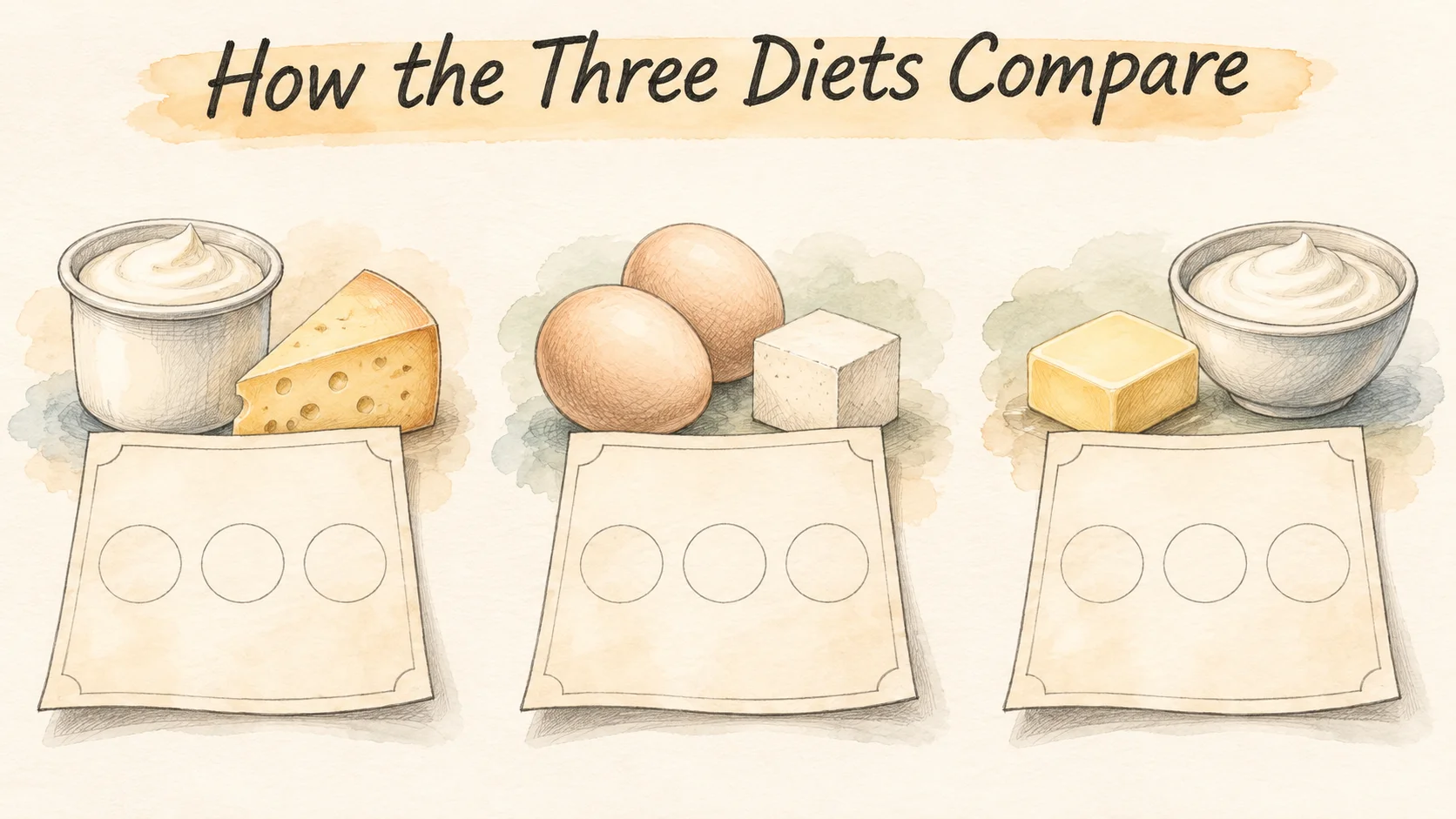
| Diet as designed | Daily cholesterol | Calories from saturated fat | Eggs |
|---|---|---|---|
| Control | 600 mg | 12% | Up to 1 per week |
| Daily eggs | 600 mg | 6% | 2 per day |
| Egg-free | 300 mg | 12% | None |
The control and daily-egg plans were intended to compare two amounts of saturated fat at the same cholesterol target. The control and egg-free plans reversed that: they had the same saturated fat target and different cholesterol targets. There was no fourth diet with lower targets for both [1].
To build the daily-egg plan, researchers included lean meats, lower-fat yogurt and cheese, and foods such as tofu and legumes. The control included chicken with skin and full-fat dairy. The egg-free plan could include butter and full-fat yogurt and avoided some foods rich in cholesterol. The meals therefore changed in several ways, across the whole day [1].
What people actually ate and what the blood tests showed
The food records put saturated fat at 14.3%, 7.9%, and 14.2% of calories in the control, daily-egg, and egg-free phases, respectively. The same records estimated about 520, 594, and 300 mg of cholesterol per day. The first two diets had the same targets on paper, but the daily-egg phase ended up about 74 mg higher in cholesterol. It was also about seven percent lower in calories than the control diet, and participants reported more fiber than on the control diet [1].
Measured in grams, saturated fat averaged 35.7 grams per day on the control diet and 18.5 on the daily-egg diet. The daily-egg records also showed more polyunsaturated fat. Daily fiber intake averaged 25.0 grams on the control diet and 33.8 grams on the daily-egg diet. Those differences matter when reading the result, because changing the menu changes more than the names of its main ingredients [1].
After the control diet, average LDL-C was 109.3 mg/dL. After the daily-egg diet, it was 103.6 mg/dL. Divide the gap of 5.7 mg/dL by the control value and it comes to about 5.2%. The egg-free diet came in at 107.7 mg/dL, a difference from the control that wasn't statistically significant. The journal corrected the unit in the abstract to mg/dL. An earlier copy may show μg/dL beside the same numbers [1, 2].
Having each participant change diets helps account for stable differences between people. The study randomized the sequence, though it did not require a break between phases. Participants could choose to take a week off between diets. The trial measured blood lipids over five-week periods. Finding out whether a diet changes events such as heart attacks would require a different study [1].
The participants started below a particular LDL-C level, and people who had been eating more than five eggs a week during the previous month were excluded. Those details help describe who the comparison applies to. A study result from this group and these meals does not tell us what happens if someone whose starting LDL-C or usual egg intake differs makes a single swap at breakfast [1].
The Egg Nutrition Center, a division of the American Egg Board, funded the trial. Three authors disclosed financial support from that organization. The authors state that the funder had no role in designing the study, analyzing or interpreting the data, or writing the paper [1].
Look at what else comes with the egg
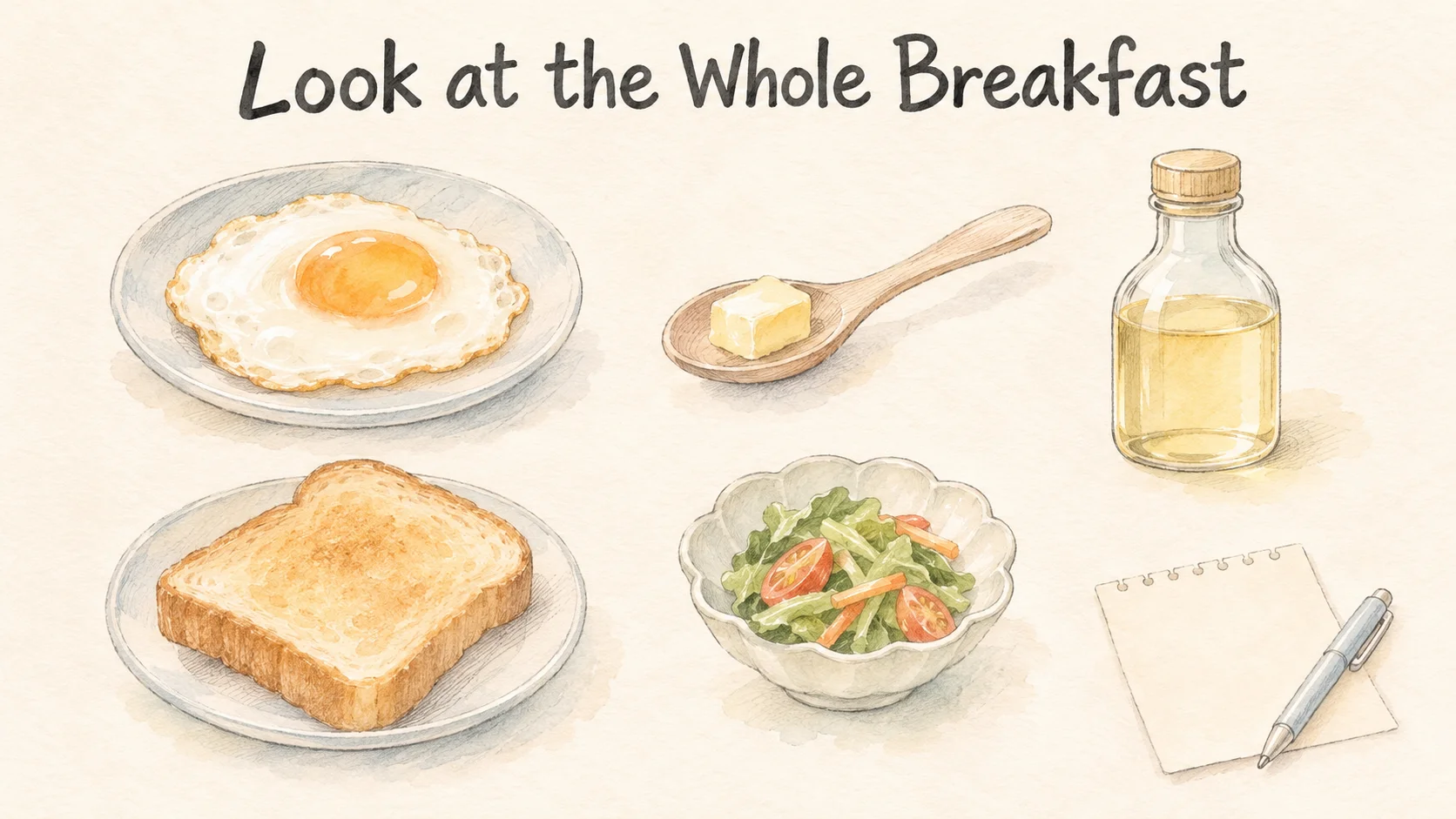
If you're comparing two breakfasts, jot down the egg, the spread, the cooking fat, and the sides. Two menus can have an egg in common and use very different amounts of butter or serve different dairy products. You can apply the same questions to a report about cholesterol. What went into the whole menu, and did the participants end up eating the amounts the plan called for?
If all you have is a photo of breakfast, the egg and toast might be easy to identify. The cooking oil and the amount of butter might only be known if you prepared it or can ask how it was made. The photo, an ingredient list, and a blood test each provide a different kind of information.
It's easy to count the eggs on a plate. Interpreting a blood test from a diet study takes the rest of the menu, too.
References
[1] Carter S, et al. Impact of dietary cholesterol from eggs and saturated fat on LDL cholesterol levels: a randomized cross-over study. Am J Clin Nutr. 2025;122(1):83–91.
[2] Carter S, et al. Corrigendum to Impact of dietary cholesterol from eggs and saturated fat on LDL cholesterol levels. Am J Clin Nutr. 2025;122(6):1873.